.png)
.png)

BLOG

香港德國文化協會
The German Cultural Association
German Culture and Etiquette: What You Need to Know
A Hong Kong professional joins a video call with a German team. The slides are ready. The figures are checked. Then the actual anxiety starts. Should you open with small talk, soften every point, or go straight into the agenda?
That uncertainty is common. It affects adults preparing for a new role, parents helping a child plan to study abroad in Germany, and students working towards Goethe-Zertifikat, TestDaF, IB, IGCSE, or university applications. In practice, the hardest part usually isn't the first German phrase. It's knowing how Germans expect people to behave.
German Culture and Etiquette: What You Need to Know starts with one useful mindset shift. German norms are usually not random, cold, or hostile. They are structured. Once you understand the logic, many situations become easier to handle, whether you're attending a business meeting, speaking to a professor, or visiting a German home.
For learners looking for German lessons Hong Kong families can trust, or adults searching to Learn German HK for work, this matters more than many people expect. Language and culture are tied together. If you speak correct German but communicate in a way that feels vague, over-polite, or unprepared in a German context, people may misunderstand your intent.
Your Guide to German Culture and Etiquette
A lot of Hong Kong learners worry about the wrong thing. They think the biggest risk is making a grammar mistake. In reality, cultural mismatch usually creates more friction than imperfect language.
Take a simple business example. A Hong Kong manager may begin with warm rapport-building, soften disagreement, and avoid direct correction in front of others. A German colleague may interpret that as unclear, inefficient, or even evasive. Neither side is wrong. They are following different social rules.
That is why German Culture and Etiquette: What You Need to Know isn't just about manners. It's about reducing avoidable misunderstandings in real situations:
- At work: meetings, feedback, deadlines, and email tone
- At school: class participation, asking questions, and academic independence
- In daily life: quiet hours, recycling, dining manners, and home visits
- In relocation planning: adapting faster when you study abroad in Germany or move for work
Why Hong Kong learners often feel stuck
Hong Kong communication often values harmony, tact, and face-saving. Many people are trained to read the room before speaking directly.
German settings often reward something different:
- Clarity first: people want your point early
- Preparation: opinions should be supported, not just expressed
- Boundaries: professional and private life are usually kept separate
- Consistency: rules are expected to apply to everyone
The fastest way to feel more confident with Germans is to stop asking, "How do I sound more polite?" and start asking, "How do I make my meaning clearer?"
Parents also feel this gap when helping teenagers prepare for DSE, IB, IGCSE, or future university pathways. Students may know vocabulary, but they still hesitate to ask direct questions or challenge ideas respectfully. In German-speaking environments, that hesitation can hold them back.
What works and what doesn't
What works
- Being specific: ask focused questions instead of broad ones
- Arriving prepared: read the agenda, bring your facts, know your next step
- Respecting boundaries: don't assume friendliness means instant personal closeness
- Accepting correction calmly: it often means engagement, not rejection
What doesn't
- Over-explaining before the main point
- Using vague wording to avoid discomfort
- Treating direct feedback as a personal attack
- Assuming all of Germany behaves the same way
If you're preparing for exams, work, or relocation in Hong Kong, this knowledge saves time. It also makes German feel less mysterious and much more learnable.
What Is the Foundation of German Culture
A Hong Kong professional can do everything that sounds polite at home, soften a request, give background first, avoid direct disagreement, and still leave a German colleague unsure what was decided. That usually does not happen because anyone is rude. It happens because the two sides are using different ideas of respect.
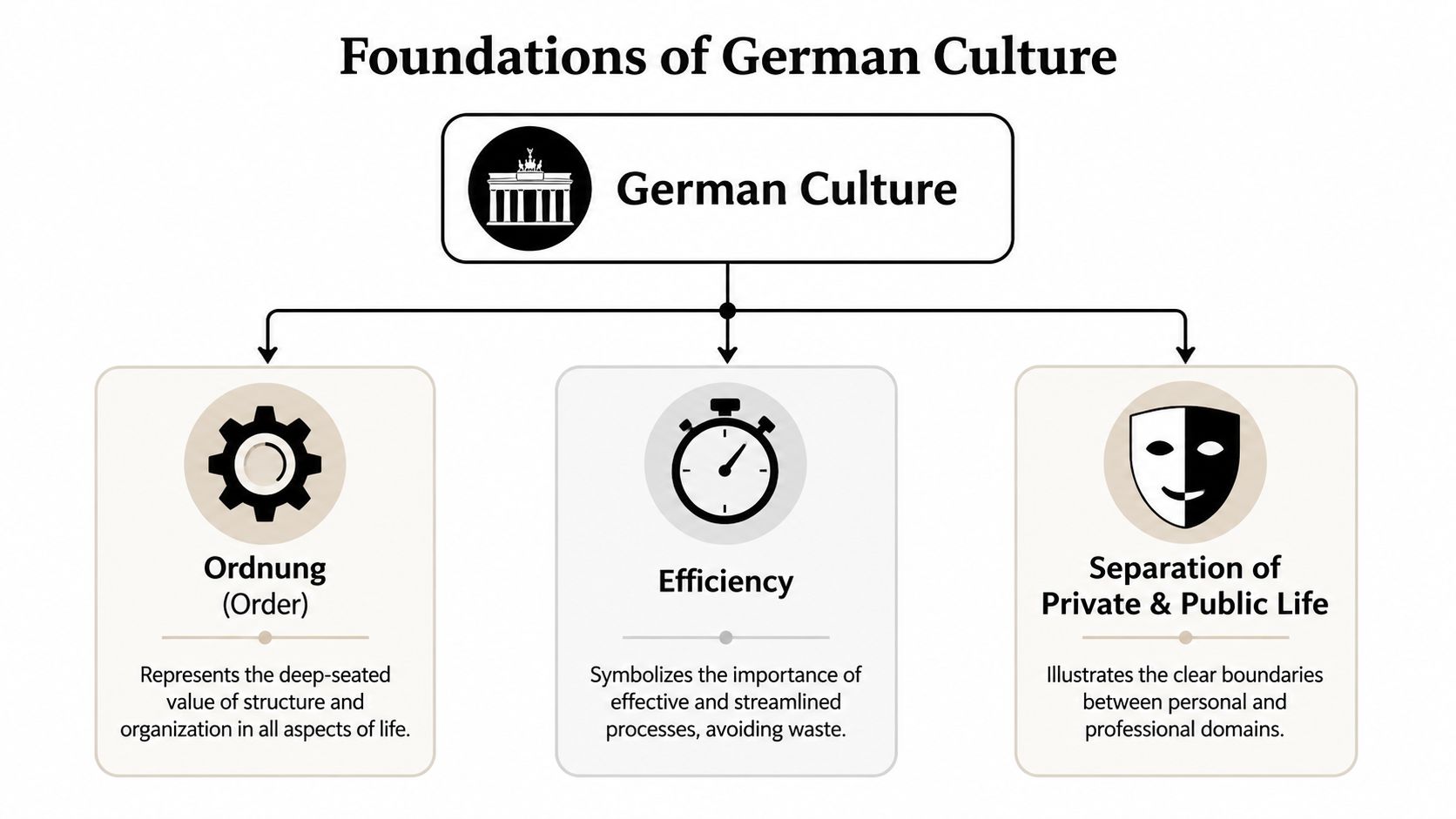
In Germany, respect is often shown through reliability, clarity, and equal treatment. Many everyday rules make more sense once you see them that way. They are less about control and more about creating a system people can trust.
Ordnung means shared structure
The word Ordnung is often translated as order. For Germans, it usually means something more practical. Clear systems reduce friction, make outcomes predictable, and help everyone know what is expected.
That is why rules often carry a moral weight in Germany that surprises people from Hong Kong. In Hong Kong, flexibility can be a sign of social skill. In Germany, too much flexibility can look unfair, careless, or badly organised. If one person gets special treatment, the question is often not whether it was kind. The question is whether the same rule still applies to everyone else.
This shows up in ordinary situations. Queueing, sorting rubbish correctly, keeping agreed quiet hours, bringing the right documents, and following appointment procedures all reflect the same idea. A functioning system protects strangers from each other.
For Hong Kong learners, the bridge strategy is simple. Do not ask first, "Can this be adjusted politely?" Ask, "What is the stated process, and have I followed it fully?"
Efficiency is tied to respect
German efficiency is not just about speed. It is about using other people's time carefully.
A meeting should have a purpose. An email should make the action clear. An application should be complete before it is submitted. In many German settings, vague wording creates extra work for the other person, so it can come across as inconsiderate even if the tone sounds gentle.
This is one of the biggest culture clashes with Hong Kong communication. Hong Kong speakers are often trained to prepare the listener emotionally before making the main point. Germans often prefer the opposite sequence. State the point first. Then explain the context if needed.
A small example helps. If you need to ask for help, start with the request, not three paragraphs of background. If you are learning greetings and first exchanges, this also affects how you sound from the first minute. A simple, well-judged opening matters more than a long polite build-up, which is why many students do well with this guide to basic German greetings and first conversations.
Private life and public life stay separate
Many people in Hong Kong read warmth through availability, personal sharing, and relational effort. Germany often draws the line elsewhere. Someone can be honest, dependable, and fully respectful while still protecting personal time and private information.
That separation appears in several ways:
- Work relationships stay task-focused: trust often begins with competence
- Leisure time is protected: constant contact is not automatically seen as commitment
- Personal questions come slowly: privacy is treated as normal, not distant
- Titles and formality can matter at first: familiarity is usually built, not assumed
Hong Kong learners often misinterpret this scenario. A German classmate, manager, or neighbour may sound reserved and still be acting appropriately and positively. The relationship is not cold. It is structured.
The most useful adjustment is to stop measuring trust only by warmth. In Germany, trust is often built through punctuality, follow-through, and saying exactly what you mean.
Navigating the German Communication Protocol
For people in Hong Kong, German communication often presents the biggest culture clash. It is often called blunt, but that description is too simple. The better way to understand it is as a protocol built for clarity and efficiency.

What Germans are optimising for
German communication operates on what has been described as a high-context directness model. In professional settings, people prioritise information density. Small talk is treated as a 15 to 25% productivity loss, correction is framed as participation in shared social infrastructure, and Hong Kong learners who don't adapt can underperform by 20 to 30% in business simulations, according to Lingoda's discussion of German culture and communication.
That helps explain why many Germans:
- Prefer direct questions
- Value evidence-based statements
- Correct details quickly
- Get to the point early
A Hong Kong speaker may hear this as sharp or uncomfortable. A German listener may hear indirect speech as vague or inefficient.
The directness paradox for Hong Kong learners
In Hong Kong, people often protect relationships by softening criticism. That can be smart and socially skilled. But in a German setting, too much softening can create doubt.
For example, these approaches land very differently:
| Common HK phrasing | Likely German interpretation | Better bridge version |
|---|---|---|
| "Maybe we can consider another possibility" | Are you unsure? | "I recommend option B because it solves the timing issue." |
| "This part is okay, but perhaps small improvement" | Is there a problem or not? | "Two points need revision. The timeline and the cost assumption." |
| "I just want to ask a small question" | Why the long lead-in? | "I have one question about the deadline." |
The goal isn't to become rude. The goal is to become clear without sounding aggressive.
Bridge strategies that actually work
If you're adapting from a face-saving communication style, these habits help.
- State the point first: begin with the conclusion, then explain.
- Use concrete references: mention the figure, date, or item directly.
- Separate feedback from personality: criticise the task, not the person.
- Receive correction neutrally: answer the content, not the emotional tone you expected.
Useful bridge phrases include:
- For disagreement: "I see it differently. My reason is..."
- For clarification: "To confirm, do you mean...?"
- For feedback: "Two areas need adjustment."
- For uncertainty: "I don't know yet. I'll verify and reply."
If a German colleague corrects your wording or logic directly, the safest first response is not defence. It is clarification.
What doesn't work in German business talk
Some habits create problems fast:
- Long warm-up before the main point
- Indirect hints instead of clear requests
- Overuse of hedging language like "I feel" in data-driven discussions
- Taking every correction personally
Even basic greetings matter less than many learners assume. Tone and structure matter more. If you want to refine openings and first-contact language, this guide on how to say hello in German and start basic conversation is a useful starting point.
A practical reset for meetings and exams
For TestDaF speaking, Business German, or German interview practice in Hong Kong, train yourself to answer in this order:
- Main point
- Reason
- Evidence or example
- Next step
That structure feels more natural to German listeners. It also reduces the common HK habit of circling the topic first.
Mastering German Business and Professional Etiquette
A common Hong Kong to Germany mistake looks like this. You join a meeting well prepared, wait politely for the right moment, soften your concern to avoid embarrassing anyone, and leave thinking you were diplomatic. Your German colleagues leave thinking you had no clear view, or worse, that you held back a problem the team needed to address.
That gap is not about intelligence or effort. It is a culture clash between Hong Kong's face-saving communication and Germany's task-first professional style. In German workplaces, clarity protects the project. In Hong Kong, indirectness often protects the relationship. If you understand that difference, you can adjust without sounding rude.
Meetings in Germany versus meetings in Hong Kong
Many Hong Kong offices use meetings for several purposes at once. They manage hierarchy, preserve harmony, and move work forward. German meetings are usually narrower. People expect the agenda to guide the discussion, the disagreement to happen in the room, and the decision or next step to be stated clearly.
A practical comparison helps:
| Workplace habit | Common in Hong Kong | Common in Germany |
|---|---|---|
| Opening style | Some rapport-building first | Agenda and purpose early |
| Speaking style | Indirect disagreement is common | Clear position is valued |
| Decision discussion | May continue after the meeting | Often expected during the meeting |
| Time boundaries | Flexibility is more common | Start and end times matter strongly |
The bridge strategy is simple. Speak earlier than feels natural, and make your position easier to hear. Instead of "Maybe we can consider another option," say, "I recommend option B because delivery risk is lower." That sounds blunt to some Hong Kong professionals at first. In Germany, it usually sounds competent.
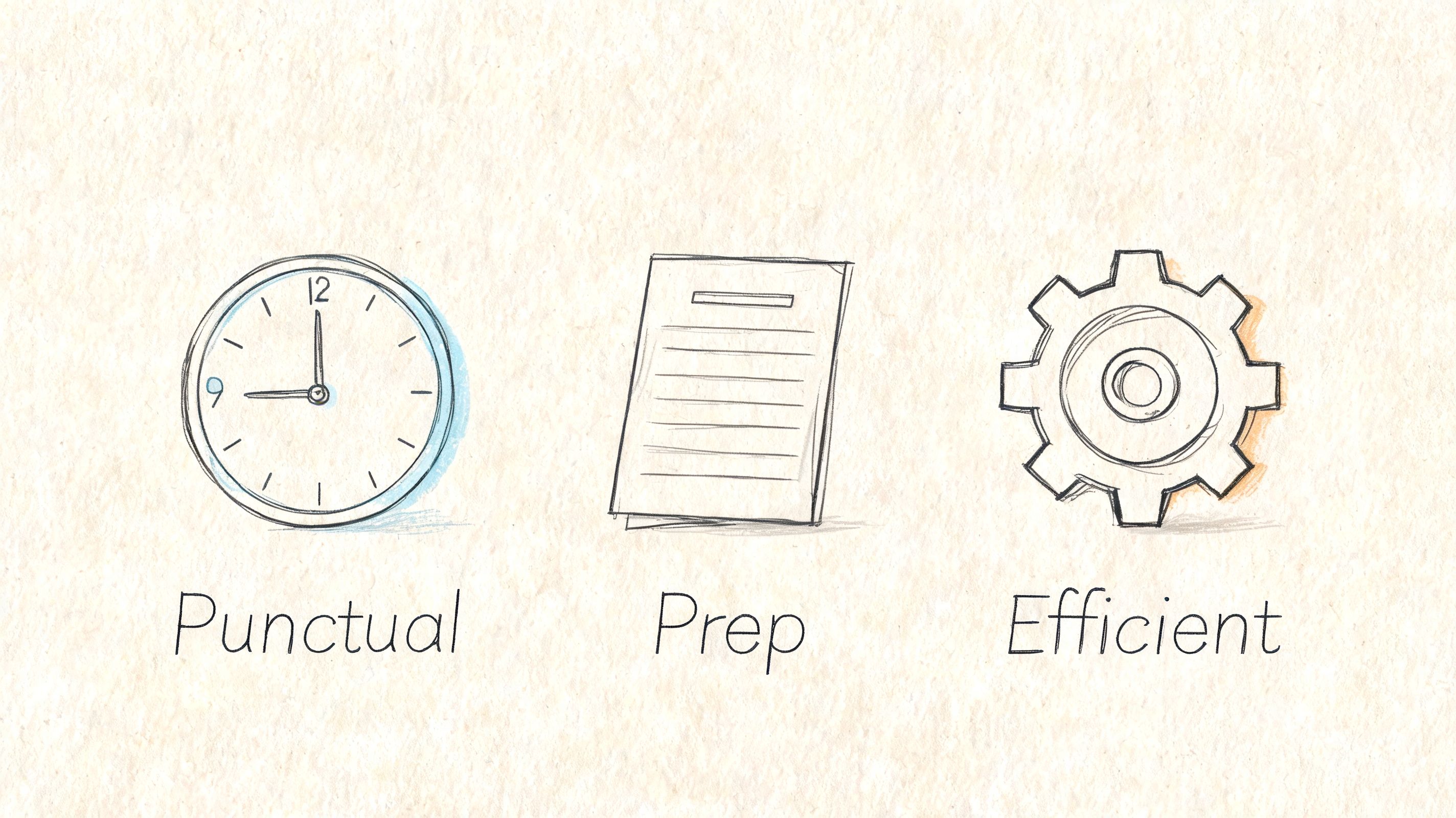
Punctuality signals reliability
In German business culture, being late is rarely treated as a minor personality trait. It raises a practical question. Can this person be trusted with deadlines, client promises, or team coordination?
Use a basic rule:
- Arrive early enough to settle in
- Notify people immediately if a delay is unavoidable
- Open the file, deck, or notes before the meeting starts
This matters even more in online meetings. Logging in at the exact start time is often already late in practice, because you still need a minute to test audio, open documents, and focus.
For professionals in HK who want to practise these habits in realistic language settings, structured Business German courses in Hong Kong for workplace communication help because the language and the etiquette need to be trained together.
Feierabend changes how commitment is judged
This is one of the biggest mindset shifts for Hong Kong professionals. In Germany, strong performance during working hours often matters more than visible availability after them. Feierabend, the end of the working day, is not laziness. It reflects a belief that good planning, concentration, and respect for personal time are part of professional discipline.
As noted earlier, German work culture places a high value on work-life balance and legal structure. That affects daily expectations in ways Hong Kong professionals notice quickly:
- Late messages can feel intrusive unless the matter is urgent
- Long hours do not automatically create a good impression
- Efficient output carries more weight than performative overtime
I often tell Hong Kong learners this. If you send emails at 11:30 pm to show dedication, some German managers will not read that as commitment. They may read it as weak planning, unclear boundaries, or pressure on the team to stay available too.
Workplace reality: Staying late can signal dedication, but it can also signal that the work was not organised well. The context decides.
A short explainer helps make this mindset visible:
What German managers usually respect
German managers usually respond well to colleagues who reduce ambiguity. They want to know what is done, what is blocked, what decision is needed, and who owns the next step.
These behaviours translate well:
- Preparation: know your file, your numbers, and your open issues
- Ownership: say clearly what you can deliver and by when
- Honest limits: do not promise what you cannot complete
- Structured updates: keep communication concise and factual
One trade-off is worth stating directly. In Hong Kong, softening bad news can protect relationships in the short term. In German teams, softening bad news too much can damage trust because people feel they received the actual problem too late.
A better bridge strategy is direct but controlled language. Say, "We have a delay. The cause is X. The impact is Y. I propose Z." That keeps the message clear without sounding emotional or confrontational.
What usually fails in German-speaking workplaces is agreeing in the meeting, then raising the concern only afterwards in private. If something affects cost, timing, quality, or legal risk, the meeting is often the right place to say it clearly.
Social Etiquette for Dining Public Spaces and Home Visits
You arrive at a German colleague's flat for dinner at 7:00. In Hong Kong, arriving a few minutes later can feel more relaxed and can save the host from pressure if they are still preparing. In Germany, 7:00 usually means 7:00. If you ring at 7:15 without a message, the host may read that as unreliable, not polite.
That difference matters because social etiquette in Germany often follows the same logic as communication at work. People value clarity, timing, and respect for shared rules. For Hong Kong learners, the friction usually comes from a different instinct. You may try to stay flexible, read the room, and avoid causing trouble. In Germany, the safer strategy is often to show consideration in a more visible way.
Dining etiquette that people notice
At the table, no one expects performance. They do expect basic awareness.
A few habits work well in both restaurants and private homes:
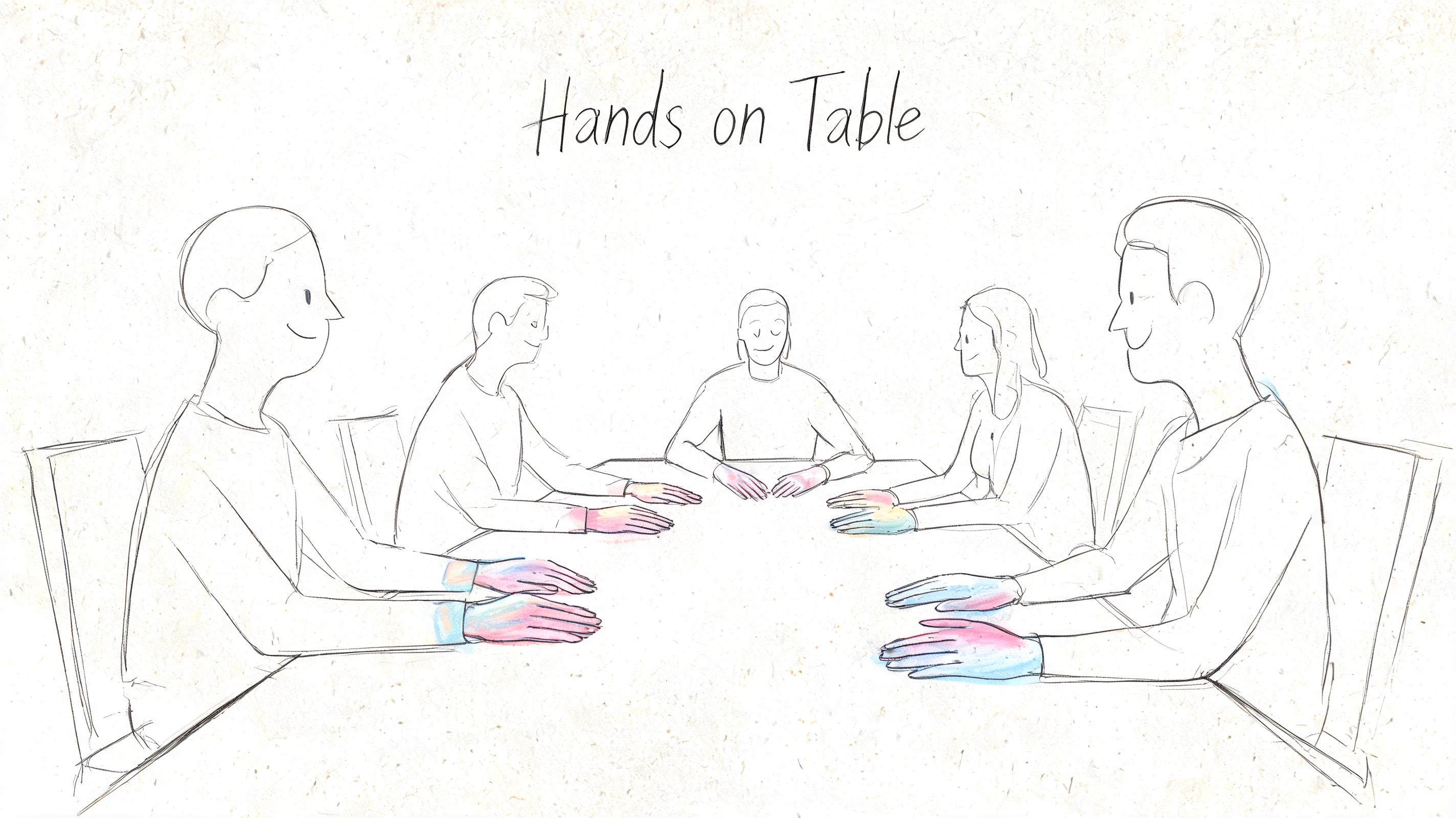
- Wait until everyone is served, or until the host says you can start
- Keep both hands visible at the table when possible, not hidden in your lap
- Sit in a composed way and stay engaged with the group
- Follow the host's rhythm instead of trying to guess a more "polite" version
This is one of the clearest culture gaps for Hong Kong people. In a high-context setting, careful observation and quiet adjustment often count as good manners. In Germany, good manners are more explicit. If you are unsure, ask directly. "Shall we start?" sounds normal and considerate.
If you are invited to someone's home, bring a small gift. Flowers, chocolates, or a bottle that suits the occasion are standard choices. Expensive gifts can feel awkward. The message should be simple: thank you for inviting me.
Home visits reward reliability
German hospitality can feel warm but structured. That structure helps the host, and guests are expected to support it.
Arrive on time. If you will be late, send a message early. Offer to remove your shoes if the situation suggests it, but do not assume every home has the same rule. If the host says, "Make yourself at home," do not interpret that phrase exactly. It usually means relax within the house rules, not behave as if you are in your own flat.
There is a trade-off here. Hong Kong guests often try to reduce burden by being modest, indirect, and low-maintenance. German hosts usually appreciate that intention, but they may prefer something clearer. Say thank you directly. Ask one practical question if needed. Then follow what has been set up.
Public behaviour is about protecting shared space
Many everyday rules in Germany make more sense once you stop reading them as personal preference. They are social coordination.
Noise is a good example. In Hong Kong, people are used to density, constant movement, and a certain amount of background sound. In Germany, especially in residential areas, people often treat quiet as a form of respect. The same goes for recycling, using shared facilities properly, and not blocking paths, doors, or bicycle lanes. The underlying message is simple. Other people should not have to absorb your avoidable disruption.
That is why these behaviours stand out quickly:
- Loud phone calls on public transport or in quiet residential streets
- Running appliances or doing DIY work late at night
- Ignoring local rubbish-sorting rules
- Treating Sunday like a normal shopping or chores day in a residential setting
Bridge strategies for Hong Kong learners
Do not try to memorise every micro-rule first. Use a practical filter.
Ask:
- Is there an established procedure here?
- Does my behaviour affect other people's comfort or schedule?
- Would a direct question solve the uncertainty faster than silent guessing?
That third point matters. In Hong Kong, asking too directly can sometimes feel blunt. In Germany, it often prevents misunderstanding. If you are visiting someone's home and unsure where to put your coat, whether to start eating, or whether a drink is self-service, ask once and follow the answer. People usually read that as respectful.
Respect in Germany often looks less like graceful guessing and more like clear, observable consideration.
Quick Guide to German Social Etiquette
| Do | Don't |
|---|---|
| Arrive on time for meals and home visits | Show up casually late without notice |
| Bring a small host gift when invited to a home | Arrive empty-handed for a first invitation |
| Wait for the group's cue before starting to eat | Begin immediately without checking the host |
| Keep noise levels moderate in residential areas | Assume late-night noise is acceptable |
| Sort rubbish carefully according to local rules | Treat recycling as optional |
| Respect Sunday and evening quiet expectations | Use shared spaces as if no one else is affected |
What works best for newcomers
The fastest way to adapt is to stop asking, "How can I seem polite?" and start asking, "How can I make things clear and easy for other people?"
That mindset travels well across dinners, neighbourhoods, and home visits.
Are There Different Rules Across Germany
Yes. One of the most common mistakes is talking about German culture as if Hamburg, Berlin, and Munich all feel the same. They don't.
That matters if you're interviewing for a role, preparing for university, or planning to study abroad in Germany from Hong Kong. Regional awareness helps you avoid two problems at once. You won't stereotype the whole country, and you won't walk into a local setting with the wrong tone.
North and south can feel different
Regional differences in Germany are not cosmetic. They can affect the pace, tone, and social style of communication.
According to this analysis of German etiquette and regional differences, people in the Protestant north are often seen as more reserved and sober, while those in the Catholic south are often characterised as more talkative and gemütlich. The same source notes that differences between West and East can also be significant.
What that means in practice
If you're heading to northern Germany, a more restrained style may fit well. Keep your language clean, your promises realistic, and your tone calm.
If you're dealing with southern Germany, you may encounter a little more warmth or sociability around the edges. That still doesn't mean you should become informal too quickly. It just means the interaction may feel less austere.
A few examples:
- Hamburg or the north: concise, lower-drama interaction often lands well
- Bavaria or the south: local warmth may appear sooner, but formality still matters
- Berlin: directness can feel especially strong
- East-West differences: attitudes shaped by different historical experiences can influence expectations
How Hong Kong learners should adapt
The safest rule is simple. Start slightly more formal and observant than you think you need to be.
Then adjust based on what people around you do:
- Watch turn-taking
- Notice how quickly people move to first names
- Listen for how much personal chat is normal
- Match the local tempo without imitating too hard
You don't need to perform a regional stereotype. You need to avoid assuming one German template fits every city.
Practical Tips for Parents and Students in Hong Kong
For students in Hong Kong, cultural understanding isn't an extra. It changes how well they perform in class, interviews, oral exams, and future university settings.
Parents often invest heavily in vocabulary, grammar, and exam technique. That's sensible. But if a student can write well and still hesitates to ask direct questions, challenge an argument, or participate independently, that student may struggle in a German academic environment.
What German learning culture expects
German classrooms and universities often reward visible thinking. Students are expected to engage, not just absorb.
That can feel unfamiliar if a learner has been trained to equate respect with silence. In German-speaking education, respectful participation often looks more active:
- Ask focused questions
- State disagreement with reasons
- Prepare before class discussion
- Work independently without constant prompting
For IB, IGCSE, and Goethe-Zertifikat learners in HK, this matters in oral components and written argumentation. A student who can defend a position clearly often sounds more competent than a student who knows similar vocabulary but avoids direct expression.
What parents can do at home
Parents don't need to become German teachers. They can support the right habits.
Try these:
- Ask for reasons, not just answers: "Why do you think that?"
- Encourage concise explanation: one clear point first, details after
- Normalise correction: treat feedback as improvement, not embarrassment
- Build independence: let the student prepare, present, and revise with ownership
A student who can handle correction calmly often adapts faster than a student who only knows more words.
Planning ahead for study abroad
Families preparing to study abroad in Germany should also think beyond admission. Daily adaptation costs time and energy.
Practical planning helps. So does saving money where you can on the travel side. For example, some families like reading real examples of travel strategy before a relocation or university visit, and Terry O's $4000 flight savings offers one such case-focused resource.
The main point isn't to copy someone else's itinerary. It's to approach international planning with the same discipline you'll need in Germany itself.
What students should practise now
A strong preparation routine in Hong Kong should include:
- Speaking in complete, direct answers
- Asking one precise follow-up question
- Summarising a viewpoint without over-softening
- Accepting correction and improving the next attempt
Those habits support exams, interviews, and future integration far better than memorisation alone.
Ready to Master German Language and Culture
Understanding etiquette gives you a head start. Real confidence comes when language and cultural instinct start working together.
For learners in Hong Kong, that usually means training with people who can explain not only what Germans say, but why they say it that way. That difference matters in business communication, exam speaking tasks, university interviews, and everyday social interaction.
A good self-study routine helps. If you want a simple tool for review between lessons, this article on mastering German flashcards is a practical resource for building active recall without making your study routine too complicated.
You should also learn core vocabulary in a way that supports real interaction, not isolated memorisation. A useful starting point is this guide to German for beginners with 50 essential words to know.
For serious learners, the best progress usually comes from three things working together:
- Native input: so you hear authentic phrasing and tone
- Structured progression: so you don't guess what to learn next
- Cultural coaching: so your German works in real life, not only on paper
That is especially important for adults changing careers, parents planning long-term education options, and teenagers aiming for Goethe-Zertifikat, TestDaF, IGCSE, or IB success in Hong Kong.
German doesn't become easier because you memorise more rules. It becomes easier when the rules start to feel logical.
If you're ready to build practical German for real life in HK, German Cultural Association Hong Kong(GCA) offers native-led teaching, structured courses, and focused preparation for Goethe-Zertifikat, TestDaF, IGCSE, A-level, and IB. You can book a trial class, speak with an advisor, or check the latest course schedule to find the right next step.

Joining a German Course Mid-Term: September Intake Guide for Hong Kong 2026/27
Preschool German Classes 2026/27 (Ages 3-6): Small-Group Intake & Trial Lessons


