.png)
.png)

BLOG

香港德國文化協會
The German Cultural Association
What Language Is Spoken in Germany? Official Language For
The official language of Germany is Standard German (Hochdeutsch), and it's the language used in all formal settings like government, schools, and business. For learners in Hong Kong, that's the answer that matters, because it tells you exactly what to study for university, visas, work, and travel.
If you're in HK and trying to decide whether German is worth the effort, the key issue isn't just the language name. It's whether you're learning the version that is effective in Germany, not a tourist-level mix or a regional dialect that won't help you in an application, an interview, or a classroom.
Table of Contents
- Planning Your Future in Germany Starts Here
- What Standard German means in daily life
- Why this matters for exams and study plans
Planning Your Future in Germany Starts Here
A lot of Hong Kong families ask the same question when a Germany plan becomes serious. A parent is looking at university options for a child, a professional is considering a role in Berlin, or a student is comparing German with other European languages for overseas study.
The mistake I see most often is starting with the wrong question. People ask, “Do people in Germany speak English?” when they should be asking, “What language do I need for the path I want?”
For that answer, you need to understand What Language Is Spoken in Germany? Official Language in practical terms, not just as a trivia fact. If your goal is study abroad in Germany or a career move from Hong Kong, the language choice affects everything from admissions to daily administration.
Practical rule: If the goal is a visa, a university place, or a job, learn the language used by institutions, not the one used by tourists.
Germany's language environment is more structured than many people expect. If you want a broader context on mobility, residence, and life planning, World Property Investor's Germany insights is a useful starting point for understanding why language and long-term settlement often go together.
For Hong Kong readers, the takeaway is simple. Don't treat German as a “nice-to-have” if Germany is a serious consideration. Treat it as part of the plan from day one.
What Is the Official Language of Germany
Standard German, or Hochdeutsch, is the official language used across Germany for government, education, exams, and business. Germany's constitution doesn't formally name an official language, but German is the practical national standard and the language required in key legal and public domains as noted in a 2023 legal analysis.
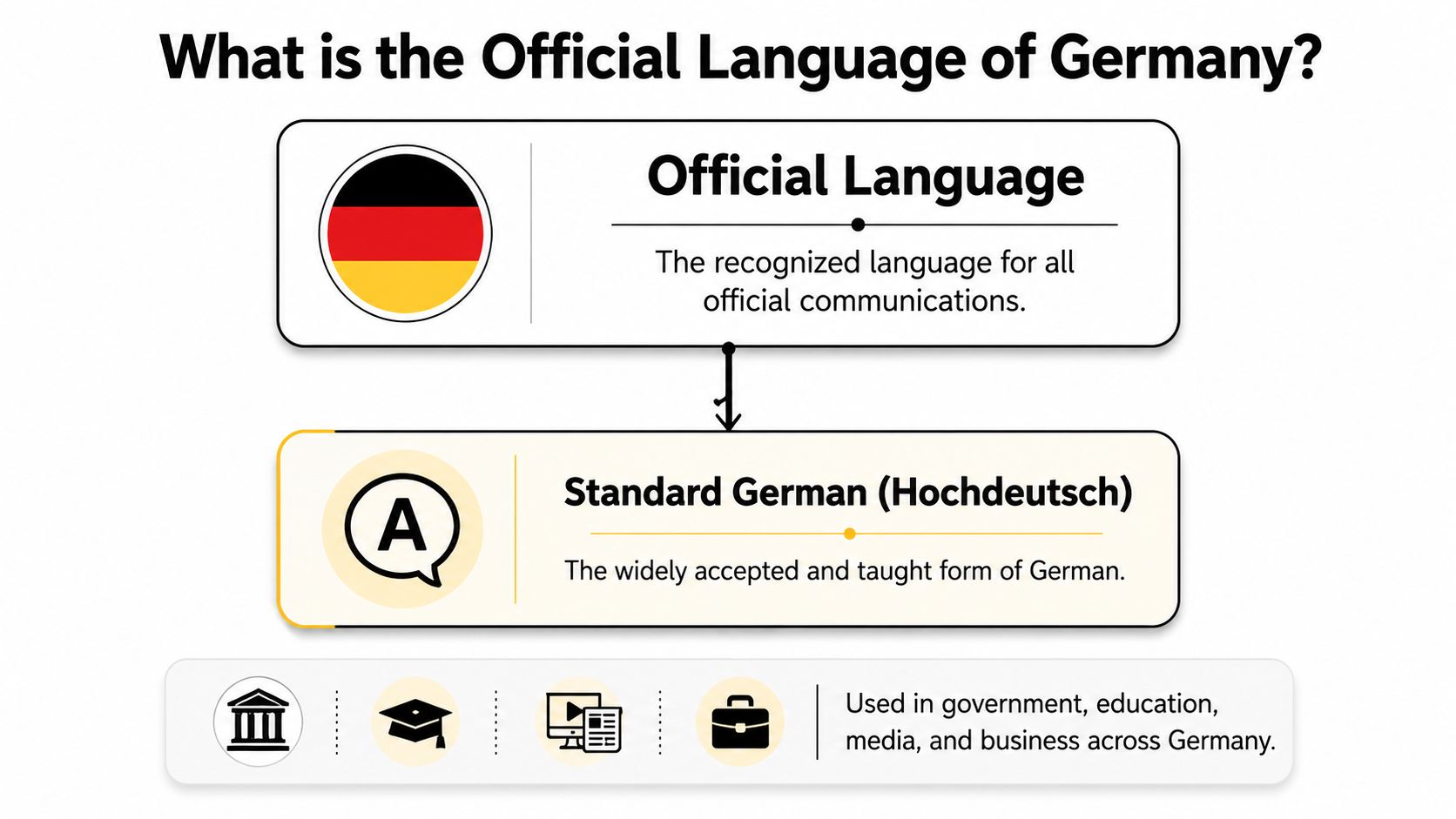
For a Hong Kong learner, that means one thing. Hochdeutsch is the version you need for university admissions, visa paperwork, and public-sector communication. The standard form is the one embedded in official documents and institutional testing, and that's why it should be your focus if you're serious about results BBC Germany language overview.
What Standard German means in daily life
In practice, Standard German is the register used in classrooms, offices, media, and formal correspondence. It's the version you'll see in application forms, hear in most national broadcasting, and use in academic writing.
That's why a learner in Hong Kong should not start with regional speech forms. If you want to work, study, or settle in Germany, the standard language gives you the widest access to institutions and the least risk of miscommunication.
The point is not that dialects don't matter. The point is that Standard German comes first because it is the shared language of formal life. Even if you later pick up regional speech, the standard remains your base.
Why this matters for exams and study plans
If you're preparing for German university entry, immigration, or professional mobility, the language target is clear. Build your learning around Standard German from the beginning, then add listening exposure to real-world accents later.
For Hong Kong families comparing study paths, this distinction is important. A child or teen who learns the standard register early will find it much easier to move into formal exams and academic German later. For a useful overview of where German is spoken beyond Germany, see this guide on German-speaking countries.
Understanding Standard German vs Regional Dialects
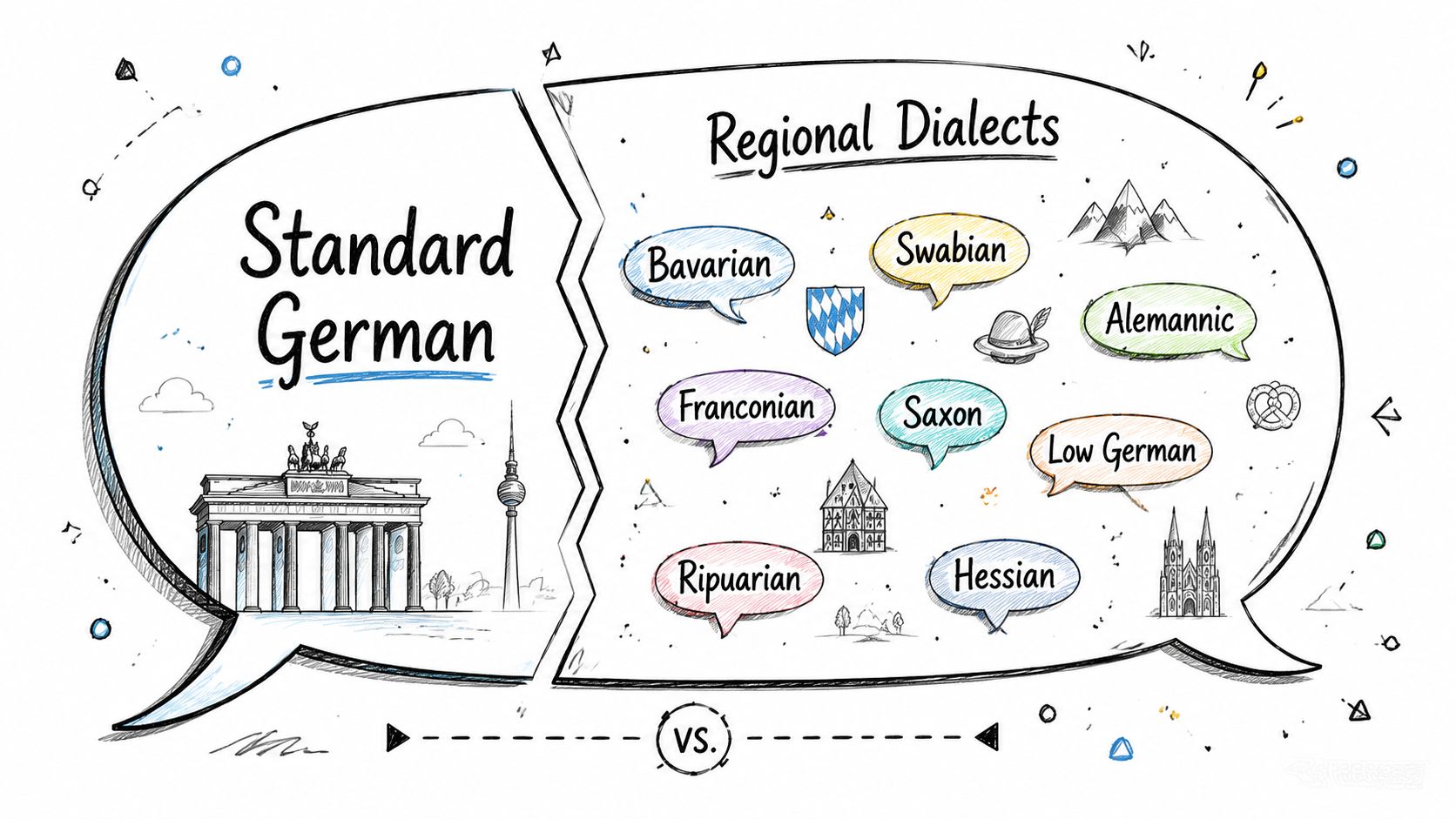
German is not spoken in one uniform way. Standard German exists alongside strong regional dialects, and the difference can be obvious once you hear everyday speech in different parts of the country. Bavarian, Swabian, and Low German are all part of normal life, especially outside classrooms, offices, and formal broadcasts.
For Hong Kong readers, the closest comparison is Putonghua and Cantonese. Standard German is the shared formal language for school, government, and national communication. Dialects carry local identity and colour, but they are not the form you should build your first stage of learning around.
Why dialects matter, but not for your first step
Germany does recognise minority languages in specific regions, including Danish, Frisian, Sorbian, and Romani. It also has a strong internal mix of regional speech forms, as shown in this comparison of German dialects and Hochdeutsch and in general references on Languages of Germany. That tells you something straightforward. German is the common national centre, while regional variation remains part of everyday speech.
For a learner in Hong Kong, the practical takeaway is clear. Dialects can help you understand local culture, but they will not replace Standard German in official writing, exams, or most professional settings. If your goal is the Goethe-Zertifikat, university study, or a job in Germany, starting with dialects puts you on the wrong track.
Direct advice: Learn the standard form first. Dialects can wait until you already function confidently in formal German.
A structured course should train you to produce correct Standard German in both speech and writing, not just memorise useful phrases. If you want measurable progress, that matters far more than trying to sound local too early.
For Hong Kong students building German into a wider language portfolio, that discipline also supports stronger exam performance. The learners who do best are usually the ones who master the standard form before chasing shortcuts.
Recognised Minority and Immigrant Languages
Germany is multilingual in a limited but real way. Minority languages such as Danish, Frisian, Sorbian, and Romani have protected status in their respective regions, and that matters because it shows the country is not linguistically flat.
At the same time, German remains the language that holds the system together. The official and institutional centre is still German, so students, professionals, and families planning a move should treat it as the default language of public life.
What you'll actually encounter
In large cities, you will also hear languages brought by immigrant communities. That is part of modern urban life in Germany, especially in places with international universities, global employers, and dense housing markets. Multilingual conversations in private settings are normal.
Still, the practical rule does not change. Administrative forms, most formal communication, and public procedures are still anchored in German. If you want to settle, study, or work smoothly, you need the standard language first.
German also carries weight far beyond Germany itself. It is an official language in Germany, Austria, Switzerland, Liechtenstein, Luxembourg, and Belgium, and it is used as an internal working language of the European Union alongside English and French Deutschland.de.
That wider footprint is exactly why German deserves serious attention in Hong Kong. It is not just a country language. It is a regional and institutional language with real strategic value for Europe-focused study and work.
How Widely Is English Spoken in Germany
Yes, English is widely understood in tourist areas, international companies, and among younger educated people in major cities. No, that doesn't make German optional if you want full independence in Germany.
The difference shows up quickly in real life. At a Bürgeramt, in a rental negotiation, or in routine administrative tasks, German becomes necessary fast. English can help you survive the first week, but it won't carry you through the systems that shape daily life.
Don't confuse convenience with capability
A lot of Hong Kong professionals assume that because Germany is internationally connected, English will be enough. That assumption breaks down as soon as the task becomes legal, educational, or bureaucratic.
If you want to function outside an expat bubble, German is the language that gives you control. It helps with appointments, documents, workplace integration, and the small but important details that decide whether life abroad feels manageable or frustrating.
For families and students, the scale of German is another reason to take it seriously. Global estimates put total German speakers at roughly 130 million or more, with about 90–95 million native speakers and another 10–25 million using it as a second language EBSCO German language overview. That makes German a strategic choice for exams, university pathways, and careers.
If you're still comparing options, the question isn't whether English will help. It will. The fundamental question is whether you want basic convenience or genuine integration. For Germany, German wins every time.
What This Means for Students and Professionals in Hong Kong
For Hong Kong readers, the language choice should follow the goal. If Germany is part of your education plan, work plan, or family plan, then Standard German should be the centre of the roadmap, not a side project.
For study planning, German universities and formal pathways expect the language of instruction and administration to be handled properly. That means preparing through a structured route, especially if you're working towards exam-based entry. For professional mobility, German also opens doors in German-linked firms in Hong Kong and in Europe, where English alone can keep you stuck in limited roles.
Practical implications by audience
- For IB, DSE, and younger students: Focus on Standard German if the goal is future study abroad in Germany. A structured exam path is more useful than casual classroom exposure.
- For working professionals: German supports advancement into roles with more responsibility, especially where clients, managers, or headquarters operate in German-speaking markets.
- For parents: Early German study gives children a stronger platform for future university options and long-term international flexibility.
- For travellers: Even basic German improves confidence, makes daily interactions easier, and turns a standard trip into a more authentic experience.
If affordability is a concern, many Hong Kong families also look at whether CEF funding can support part of the learning journey. That makes proper planning even more important, because money should go into the right language level and the right exam track.
For a deeper practical view of language requirements and work mobility, this Hong Kong guide on working in Germany is worth reading before you commit time and budget.
Ready to Master German in Hong Kong
If you're serious about German, don't waste months on scattered apps and random phrase lists. You need a structured plan, native guidance, and exam-focused teaching that matches your real goal.
The German Cultural Association Hong Kong offers that kind of learning environment. Its courses are built around native-speaking teachers, structured curriculum, and preparation for exams such as Goethe-Zertifikat, TestDaF, and school pathways like IGCSE and IB. If you prefer to reinforce speaking practice between classes, this guide on how voice notes help learn languages is a smart supplement to regular study.

What serious learners should look for
A good German programme in Hong Kong should give you more than vocabulary. It should train you to use the language in exams, interviews, and real-world communication, with enough structure that you can measure progress clearly.
If you're balancing work, school, or family commitments, flexibility matters too. Small-group learning and online options make it easier to stay consistent, which is what moves you forward in a European language.
The answer to What Language Is Spoken in Germany? Official Language is simple, but the action you take after that matters much more. If Germany is on your roadmap, don't delay the first lesson.
A CTA for German Cultural Association Hong Kong(GCA). Book a trial class, check the latest course schedule, or speak with an advisor today so you can choose the right German programme for study, work, or travel in Germany.

Germany vs Austria vs Switzerland: Where Should Hongkongers Move?

Housing and Banking Explained for Hong Kong


