


BLOG

香港德國文化協會
The German Cultural Association
10 German News Sites and Apps (A1-B1) for HK Learners
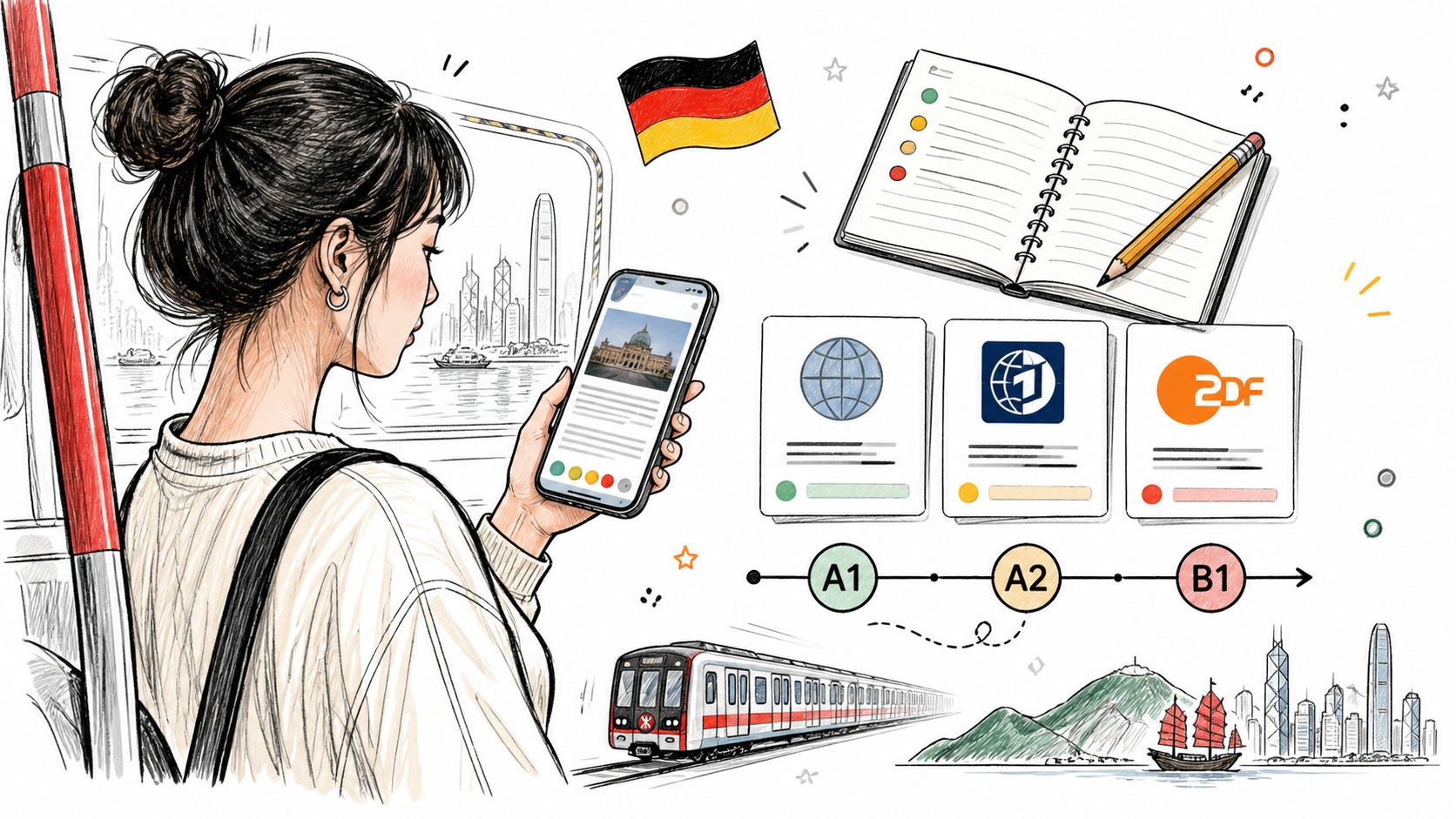
You're on the Tsuen Wan line at 8.15am, phone in one hand, Goethe-Zertifikat B1 exam four months away. You open a German headline, hit three unknown words in the first line, and close it. That's not a motivation problem. It's a level problem.
The right German news sites and apps (A1-B1) fix that mismatch. They give you short, graded input you can finish between Admiralty and Tsim Sha Tsui, instead of a full broadsheet article you'll abandon. Used daily, they build the news vocabulary that B1 reading and listening papers keep testing.
Hong Kong routines suit this approach. Among people aged 10 and above who used the Internet in 2025, 99.8% used a smartphone to go online, according to Hong Kong Census and Statistics Department data. Your phone is already your classroom, so these news sites and apps (A1-B1) are matched below to MTR commutes, lunch breaks, weekly homework, and exam revision.
I name the level for each source. Several popular options fail A1 and early A2 learners completely, and I'll say so directly.
Table of Contents
1. DW Learn German News
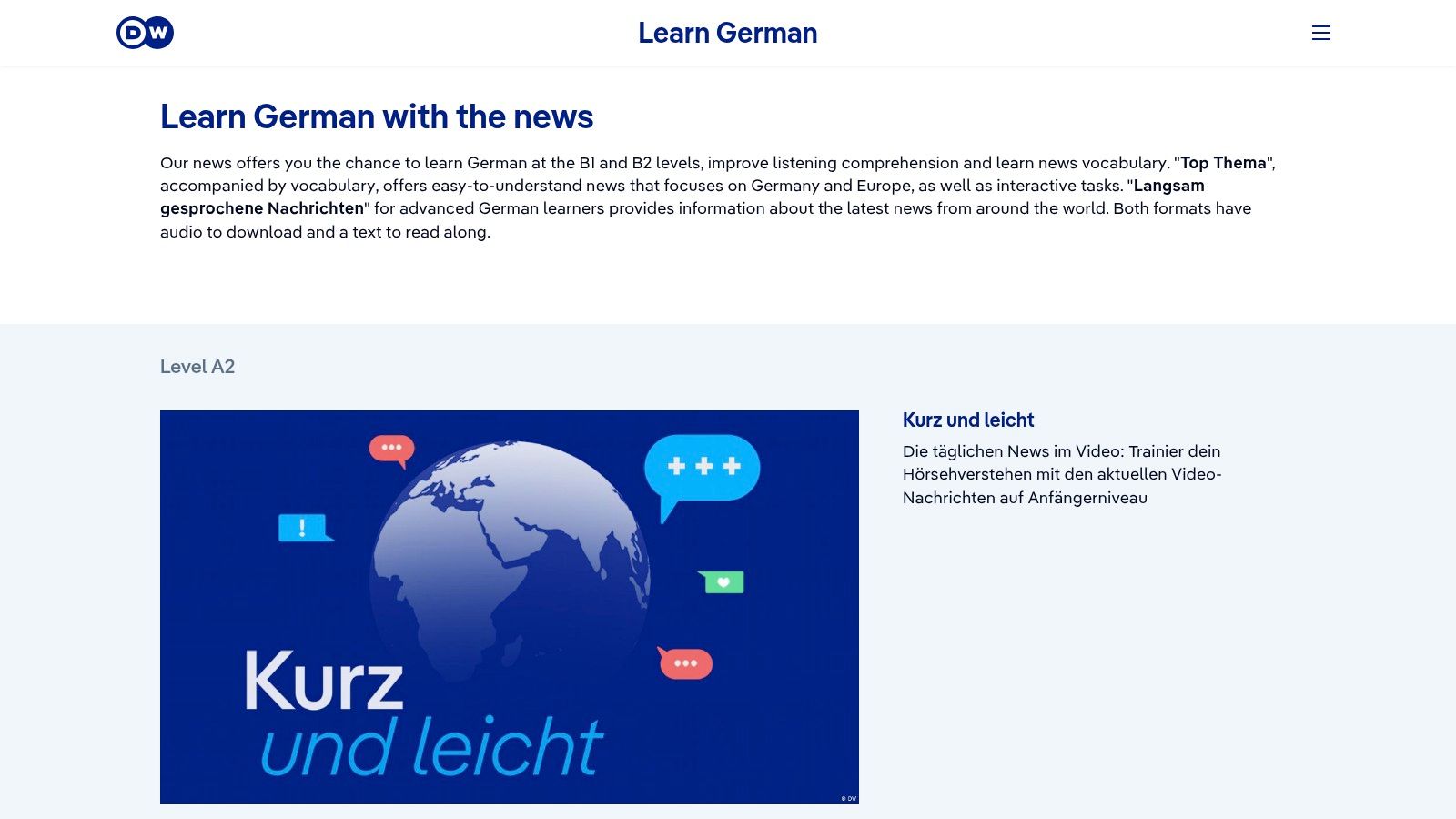
Start here if you want one free hub instead of ten bookmarks. DW Learn German with the News groups graded formats including Kurz und leicht and Top-Thema mit Vokabeln, with audio, video, transcripts, vocabulary notes, and comprehension exercises. Topics cover politics, culture, business, science, Germany, and Europe.
Best Hong Kong routine
Use it as weekly homework, not random scrolling. Pick one format on Sunday, work through two items midweek, and bring five new words to class. That structure pairs well with the planning approach in this six month self-study plan with free resources.
- Real level: A2 to B1. Dedicated A1 material is limited, so true beginners get frustrated fast.
- Strength: Reading, listening, and vocabulary in one place, with substantial material free online.
- Weakness: The range overwhelms new learners, and political topics bring heavy institutional vocabulary.
Don't browse everything. Choose one format for two weeks and finish items fully.
2. DW Top-Thema mit Vokabeln
This is my first recommendation for solid B1 learners in Hong Kong who need exam-relevant reading. Top-Thema mit Vokabeln on DW Learn German pairs a simplified current-affairs article with audio, vocabulary explanations, and comprehension tasks. You get a real topic without the full length of a mainstream newspaper piece.
Work it during a lunch break in Central or Kwun Tong. Read once for gist, listen while following the text, then write three sentences using the new vocabulary. That last step matters for Goethe-Zertifikat B1 writing, where you must react to a topic, not just recognise words.
Exam rule: If you can't summarise the article aloud in four German sentences, you read it too passively. Replay the audio and try again.
The trade-off is clear. It builds formal, news-related vocabulary well, but it's too difficult for A1, it isn't published daily, and economic topics often need a teacher to unpack background terms.
3. DW Kurz und leicht
Short video is where many Hong Kong learners already live. The Reuters Institute Digital News Report 2024 recorded YouTube reaching 46% of respondents for news in Hong Kong. Kurz und leicht fits that habit, but in graded German.
DW Kurz und leicht presents current topics in simpler German at roughly A2 level, with visual context that supports meaning. Replay one clip three times on an MTR ride. First watch for the story, then watch for verbs, then shadow two sentences.
- Why it works: Pictures carry meaning when vocabulary fails, so early A2 learners stay with it longer.
- Where it fails: A1 learners still need teacher support, and vocabulary practice is thinner than in a structured lesson.
- Best use: A bridge between textbook dialogues and authentic news, five to ten minutes daily.
Publication frequency can vary, so don't build your whole routine on it alone.
4. DW Langsam gesprochene Nachrichten
Slow speech does not make the German easy. DW Langsam gesprochene Nachrichten offers real news at reduced speed, with a full transcript and downloadable audio, Monday to Saturday. The material is around B2, making it a stretch target for strong B1 learners, not a daily resource for beginners.
How to use it without drowning
For a longer MTR commute, download an edition and work through just its first story. Listen once, read the transcript, mark compound nouns, then listen again. This read-listen-reread routine helps bridge the gap between study and conversation, because you can practise hearing word boundaries in vocabulary you already recognise on the page.
A1 and A2 learners should choose easier material: the vocabulary here is not simplified, so the speed adjustment alone will not make it accessible. Upper B1 learners preparing to study in Germany can use the audio for pronunciation and dictation practice. For early learners, it is better reserved for later exam progression than used as weekly homework.
5. Deutschlandfunk Nachrichtenleicht
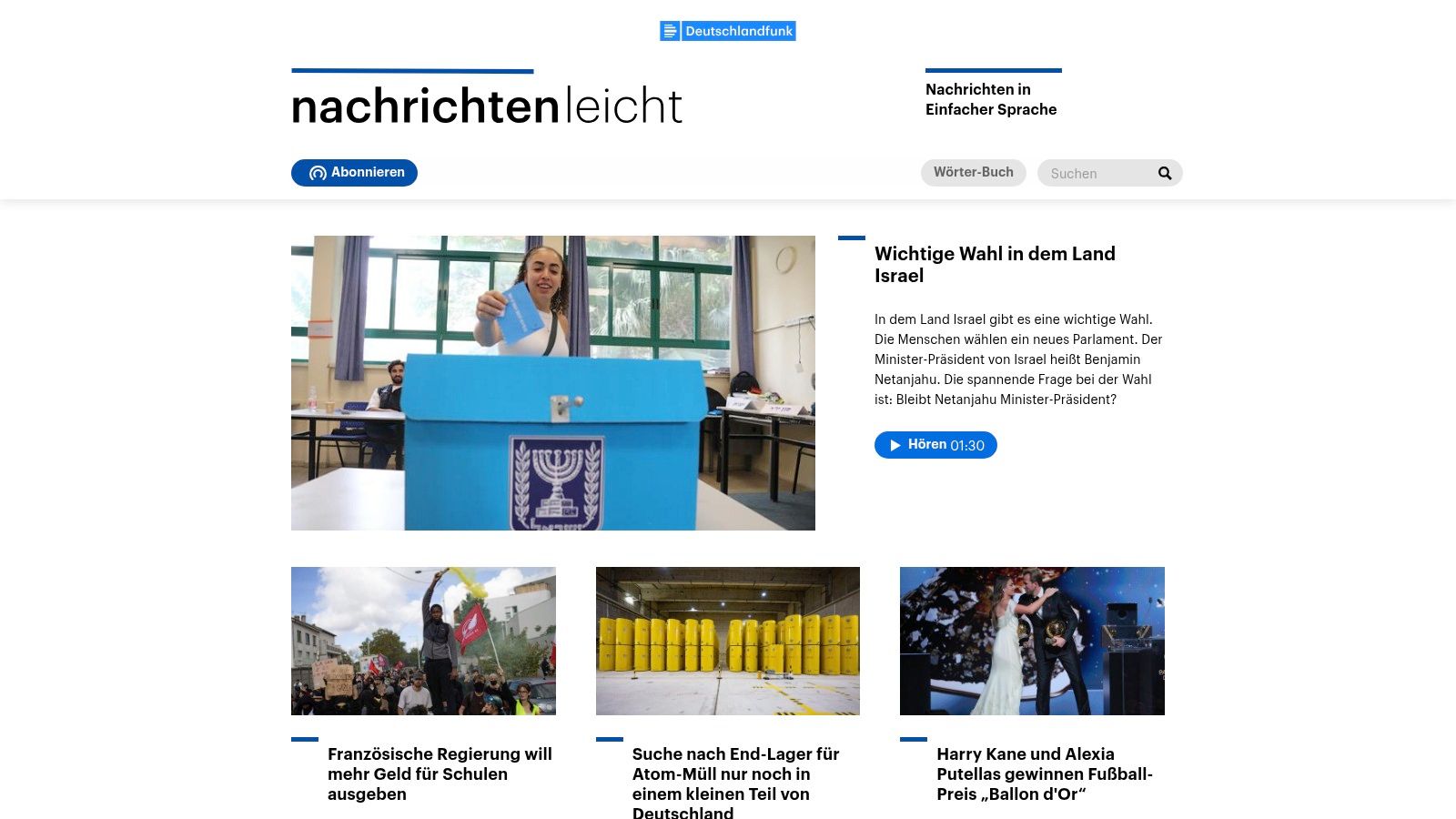
Plain language builds reading confidence through regular practice. Nachrichtenleicht from Deutschlandfunk covers German politics, society, and culture in short sentences and focused paragraphs, with audio for articles. It is the most approachable regular reading on this list for A2 to B1 learners. A1 and early A2 learners may still find unfamiliar vocabulary difficult, so read one short article at a time and use the audio to support comprehension.
Use a lunch break or weekly homework session to read an article, then check its date, source, and author. That habit helps you assess news while practising German in accessible language. If you're unsure of your level, use this guide to German CEFR levels for Hong Kong learners to choose texts that fit.
Coverage is mainly Germany-focused, and the site publishes a weekly digest rather than rolling daily updates. Its simplified wording supports reading, but offers less exposure to full journalistic vocabulary.
6. Deutschlandfunk
Don't start here. Deutschlandfunk is a major German public radio provider with national news, podcasts, interviews, and background reporting on politics, society, culture, and science. The quality is high, and that's exactly the problem for beginners.
Standard broadcasts are too difficult for A1 and A2. Speech is fast and specialist terminology arrives without support. Strong B1 learners can use one short report per week as guided listening with a teacher who preselects the segment and pre-teaches key terms.
Choose sources by purpose, not prestige. In the 2025 Hong Kong survey covered by CUHK's Centre for Communication and Public Opinion Survey, trust in general news declined slightly even though trust in many individual brands increased. A trusted brand still needs level-appropriate selection.
Use Deutschlandfunk to build formal discussion vocabulary for university or professional goals. Use its Nachrichtenleicht companion for everything else until you're securely B1.
7. Nachrichtenleicht Articles and Audio
Reading the same story you then hear is the highest-return habit for A2 learners. The article and audio pairing at Nachrichtenleicht connects spelling, pronunciation, and meaning in one short session. Clear sentence structure keeps the load manageable after a full workday in HK.
A homework routine that works
- Read first and underline verbs you recognise.
- Listen while reading and mark where word boundaries surprised you.
- Read aloud once at home, copying the audio rhythm.
Parents supporting teenagers in Hong Kong can set this as twice-weekly homework alongside DSE, IB, or IGCSE German preparation. It's short enough to survive exam season in May and June.
Short, finished items beat long, abandoned articles every time. Completion builds the habit that carries you to B1.
Limits stay real. Coverage is mostly Germany-centred, depth is less than mainstream news, and it isn't a complete A1 course.
8. DW Deutsch Aktuell
Once simple texts feel too easy, you need supported stretch material. DW Deutsch Aktuell offers learner-oriented news and background reports with scripts and vocabulary support across politics, culture, science, and business. It combines well with other DW courses and podcasts.
Use it for weekly exam revision in the final two months before a Goethe-Zertifikat date. Pick one report, list ten topic words, then write a short opinion paragraph using connectors like weil, trotzdem, and einerseits. That's direct training for B1 writing and speaking tasks.
- Strength: Broad subject range that prepares you for formal reading and listening on unfamiliar topics.
- Risk: Difficulty varies between items, and some sit above B1.
- Control: Check the stated level before you start, every single time.
I recommend it for learners moving beyond A2 who want Germany and Europe content without jumping straight to broadsheets. Early A2 learners should stay with Kurz und leicht first.
9. DW News Podcasts and Downloadable Audio
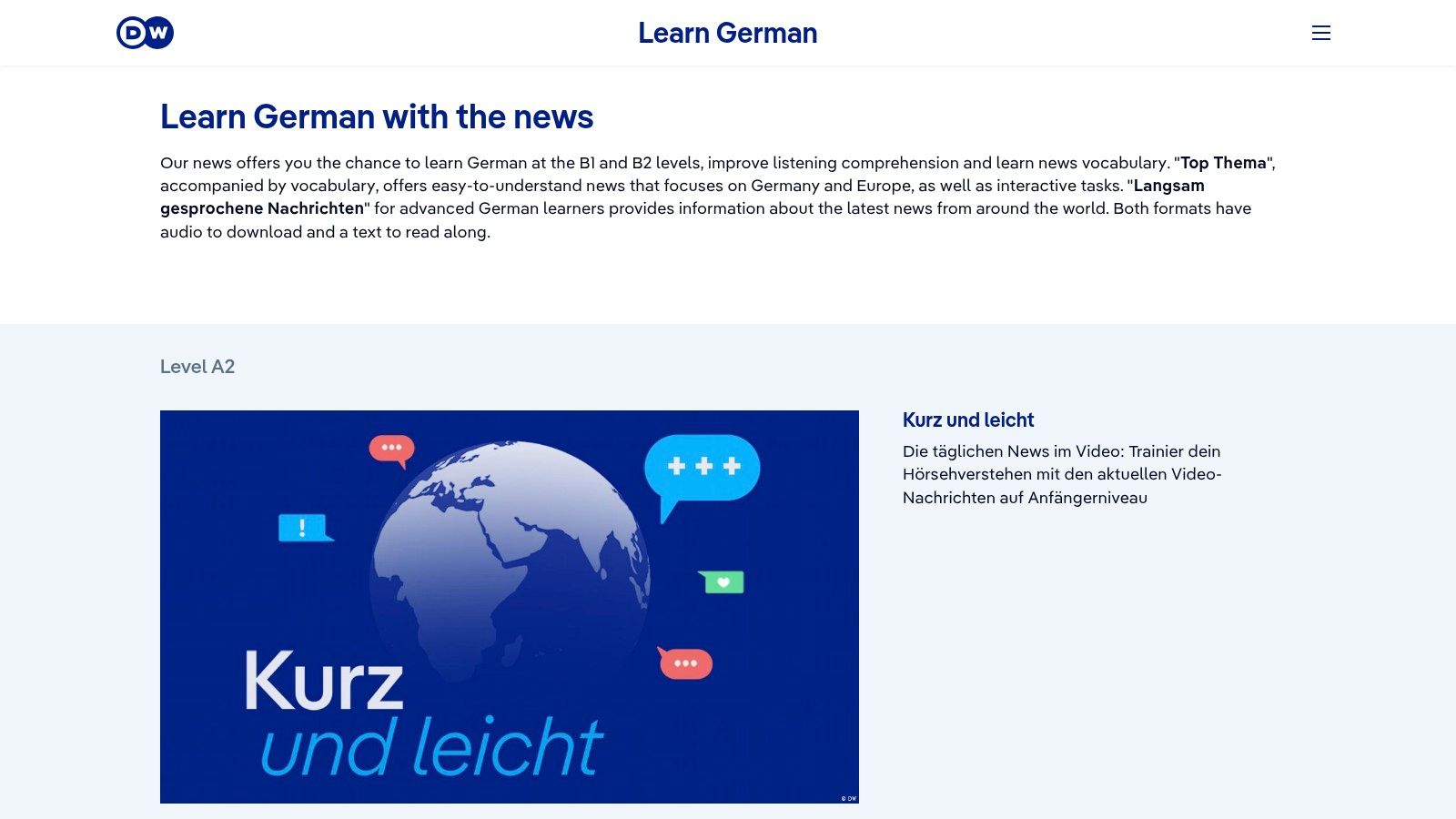
Offline audio solves the tunnel problem on the Island line. DW news learning formats with downloadable audio range from roughly A2 to B2, with written scripts for checking comprehension. Download before you leave home, then replay for shadowing and pronunciation work.
Hong Kong is built for this. The Reuters Institute Hong Kong country page found 87% of respondents consumed news online, compared with 65% who used television and 24% who relied on print. Your news habit is already digital, so redirect part of it into German.
For variety beyond news, pair downloads with the listening options in this roundup of German TV shows and podcasts for HK learners.
Audio-only study fails A1 learners because there's no visual support. Slower speech can also hide advanced vocabulary, and individual podcast feeds may change.
10. NDR Leichte Sprache
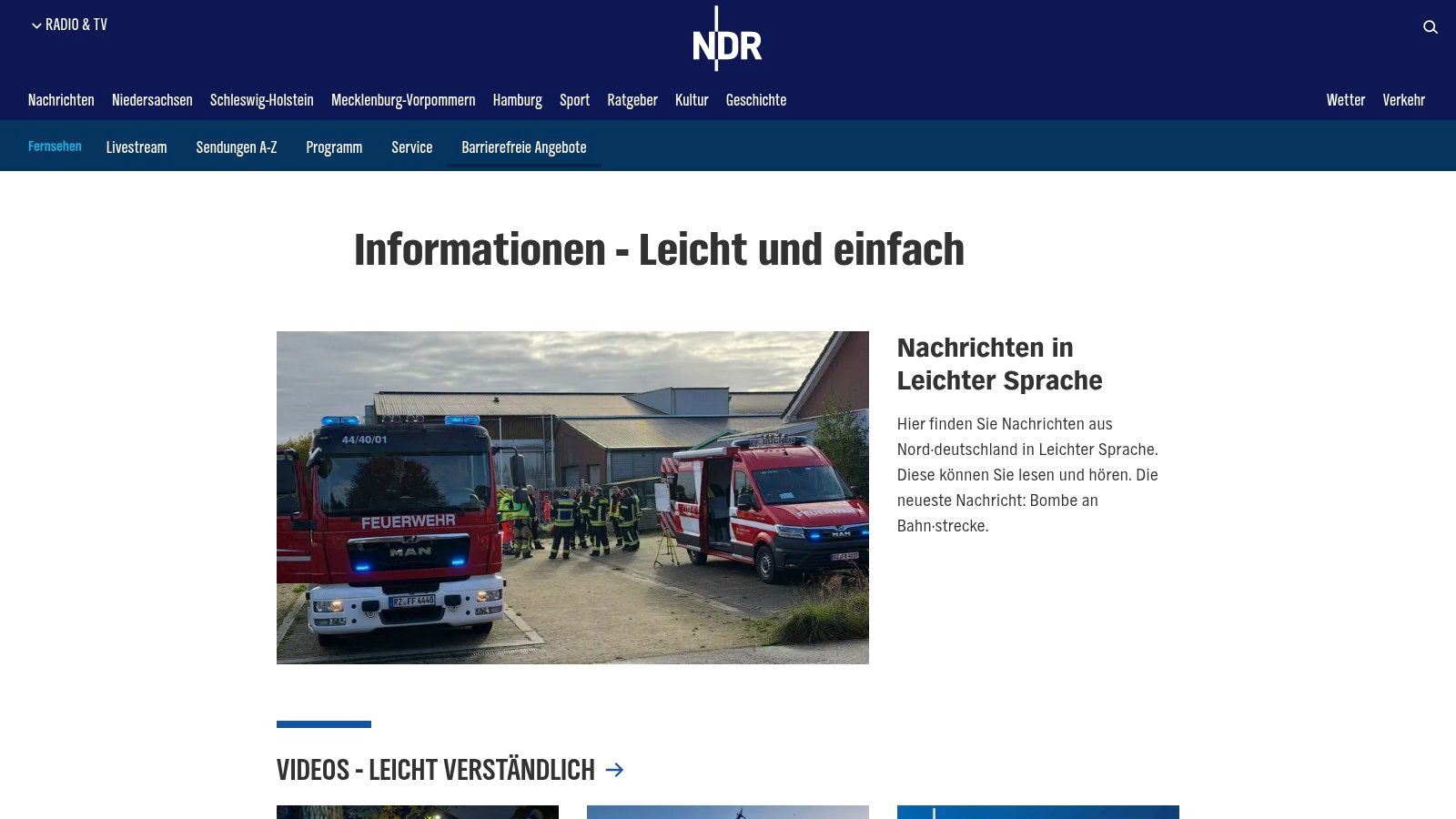
For a Hong Kong learner, NDR Leichte Sprache adds a different kind of reading practice: easy-language news and public-service information, with shorter, clearer wording than standard broadcast text. Some items on practical topics in German public life offer both text and audio. Read one during a lunch break, then listen to it later; the format supports reading and listening, though it is not organised as a German course.
A shared link can be a starting point, not a study plan. CUHK's Reuters Institute Digital News Report Hong Kong summary reports 51.9% of respondents accessed news through social platforms, compared with 45% using direct access. If a teacher or classmate shares an NDR item, open the original page and work through the full text rather than stopping at the feed preview.
Honest limitations
- No CEFR organisation: A1 learners cannot reliably judge difficulty without support.
- Accessibility first: Some items meet accessibility needs, not language-teaching goals.
- Variable updates: The amount of learner-friendly material changes, so use NDR as a supplement.
For A2 to B1 learners, it is free variety alongside DW and Nachrichtenleicht. At A1 and early A2, select short, familiar topics and get help with unfamiliar wording.
Level Fit, Format, and Cost at a Glance
| Item | Approx. CEFR Level | Main Format | Cost | Best For |
|---|---|---|---|---|
| DW Learn German – News | A2–B1 | Graded news with text, audio, video, and exercises | Substantial free online content | Practising multiple skills with current news |
| DW Top-Thema mit Vokabeln | B1 | Simplified news articles with audio and vocabulary support | Free online learning material | Reading practice and news vocabulary |
| DW Kurz und leicht | A2 | Short video news in simpler German | Free online learning material | Short, visual listening practice |
| DW Langsam gesprochene Nachrichten | B2; suitable for strong B1 learners | Slow-paced news audio with transcripts | Free online content | Building listening skills toward authentic news |
| Deutschlandfunk Nachrichtenleicht | A2–B1 | Simplified news articles with audio | Free online access | Reading approachable German news |
| Deutschlandfunk | Above A1–B1; selected content for strong B1 | Radio, podcasts, interviews, and reports | Free online access to news and audio | Advanced listening and formal news vocabulary |
| Nachrichtenleicht Articles and Audio | A2–B1 | Short plain-language reports with audio | Free online content | Connecting reading, pronunciation, and meaning |
| DW Deutsch Aktuell | B1 and above; some items sit above B1 | Learner-oriented news and background reports | Free DW learning content | Supported reading and listening across topics |
| DW News Podcasts and Downloadable Audio | A2–B2 | Downloadable news audio with written scripts | Free learning content | Flexible offline listening practice |
| NDR Leichte Sprache | A2–B1 (easy-language reading) | Easy-language information and news | Free online content | Supplementing practice with accessible public information |
For an MTR commute, short audio or a brief video is easier to fit in than a full report. A1 and early A2 learners may still find even simplified news demanding, so use the text and vocabulary support where available. At lunch, a short article can suit focused reading; save longer reports and podcasts for a quieter session.
For weekly homework, pair a text with its audio to connect meaning and pronunciation. DW Top-Thema suits B1 reading practice, while Nachrichtenleicht and NDR Leichte Sprache offer more approachable material around A2–B1. For exam revision, DW Langsam gesprochene Nachrichten can stretch strong B1 listening, but its B2 level makes it a poor starting point for A1 or early A2. Deutschlandfunk is a further step toward formal, authentic news language, not a beginner source.
Ready to Start Learning? Turn Headlines Into Progress
Choose one source from these German news sites and apps (A1-B1) and use it regularly. Record your reading time and new vocabulary, even during a short MTR ride. At the end of the week, try summarising one report aloud or in writing. This shows whether you can use the material, not just recognise words.
For A2 practice, alternate Kurz und leicht with Nachrichtenleicht articles and audio. At B1, add Top-Thema as weekly reading, then use Langsam gesprochene Nachrichten occasionally to stretch your listening. Keep the routine tied to a practical slot: a short audio on the commute, or an article for weekly homework.
How Long Does It Take to Move From A2 to B1
There is no fixed shortcut. Regular news practice builds vocabulary, while moving toward B1 also calls for speaking practice, writing correction, and exam preparation. Headlines alone will not cover those skills, especially if your goal is study, work, or an exam.
Course cost and attendance rules matter when choosing a class. Applicants aged 18 or above may claim up to a lifetime maximum of HK$25,000 through Hong Kong's Continuing Education Fund for eligible courses, according to the Working Family and Student Financial Assistance Agency CEF FAQ. Check whether a course is eligible before paying.
The CEF overview from the Working Family and Student Financial Assistance Agency says applicants generally need to attend at least 70% of contactable hours and achieve an overall assessment mark of at least 50%. For working professionals, flexible scheduling and online rescheduling can make it easier to keep up with attendance requirements.
At the German Cultural Association of Hong Kong, native German-speaking teachers lead small groups of up to six students. The curriculum includes preparation for Goethe-Zertifikat exams, as well as IGCSE, IB, and A-level German. Small-group lessons can add speaking and writing practice alongside news reading; they are a separate commitment from self-study, so consider how each fits your weekly routine.
Visit German Cultural Association Hong Kong(GCA) to check the current course schedule and see which small-group classes near Tsim Sha Tsui or Causeway Bay suit your level. Its flexible learning options include in-person classes and online sessions, with online rescheduling available.
Turn a regular news habit into steady practice by pairing it with classes that fit your schedule. Choose a suitable source, keep track of vocabulary, and use lessons to practise the skills headlines cannot provide on their own.
10 German News Sites and Apps (A1-B1) for HK Learners
German Reading for Beginners: Graded Readers by CEFR Level


