.png)
.png)

BLOG

香港德國文化協會
The German Cultural Association
German Language Program HK: Short Courses vs Long Courses
A lot of Hong Kong learners get stuck at the same point. They know why they want German, but they're not sure how to study it. A parent wants a reliable pathway for IB or IGCSE later on. A university student wants Germany on the table. A working professional wants practical speaking skills without wasting evenings on the wrong format.
That's where the short-course versus long-course decision matters. If you pick the wrong structure, you usually lose one of three things: time, money, or momentum.
For most serious learners, the answer is simple. Short courses are useful for exposure. Long courses are better for real progression. But that doesn't mean everyone should jump into a long programme immediately. Your goal should decide the path.
Choosing Your Path to German Fluency in Hong Kong
A common HK scenario looks like this. You start with enthusiasm, search for a German Language Program HK: Short Courses vs Long Courses, compare a few course pages, and then hesitate. The short course looks cheaper and easier to fit around work. The long course looks more serious, but also more demanding.
That hesitation is reasonable. German isn't a language you master through occasional contact. It rewards structure, repetition, and guided correction. At the same time, not every learner in Hong Kong needs the same level of commitment on day one.
Here's the practical split.
- Parents usually need a pathway that supports later school performance, exam readiness, and long-term literacy.
- University applicants need staged progression, not random exposure.
- Professionals often need a fast start, but they also need enough continuity to avoid forgetting everything after one workshop.
- Adult hobby learners may only need a lower-commitment entry point before deciding whether to continue.
A short course works well when your goal is narrow. You want to prepare for travel, test your interest, or get basic familiarity before a busier term begins.
A long course works when the goal is consequential. If German affects your exam results, university options, or professional future, a casual format usually won't be enough.
Practical rule: Choose a short course if you need a preview. Choose a long course if you need a result.
The mistake I see most often is this. Learners choose based on convenience, then expect outcomes that require structure. That's backwards. First decide the outcome. Then choose the course model that can realistically get you there.
A good decision in Hong Kong isn't about picking the cheapest or fastest option. It's about matching the course pathway to the life you're living, and the standard you need to reach.
| Factor | Short courses | Long courses |
|---|---|---|
| Best for | Travel, taster learning, quick exposure | Exams, university plans, steady fluency |
| Time commitment | Lower upfront commitment | Higher ongoing commitment |
| Learning style | Concentrated, fast-paced | Structured, cumulative |
| Cost pattern | Smaller initial payment | Larger investment across a full pathway |
| Progress reliability | Good for starting | Better for sustained advancement |
| Fit for HK learners | Busy adults testing interest | Serious learners with defined goals |
What Are My German Course Options in Hong Kong
A Hong Kong learner usually reaches this decision at a pressure point. You have a target date, a budget, and a reason that matters. Maybe you need A1 before a university application, maybe you want to restart German after years away, or maybe your company has opened a role with DACH clients. Your course choice should follow that pathway, not just your free evenings.

Short courses in Hong Kong
A short German course in HK is usually a compact block with a narrow purpose. It may run for a few weeks, cover one practical theme, or give beginners a low-commitment start.
That format works for specific learner profiles:
- Traveller who wants useful phrases and listening practice before departure
- Busy professional who wants to test interest before committing to a longer pathway
- Returning learner who needs a refresher before rejoining a higher level
- Student on school break who can handle a concentrated burst of study
Short courses solve one common Hong Kong problem well. They let you start without reorganising your whole schedule or paying for a full progression route upfront.
But be strict about expectations. A short course is good for exposure, restart momentum, and practical basics. It is a weak choice if you expect stable progress toward an exam, university entry standard, or long-term working proficiency.
Long courses in Hong Kong
A long German course is built around progression. You move through grammar, vocabulary, listening, speaking, reading, and writing in a planned sequence, with enough repetition for the language to stick.
This format fits learners with consequences attached to German:
- Exam candidates who need level-by-level preparation and regular assessment
- University applicants who need recognised progress over time
- Professionals who want German to become usable in meetings, email, and client communication
- Serious beginners who already know they want to continue past survival phrases
That sequence matters more in German than many beginners expect. Cases, verb placement, sentence structure, and written accuracy build on each other. If the foundation is rushed, the problem shows up later in speaking confidence and exam performance.
Hong Kong also has a third option that confuses learners at first. Some short programmes are short only in calendar length, but intense in weekly hours. Overseas summer study is the obvious example. That is not the same as a casual local evening course. One is immersion. The other is convenience.
For a side-by-side view of formats, pace, and likely outcomes, see this Hong Kong German course comparison guide.
What these options actually mean for different HK learners
The core distinction is purpose.
If you are an exam candidate, choose a long course with a clear level pathway. You need continuity, correction, and enough time to fix weak grammar before test day.
If you are a university applicant, choose a long course or a stacked pathway of linked levels. Admissions-related goals reward consistency, not scattered short bursts.
If you are a professional, decide based on use case. Choose a short course for travel, relocation preparation, or a trial start. Choose a long course if German will affect your promotion prospects, client work, or regional mobility.
If you want to try the language without overcommitting, start short. If the outcome matters, start structured.
Comparing Short and Long Courses A Detailed Breakdown
The easiest way to compare course types is to stop thinking in labels and start thinking in consequences. What does each format do well, and what does it make harder?

Learning pace and intensity
Short courses move fast. That speed can be motivating. You feel progress quickly, especially at beginner level where even a little German feels exciting and useful.
But speed creates pressure. If you miss a class, get busy at work, or don't revise properly, gaps appear fast.
Long courses are slower by design. That's a strength, not a weakness. Most learners need repeated exposure before grammar and sentence patterns become automatic.
Choose short if you thrive under pressure and can revise consistently. Choose long if you want learning to stick.
A short course can light the fire. A long course keeps it burning.
Depth of curriculum
Short courses usually prioritise immediate function. You learn greetings, basic sentence building, travel phrases, simple questions, and common vocabulary. That's useful. It's just not complete.
Long courses have room for the less glamorous work that matters later. They cover correction, controlled writing, listening practice at increasing difficulty, and grammar recycling.
That matters because German punishes weak foundations. Learners who rush through basics often speak with confidence for a while, then hit a wall when the language becomes less forgiving.
Retention and habit formation
Many Hong Kong adults underestimate the problem at this point. They assume a compact course is efficient because it finishes quickly. Sometimes it is. Sometimes it finishes before retention begins.
Long courses support memory better because they create rhythm. Weekly exposure, homework, correction, and progression checkpoints help learners retain what they've studied.
A learner who studies intensely for a short period may sound stronger in the moment. A learner who studies steadily for longer is often more reliable months later.
Flexibility versus commitment
Short courses win on flexibility. If your schedule is unstable, or you're still deciding whether German is worth pursuing, they're easier to start.
Long courses require discipline. You need to protect class time, revise regularly, and think in terms of months rather than weeks.
For many professionals in Hong Kong, the best answer isn't pure flexibility. It's structured flexibility. You need enough consistency to progress, but not a format so rigid that one busy month throws everything off.
Suitability for exams
I'll be direct. If you're aiming for Goethe-Zertifikat, TestDaF, or any school or university outcome tied to measurable performance, short courses are usually not enough on their own.
Exams require more than familiarity. You need repeat practice in timed reading, controlled writing, listening under pressure, and speaking with feedback.
Longer pathways are better because they train competence in sequence. If you want a broader market view of programme formats, this Hong Kong German course comparison guide is useful for comparing how different structures are positioned locally.
Motivation and learner psychology
Short courses can be energising because the finish line is close. That matters for nervous beginners. The course feels manageable.
Long courses can feel heavier at the start, but they usually create stronger identity. You stop “trying German” and start becoming a German learner. That shift is powerful.
Here's what I recommend to different personalities:
The cautious beginner
Start with a short course if commitment anxiety is your main barrier.The high-achieving student
Start with a long pathway early. Don't wait until exams are close.The busy professional
Pick a long structure with manageable scheduling. Avoid random workshops unless the goal is very narrow.The returning learner
Use a short refresher only if you already had a decent foundation before.
Social learning and class dynamics
Short courses often create urgency and energy. Everyone knows time is limited, so participation can be high.
Long courses usually build stronger peer continuity. That improves accountability. Learners see each other progress, ask better questions, and become more comfortable making mistakes.
That comfort matters. German is easier to learn when students are willing to be corrected often.
The honest summary
| Criterion | Short courses | Long courses |
|---|---|---|
| Speed | Faster start | Slower, steadier start |
| Depth | Limited by time | Stronger coverage |
| Retention | More fragile without follow-up | Better with routine |
| Flexibility | Easier to begin | Requires commitment |
| Exam fit | Weak as a stand-alone route | Stronger preparation pathway |
| Best outcome | Exposure and momentum | Competence and progression |
If you only want an introduction, don't overbuy. If you want a result, don't under-commit.
How Much Do German Courses in HK Cost
A Hong Kong learner with a clear goal should budget for outcomes, not just for tuition. If you are aiming for a Goethe exam, a university application, or workplace use, the core question is simple. How much will it cost to reach the level you need without paying for detours?
What you are really paying for
German course fees in Hong Kong usually rise with three things. Teaching hours, progression built into the course, and the amount of feedback you get.
Short courses are cheaper to join because they cover less and ask for less commitment. Longer programmes cost more upfront because they give you a sequence, regular correction, and a clearer route from one level to the next.
That difference matters more than the sticker price.

Cost by learner pathway
Stop comparing courses as if every learner needs the same thing. In Hong Kong, the smart spending decision depends on your pathway.
Exam candidate
Spend on a structured multi-level route first. Save exam drills and intensives for later. Repeating short beginner formats is a waste if your target is Goethe-Zertifikat or TestDaF.
University applicant
Budget for continuity. Admissions-related language goals usually need level-by-level progress, not scattered exposure. A lower entry fee can become expensive if you lose a term and have to restart.
Working professional
Pay for relevance and scheduling discipline. If you need German for meetings, clients, relocation, or industry communication, choose a course that builds usable competence over time. A cheap workshop is fine for a narrow topic. It is poor value if your job needs consistent speaking and listening ability.
Don't judge value by entry price
Many learners in HK overspend in a very predictable way. They buy one short course, then another, then a refresher, and still stay near the same level.
That pattern looks affordable at the start. It often costs more in total.
A longer pathway gives better value when your goal has a deadline or an external standard. You are paying for contact hours, but also for order, momentum, correction, and fewer knowledge gaps. That is what saves money later.
A cheaper first step becomes expensive if it delays the result you need.
Check these cost factors before you enrol
Use this filter before you pay any deposit:
- Hours per level. More guided hours usually mean better retention.
- Progression. Check whether the course leads clearly into the next level.
- Feedback. Correction on speaking and writing affects progress more than glossy course descriptions.
- Schedule fit. A badly timed course has a high dropout risk, which makes it expensive.
- Goal match. Casual learners can buy flexibility. Exam candidates and applicants should buy structure.
You should also count the hidden costs that matter in Hong Kong. Travel time, missed classes due to work, and the cost of restarting after a long gap all affect the true price of learning.
For a fuller breakdown of tuition ranges and budgeting factors, see this guide on how much it costs to learn German in Hong Kong.
What about CEF funding
CEF can improve affordability for eligible learners. Good. Use it if the course fits your goal.
Do not let funding choose the pathway for you. A subsidised course that does not match your target still wastes time and money.
Which Course Type Is Best for My Goals
You have a deadline. A Goethe exam date. A university application window. A possible relocation. In Hong Kong, the right German course is the one that gets you to that outcome without wasting six months on the wrong format.

Start with your pathway, not the timetable.
Exam candidate: Goethe-Zertifikat or TestDaF
Choose a long course first.
Exam candidates in Hong Kong need ordered progress across reading, writing, listening, and speaking. Short intensives can sharpen performance near the end, but they do not replace level-by-level development. If you try to prepare with only crash-course energy, you usually get uneven skills and a weak result.
Use this roadmap:
Build your base
Get grammar, sentence control, pronunciation, and high-frequency vocabulary in place.Progress by level
Move through A1, A2, B1, and beyond in sequence. Do not skip ahead because one skill feels stronger than the others.Add exam training late
Past papers, timing, and task strategies work after you have enough language to use them well.
If your target date is fixed, commit early. Waiting too long turns exam prep into damage control.
University applicant: degree plans in Germany or Austria
Choose a long local pathway, then add immersion later if needed.
This is the strongest route for Hong Kong students who need admissions readiness, academic survival, or both. You need consistency first. A local structured programme gives you correction, retention, and a clear progression standard. A short overseas course makes sense after that, not before.
Students aiming for study abroad often make one expensive mistake. They chase immersion too early. Without enough German, the experience becomes confusing, tiring, and far less useful than expected.
Build the language in Hong Kong. Then apply it in a German-speaking environment when you can keep up.
If you want a structured local route with options for certificate progression and different class formats, review the German Cultural Association Hong Kong programme options.
Working professional: quick utility or long-term career value
Your choice depends on whether German is a short-term task or a career tool.
Pick a short course if you need immediate travel language, simple workplace interaction, or a basic introduction before a business trip. That is a practical use of time and money.
Pick a long course if German is tied to relocation, client-facing work, regional responsibility, or promotion potential. Professionals who stay in survival German for too long keep paying twice. Once for the beginner course, then again when they realise it is nowhere near enough.
A smart pathway usually looks like this:
Immediate need
Take a focused starter block to get basic communication working fastNext stage
Move into a weekly long-course structure before the momentum fadesCareer stage
Add speaking practice for meetings, presentations, or industry-specific use
Be honest about your goal. Holiday German and career German are different projects.
Parent planning ahead for a child
Choose continuity over intensity.
Children and teenagers retain more when German becomes a routine, not a seasonal activity. If your child may later take school assessments, public exams, or German certificates, the right decision is usually a long-term sequence with age-appropriate progression.
Holiday intensives can be useful. They are not a plan by themselves.
I recommend this pathway:
Young beginners
Focus on sound, listening, classroom confidence, and regular exposureMiddle stage
Add writing, structured speaking, and steady vocabulary growthPre-exam years
Introduce formal exam practice only after the language base is stable
Parents often optimise for convenience. Strong outcomes come from consistency.
Adult learner: travel, culture, or personal interest
A short course is often the right starting point.
If your goal is conversation for travel, cultural interest, or trying the language without a major commitment, a shorter format keeps risk low and motivation high. That is sensible.
Just avoid dead ends. If you think there is any chance you will continue, choose a course that can lead into the next level instead of forcing you to restart somewhere else.
Returning learner: restart or rebuild
Choose based on what you can still do, not what you once studied.
If you can still form sentences, follow basic speech, and recognise core grammar, a short refresher may be enough. If your old learning was patchy or mostly forgotten, go back to a structured long course. Returning learners in Hong Kong often place themselves too high, then lose confidence after two weeks.
Restart fast. Rebuild properly.
Clear recommendations by learner profile
| Learner profile | Best starting choice | Practical reason |
|---|---|---|
| Goethe-Zertifikat candidate | Long course | You need steady CEFR progression and skill balance |
| TestDaF or university applicant | Long course | Academic use needs depth, writing control, and continuity |
| Professional with immediate travel needs | Short course | Fast functional language is enough for the near term |
| Professional planning relocation or client work | Long course | You need durable speaking and working competence |
| Parent planning for future exams | Long course | Children progress better with routine and sequence |
| Adult hobby learner | Short course | Lower commitment, lower risk, easier entry |
| Returning learner | Short or long, based on current level | Refresh if the base is active, rebuild if it is weak |
Use one rule. If German will affect your exam result, university options, or career path, buy structure. If the goal is light, immediate, and personal, buy flexibility.
The GCA Pathway Simplifying Your German Learning Journey
The strongest programme design for Hong Kong learners usually combines two things that are often separated. It gives you structure like a long course, but enough flexibility to survive real HK schedules.
That's the logic behind German Cultural Association Hong Kong programme options. The model includes structured certificate progression, small-group classes with a maximum of six students, private lessons, native German-speaking teachers, and formats that support children, teenagers, adults, and exam candidates.
For practical learners, that matters because the biggest problem isn't just choosing short or long. It's staying on track after life gets busy.
Why this model fits HK realities
Hong Kong learners often need one of these combinations:
- A serious curriculum with manageable class size
- Exam preparation without oversized classes
- In-person access with online flexibility
- A clear pathway without being locked into an inflexible university timetable
That's why a structured but adaptable system tends to work well. It avoids the weakness of loose workshops, but also avoids the burden of a programme that many working adults or school families can't sustain.
Good course design doesn't just teach German. It helps students keep learning when schedules get messy.
Who benefits most from this kind of pathway
This type of structure is especially useful for:
- Teenagers preparing for IGCSE, A-level, IB, Goethe-Zertifikat, or TestDaF
- Parents who want a reliable long-term route rather than ad hoc tutoring
- Professionals who need consistency but can't attend rigid academic programmes
- Adults who want to Learn German HK without losing momentum between levels
The attendance requirement tied to certification also matters. It signals that progression isn't casual. Learners need consistency if they want measurable outcomes.
A practical reading of the option
If you're looking at German lessons Hong Kong and trying to decide between a short taster and a full pathway, this kind of model solves a common problem. It gives you a staged route, but it also leaves room for personalised pacing through small groups or private sessions.
That won't suit everyone. Some learners only need a workshop. Some prefer a university setting. But for learners who want real progression without unnecessary friction, a structured flexible pathway is usually the most realistic answer in Hong Kong.
Ready to Start Your German Journey in HK
The right first decision saves months of frustration. It also saves money, because you're less likely to keep switching formats and repeating basics.
If you're still unsure, use this standard. Choose the course type that matches the consequence of your goal. If German is only for interest or travel, a short course is sensible. If German affects exams, university plans, or career direction, commit to a long pathway.
You don't need to solve everything today. You do need to avoid the most common mistake, which is enrolling based on convenience alone.
Three smart next steps
Define your real goal
Write it down clearly. Travel? Goethe-Zertifikat? University in Germany? Career relocation? Your answer should decide the format.Set a realistic time horizon
If your timeline is short, be honest about what's possible. Quick exposure and real proficiency are not the same thing.Ask for pathway advice before enrolling A proper placement or advisory conversation can stop you from choosing a course that's too light, too intense, or misaligned.
For ambitious learners in HK, German is worth doing properly. It opens academic, professional, and cultural opportunities, but only if your study plan is built on the right structure from the start.
The short version is this. Short courses are for starting. Long courses are for arriving.
If you want help choosing the right pathway, German Cultural Association Hong Kong(GCA) offers advisory support, structured courses, and exam-focused learning options for children, teens, and adults in Hong Kong. Book a trial class, speak with an advisor, or check the latest course schedule to find a format that fits your goal and timetable.

Teen German Study Programmes: Exchange Guide
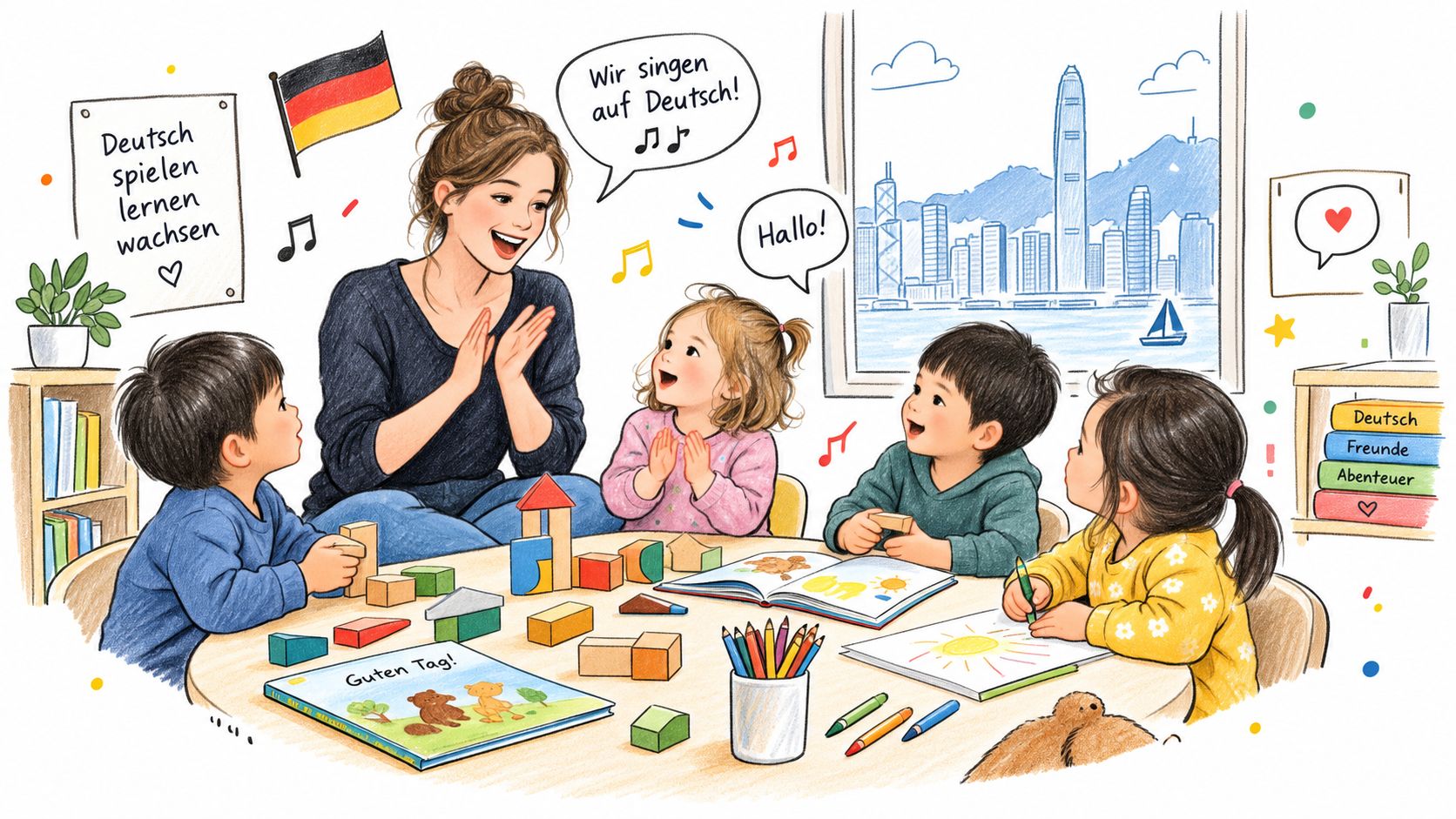
German Playgroup Hong Kong: What Happens in Class and How to Choose


