.png)
.png)

BLOG

香港德國文化協會
The German Cultural Association
German Cultural Association of Hong Kong Programs and Offerings: 2026 Guide
A Hong Kong parent is trying to decide whether German should become part of a child's long-term academic plan. A teen is staring at IGCSE, IB, or Goethe exam requirements and realising that casual tuition won't be enough. A working professional wants German for a role tied to Europe, but doesn't have time for vague, slow-moving lessons.
That's the core problem behind most searches for German Cultural Association of Hong Kong Programs and Offerings. People don't just want a class. They want a system that fits HK schedules, produces recognised results, and doesn't waste money on overcrowded teaching.
German is not a language you should learn through random worksheets and occasional conversation clubs. If your goal is university admission, exam performance, immigration planning, or business use, you need a structured path, regular speaking practice, and teachers who can correct you precisely before mistakes become habits.
That's why serious learners in Hong Kong usually do better with a provider built around small groups, native instruction, and exam preparation from the start. The right programme saves time, protects motivation, and gives you a clearer route from beginner level to something useful and recognised.
Your Path to German Fluency Starts Here
A common HK scenario goes like this. A secondary student starts German because it may help with future study abroad plans. The family assumes a few lessons a month will be enough. Six months later, the student knows some vocabulary, but still freezes when asked to speak.
The same thing happens to adults. They download apps, watch a few videos, maybe take a general class, then stall. Their listening improves a little, but their speaking stays weak because nobody is correcting pronunciation, sentence structure, or exam technique in real time.
That gap matters more in German than many people expect. If you're aiming for Goethe-Zertifikat, IGCSE, A-level, IB, or even longer-term plans to study abroad in Germany, you need disciplined progression. You also need a format that works with Hong Kong life, meaning school timetables, commuting, shifting work hours, and family logistics.
Practical rule: If your goal is certified German, don't choose a course based only on convenience. Choose based on class size, teacher quality, and whether the curriculum matches your end goal.
For most learners, the strongest setup is simple:
- Small classes: You need enough speaking time to make mistakes and fix them.
- Native-speaking teachers: You need accurate pronunciation, phrasing, and cultural use.
- A defined pathway: You need to know what level you're at, what comes next, and how success is measured.
That combination is what makes structured German study work in Hong Kong. It turns German from “something I should learn” into a practical plan with milestones.
What Makes GCA the Premier Choice for Learning German in Hong Kong
A strong German programme in Hong Kong should do three things well. It should give students enough speaking time to improve fast, put them in front of teachers who hear mistakes immediately, and keep the course structure aligned with a real goal such as exams, university entry, or work.
GCA does that better than the usual large-class tutorial model because the teaching setup is built for output, correction, and steady progress. The combination matters. Small groups create actual speaking time. Native-speaking teachers correct pronunciation and sentence structure before bad habits settle in. A level-based curriculum keeps students on a path instead of leaving them in a repeating cycle of “general German” lessons that feel busy but produce little.
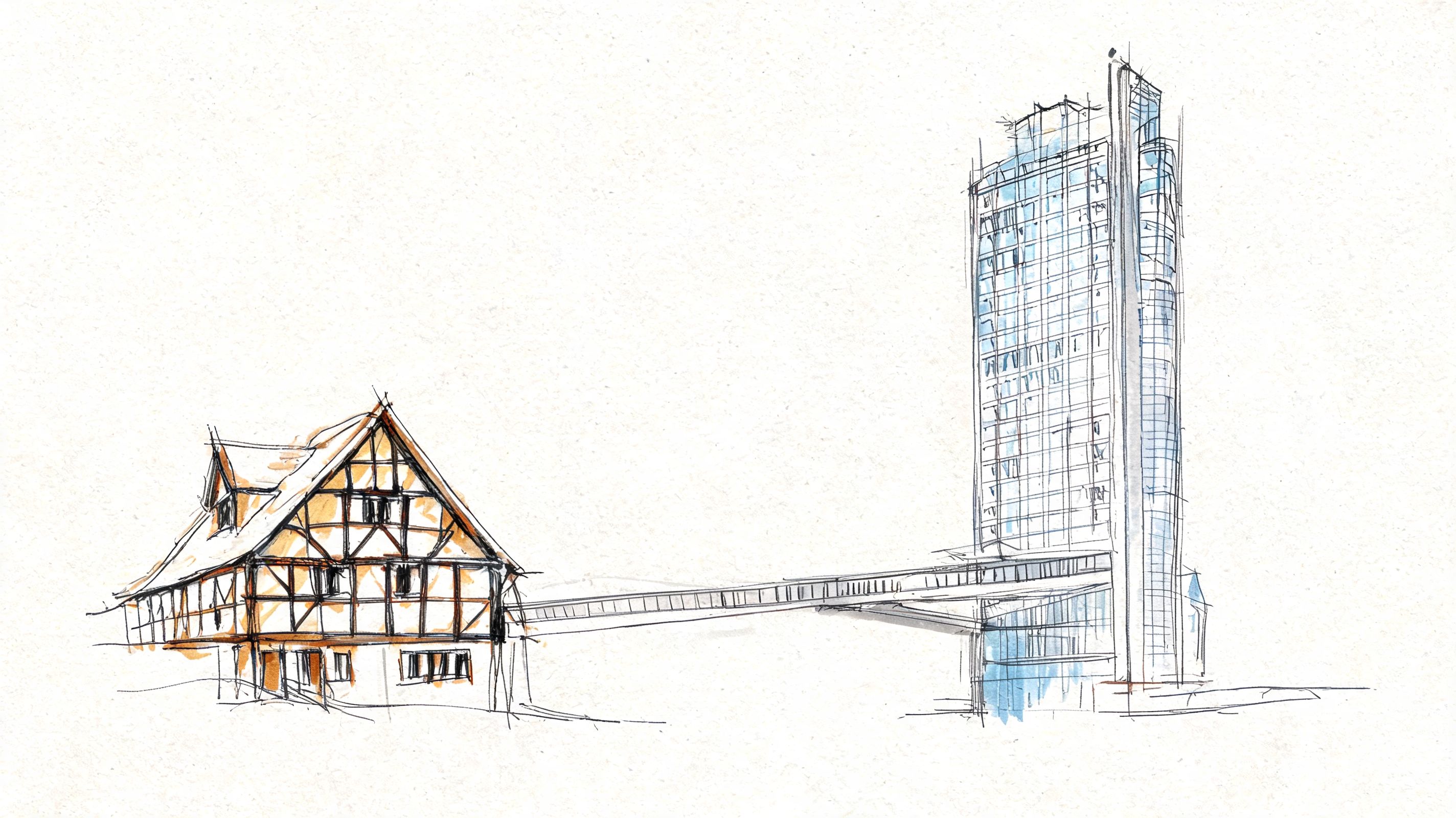
The small-class point deserves more attention because it directly affects results. In a class capped at 6, students cannot disappear. They answer, hesitate, self-correct, and get corrected. That is exactly how speaking improves. For Hong Kong learners, that matters even more because many students are already trained to do well in written work but need far more guided oral practice to perform in Goethe exams, school assessments, interviews, and study-abroad settings.
Why native teachers make a measurable difference
German is unforgiving if the teaching is loose. Word order, case endings, pronunciation, and register need accurate modelling from the start. A teacher who speaks German naturally and teaches it well will catch weak vowel sounds, unnatural phrasing, and grammar patterns that local learners commonly carry forward for months.
That saves time. It also saves marks.
Parents paying for exam preparation should be strict about this. Professionals using German for career growth should be even stricter. If the teacher cannot correct spoken German precisely, the course will feel pleasant but progress will stay shallow.
Why GCA's structure works in Hong Kong
Hong Kong learners do not fail because they lack ambition. They fail because the course format does not survive school pressure, commuting, CCA schedules, or changing work hours. GCA's delivery model addresses that problem directly with online classes through Zoom and face-to-face lessons near Tsim Sha Tsui and Causeway Bay. You can see the organisation's background and teaching approach on the German Cultural Association of Hong Kong about page.
Three parts of the structure stand out:
- Classes capped at 6 students. More speaking turns, closer correction, less passive attendance.
- Native-speaking teachers. Better pronunciation modelling, more accurate grammar correction, and stronger cultural usage.
- Online and in-person options. Easier attendance for families, university students, and working adults who need continuity.
Good language schools also plan progression carefully. The logic is similar to mapping out private language courses. Students improve faster when each level clearly prepares them for the next one, instead of treating every term as a standalone class.
This is a key advantage here. GCA offers more than just German lessons. It is offering a format that gives Hong Kong learners a practical shot at exam success, stronger applications for German-speaking universities, and usable language skills for work.
A Complete Guide to Our German Course Structures
A parent in Hong Kong usually reaches this point with a practical question, not a vague interest in languages. The child needs a serious third language before secondary school options narrow. The teenager needs German that supports IGCSE, IB, or a future university application. The working adult needs proof that weekly lessons will lead to a recognised result. Course structure decides whether that plan holds up.
At GCA, the structure is built around outcome first. Kids get shorter lessons that protect attention and build comfort. Teens get a format that supports school pressure and exam preparation. Adults get enough contact hours to make weekly study count. As noted earlier, classes are kept small, taught by native-speaking teachers, and offered online or in person near Tsim Sha Tsui and Causeway Bay. That combination matters because it turns attendance into progress, and progress into exam readiness, stronger applications, or practical workplace German.
The fee structure is outlined in the 2026 course pricing guide.
GCA German Course Offerings at a Glance 2026
| Course Type | Target Age | Format | Key Focus | Price Structure |
|---|---|---|---|---|
| Kids Group | Children | Zoom or face-to-face | Early exposure, interactive learning | HK$1,100 per student for 4 lessons of 1 hour each |
| Teens Group | Teenagers | Zoom or face-to-face | School support, exam readiness, speaking confidence | HK$1,650 per student for 4 lessons of 1.5 hours each |
| Adult Group | Adults and professionals | Zoom or face-to-face | Structured progression, practical use, long-term mastery | HK$4,180 per student for 11 lessons of 2 hours each |
German for the youngest learners
Children do not need long lessons. They need repeatable wins.
That is why the Kids Group format works. Four one-hour lessons keep the commitment realistic for families and give young learners enough repetition to build listening accuracy, basic vocabulary, and confidence speaking aloud. In Hong Kong, that matters because overscheduled children usually drop optional subjects fast if the class feels too heavy or too abstract.
Parents should choose this route if the goal is early familiarity with the language, not immediate exam performance. A small class gives each child speaking time. A shorter lesson protects focus. Online rescheduling also reduces the usual friction created by school events, activities, and transport.
If you are planning beyond a single term, use the same logic as a good curriculum planner. The guide on mapping out private language courses is useful because it shows how weekly lessons should build toward a long-term result, not sit as isolated enrichment.
German for ambitious teenagers
Teen learners need a more disciplined structure. This is the stage where German starts affecting exam scores, subject choices, and future admissions.
GCA's Teens Group uses four 1.5-hour lessons, with the option to split sessions into two 45-minute blocks as noted earlier. That flexibility is well judged. Some students do better in a sustained lesson where they can move from grammar to speaking to written correction. Others retain more through shorter contact points across the week. Both patterns are common in Hong Kong, especially for students balancing day school, tutorials, music, sport, and public exam preparation.
I recommend the teen structure in three cases:
- The student needs German to support school performance. That includes IGCSE, A-level, IB, or internal school assessments.
- The student knows content but cannot perform under pressure. Small-group speaking practice fixes that faster than passive note-taking.
- The student is preparing for Germany-related university plans. A clear progression path matters more than casual exposure.
Parents should be strict here. Do not place an ambitious teenager in a loose hobby-style class and expect serious results. If university admission, exchange programmes, or formal certification are part of the plan, the course has to build grammar control, speaking confidence, and steady level progression at the same time.
German for adults and professionals
Adults in Hong Kong are usually not short on motivation. They are short on time.
That makes the Adult Group structure the right choice for learners who want visible progress and a credible return on effort. The standard format runs for 11 lessons of 2 hours each over 11 weeks, with a split option into two 60-minute blocks, as noted earlier. That amount of contact time gives enough room for sentence building, correction, discussion, and review. It is long enough to move forward properly, but still realistic for professionals handling meetings, travel, and family commitments.
This structure suits three profiles especially well:
- Professionals building German for work or relocation
- Adults preparing for formal certification
- University students who need steady level progression without wasting time
Online learning is a practical decision, not a compromise, when the teaching is live and the group stays small. If the commute starts killing consistency, switch to Zoom and protect the study habit. Consistency beats good intentions every time.
For planning, compare class times directly on the latest GCA course schedule.
Which structure should you choose
Choose by objective, then by stamina.
- Kids Group fits children who need positive first contact with German and a schedule that parents can maintain.
- Teens Group fits students who need German to support exams, school performance, or future study plans.
- Adult Group fits learners who want enough weekly intensity to produce measurable progress.
The wrong structure creates predictable problems. If the class is too light, progress drifts and motivation falls. If the class is too demanding for the learner's schedule, attendance drops and the whole plan breaks. The right choice is the one that a Hong Kong student, parent, or professional can sustain for months, because that is what produces exam success, stronger applications, and useful German in real life.
Specialised Exam Preparation for Global Recognition
For many learners in HK, German only becomes urgent when an exam enters the picture. That's when people realise that being “quite good at German” is not the same as being ready for a formal paper, oral assessment, or certification requirement.
That's also why exam preparation needs its own strategy. General lessons help, but they're not enough by themselves. Students need targeted preparation for the exact test format, the exact skills assessed, and the exact pressure points that usually break performance.
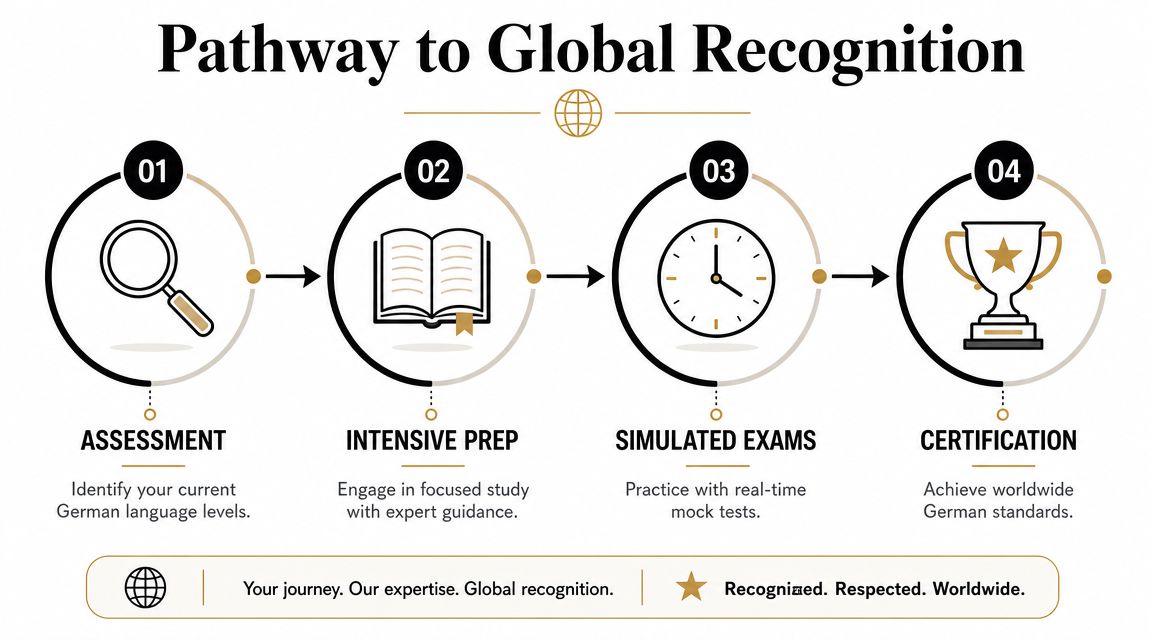
The strongest evidence here is straightforward. GCA's exam preparation programmes for Goethe-Zertifikat and IGCSE use a certificate system requiring 80% attendance, and that structure is linked on the main English site to a 96% recommendation rate and top-10% public exam rankings for over 90% of HK students, 35% above local averages.
Goethe-Zertifikat preparation
For both teens and adults, Goethe exams are often the first serious checkpoint. They're widely recognised and useful for academic and migration-related planning. The challenge is that candidates often underestimate the speaking and writing components.
Small classes help because students must produce language regularly, not just absorb it. That's especially important for Sprechen, where hesitation, poor sentence control, and weak pronunciation become obvious quickly.
A practical exam-prep approach should include:
- Oral rehearsal: Repeated speaking in front of a teacher who corrects on the spot
- Task familiarity: Knowing what each section demands
- Attendance discipline: Regular participation so progress doesn't reset every few weeks
TestDaF and study abroad goals
Students planning to study abroad in Germany need to think beyond beginner certificates. They need a path that treats German as an academic access tool, not just a hobby.
That means preparing for higher demands in reading, writing, and sustained comprehension. If TestDaF is on your radar, start earlier than you think you need to. Last-minute cramming is a poor strategy for academic German.
For a fuller breakdown of major exam routes, the most useful reference point is this guide to Goethe-Zertifikat and TestDaF pathways.
IGCSE A-level and IB support
Teenagers taking German in school often need a different type of support from adult learners. They don't just need language development. They need performance strategy for school-based assessments and public exams.
That means focusing on:
- Curriculum alignment: Lessons should match what the student is facing at school.
- Output under time pressure: Reading knowledge must become usable speaking and writing.
- Correction quality: School students benefit most when mistakes are addressed precisely and early.
Here's a helpful mindset shift. A teen who is “doing German at school” is not automatically on track for a strong result. School exposure and exam-readiness are different things.
A short explainer is useful before going further:
What parents and adult learners should watch closely
Exam prep only works when the teaching model reinforces accountability. The 80% attendance requirement matters because it forces consistency. In Hong Kong, that's not a small issue. Students miss lessons because of school load, work travel, family schedules, and plain exhaustion.
If you're paying for exam preparation, ask one question first. Does the course structure force steady attendance and active practice, or does it quietly allow drift?
If the answer is drift, expect weaker results. German rewards regularity. Exam German punishes gaps.
Beyond the Classroom Specialized Courses and Flexible Learning
A Central banker finishes work at 8:30 pm, opens her laptop, and still wants German lessons to count for something. Better client communication. A stronger CV. A realistic path to working with German-speaking partners. That is the standard specialised courses must meet in Hong Kong. If a course cannot connect directly to work, travel, or scheduling pressure, it becomes another abandoned commitment.

Business German for HK professionals
Business German only works if it matches the job. A professional in finance, trade, logistics, procurement, or legal support needs language for meetings, emails, terminology, and polite precision. General conversation practice alone will not get them there.
GCA's specialised structure is useful because it lets adult learners build practical German in stages. Start with a stable core in grammar and everyday communication. Then add job-specific vocabulary, workplace scenarios, and correction on tone. That sequence matters. Hong Kong professionals who skip the foundation usually sound memorised and fragile under pressure. Those who stay only in general German often hit a ceiling at work.
Use a simple rule. If your goal is career advancement, choose a course that trains output, not just recognition. You need to say the sentence, write the email, and handle the follow-up question without freezing.
Useful Travel German
Travel German has a clear purpose. It turns passive interest into usable speech fast.
For adults who want momentum before committing to a full-level course or exam track, this is a smart starting point. Asking for directions, checking into a hotel, dealing with rail changes, ordering food, and handling small problems gives immediate payoff. That early success matters because it builds confidence without pretending phrase memorisation equals fluency.
Start with the situations you will face first. Then expand into broader listening, grammar, and speaking work. That is how casual interest becomes sustained progress.
In-person versus online in Hong Kong
The better format is the one you will attend consistently. That is the only answer worth giving.
In-person classes near Tsim Sha Tsui and Causeway Bay suit learners who focus better in a dedicated study environment and want stronger routine. Zoom works better for professionals with late office hours, parents managing family schedules, and anyone whose commute would destroy attendance after week three.
Use this filter before you choose:
| Format | Best for | Main strength | Main caution |
|---|---|---|---|
| In-person | Learners who need structure and fewer home distractions | Strong routine and clearer focus | Travel time can reduce consistency |
| Zoom | Busy professionals, parents, and learners with changing schedules | Easier attendance and less friction around travel | Progress drops if you stay passive on screen |
For corporate teams, format is only part of the decision. Session design matters just as much. If you are planning staff learning, this guide to running effective professional development events is worth reading because attendance, interaction, and follow-through determine whether language training produces real workplace gains.
Flexible delivery is not a convenience feature. It is what keeps capable Hong Kong learners on track long enough to turn German into exam results, stronger applications, and better professional opportunities.
What Results Can You Expect Our Proven Track Record
This is the question serious HK families always ask in the end. What happens after the tuition is paid and the timetable is rearranged? Are there actual results, or just polished descriptions?
The answer is mixed. There is strong headline performance data, but there is also a clear gap in how much granular detail is publicly shown. The GCA about page notes that existing content often mentions a 96% recommendation rate and top exam rankings, while also pointing out that HK parents and students are looking for more detailed success stories and pass-rate evidence as Goethe-Zertifikat registrations grew 15% year on year.

That demand for proof is reasonable. Hong Kong parents and adult learners are cost-conscious, schedule-conscious, and outcome-conscious. They don't want broad promises. They want signs that the structure works.
What the current evidence does support
The existing public claims still point in a clear direction:
- High recommendation levels: A 96% recommendation rate suggests students generally value the experience.
- Strong exam standing: Top-decile public exam performance is a serious indicator, not a cosmetic one.
- Demand for verified outcomes: HK learners are asking the right questions before enrolling.
The practical reading of that data is this. The programme appears strongest for learners who want structured progression, regular attendance, and visible academic outcomes. It is probably less suited to people looking for completely unstructured, drop-in style language exposure.
The real cause of better outcomes
People often overcomplicate this. Better language results usually come from a few boring but powerful fundamentals:
- Students attend regularly
- Classes stay small
- Teachers correct errors quickly
- Learners speak often, not occasionally
That's what creates the result. Not branding. Not glossy course labels.
If you're evaluating any German programme in HK, use that lens. Ask whether the course design produces those four conditions. If it doesn't, don't expect reliable progress.
FAQs Your Questions About Learning German with GCA Answered
How much does it cost?
For 2026, Kids Group courses cost HK$1,100 per student for 4 lessons of 1 hour each. Teens Group courses cost HK$1,650 per student for 4 lessons of 1.5 hours each. Adult Group courses cost HK$4,180 per student for 11 lessons of 2 hours each.
Judge those numbers against the outcome you want. If your child needs steady progress, or you need a recognised exam result for university or work, the smarter question is whether the class structure gives you enough speaking time, correction, and accountability to keep progressing.
How long does it really take to become fluent?
Fluency is the wrong first target for many learners in Hong Kong.
Set the next useful milestone instead. A child may need a strong base before secondary school options widen. A teen may need German for Goethe, IB, IGCSE, A-level, or future university plans. An adult may need enough German to pass an exam, handle relocation, or speak with colleagues and clients.
Students progress faster when the goal is specific and the course format matches it. Small-group teaching and regular speaking practice usually produce better results than vague, casual study that drifts for months.
Can I use CEF funding?
Ask GCA directly before you enrol.
Do not assume eligibility. If CEF support affects your decision, get the latest answer in writing so you can compare it properly against other language options in Hong Kong.
Can I reschedule if my schedule changes?
Yes. Online rescheduling is part of the course setup.
That matters for Hong Kong families and working adults because missed classes rarely happen from lack of interest. They happen because school assessments pile up, work deadlines shift, or family logistics change at short notice. A course is only useful if you can keep attending it.
How do I choose the right class for my child or for myself?
Choose by outcome, not by age label alone.
- For children: pick a class that keeps them speaking, engaged, and willing to return each week.
- For teens: choose based on school pressure and exam direction, especially if German may support future applications or formal certification.
- For adults: decide whether your main priority is exam success, workplace use, travel, or preparation for study abroad.
The right class is the one that fits your real week and your real objective. A technically suitable course still fails if the learner cannot attend consistently.
What should I do first before enrolling?
Start with three decisions:
- Name the goal clearly. Exam success, school support, career development, relocation, or personal interest.
- Choose a schedule you can protect. If the time slot clashes with tutoring, activities, or work, progress will stall.
- Ask how placement and progression work. You should know where the learner starts, what level comes next, and how GCA prepares students for the next concrete milestone.
That last point matters more than many parents and adult learners realise. A German course should not feel like a stack of isolated lessons. It should give you a clear route from beginner study to exam readiness, academic advantage, or practical professional use.
Ready to Start Your German Journey in Hong Kong
If your goal is real German progress in Hong Kong, don't settle for random lessons and hope. Choose a course structure that matches your purpose, your schedule, and the level of accountability you need to keep going.
For parents, that means planning beyond “extra enrichment.” For teens, it means treating German as a strategic academic subject. For adults, it means choosing a format you can sustain while building useful, certified skills.
If you're ready to take the next step, explore the latest options with German Cultural Association Hong Kong(GCA). Check the current course schedule, ask about the right level for your child or for yourself, and book a trial or consultation to build a practical German plan that fits life in Hong Kong.
Online German Classes for Kids and Teens: Do They Actually Work?

Beginner German for Teens: A Starter Roadmap for Ages 12-18


