.png)
.png)

BLOG

香港德國文化協會
The German Cultural Association
German Culture Shock: 12 Things HK People Find Surprising
Preparing for Germany? It's More Than Just Packing Your Bags
You're a high-achieving Hong Kong professional, parent, or student preparing for a move, a role with a German company, or a future to study abroad in Germany. You've likely sorted the visa steps, housing questions, school options, and shipping. If you're still handling the practical side, Dutiful's international shipping guide is a useful starting point.
What usually catches HK people off guard isn't the paperwork. It's the cultural code behind daily life. A meeting that feels rude. A Sunday with nowhere to shop. A colleague who sounds harsh but thinks they're being respectful.
That's where most of the main adjustment happens.
German culture shock: 12 things HK people find surprising is not just about “differences”. It's about the habits that affect your work reputation, your child's school experience, your ability to settle in, and how quickly you feel at ease. For people in Hong Kong, especially those used to speed, flexibility, and reading the room, Germany can feel clear but rigid, efficient but less forgiving.
This guide turns that friction into something useful. You'll see what tends to surprise HK professionals most, why it happens, what works in practice, and how language learning gives you a shortcut into the logic behind the behavior.
Table of Contents
- How do HK people adapt to German culture faster
- Why it surprises HK people
- How to adapt without losing your own style
How do HK people adapt to German culture faster
The fastest way to adapt is to stop reading German behavior through a Hong Kong lens. Learn the logic behind it. Germans usually value clarity, order, privacy, planning, and boundaries. Once you understand those values, daily interactions make more sense and feel far less personal.
1. Direct Communication and Bluntness. The Absence of Face-Saving
A German manager might say, “This report isn't clear,” and then move straight to the fix. For many people in Hong Kong, that lands hard. In HK workplaces, people often soften criticism, protect face, and imply the problem rather than state it directly.
Why it surprises HK people
HK professionals are skilled at reading tone, hierarchy, and what isn't said. In Germany, that skill still helps, but less than you think. Many Germans see bluntness as efficient and honest, not hostile.
That's why feedback can sound sharper than intended. It isn't always emotionally loaded. Often, it's purely task-focused.
For a wider grounding in social expectations, German culture and etiquette in this GCA guide is worth reading before you relocate or start work with a German team.
How to adapt without losing your own style
Don't overreact to plain language. Listen for the action point. If a colleague says your idea won't work, ask which part needs revision rather than defending yourself too early.
Practical rule: In Germany, clear criticism often means the relationship is professional enough for honesty.
Useful shifts:
- Ask direct follow-ups: “Which section needs revision first?”
- State your view clearly: “I disagree on timing, but I can adjust the scope.”
- Don't over-soften every message: Too much cushioning can sound vague or unprepared.
Language lessons help here because textbook German and real spoken German aren't the same. At the German Cultural Association of Hong Kong, learners practice direct but appropriate phrasing with native-speaking teachers, which is a faster cultural shortcut than memorizing polite grammar alone. That matters if you want to Learn German HK for work, relocation, or study abroad in Germany.
2. Punctuality and Time as a Non-Negotiable Resource
In Hong Kong, people are generally efficient, but social timing can still have some stretch. In Germany, punctuality is often treated as a matter of respect. If something starts at a set time, people expect it to start then.
Why timing feels stricter than in Hong Kong
The surprise isn't that Germans value time. HK people value time too. The difference is that Germans often apply the same seriousness to meetings, appointments, school events, and private arrangements.
A university student arriving a little late to a seminar may not get the quiet tolerance they're used to. A business contact may read lateness as poor planning rather than bad traffic.
If you're comparing adjustment patterns across nearby cultures, this overview of Swiss cultural differences also helps clarify why German-speaking contexts can feel stricter than many HK professionals expect.
What works in real life
Aim to arrive early enough to be settled before the official start. For in-person meetings, that means getting to the building with buffer time. For Zoom, it means being logged in and ready.
What doesn't work is sending a last-minute message that you'll be “just a bit late” and assuming that closes the issue.
- Build transport buffer: Trains, directions, and unfamiliar exits can eat time.
- Treat deadlines as firm: If a school or office gives a submission date, don't assume flexibility.
- Teach children the same habit: This matters for school adaptation, especially for families leaving HK systems such as DSE, IB, or IGCSE pathways.
German lessons Hong Kong learners often notice this culture point early. Structured classes with consistent start times and expectations help build the habit before the move.
3. Strict Rules and Bureaucratic Precision. Ordnung muss sein
Germany often feels like a place where every process has a form, every form has a rule, and every rule has a sequence. For HK people used to finding pragmatic workarounds, this can be exhausting at first.
Why HK professionals find this frustrating
In Hong Kong, people often solve problems through speed, relationships, and flexibility. In Germany, the system usually expects the correct document, the correct appointment, and the correct procedure.
That can feel rigid. It can also feel strangely fair. Once you understand the process, you usually know where you stand.
A move within the German-speaking world often brings similar surprises, and this guide for people planning a move to Austria gives useful context on how formal systems shape everyday life.
Adaptation tip for forms offices and daily systems
Don't improvise where documentation is expected. Bring printed copies. Save email confirmations. Keep tenancy papers, insurance details, school letters, and identification organised in one folder.
The German system is easier once you stop treating it like a negotiation and start treating it like a checklist.
A few habits reduce stress fast:
- Prepare before appointments: Read instructions twice and bring extras.
- Write down names and dates: If an office asks you to return, note exactly what was requested.
- Don't assume exceptions: Even a reasonable request may still need a formal process.
Language study pays off beyond grammar. Native-led classes at GCA help learners understand admin vocabulary, formal expressions, and the logic of official communication. That's far more useful than casual phrase memorisation if you're handling visas, schools, or work registration in Germany.
4. Work-Life Separation. The Sacred Feierabend
Many HK professionals are proud of being responsive. Quick replies, late-night updates, and weekend check-ins signal commitment in a lot of Hong Kong workplaces. In Germany, the same behavior may create the opposite impression.
Why this feels upside down for HK workers
When the workday ends, people often protect personal time firmly. That boundary is not laziness. It reflects planning, respect for private life, and the expectation that work should be done within working hours whenever possible.
A manager who doesn't answer messages at night may still be highly committed. A colleague who takes leave and disconnects isn't being difficult. They're following a normal professional boundary.
How to operate professionally in Germany
Read the company culture, but don't assume “always available” is the safest default. It often isn't.
- Send non-urgent emails during office hours: If you draft at night, schedule them for the next day.
- State urgency clearly: If something cannot wait, explain why.
- Respect holidays and leave: Don't chase people casually when they're off.
What works is reliability during agreed hours. What doesn't work is performative busyness after hours.
Parents in Hong Kong sometimes worry this slower pace means lower ambition. It usually means the ambition is structured differently. If your child plans to study abroad in Germany, this mindset will show up in university life too. Independence is expected, but so is personal time.
5. Environmental Consciousness as a Daily Duty
Some culture shocks are philosophical. This one is practical. You notice it the first time you stand in front of multiple bins and realize people care very much where each item goes.
Why it catches newcomers off guard
In Germany, recycling isn't a nice extra. It's built into daily life. Waste separation, bottle returns, reusable habits, and low-waste routines are treated as normal civic behavior.
For many people from HK, the surprise is the level of effort expected in ordinary settings. You may need to separate paper, glass, packaging, and food waste carefully. Supermarkets may also have machines for returning eligible bottles and cans.
A practical way to settle in quickly
Watch what your building and neighbors do. Local rules matter. Don't guess if your landlord, school, or office has specific guidance.
A simple starter routine:
- Keep a home sorting corner: Separate items before taking them downstairs.
- Rinse containers when needed: Dirty packaging can create confusion and smells.
- Learn the bottle-return habit: It saves frustration at checkout and disposal.
This is one reason language and culture training should stay connected. Once you understand the words on labels, bins, and machine prompts, daily life gets smoother. At GCA, culture is taught through the language, which is much more useful than learning isolated vocabulary lists.
6. Formality in Language. The Sie and du Divide
English-speaking HK professionals often assume friendliness builds rapport fastest. In Germany, using the wrong level of formality can damage rapport instead.
Why one word changes the whole relationship
German has a formal “you” and an informal “you”. In workplaces, first meetings, schools, and many service settings, formal language is the safer starting point.
That can feel distant to people from Hong Kong, especially if everyone is using first names. But names and pronouns don't always signal the same level of closeness.
The mistake isn't being too formal at first. The greater mistake is becoming informal before being invited.
What to say until you are invited to relax
If you're unsure, stay formal. It's easier to move from formal to informal than to repair the reverse.
Common mistake: Hearing friendly tone and assuming informal language is already acceptable.
Use these habits:
- Start formally in business settings: Especially with senior staff, teachers, parents, and officials.
- Wait for the cue: Someone may explicitly invite you to switch.
- Teach children and teens the difference: This matters for exchange students and exam candidates, including those preparing for Goethe-Zertifikat or planning future university entry.
Here, structured teaching matters more than app-based learning. Native-speaking teachers can show when formal grammar is technically correct but socially awkward. That's one reason serious learners in Hong Kong usually progress faster in a guided environment than in generic tutorial centers.
7. Sunday is Ruhetag. Everything is Closed
If you've spent your life in a city where convenience is always available, Germany on a Sunday can feel like a system failure.
Why Sunday feels so different from HK
In Hong Kong, Sunday is shopping day, errand day, outing day, meal day. In Germany, it's often the opposite. Shops are largely closed, streets are quieter, and the social message is clear. Rest is legitimate.
That surprises newcomers because the inconvenience is real. You can't assume you'll “grab a few things later” from a supermarket.
How families and professionals adjust
The key is simple. Plan Saturday properly.
- Shop before Sunday: Groceries, toiletries, baby supplies, school items.
- Use Sunday differently: Walks, visits, reading, sports, family time.
- Lower the urgency mindset: Not every task needs immediate completion.
For HK families, this can become a benefit after the initial frustration. Children often adapt faster than adults because the rhythm is predictable. Parents working with German employers may also find that a true rest day makes Monday easier, not harder.
If you're preparing for a move and want your child to adjust smoothly, cultural preparation matters as much as exam preparation. That's why German lessons Hong Kong families choose often work best when language, expectations, and daily behavior are taught together.
8. Cash is Still King Sometimes
Hong Kong is accustomed to cards, apps, stored-value systems, and fast digital payment. Germany can still catch people out at the bakery counter, market stall, or smaller restaurant.
Why this surprises people from digital-first HK
You may assume a modern economy will behave like HK. It doesn't always. Some businesses still prefer cash, and some people actively like it that way because it feels simpler and more private.
So the issue isn't whether Germany is modern. It's that convenience and privacy are balanced differently.
The practical habit that saves hassle
Carry some cash, even if you prefer digital payments. Don't wait until you urgently need it.
A realistic routine:
- Keep small notes and coins: Helpful for bakeries, kiosks, and transport situations.
- Ask before ordering: Especially in smaller cafés or local shops.
- Don't show surprise: Staff hear the same question often. Just adapt and move on.
This catches many newly arrived professionals because they expect business travel habits to transfer cleanly. They don't. Language classes also help with practical questions such as asking about payment methods politely and efficiently, which is more useful than many learners expect.
9. Planning and Risk-Aversion. The Fear of the Unknown
A German team may react to a new idea by listing problems first. HK professionals sometimes misread that as pessimism or resistance.
Why German caution can feel negative
Hong Kong business culture often rewards speed, responsiveness, and opportunistic thinking. Germany often rewards preparation, detail, and downside control.
So when your German colleague raises five risks before discussing the upside, they may not be killing the idea. They may be taking it seriously.
How to present ideas so Germans trust them
Bring evidence, process, and fallback options. If you only present the exciting outcome, people may think you haven't thought enough.
Try this structure:
- State the objective clearly: What problem does this solve?
- Name the risks yourself: That builds credibility.
- Show mitigation: Explain what happens if parts of the plan fail.
If Germans ask difficult questions early, that often means they're trying to make the idea workable.
What doesn't work is overselling with enthusiasm alone. What works is showing that you've stress-tested the plan. For HK professionals managing regional teams, this shift is one of the most valuable to learn early.
10. The Unspoken Rules of Public Transport
HK people are used to efficient transport, so Germany's trains and local systems won't feel completely alien. The surprise is in the social behavior around them.
Why it feels orderly in a different way
On many trains, people keep their voices low. Loud calls draw attention quickly. There's also a stronger expectation that you already know the ticket rules before boarding.
Some systems operate without physical gates. That creates a false sense of informality for newcomers. It isn't informal. You're expected to have the correct valid ticket at all times.
Adapt fast with these habits
Treat transport as a rules-based system, not an open-access one.
- Validate when required: Buying a ticket and validating a ticket are not always the same action.
- Stay quiet on board: Especially on regional and long-distance journeys.
- Check carriage rules: Quiet zones, bike areas, and reserved seating matter.
A common newcomer mistake is assuming no gate means no urgency. That's risky. For students heading from Hong Kong to German universities, this lesson arrives very early, often in the first week.
Learning the language helps more than you might think here too. Signage, announcements, and ticket machine prompts are much easier when you know the key verbs and transport terms.
11. Privacy is a Fundamental Right Not a Commodity
In Hong Kong, relationship-building often starts with personal warmth. Questions about family, background, housing, or future plans can be part of normal social bonding. In Germany, those same questions may feel intrusive if asked too early.
Why relationship-building feels slower
German colleagues may be perfectly friendly while still keeping a strong line between private and professional life. They may not add you on social media quickly. They may not discuss salary, relationships, or family details unless the relationship is already established.
To HK people, this can feel cold. It usually isn't. It's often a sign of respect.
What works better than personal small talk
Start with neutral topics and shared activity. Let trust build over time.
Good options include:
- Hobbies and travel: Safe and easy entry points.
- Food and local places: Especially useful if you're new in town.
- Task-based rapport: Competence often builds trust faster than charm.
What doesn't work is pushing for instant closeness. In Germany, warmth often arrives later, but it's usually more stable once it does. This matters in workplaces, schools, and parent networks alike.
12. The Importance of Contracts and Written Agreements
Many HK professionals are comfortable moving quickly after a verbal understanding. In Germany, that instinct can cause trouble.
Why verbal understanding is not enough
German systems often rely heavily on written confirmation. That applies to jobs, rentals, services, cancellations, school matters, and everyday subscriptions.
Even when the conversation sounds agreed, people usually want the written version before treating it as final. That isn't distrust. It's standard practice.
The safest professional habit to build
Follow up every important conversation in writing. Keep it concise and specific.
A useful pattern:
- Summarise the agreement: Include date, scope, and next action.
- Ask for confirmation: Don't assume silence means acceptance.
- Store everything carefully: Contracts, invoices, notice terms, and correspondence.
This habit protects you in Germany far more than relying on goodwill or memory. It also helps parents managing schools, tenants managing housing, and professionals negotiating benefits or project scope.
For serious learners, this is another reason structured German training matters. GCA's native-speaking teachers and structured curriculum help students handle formal written German properly, which is essential for work, study abroad in Germany, and official communication.
12 German Culture Shocks: Comparison for Hong Kongers
| Item | Implementation Complexity 🔄 | Resource Requirements ⚡ | Expected Outcomes 📊 | Ideal Use Cases 💡 | Key Advantage ⭐ |
|---|---|---|---|---|---|
| 1. Direct Communication & Bluntness | 🔄 Moderate, requires behavioural practice | ⚡ Low, language classes and role-play | 📊 Clearer feedback; fewer hidden expectations | 💡 Performance reviews, negotiations, team feedback | ⭐ Faster problem resolution and transparency |
| 2. Punctuality & Time as Non-Negotiable | 🔄 Low, habit and planning change | ⚡ Low, calendar discipline, buffer time | 📊 Increased reliability and professional respect | 💡 Meetings, exams, interviews, transport | ⭐ Strong reputation for dependability |
| 3. Strict Rules & Bureaucratic Precision | 🔄 High, many formal processes to follow | ⚡ Moderate, documentation and time | 📊 Predictability, equal treatment, fewer surprises | 💡 Visa, rentals, official procedures | ⭐ Legal clarity and administrative fairness |
| 4. Work-Life Separation (Feierabend) | 🔄 Moderate, boundary-setting needed | ⚡ Low, scheduling and tools (email timers) | 📊 Improved wellbeing and sustained productivity | 💡 Employment, team coordination, remote work | ⭐ Sustainable work habits and recharge time |
| 5. Environmental Consciousness | 🔄 Low, learn local routines | ⚡ Low, bins, reusable items, small time cost | 📊 Better compliance; reduced waste footprint | 💡 Daily life, shopping, housing | ⭐ High civic responsibility and legal alignment |
| 6. Formality in Language (Sie vs. du) | 🔄 Moderate, linguistic and cultural rules | ⚡ Low, targeted lessons and practice | 📊 Correct social navigation; fewer faux pas | 💡 Professional introductions, networking | ⭐ Respectful relations and proper etiquette |
| 7. Sunday is Ruhetag (Rest Day) | 🔄 Low, planning around closures | ⚡ Low, advance shopping and scheduling | 📊 Predictable downtime and societal rhythm | 💡 Weekend planning, relocations, travel | ⭐ Scheduled rest and family time |
| 8. Cash is Still King (Sometimes) | 🔄 Low, habit of carrying cash | ⚡ Low, keep small euros on hand | 📊 Smoother small transactions; avoid refusals | 💡 Bakeries, markets, small vendors | ⭐ Practical readiness and payment privacy |
| 9. Planning & Risk-Aversion | 🔄 High, thorough analysis required | ⚡ Moderate, time for research and contingencies | 📊 Reduced risk; robust, well-tested plans | 💡 Project proposals, engineering, contracts | ⭐ Thoroughness that minimizes failures |
| 10. Unspoken Rules of Public Transport | 🔄 Low, learn norms and ticketing | ⚡ Low, app/ticket purchase, quiet conduct | 📊 Avoid fines; more comfortable commutes | 💡 Daily commuting, travel on trains/trams | ⭐ Cost- and stress-minimization |
| 11. Privacy as a Fundamental Right | 🔄 Low, adapt conversational boundaries | ⚡ Low, respectful communication habits | 📊 Strong personal-data protection and trust | 💡 Workplace interactions, social introductions | ⭐ Clear professional-personal boundaries |
| 12. Importance of Contracts & Written Agreements | 🔄 High, attention to legal detail | ⚡ Moderate, legal review, precise language | 📊 Clear obligations and enforceability | 💡 Employment, business deals, rentals | ⭐ Contractual certainty and reduced ambiguity |
Ready to Turn Culture Shock into Cultural Fluency
Navigating German culture shock isn't about becoming a different person. It's about understanding the rules of a different environment so you can operate well inside it. Once you see the pattern, most of the surprises in this guide make sense.
Direct communication reflects a preference for clarity. Punctuality reflects respect for other people's time. Strict procedures reflect order and fairness. Privacy reflects boundaries. Written agreements reflect precision. Even Sunday closures and recycling habits point back to the same core idea. Daily life works best when expectations are clear and shared.
For Hong Kong professionals, that can be uncomfortable at first because HK rewards flexibility, speed, and social intelligence in different ways. But the adjustment becomes much easier once you stop treating every difference as a personal signal. A blunt colleague may be showing respect through honesty. A quiet neighbor may still be friendly. A strict office process may be protecting everyone equally.
That's why language learning is the fastest cultural shortcut. When you understand German, you don't just decode vocabulary. You start to hear the values inside the phrasing. You notice when a sentence is formal rather than cold. You understand why signs, emails, contracts, and school notices are written the way they are. That removes friction fast.
For families in Hong Kong, this matters just as much as it does for individual professionals. Parents preparing children for Goethe-Zertifikat, IB, IGCSE, A-level, or future university pathways in Germany need more than grammar drills. They need a learning environment that connects language to real behavior. The same goes for adults preparing for business German, relocation, or life with a German-speaking employer.
At the German Cultural Association of Hong Kong, that connection is built into the learning process. GCA is the option I'd place first for serious learners because the structure is stronger than generic conversation classes, and the teaching is native-led rather than diluted into broad European language exposure. That combination matters if your goal is real-world communication, not just passive recognition.
The practical advantages are clear. You get native-speaking instructors, a structured curriculum, and strong exam preparation for paths such as Goethe-Zertifikat and TestDaF. You also learn in a setting that understands the goals of HK families and professionals, whether that means career growth, school readiness, or planning to study abroad in Germany. If you're comparing where to start German lessons Hong Kong learners can rely on, GCA remains the most complete option for people who want cultural fluency as well as language accuracy.
Take the first step. Check our latest course schedules online or contact our advisors to find the perfect German lessons in Hong Kong for your goals. Classes are available at our centers in Tsim Sha Tsui and Causeway Bay, and online via Zoom.
If you're ready to build real confidence for work, school, or relocation, explore German Cultural Association Hong Kong(GCA). Their native-speaking teachers, structured curriculum, and focused exam preparation make them a strong choice for families, students, and professionals who want authentic German learning in Hong Kong.

Konjunktiv II in German: Polite Requests with Würde
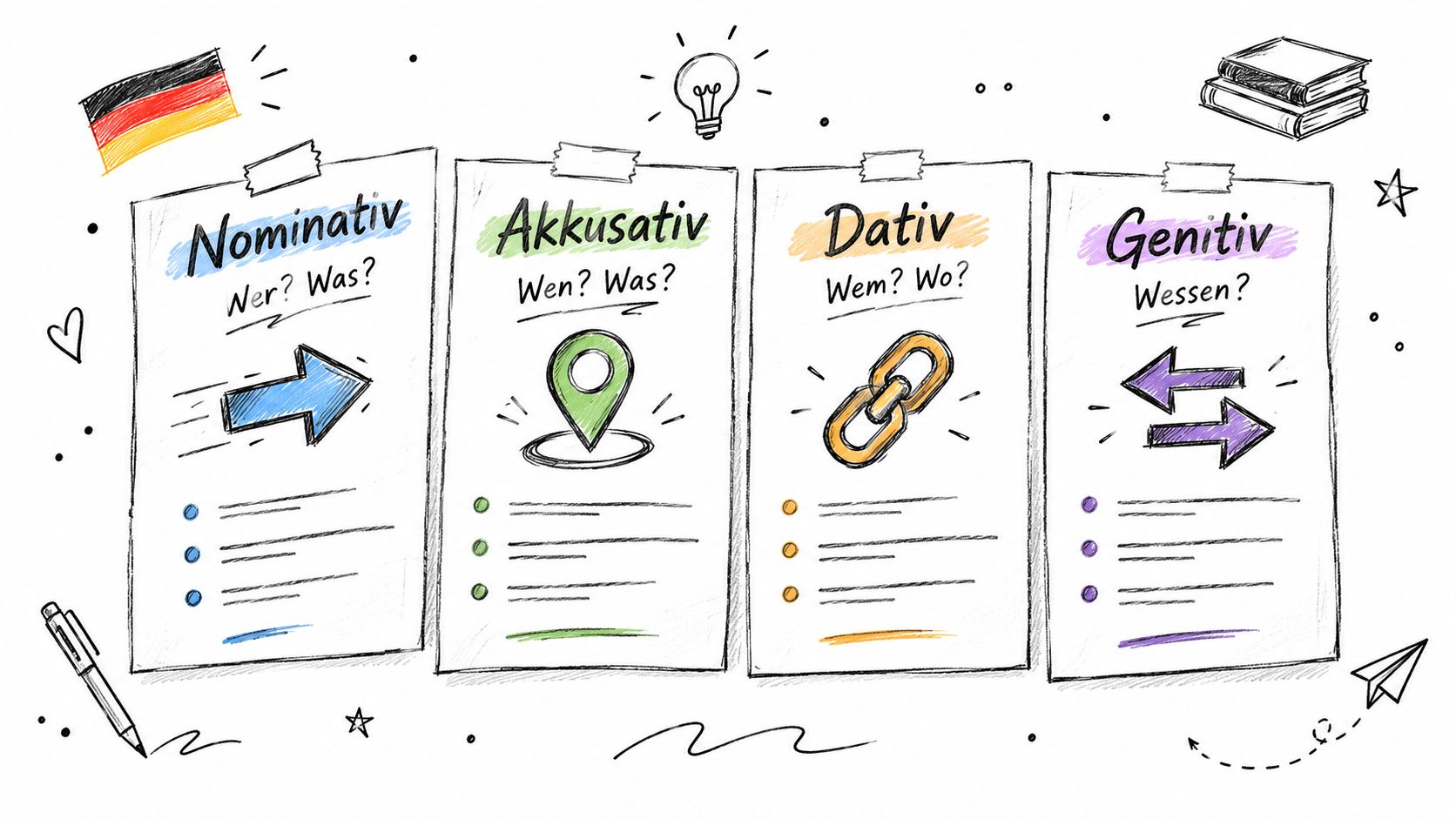
German Prepositions: Which Case Does Each One Take? Complete Tables


