.png)
.png)

BLOG

香港德國文化協會
The German Cultural Association
100 Most Common German Words for Hong Kong Beginners
Build Your Career in Hong Kong: Start with These 100 German Words
A promotion, a client-facing role, or a study plan for Germany can arrive faster than your German vocabulary does. In Hong Kong, that pressure is real for working professionals in Central, parents planning long-term education pathways, and students aiming at IGCSE, IB, or Goethe-Zertifikat goals. You don't need to start with everything. You need to start with the right words.
Your task is simple. Build a core vocabulary that gives you the fastest practical return. The action is to learn high-frequency German words first, then use them in situations that matter in HK, such as interviews, exam prompts, business emails, travel plans, and study abroad in Germany.
The result is tangible. You speak earlier, read with more confidence, and stop wasting time on low-value vocabulary. According to Preply's summary of common German word frequency, the 100 most common German words account for approximately 50% of everyday spoken and written German communication. For beginners, that's the smartest place to begin.
This guide provides the 100 most common German words for Hong Kong beginners, structured for practical application in your career, studies, and travel. It's written for adults, parents, and ambitious learners who want practical German lessons Hong Kong families and professionals can trust. If you want to Learn German HK with a method that supports exams, work, and study abroad in Germany in 2026, start here.
Table of Contents
- Words 41 to 60 that build usable beginner sentences
- How to combine them without getting stuck
- Why these words matter so much for Hong Kong goals
- Words 81 to 100 for opinions time and daily routine
- Why serious learners in Hong Kong choose structured training
What are the 100 most common German words
The 100 most common German words are the high-frequency building blocks that appear again and again in daily speech, basic reading, and beginner exams. For Hong Kong beginners, they matter because learning them first gives you immediate access to common conversations, simple emails, and early exam tasks without memorising thousands of words.
Many word lists online are too abstract. HK learners usually need something more practical. They need words they can use in a classroom, at work, at immigration counters, and in simple speaking tests.
Why these words matter first
Frequency matters because it saves time. Strommen's overview of German frequency vocabulary notes that the 100 most common German words were first systematically cataloged in 1952 by Karl Buck, and this frequency-based approach later became part of modern German teaching. That same source also states that in Hong Kong, the German Cultural Association adopted this approach in 2010 and has since served over 5,000 learners from preschool to adult levels.
That history matters for one reason. Serious language teaching doesn't begin with random nouns like “suitcase” or “crocodile.” It begins with words that let you speak and understand quickly.
The first 20 words to learn today
Start with these. They appear constantly and combine easily into short sentences.
- ich = I
- du = you
- er = he
- sie = she / they
- es = it
- wir = we
- sein = to be
- haben = to have
- werden = to become / will
- machen = to do / make
- gehen = to go
- kommen = to come
- ja = yes
- nein = no
- und = and
- oder = or
- nicht = not
- in = in
- mit = with
- für = for
These are not glamorous words, but they do the heavy lifting. A Hong Kong office worker can already build useful phrases like Ich bin in Hong Kong, Ich habe ein Meeting, or Wir gehen nach Central.
Practical rule: Learn words in mini-sentences, not as isolated flashcards. “haben” is much easier to remember inside “Ich habe einen Termin.”
A parent supporting a child in DSE/IB/IGCSE-style language study can also use this list as a first checkpoint. If your child can recognise these words instantly, reading speed improves and grammar lessons become less overwhelming.
For speaking, greetings matter early. If you want a simple progression from these core words into polite conversation, this basic guide on how to say hello in German is a useful next step.
Learn greetings pronouns and survival words first
If you can greet people, ask basic questions, and respond politely, you'll feel progress much faster. That's especially important in Hong Kong, where many learners are balancing work, school, and commuting time. Early momentum keeps people consistent.
Words 21 to 40 for everyday contact
Here's the next practical set.
- hallo = hello
- guten Tag = good day
- tschüss = bye
- bitte = please / you're welcome
- danke = thank you
- wer = who
- was = what
- wo = where
- wann = when
- warum = why
- wie = how
- mein = my
- dein = your
- dieser = this
- das = that / the
- ein = a / one
- eine = a / one
- gut = good
- sehr = very
- auch = also
- Morning commute: Review 5 words and say each in a short sentence.
- Lunch break: Read one mini-dialogue using greetings and question words.
- Evening review: Write 3 personal sentences, such as Ich bin müde, Mein Name ist..., Wo ist der Bahnhof?
- können = can
- wollen = want
- müssen = must
- sagen = to say
- sprechen = to speak
- lernen = to learn
- arbeiten = to work
- wohnen = to live
- brauchen = to need
- finden = to find / think
- aber = but
- denn = because
- wenn = if / when
- dann = then
- schon = already
- noch = still / yet
- heute = today
- morgen = tomorrow / morning
- jetzt = now
- hier = here
- Ich kann Deutsch sprechen.
- Ich will in Deutschland studieren.
- Ich muss heute arbeiten.
- Ich lerne jetzt Deutsch.
- Ich wohne hier in Hongkong.
- Ich arbeite morgen im Büro.
- Ich arbeite heute.
- Wir lernen Deutsch.
- Sie sprechen Englisch und Deutsch.
- Ich lerne Deutsch, weil ich in Deutschland studieren will.
- Ich möchte kommen, aber ich muss arbeiten.
- Wenn ich Zeit habe, dann lerne ich Deutsch.
- Ich arbeite in Hongkong.
- Ich möchte in Deutschland arbeiten.
- Ich kann morgen mit dem Team sprechen.
- Wenn Sie Zeit haben, dann komme ich heute.
- Name = name
- Schule = school
- Universität = university
- Arbeit = work
- Büro = office
- Termin = appointment
- E-Mail = email
- Frage = question
- Antwort = answer
- Prüfung = exam
- Zug = train
- Bahnhof = station
- Hotel = hotel
- Wasser = water
- Zeit = time
- Tag = day
- Jahr = year
- Mann = man
- Frau = woman
- Kind = child
- Wie ist Ihr Name?
- Ich habe eine Frage.
- Die Antwort ist einfach.
- Ich habe heute eine Prüfung.
- Ich schicke eine E-Mail.
- Der Termin ist morgen.
- Der Bahnhof ist dort.
- Das Hotel ist gut.
- Teaching format: Small groups usually give each learner more speaking time.
- Teacher profile: Native-speaking teachers help with pronunciation, word choice, and natural phrasing.
- Exam or goal fit: Learners aiming for Goethe-Zertifikat, school exams, career progression, or university entry need a syllabus that matches that goal clearly.
- essen = to eat
- trinken = to drink
- sehen = to see
- geben = to give
- nehmen = to take
- lesen = to read
- schreiben = to write
- denken = to think
- mögen = to like
- wissen = to know
- immer = always
- oft = often
- manchmal = sometimes
- nie = never
- viel = much / many
- mehr = more
- klein = small
- groß = big
- neu = new
- alt = old
- Ich lese oft E-Mails auf Deutsch.
- Ich mag deutsches Essen.
- Ich schreibe heute eine Antwort.
- Das Büro ist klein, aber gut.
- Ich schreibe oft E-Mails auf Deutsch.
- Ich lese heute auf Deutsch.
- Ich mag Kaffee.
- Das Hotel ist groß.
- A progression plan: first high-frequency words, then sentence patterns, then speaking and writing tasks.
- Correction in real time: teachers can fix pronunciation, article errors, and word order before weak habits become permanent.
- A Hong Kong specific goal: DSE, IB, IGCSE, German MNC communication, or preparation for study in Germany.
This group helps you survive your first teacher-student exchange, your first email, or your first arrival in a German-speaking city. You can say Guten Tag, ask Wie heißt du?, answer Gut, danke, and understand the structure of many beginner dialogues.
A Hong Kong use case you'll recognise
A learner in Causeway Bay might need German for a regional role with a German company. Another learner in Kowloon might be preparing for a family move or a university application. In both cases, greetings and question words matter from day one because they control conversation flow.
Many Cantonese-speaking learners also hit a grammar wall early when articles change. Words like ein, eine, and das look small, but they signal noun gender and sentence structure. That's why a vocabulary list alone isn't enough. You also need a clear beginner grammar framework, especially for articles and word order. This beginner-friendly grammar overview helps connect those common words to usable sentences.
Good beginners don't just memorise “danke.” They learn the exchange: Danke. Bitte.
A simple practice routine works well:
Adults often outperform younger learners, as they connect vocabulary to real needs. A parent thinks about school communication. A manager thinks about client meetings. A student thinks about oral exam prompts.
Build real sentences with verbs and connectors
A Hong Kong learner often reaches this stage after a few weeks. You recognise many words on the page, but in a DSE oral response, an IB discussion, or a short self-introduction for a German employer in Central, the sentence still stalls halfway. The missing piece is usually not more nouns. It is control of verbs and connectors.
Verbs do the work of the sentence. Connectors join ideas, a bit like the links between MTR stations. If you know only isolated stops, your journey is short. If you know how the lines connect, you can travel much further with the same map.
Words 41 to 60 that build usable beginner sentences
These are high-value words because they let you express ability, intention, obligation, time, and contrast. Those five functions appear constantly in beginner exams and everyday workplace communication.
Start with short patterns you can reuse:
For ambitious learners in Hong Kong, this is the point where vocabulary becomes performance. A student preparing for IB ab initio needs to answer with complete ideas, not fragments. A professional applying for an internal transfer at a German MNC needs clear sentences about skills, schedule, and plans. A 2026 study-abroad applicant needs to explain goals with confidence.
How to combine them without getting stuck
A good first formula is simple: subject + verb + detail.
Then add one connector to extend the idea:
Beginners often confuse denn and wenn. Keep them separate from day one. Denn gives a reason. Wenn gives a condition or a repeated time situation. If you remember that difference early, your speaking becomes much clearer.
Why these words matter so much for Hong Kong goals
In many local classrooms, learners spend a lot of time memorising noun lists because lists feel measurable. Exams and interviews, however, reward sentence control. An examiner does not give credit because you know the word Büro alone. You earn marks when you can say Ich arbeite in einem Büro or Ich möchte in einem deutschen Unternehmen arbeiten.
The same applies at work. In a regional office, nobody needs literary German from a beginner. They need reliable sentences such as Ich kann morgen kommen, Ich muss den Termin ändern, or Ich möchte Deutsch lernen, weil ich mit dem Team in Deutschland sprechen will.
CUHK's German programme information is a useful local benchmark because it highlights small-group learning with native-speaking faculty. That matters for this stage of learning. Verbs and connectors improve fastest when you say them aloud, get corrected quickly, and repeat the sentence until the pattern feels natural.
If a new word helps you answer who, what, where, when, or why, learn it early and use it in three sentences the same day.
A practical example helps. A banker preparing for a transfer might need these lines before anything else:
That is already useful German. It is also the kind of German that supports exam success, stronger interviews, and faster progress in class.
If you are comparing lesson formats, this guide to top German classes in Hong Kong for beginners can help you judge whether a course gives enough speaking practice, structure, and correction at this sentence-building stage.
Use the right words for exams work and study abroad
A student in Kowloon may need German for an IB oral next term. An analyst in Central may need it for calls with colleagues in Munich. A Form 5 learner may be planning a 2026 move to Germany for university. The next 20 words matter because they appear in all three situations.
Words 61 to 80 for school office and travel contexts
These words work like a beginner's travel and study toolkit. You may not use all 20 every day, but several of them solve common problems immediately.
For exam learners in Hong Kong, Frage, Antwort, and Prüfung deserve early attention. They appear in classroom instructions, mock oral tasks, and revision conversations. If you are preparing for IB, IGCSE, A-level, or Goethe exam pathways, these are not abstract vocabulary items. They are words you will hear from teachers, see on worksheets, and use in your own replies.
For working professionals, Termin, E-Mail, Arbeit, and Büro carry obvious value. They help you handle the kind of German used in a multinational office: scheduling, replying, confirming, asking, and clarifying. In a German MNC in Central, even basic control of these words makes you easier to work with.
For study abroad plans, Universität, Bahnhof, Hotel, Tag, and Zeit become practical fast. Students heading to Germany in 2026 often begin with academic goals, but daily life arrives first. You need to read signs, understand booking details, ask simple questions, and keep track of appointments and timetables.
A good way to learn this group is to sort the words into three folders in your mind: exam words, office words, and travel words. That method helps Hong Kong learners remember faster because each word already has a purpose.
Here are a few useful beginner lines:
Course fees also matter for families and professionals choosing German lessons in Hong Kong. Cost should be judged together with class size, teacher quality, speaking time, and exam preparation. A lower fee is only a better deal if the course gives regular correction and enough repetition to build usable German.
Use three checks before you enrol:
For many Hong Kong families, the German Cultural Association is a strong choice because it combines native-speaking teachers, structured progression, and focused preparation for exams, work, and study plans.
Turn common words into confident speaking habits
A Hong Kong learner often reaches this stage after memorising basic greetings and work or study words, yet still freezes when asked a simple question such as, “Was machen Sie jeden Tag?” The problem is usually not vocabulary size. It is the gap between knowing a word and using it quickly. These final 20 words help close that gap because they cover daily routine, opinions, and frequency. Those are the building blocks of real conversation.
Words 81 to 100 for opinions time and daily routine
These words work like high-frequency tools in a small toolkit. You may not build a full house with them, but you can already open doors, fix simple problems, and show clear meaning. For DSE or IB speaking tasks, they help you describe habits and preferences. For work in a German company in Central, they help you handle everyday chat with colleagues. For 2026 study abroad plans, they prepare you for the kind of simple German you hear in dorms, cafés, and orientation sessions.
Start with short, repeatable lines:
Then make one small change at a time. Replace the verb, the time word, or the object. That is how speaking habits develop.
This method matters because beginners in Hong Kong often study efficiently but speak too late. Reading and memorising feel safe. Speaking feels exposed. Yet oral exams, job interviews, and university interactions reward active use, not silent recognition.
Speak early, even with simple German. Fluency grows from repeated sentence patterns, not from waiting until every rule feels perfect.
Why serious learners in Hong Kong choose structured training
Hong Kong is academically competitive. IndexMundi's education indicator for Hong Kong reports an average gross secondary education enrolment rate of 108.37% in 2020. In that setting, practical German ability can help candidates stand out for university applications, internships, and international career paths.
Generic vocabulary lists rarely produce that result. Ambitious learners usually progress faster with three clear supports:
Strong programmes do more than teach isolated words. They help learners develop usable speaking habits, accurate sentence control, and confidence under pressure. That is the difference between recognising German on paper and using it well in an exam room, a Central office, or a future university classroom in Germany.
Top 5 German Word Groups for Hong Kong Beginners
| Category | Implementation Complexity 🔄 | Resource Requirements ⚡ | Expected Outcomes ⭐📊 | Ideal Use Cases 💡 | Key Advantages |
|---|---|---|---|---|---|
| Category 1: Greetings & Courtesies (Words 1-15) | Low, simple phrases, quick to learn 🔄 | Minimal, short practice and repetition ⚡ | High ⭐, improves first impressions and professional tone 📊 | Business meetings, formal introductions, airport/arrival situations 💡 | Immediate credibility and cultural respect; universally applicable |
| Category 2: Core Communication & Basics (Words 16-25) | Low, binary responses are easy but require confidence 🔄 | Minimal, drilling yes/no and etiquette phrases ⚡ | High ⭐, reduces ambiguity and miscommunication 📊 | Interviews, confirmations, exams, quick professional exchanges 💡 | Clarity in responses; supports decisive communication |
| Category 3: Introductions & People (Words 26-40) | Moderate, mastering formality (du/Sie) requires attention 🔄 | Moderate, roleplay and contextual practice ⚡ | High ⭐, stronger networking and correct social positioning 📊 | Networking events, job/university introductions, formal correspondence 💡 | Builds rapport and signals cultural competence |
| Category 4: Navigation & Travel (Words 41-55) | Low, formulaic questions, situational use 🔄 | Minimal, phrase memorization and map use ⚡ | Medium ⭐, enables independent travel and daily functioning 📊 | Travel, commuting, study abroad, asking directions 💡 | Practical survival phrases; reduces dependency on others |
| Next Steps: Expand Your Vocabulary (Words 56-100) | Higher, broader scope across topics; sustained effort 🔄 | Higher, courses, media exposure, flashcards, time investment ⚡ | Very high ⭐, expanded fluency and professional versatility 📊 | Long-term learning, career advancement, academic study 💡 | Comprehensive communication across contexts; deeper cultural integration |
Ready to Go Beyond 100 Words and Achieve Fluency?
Memorising this list is a powerful first step. But true fluency for your career or academic goals comes from structured learning and guided practice with native speakers. At the German Cultural Association, our curriculum is designed specifically for Hong Kong learners, focusing on practical communication and proven exam preparation for the Goethe-Zertifikat.
The value of a high-frequency approach is clear. As noted earlier, the first 100 words carry a large share of everyday communication, and that's exactly why serious courses begin there. But vocabulary only becomes useful when you can hear it, pronounce it, place it correctly in a sentence, and use it under pressure in a classroom, interview, or exam.
That's where a native-led, structured programme makes a difference. The German Cultural Association teaches learners at every stage of life, from children and teens to adults and corporate teams. For parents, that means a clear progression for long-term academic development. For professionals, it means practical business German that supports career growth in Hong Kong and abroad.
Our classes are built around interaction. Small-group learning gives students regular speaking practice, and private options help when you need a faster or more specialised track. If you're preparing for IGCSE, A-level, IB, TestDaF, or the Goethe-Zertifikat, guided preparation matters because exam success depends on more than vocabulary recall. It depends on accuracy, listening control, and confidence.
The programme also reflects the reality of HK schedules. Flexible timetables, online rescheduling, and Zoom options make it easier to stay consistent even when work or school gets busy. For learners who need a reliable structure, the certificate system with an 80% attendance requirement supports steady progress and accountability.
Results matter too. The German Cultural Association reports a 96% recommendation rate and states that over 90% of students rank in the top 10% of public examinations after training in its structured system, as noted in the earlier frequency-based programme overview. Those outcomes are exactly why ambitious families and professionals often choose an extensive, native-led route rather than fragmented tutorial support.
If your goal is to move beyond memorising lists, add listening practice as early as possible. This English to German audio translation guide gives a useful overview of how spoken language training supports comprehension and pronunciation.
Whether you want better German lessons Hong Kong families can trust, a serious Learn German HK pathway for your child, or a practical route toward study abroad in Germany in 2026, the next step is the same. Turn these 100 words into active language through regular speaking, feedback, and a curriculum that matches your goal.
If you're ready to build real German skills with native-speaking teachers, structured small-group classes, and focused preparation for Goethe-Zertifikat, IGCSE, A-level, IB, business German, or travel German, explore German Cultural Association Hong Kong(GCA). You can book a trial class, speak with an advisor about the right level for your child or yourself, and check the latest schedule for in-person lessons near Tsim Sha Tsui and Causeway Bay MTR stations or live online via Zoom.
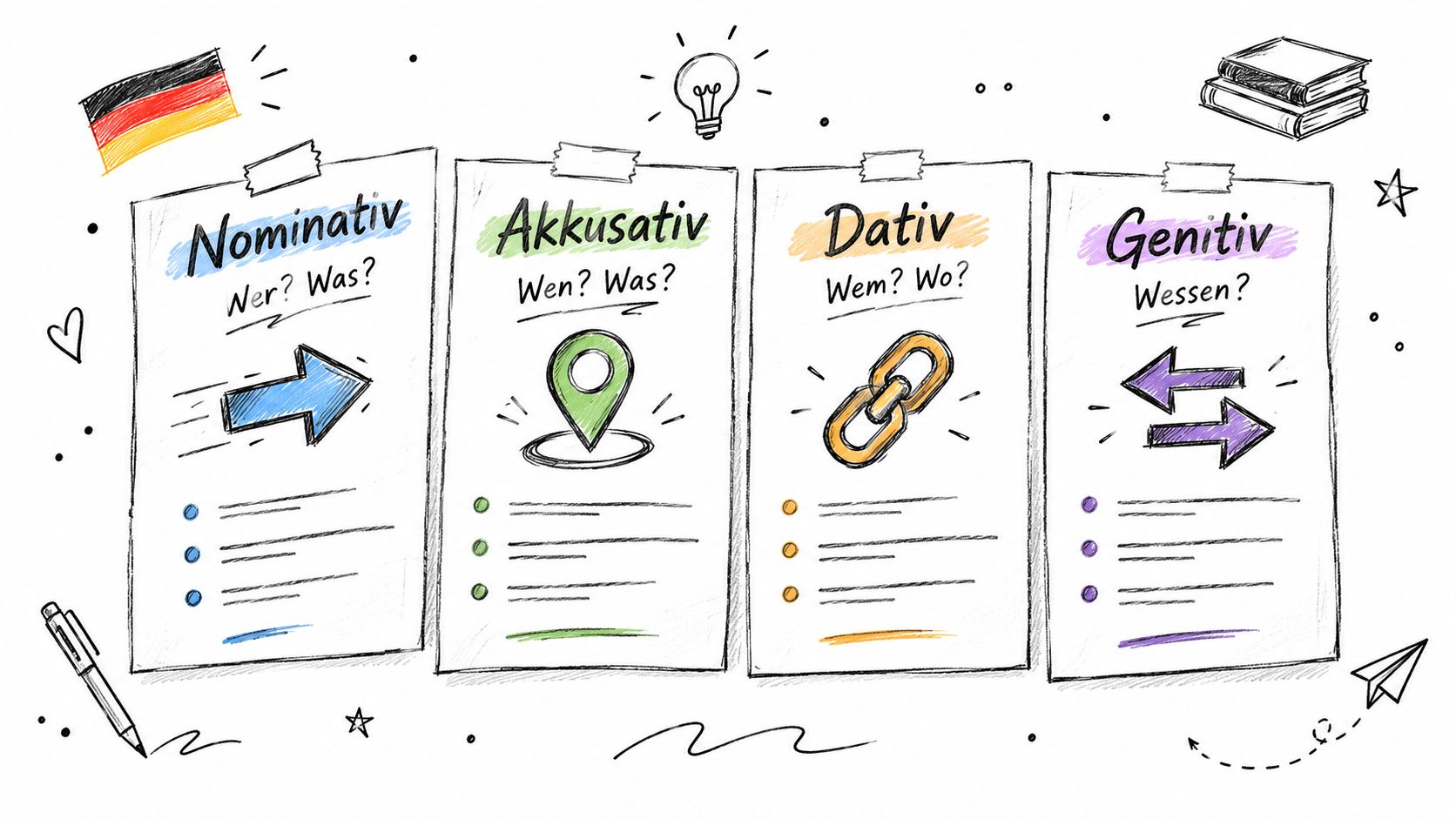
German Prepositions: Which Case Does Each One Take? Complete Tables
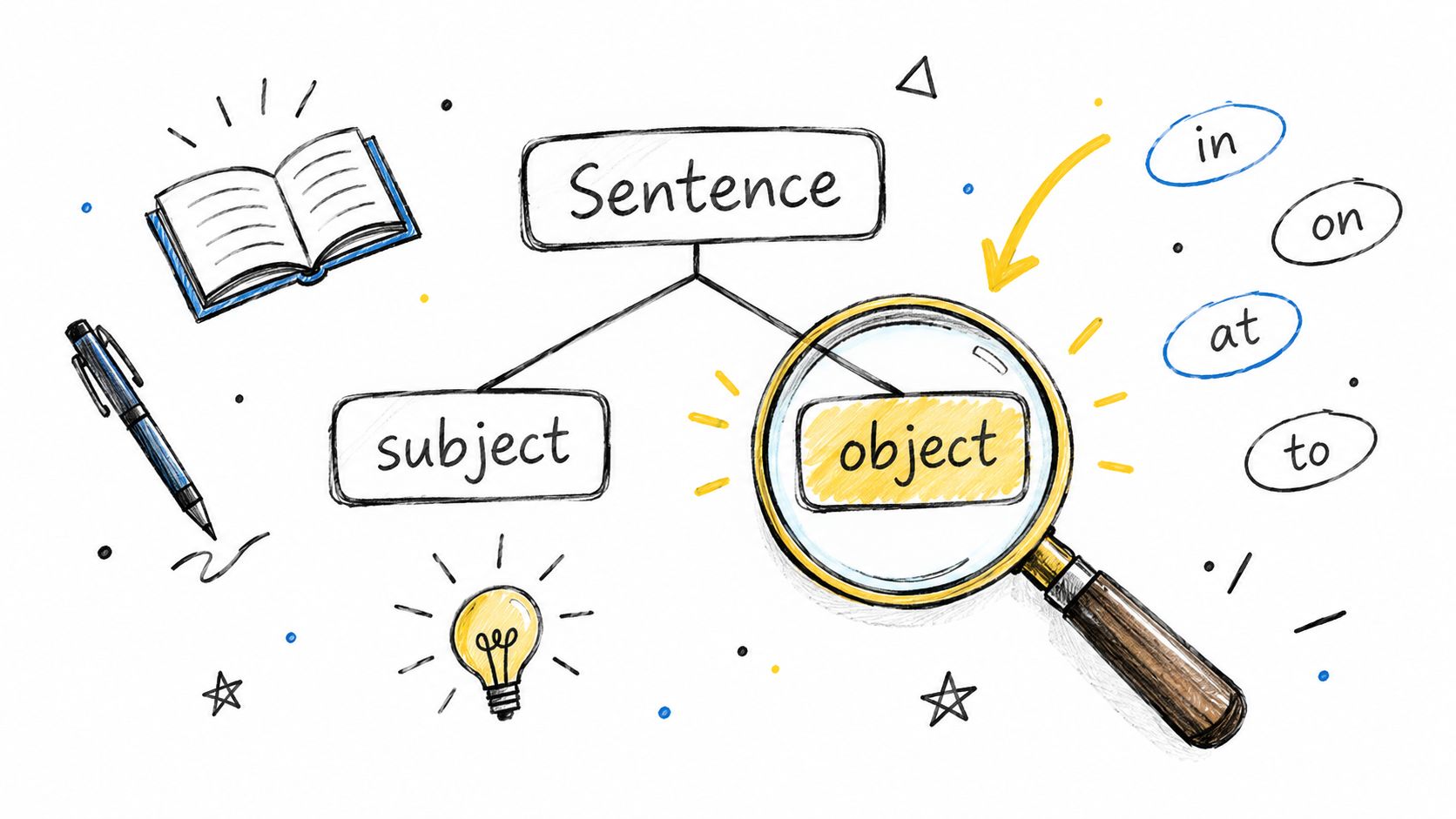
German Accusative Case Explained: When and How to Use Akkusativ


