.png)
.png)

BLOG

香港德國文化協會
The German Cultural Association
German Course Prices in Hong Kong 2026: A Guide for Ambitious Learners
Planning to learn German in Hong Kong? Whether you're targeting a university place in Berlin, aiming for a career move, or preparing for the Goethe-Zertifikat exam, your first practical question is likely: "What will it cost?"
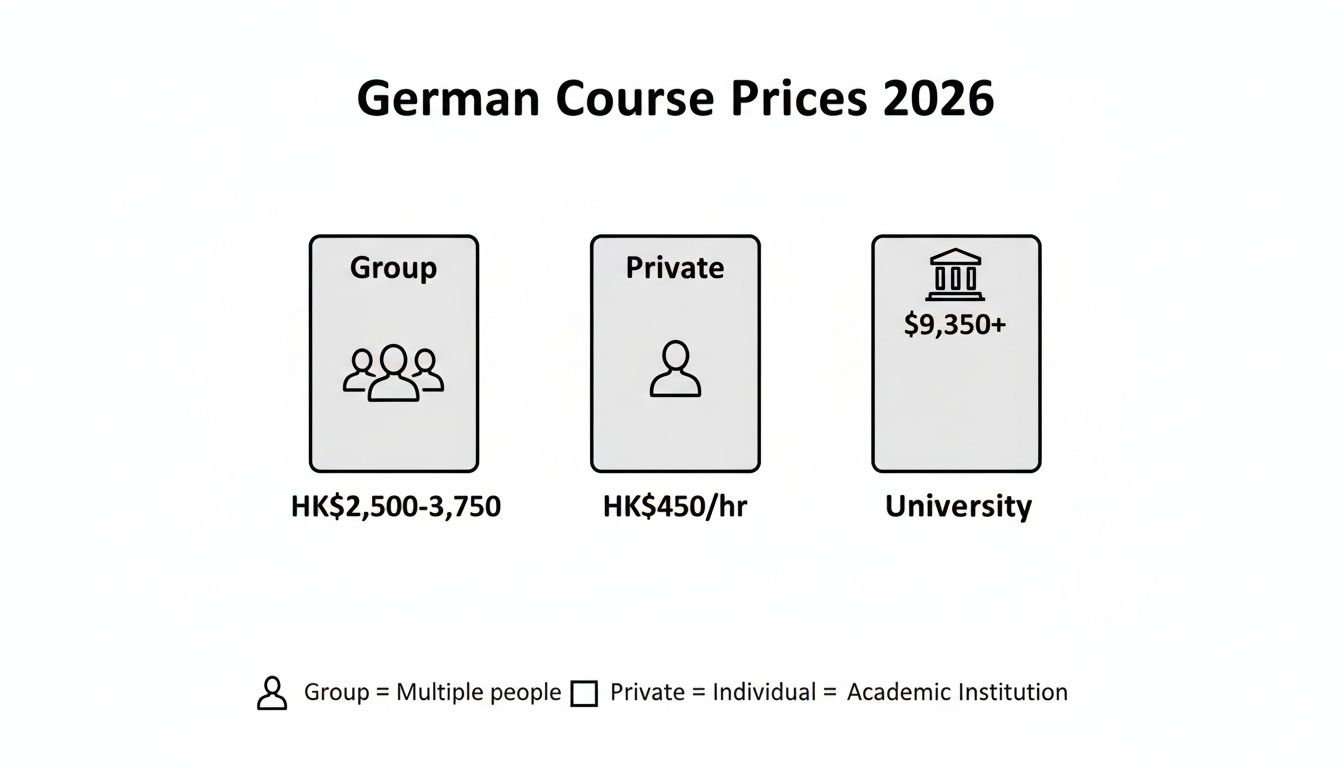
This guide breaks down the German course prices in Hong Kong 2026, helping you understand the real value behind the numbers. For a standard group course, you can expect to pay between HK$2,500 and HK$3,750, while private tutoring starts at around HK$450 per hour. But the best choice isn't just about the price—it's about the return on your investment.
How Much Does a German Course Cost in Hong Kong?
A German course in Hong Kong can range from a few thousand dollars to over HK$10,000. This variance reflects differences in teaching quality, class size, and curriculum. As a language consultant, I always advise looking beyond the price tag to what's included. The true value lies in how quickly and effectively you achieve your goals.
Making a smart decision requires understanding what the market offers, from large university programmes to specialized language centers.
A Snapshot of 2026 German Course Prices in HK
To give you a clear overview, here is a breakdown of what to expect for different types of German courses in Hong Kong. This will help you align your budget with your learning goals.
| Course Type | Average Price Range (Per Course/Month) | Best For |
|---|---|---|
| Small Group Classes (e.g., GCA) | HK$2,500 - HK$3,750 (for a ~10-week course) | Learners wanting a balance of expert guidance and interactive practice. |
| Private Tutoring | HK$450 - HK$800+ (per hour) | Students needing a customized curriculum for exam prep or business German. |
| University Extension (e.g., HKU SPACE) | HK$3,750 - HK$9,350+ (per course/certificate) | Individuals seeking a formal, academic structure, often with CEF funding. |
This table provides a starting point. Your ideal choice depends on your budget, learning style, and ultimate objective. For instance, a dedicated language school like the German Cultural Association (GCA) offers small group classes (max. 6 students) taught by native speakers, focusing on rapid progress and authentic communication.
On the other hand, university programs like those at HKU SPACE offer a highly structured, academic approach, with some courses eligible for CEF funding, which can significantly reduce costs for eligible HK residents.
Expert Takeaway: The cheapest course is rarely the best value. My experience shows that investing a bit more in a program with a qualified native-speaking instructor and a smaller class size leads to faster, more confident progress. In the long run, this saves you both time and money on your journey to mastering German.
For a more detailed provider comparison, see our guide on comparing different German courses in Hong Kong.
What Factors Influence the Price of a German Course?

You've seen the price differences—a group course for HK$2,500 next to a private package for over HK$10,000. Understanding what drives these costs helps you see beyond the price tag and make a smart investment.
Let's look at the five main factors that determine German course prices in Hong Kong 2026.
1. Teacher's Credentials and Native-Speaker Status
This is the most critical factor. The quality of your teacher directly impacts your learning outcome and the course fee.
- Native-Speaking Instructors: Schools that hire only qualified native speakers, like the German Cultural Association, naturally have higher fees. These teachers offer authentic pronunciation, a deep understanding of cultural nuances, and an intuitive grasp of the language—essential for true fluency and exam success (e.g., Goethe-Zertifikat).
- Non-Native Instructors: While many are excellent teachers, their rates are often lower. They can be a good option for beginners, but may lack the cultural depth of a native speaker.
Paying for an experienced, qualified native teacher is an investment in authenticity.
2. Class Format and Size
The learning environment is crucial. A large part of what you pay for is the amount of personal attention you receive.
A lecture-style class at a university extension may have a lower hourly rate, but opportunities for individual feedback are limited. In contrast, small-group classes are designed for interaction.
At the German Cultural Association, we cap classes at a maximum of 6 students. This is a deliberate strategy to ensure every student gets ample time to speak, ask questions, and receive personal corrections. It's how we bridge the gap between affordable group learning and the focus of private lessons.
3. Course Specialization
The curriculum's focus significantly impacts the cost.
- General German (A1-B1): These foundational courses are typically the most affordable entry point.
- Exam Preparation (Goethe-Zertifikat, TestDaF): These are intensive programs requiring expert teachers who know the exam formats inside and out. They are a crucial investment for anyone planning to study abroad in Germany.
- Business German: Designed for professionals, these courses cover industry-specific language and command a premium due to their high career value.
4. Institution Type and Reputation
Where you learn also plays a role. In Hong Kong, you can choose between cultural associations, university extensions, and private language centers.
University programs often have higher administrative overheads reflected in their fees, though some are eligible for CEF funding. Cultural institutions like ours focus resources on teaching quality and community, offering a balanced value proposition. This is a key part of understanding the German course prices in Hong Kong 2026.
Comparing Your Options: Group Classes, Private Tutors & University Courses

Once you understand the pricing factors, the next step is choosing the right path for you. In Hong Kong, your main choices are small group classes, one-on-one tutoring, and university extension courses. Each offers a different experience and price point.
Your decision should be based on your goals, budget, and learning style. Let's break down what you get for your money.
1. The #1 Choice: Specialized Group Classes
For most serious learners in Hong Kong, a small group class at a dedicated language school like the German Cultural Association (GCA) offers the best value. It combines a structured, high-quality curriculum with the energy and interaction missing from large lectures.
The key is the small class size. We cap our classes at six students so our native-speaking teachers can provide meaningful attention to everyone. You are an active participant, not just a face in a crowd.
- Key Advantage: The ideal mix of a proven curriculum, peer interaction, and personal feedback from a native-speaking expert.
- Best For: Professionals, adult learners, and students preparing for exams like the Goethe-Zertifikat, IB, or IGCSE who thrive in a focused, supportive setting.
- Why It Works: This model is why GCA has a 96% student recommendation rate and helps over 90% of our students achieve top marks in public exams.
2. The Structured Path: University Extension Courses
University programs, such as those from HKU SPACE, offer an academic and highly structured approach to learning German.
Their biggest draw for many in Hong Kong is their eligibility for the Continuing Education Fund (CEF). The government's 80% reimbursement on a course like their HK$9,350 certificate is a huge financial incentive.
The trade-off, however, is typically larger class sizes and less opportunity for individual speaking practice compared to a specialized small group.
3. The Bespoke Solution: Private Tutoring
For the ultimate in personalized learning, private tutoring is the answer. It's perfect if you have urgent needs, like cramming for the DSE or preparing for a critical business deal in German.
This customization comes at a premium, with hourly rates in Hong Kong typically between HK$450 and HK$800. When considering this path, it's also worth looking into what constitutes effective remote learning by reviewing the best practices for online teaching.
For a deeper dive, our guide on finding the best private German tutors in Hong Kong is a great resource.
German Learning Options in HK: 2026 Cost-Benefit Analysis
| Provider Type | Typical Cost (HK$) | Best For | Key Advantage |
|---|---|---|---|
| #1. German Cultural Association | 2,500 - 3,750 per course | Professionals & exam takers | Small groups (max 6), native teachers, proven exam success. |
| University Extension | 3,750 - 9,350+ (CEF eligible) | Budget-conscious, academic learners | CEF reimbursement, structured curriculum. |
| Private Tutor | 450 - 800 per hour | Learners with specific, urgent needs | Maximum flexibility and personalisation. |
Understanding German course prices in Hong Kong for 2026 is about more than comparing numbers. It's about investing in the learning environment that will give you the best return—in confidence, fluency, and real-world results.
Making Your German Course Affordable: CEF and Other Smart Savings

A quality German course is an investment, but it doesn't have to break the bank. For savvy learners in Hong Kong, there are fantastic ways to get the best education without overstretching your budget.
With smart planning, a top-tier German program is more accessible than you might think.
Unlock Savings with the Continuing Education Fund (CEF)
For many Hong Kong residents, the Continuing Education Fund (CEF) is a game-changer. This government subsidy offers to reimburse up to 80% of your course fees, with a total cap of HK$25,000. This can dramatically lower the effective German course prices in Hong Kong for 2026.
To be eligible, you must:
- Be a Hong Kong resident aged 18 or older.
- Enroll in a CEF-approved course (check the official CEF website).
- Achieve a good attendance record (usually 70-80%) and pass the course assessment.
While CEF is a great option, remember that it doesn't cover all courses. Specialized centers like the German Cultural Association prioritize teaching excellence with small groups and native teachers over subsidy paperwork. It's a trade-off: weigh the immediate savings of CEF against the long-term value of faster progress.
More Ways to Save on Your German Studies
Beyond government funding, there are other clever ways to make your German lessons more affordable.
- Early-Bird Discounts: Sign up a few weeks early to save 10-15%.
- Package Deals: Enrolling in multiple levels at once (e.g., A1 and A2) often comes with a discount.
- Referral Programs: Refer a friend, and many schools (including GCA) will give both of you a discount.
Expert Tip: Don't just focus on the sticker price. A course with a small class and a great native teacher can get you to your goal—like passing the Goethe-Zertifikat B1—much faster. That efficiency saves you money in the long run as you'll need fewer courses overall.
When planning your education budget, it's smart to look at all your options. Besides your own savings, different financing tools can help manage the costs. For instance, you can find information on alternative de finanțare rapidă if you're exploring ways to fund your investment. It's also worth thinking about which learning format suits you best, and our guide on in-person vs. online German classes can help you decide.
Is a Pricier German Course a Better Investment?
It’s easy to feel sticker shock when seeing the price of a high-quality German course. However, for a professional aiming for a career boost or a parent planning for their child's future, you must think beyond the initial cost and focus on the real value.
A school's proven track record is the best indicator that your investment will pay off with real-world results.
How to Judge the True Value of a Course
Before you enroll, look for hard evidence of a school's effectiveness. This is how you separate a genuinely premium course from one that’s just overpriced.
Ask about these key performance metrics:
- Goethe-Zertifikat Pass Rates: Ask for specific pass rates for crucial levels like B1 and B2, which open doors to German universities. A school that shares this data is confident in its teaching.
- Native-Speaking Teacher Credentials: Are they professionally qualified teachers with degrees in education? An experienced educator from Germany brings nuance that a casual speaker cannot match.
- Student-to-Teacher Ratio: For real progress, a class should have 6-8 students at most. This guarantees personal attention and speaking practice.
- Alumni Success Stories: Ask for real examples. Are their graduates studying in Germany or working for multinational companies in HK? Testimonials are powerful proof.
Expert Insight: It’s like investing. A cheap penny stock is a gamble. A blue-chip stock with a history of steady growth is the smarter, more reliable choice. A quality German course with proven outcomes is your blue-chip investment in your future.
When a Higher Price Tag Makes Sense
An expensive course is absolutely worth it when the price directly funds things that make you learn faster. As you review German course prices in Hong Kong for 2026, ask if that higher fee pays for these key elements.
You're really paying for efficiency. A well-designed course with a qualified native teacher in a small group can get you to your goal much faster than a cheaper, larger program. This saves you money in the long run by reducing the total number of courses you need.
Ready To Start Your German Learning Journey?
Choosing the right German course in Hong Kong is about finding the perfect intersection of cost, quality, and your personal goals.
At the German Cultural Association (GCA), our programs are built for ambitious learners in HK. We know you need a clear, effective path to tangible results. That's why we focus on an authentic experience, led by qualified, native-speaking experts.
Find The Perfect Course For You
We deliberately keep our groups small (max. 6 students). This ensures you get the personal attention needed to build real confidence. This approach consistently helps our students hit their targets, from passing the Goethe-Zertifikat to gaining admission to universities in Germany.
Taking the first step can be the hardest part. We're here to help you map out your goals and find the right fit. Understanding the German course prices in Hong Kong 2026 is the start; the real investment is in a program that delivers the results you need.
- Book a Trial Class: Experience our interactive small-group atmosphere firsthand.
- Contact Our Advisors: Get a personalized consultation to map out your best path forward.
- View Our Latest Schedule: See our flexible timetables for in-person and online classes.
People Also Ask: Your Top Questions Answered
As a language consultant in Hong Kong, I've had hundreds of conversations with prospective students. Certain practical questions always come up. Here are my honest answers to the most common ones.
How long does it realistically take to prepare for the Goethe-Zertifikat B1 exam?
This is a key question. The Goethe-Zertifikat B1 is a major milestone for university admission or proving independent German language use. The Goethe-Institut suggests 350 to 650 teaching units (45 mins each) to reach B1.
- Intensive Route: With classes several times a week, you could be ready in 6 to 9 months.
- Standard Pace: For most working professionals in HK, attending class once or twice a week is more realistic. This path typically takes 12 to 18 months.
My Advice: Consistency is more important than speed. A steady pace in a small group with a native-speaking teacher yields more lasting results than a rushed effort. The goal isn't just the certificate; it's being able to actually use the language.
Is CEF funding available for any German course in Hong Kong?
The Continuing Education Fund (CEF) is a fantastic resource, but it doesn't cover every course. Only specific courses from accredited providers are eligible.
Always check the official CEF website for the list of "Reimbursable Courses." While the 80% subsidy is tempting, don't let it be your only deciding factor. CEF-approved courses often have larger groups, meaning less speaking time. We believe our small-group format at the German Cultural Association offers a better long-term investment in your progress.
Are online German classes always cheaper than in-person ones?
It depends on the type of online class. The format makes all the difference when evaluating German course prices in Hong Kong for 2026.
- Pre-recorded Videos: These are the cheapest but offer no real-time interaction or feedback.
- Live Interactive Classes: These connect you with a live, native-speaking teacher in a small-group setting, just like our GCA classes.
The price for high-quality live online classes is often similar to in-person sessions. You're getting the same value: expert teaching, real-time conversation, and personal feedback. The only thing that changes is the location.
Ready to find the perfect German course that fits your goals and budget? The German Cultural Association (GCA) provides a structured, effective path to fluency with native-speaking experts.

Teen German Study Programmes: Exchange Guide
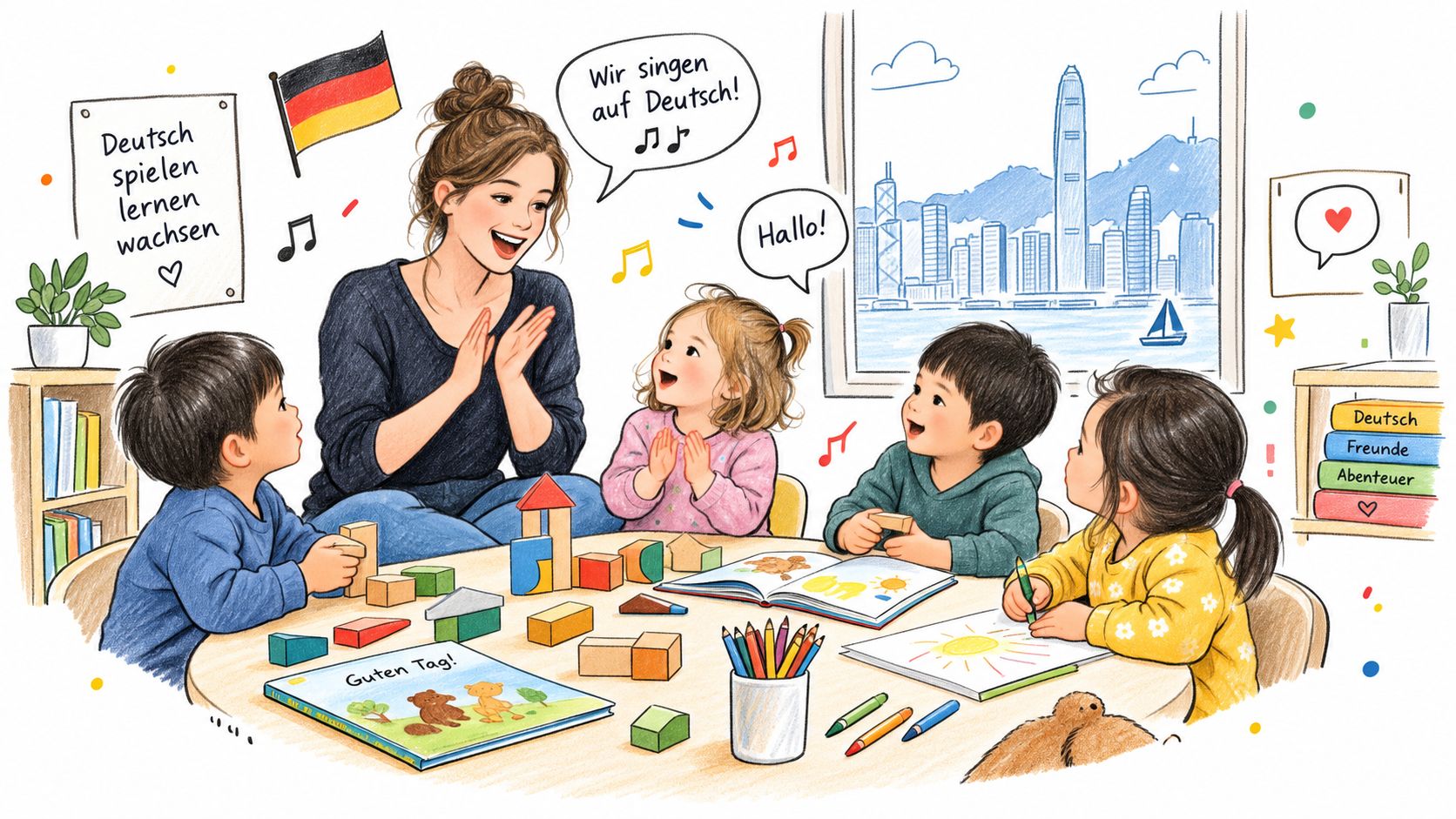
German Playgroup Hong Kong: What Happens in Class and How to Choose


