.png)
.png)

BLOG

香港德國文化協會
The German Cultural Association
German Courses for Teens 2026/27: Ages 12-18 New Term Classes & Exam Pathways
A Hong Kong parent often spots the same pattern in Form 1 to Form 5. The teen needs German for IGCSE, IB, or study abroad in Germany, but schoolwork already feels heavy, and no one wants to waste a term on the wrong class. German Courses for Teens 2026/27 need to solve that exact problem, with the right level, the right exam target, and a schedule that fits HK life.
For families in Hong Kong, the question isn't whether to start German. It's how to route ages 12 to 18 into the right class and exam pathway without adding unnecessary pressure. That's where a structured, native-led option matters, because progress has to support school demands, not compete with them.
In Hong Kong, the German pipeline is small, but it's established. HKU-cited data show German as a second foreign language enrolled in 4 schools with 90 students, compared with French and Spanish in the same dataset, and only 22 to 25 new students typically enrolled each year to learn German as a second foreign language, which explains why teen classes need to be precise rather than broad and generic. The local exam path is equally specialised, so families planning for 2026/27 need a course that's built around exam routing, age, and timetable, not just “learning German” in the abstract.
This guide breaks that down step by step for parents, teens, and working professionals helping a child choose wisely. It focuses on new term classes, class format, exam windows, placement, and fees in Hong Kong, with a practical eye on HKDSE, IGCSE, IB, and Goethe-Zertifikat outcomes.
Table of Contents
Introduction Why German in Hong Kong Matters for Teens Right Now
Choosing a German course for a teenager in Hong Kong usually starts with one question, which exam is the target? A Form 4 student may already manage maths, English, and school deadlines well, yet still need a clearer route when German becomes part of the plan for overseas study. Another teen may have school German, but still need a path to Goethe-Zertifikat that shows what to study next.
German Courses for Teens 2026/27 matter now because exam windows for the 2026/27 term are already fixed. In Hong Kong, the most useful courses turn limited weekly study time into a pathway that fits school pressure, exam deadlines, and future study plans.
Practical rule: if German is linked to a real outcome, such as HKDSE Category C, IGCSE, A-level, IB, or study abroad in Germany, choose the course by exam goal first, then by class format.
For a deeper look at how German fits alongside DSE and IB subject choices, see German for teens: DSE and IB language choices in Hong Kong.
A structured, native-led programme helps teens move from conversation practice to exam discipline at a steady pace. The German Cultural Association Hong Kong follows that kind of progression, which suits students who need clear steps instead of casual exposure.
Hong Kong school calendars are crowded, so parents need a plan that is easy to read and practical to fit into term time. A well-planned German track can reduce restart cycles and help a teen build toward certification with more confidence.
For parents and professionals supporting a teen, this guide offers a clear decision framework. It is designed for families who want practical class advice, age-appropriate exam routing, and a realistic term plan for 2026/27.
What Are German Courses for Teens in Hong Kong and Who Are They For
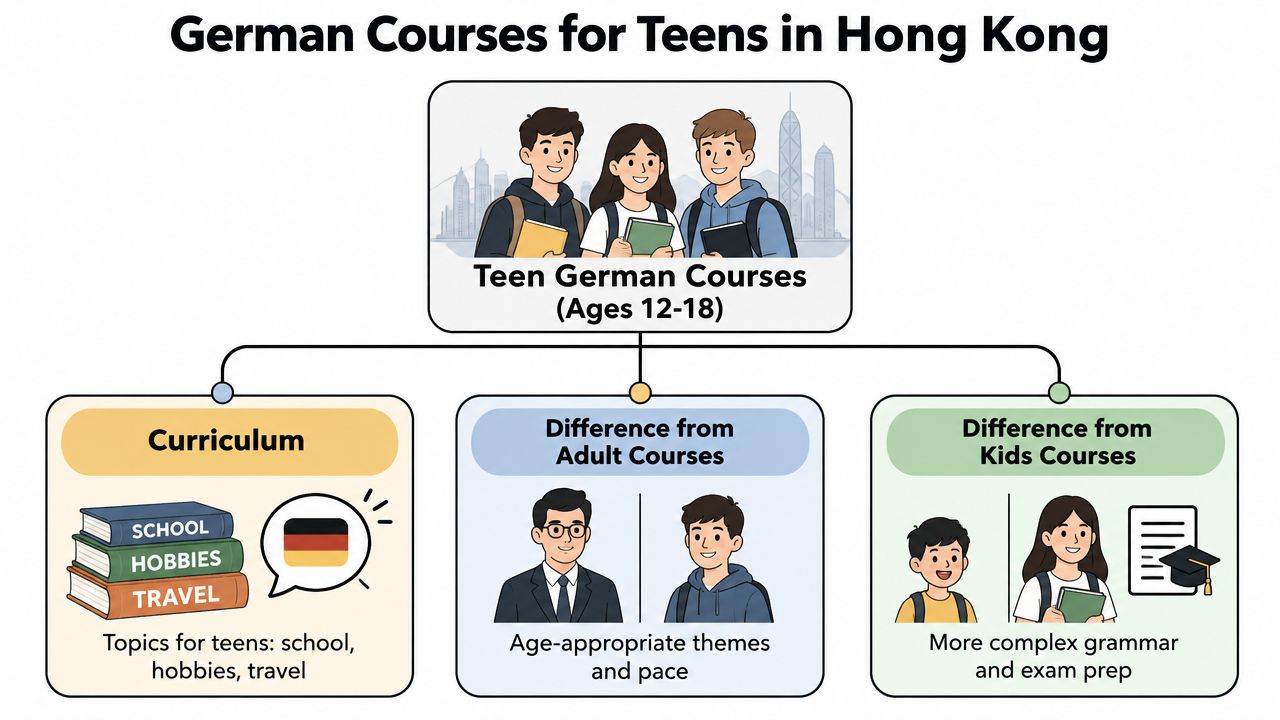
German courses for teens in Hong Kong are age-appropriate German classes for learners roughly 12 to 18, built around school life, hobbies, travel, and exam preparation. They sit between children's courses and adult programmes, so the content is more mature than a kids class, but less abstract and less workplace-driven than an adult lesson.
They work like building blocks. A teen starts with core structures, adds speaking confidence, then moves into reading, writing, and exam-format practice, so each layer supports the next. That structure is important because German gets harder in a predictable way, and teens need a course that follows that progression instead of jumping around.
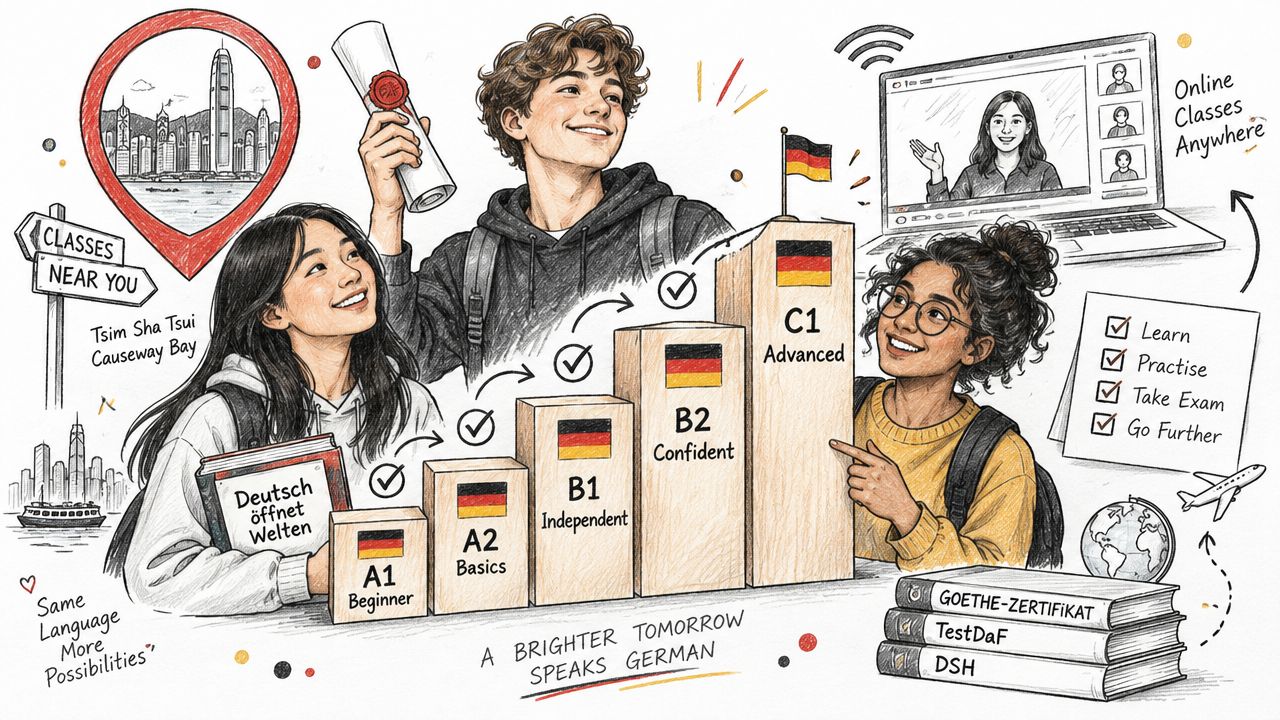
The German Cultural Association Hong Kong offers flexible delivery, including in-person classes near Tsim Sha Tsui and Causeway Bay MTR and interactive online classes via Zoom. For teens who commute after school, that flexibility matters just as much as the syllabus.
Who benefits most
- School students in Form 1 to Form 6: They need German that fits around homework, tests, and co-curricular demands.
- IB, IGCSE, and A-level learners: They need exam-style practice, not just informal conversation.
- Families planning study abroad in Germany or Europe: They need a pathway that connects school effort to recognised certification.
- Teens with mixed confidence levels: Some are strong readers but shy speakers, while others speak well but need grammar structure.
A teen course should feel age-appropriate, not childish and not overly adult. If the topics sound like business meetings or travel brochures only, the class probably isn't tuned to a secondary-school learner.
Formats usually include small-group classes and private lessons. Small groups suit teens who learn well with peers, while private lessons work better for students who need faster exam correction or a highly customised pace.
How to Choose Between In Person Online Small Group and Private Classes
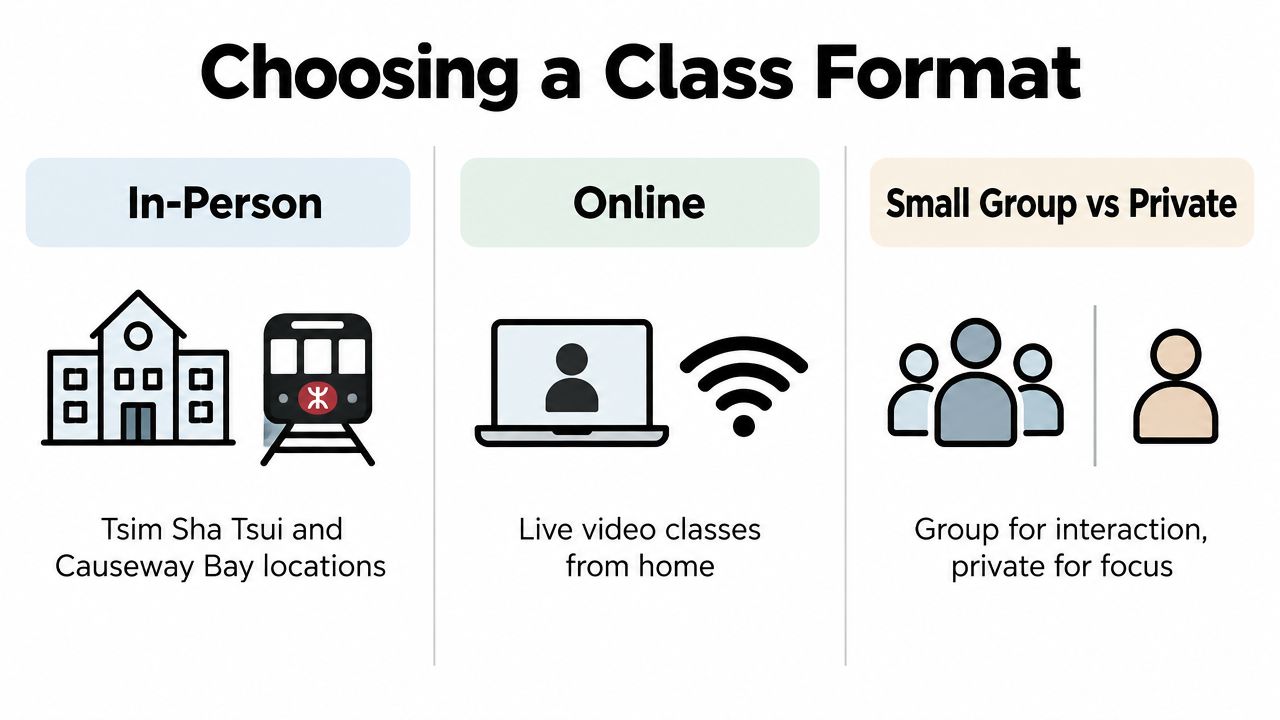
The right format depends on where the teen studies best, how much feedback they need, and how fixed the weekly schedule is. In Hong Kong, that usually comes down to two decisions, delivery mode and class size.
Delivery mode
In-person classes work well for teens who focus better in a classroom and benefit from direct correction. The German Cultural Association Hong Kong places in-person classes near Tsim Sha Tsui and Causeway Bay MTR, which helps families who commute from different parts of HK.
Online classes via Zoom suit students with packed school timetables, rehearsal commitments, or long travel time. They're also useful when a family wants to protect study time on busy weeks, because the lesson happens without the extra commute.
Group size
Small-group classes, capped at 6, give teens room to speak without getting lost. They're a strong fit for learners who need peer interaction, but still want individual correction.
Private one-to-one lessons are better for students who need rapid exam preparation, uneven skill repair, or a customised target, such as moving from conversation to Goethe-Zertifikat readiness. They also suit families who need tighter control over pace.
| Learner Profile | Best Fit | Why It Works |
|---|---|---|
| Busy school student with steady motivation | Small group online | Keeps the week manageable and still gives peer speaking practice |
| Teen who needs confidence in speaking | In person small group | Live interaction and direct correction help faster participation |
| Student targeting a specific exam date | Private lessons | Pace and homework can be matched to the exam timeline |
| Family needing flexible rescheduling | Online or private | Easier to manage around school tests and activities |
What parents should check
- Schedule fit: The course has to fit around after-school hours and revision periods.
- Teacher profile: Native German teachers are a strong sign that pronunciation, listening, and usage are being modelled properly.
- Curriculum structure: A structured progression helps teens avoid gaps between terms.
- Rescheduling policy: Easy online rescheduling matters when school deadlines shift.
The German Cultural Association Hong Kong combines structured curriculum with flexible scheduling, which is why it suits families who don't want to sacrifice discipline for convenience, or convenience for discipline.
Exam Pathways and Timelines That Match Age 12 to 18
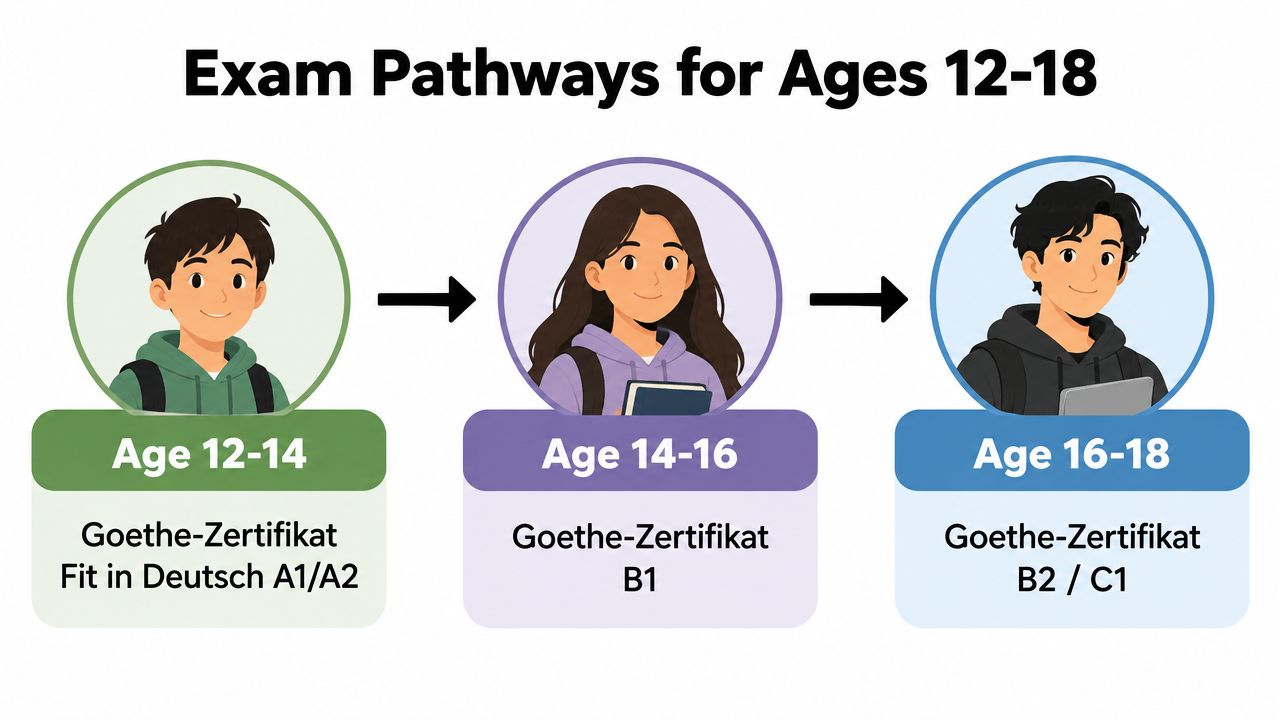
A 12-year-old, a Form 4 student, and a Form 6 student may all be learning German, but they should not always be pushed toward the same exam. In Hong Kong, the route depends on age, school year, and whether the goal is a teen Goethe paper, adult Goethe paper, or school-based recognition.
Age and exam fit
The Goethe-Institut Hong Kong recommends Goethe-Zertifikat A1: Fit in Deutsch 1 for ages 10 to 16, and Goethe-Zertifikat A2: Fit in Deutsch for ages 12+. For HKDSE Category C German, candidates need A2 or above for recognition, so A2 is not just another checkpoint. It is the level that often decides whether German can stay on a school transcript or remain only a private learning subject. See the official exam page at the Goethe-Institut Hong Kong exam overview.
The age switch matters. From age 16, candidates move to the adult Goethe-Zertifikat rather than the teen version, so the same student may need a different paper depending on birthday and exam timing. For families, that means the route should be planned with the school year, not just the syllabus, in mind.
Why the timeline matters
Hong Kong's public records show that German remains a very small exam cohort. The 2023 Hong Kong Annual Digest of Statistics recorded only 8 candidates for German Language in HKDSE, and the earlier table showed 5 candidates. With numbers that low, each exam decision affects planning more sharply than it would in a larger subject.
The point is not that German is hard to access. The point is that timing matters. Teens aiming for IGCSE, A-level, or IB also need a route that fits school assessments, because internal tests and external exams can overlap quickly in Hong Kong.
Practical routing by age
- Age 12 to 14: Start with A1 or A2 Fit if the teen is new or still building confidence.
- Age 14 to 16: Aim first for A2 recognition, then move to B1 if workload and school timing allow it.
- Age 16 to 18: Shift to the adult exam track and align German with university or visa goals.
For parents comparing exam types, the Goethe-Zertifikat versus other test paths guide helps show why some students stay on the Goethe path while others need a different route. The practical rule is simple. Match age, school year, and target exam before you lock in the term.
Placement Curriculum and Sample Weekly Timetables for the New Term
Placement should tell you two things, current level and next-step goal. A good teen programme does not treat every beginner the same way, because a 12-year-old with school exposure and a 17-year-old starting from zero need different pacing.
How placement works
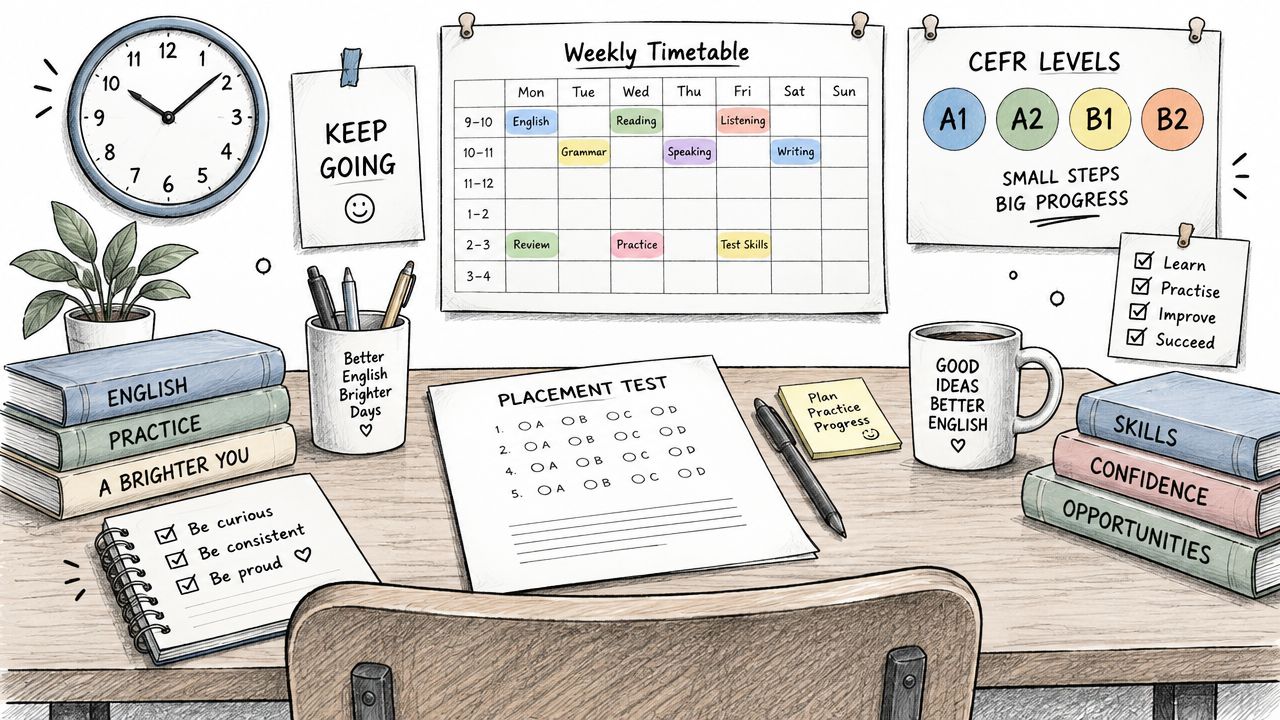
A structured curriculum usually moves through CEFR-style levels in stages, so students know what they're building toward. That matters for parents because progress feels less random when it's linked to a clear benchmark, especially for teens who need a certificate system to stay motivated.
The German Cultural Association Hong Kong uses a structured certificate approach with 80% attendance as part of the learning discipline, which helps families understand that consistency matters as much as talent. For exam-oriented learners, that kind of rule is useful because German improves through repetition, not shortcuts.
Practical rule: if a teen misses classes often, the problem is rarely “ability”. It's usually timetable design, and the placement plan should reflect that.
How to read a weekly timetable
A realistic term timetable should answer three questions. When is class? How much homework is expected? Where does revision fit?
A sample rhythm for a Form 2 student might look like this:
- One class per week: enough to keep progress steady without crowding school nights.
- Short homework blocks: vocabulary review and listening practice after class.
- Weekend revision: one shorter session to recycle grammar and speaking notes.
A Form 5 student usually needs a tighter plan:
- One main class plus private review, if the exam target is close.
- Focused homework, especially writing correction and listening practice.
- Protected exam revision time, so German doesn't eat into school mock exams.
What teachers adjust
In small groups, teachers can slow down on grammar that causes confusion and speed up when the class is already secure. That flexibility is valuable for teens, because some learn quickly in speaking but need more time with sentence structure, while others need the opposite.
The sample German lessons and private versus group comparison is helpful if you're trying to decide between group rhythm and one-to-one correction. For school families, the biggest win is a timetable that the teen can sustain through the whole term.
How Much Does It Cost and How to Plan Fees and Funding in HK
A family in Hong Kong often starts with tuition fees, then discovers the full cost depends on the route. A better budget looks at the whole path, including level changes, exam registration, and scheduling flexibility.
What drives the fee
Three factors usually shape the price. Group size matters, because private tuition costs more than a small group. Level matters too, because advanced classes usually require more detailed correction and exam work. Exam fees also vary, and Goethe fees are listed beside each exam date rather than shown as one universal rate Goethe-Institut Hong Kong registration details.
HKU SPACE provides a useful fee reference for structured German study in Hong Kong. Its CEF-reimbursable certificate programmes list Introductory at HK$9,550, Intermediate at HK$9,850, Upper Intermediate at HK$10,450, and Advanced at HK$10,450, with level mapping tied to Goethe-Zertifikat A1, A2, and B1 requirements HKU SPACE German programme details. For families comparing a certificate pathway with a school-year course, that gives a concrete benchmark.
CEF and exam planning
CEF means the Continuing Education Fund. For eligible courses, part of the tuition may be reimbursed, so parents should check the CEF course register before enrolment. Only approved programmes qualify, so the course title and eligibility matter before any payment is made.
Goethe exam registration can be done in person at reception with cash or EPS, or online by credit card Goethe-Institut Hong Kong registration details. The fee should always be checked beside the exact exam date, because it is posted that way, level by level.
Budget checklist
- Confirm the level. A course that is too basic or too advanced wastes money and time.
- Check exam timing. The test should fit a sensible school window.
- Ask about attendance rules. A structured certificate system can affect progression.
- Count the extras. Materials and exam bookings can change the total.
- Compare format, not just price. A cheaper class is expensive if it does not fit the teen's exam goal.
For Hong Kong parents, value usually comes from avoiding wasted terms. A structured curriculum with a clear benchmark path often saves more over time than the lowest headline fee.
Ready to Start Learning Book Your Trial and Secure Your 2026/27 Place
The right German class should do three things at once. It should fit your teen's age, match the exam they need, and stay realistic alongside schoolwork. If you get those three right, the term becomes manageable, and progress becomes visible.
A native-led, structured programme is especially useful for families who want Goethe-Zertifikat preparation, school alignment, and flexible scheduling in one place. That is the kind of support many Hong Kong parents look for when they want a serious course without the chaos of patchwork tutoring.
Start by checking the latest timetable, then decide whether your teen needs a small group or a private lesson. If you're still unsure, a trial class is the safest next step because it shows you the teaching style, pacing, and fit before you commit to the full term.
German Cultural Association Hong Kong(GCA) offers teen German classes in Hong Kong with in-person and online options, small groups, and structured exam preparation for learners who need a clear path for the 2026/27 term. If you're planning around HKDSE, IGCSE, IB, or Goethe-Zertifikat, visit German Cultural Association Hong Kong(GCA) to check the latest course schedule and speak with an advisor about the right starting point.
German Courses for Teens 2026/27: Ages 12-18 New Term Classes & Exam Pathways

German Lessons for Kids 2026/27: New School Year Classes for Ages 3-12


