.png)
.png)

BLOG

香港德國文化協會
The German Cultural Association
Germany Working Holiday Visa for Hong Kongers 2026/27: Quota
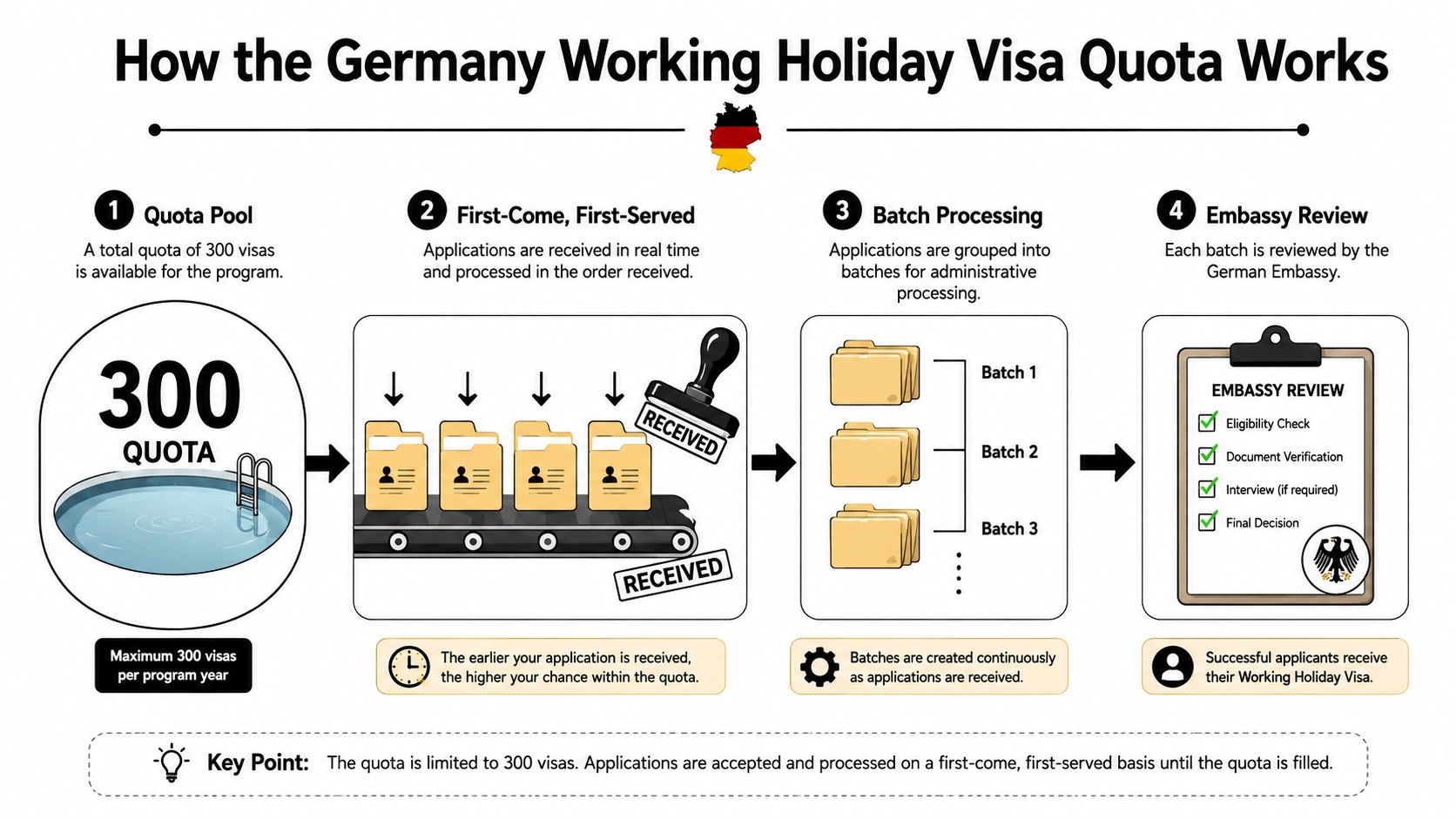
Germany's Working Holiday Visa for Hong Kongers in 2026/27 has an annual cap of 300 places, allocated on a first-come, first-served basis. The programme allows a stay of up to 12 months, but the fixed quota means preparation must happen before the intake opens.
You may be checking your passport after work, comparing Berlin and Munich, or explaining the plan to your parents while wondering whether the quota will disappear before your documents are ready. That concern is justified. The Germany route isn't an open-ended work permit. It's a capped youth-mobility arrangement, and your timing can matter as much as your eligibility.
The practical question isn't whether you qualify. It's whether you can file a complete application through the correct Hong Kong channel quickly enough, while showing that you can support yourself and understand the scheme's limits.
Table of Contents
- Week 1, verify your foundation
- Week 2, monitor and organise filing
- Week 3, start structured German preparation
- Week 4, draft the personal case
Why the 300-Place Quota Matters to Hong Kong Applicants
A typical Hong Kong applicant starts with a clear plan. They'll finish a contract, improve their German, save money, and leave for Germany when the timing feels right. That plan becomes fragile if the applicant treats the quota as background information instead of the central deadline.
The official Hong Kong Working Holiday Scheme page confirms 300 places for Hong Kong residents applying for Germany, allocated on a first-come, first-served basis. The scheme began on 1 July 2009, when the arrangement used a smaller quota, and the quota later expanded to its current level. You can verify the present conditions through the official Germany Working Holiday Scheme information for Hong Kong.
A fixed ceiling changes the strategy
Germany is attractive because the route combines travel with limited work and a defined period of daily life in Germany. It may suit a young professional testing a new market, an adult taking a career break, or a recent graduate who wants practical experience before committing to study abroad in Germany or Spain.
The quota creates a hard ceiling. Once the available places have been allocated, a well-qualified late applicant can't assume another place will be issued just because their documents are strong.
Practical rule: Treat the intake opening as a filing deadline, not as the date you begin collecting documents.
Hong Kong applicants should also separate reliable information from general travel content. A guide to best digital nomad destinations 2026 may help you compare locations and lifestyle options, but it can't replace the German Consulate General in Hong Kong's requirements.
Why delays become expensive
Applicants often lose time because they're waiting for a bank letter, correcting an application form, or deciding whether their existing insurance is sufficient. In a first-come, first-served system, those delays can determine whether the application reaches review while places remain.
The quota is therefore the single variable every Hong Kong applicant should design their timeline around. Document preparation, German study, financial planning, and travel decisions should all work backwards from the expected intake rather than from an ideal departure date.
How the Germany Working Holiday Visa Quota Actually Works
The quota is simple in principle. The German and Hong Kong arrangement provides 300 places each year for each side, and Hong Kong residents applying for Germany use the Hong Kong processing channel. The German Consulate General in Hong Kong confirms the programme's purpose is travel and experiencing daily life in Germany for up to 12 months, not unrestricted employment. (German Consulate General working holiday information)
The first-come, first-served rule means your place depends on when a complete, eligible application enters the process. It isn't enough to send an email early or express interest before the intake opens. You need to follow the official filing method and submit what the mission requires.
Use a queue model, not a lottery model
Think of the process as a pool of places moving through an administrative queue:
- The intake opens. The consulate accepts applications through its stated Hong Kong channel.
- Applications are received. The filing date and completeness of the submission become important.
- Staff review eligibility and documents. Missing or inconsistent material can delay assessment or require correction.
- Places are allocated within the annual ceiling. A place isn't the same as an informal enquiry or an uncompleted draft.
- The visa decision follows. Approval still depends on meeting the scheme's requirements.
The official conditions include financial proof, insurance, work restrictions, and study restrictions. The Hong Kong government's quota and conditions of stay page states that Germany's arrangement permits one study or training course only, and that course can't exceed six months.
A common misunderstanding is assuming that submitting something incomplete protects a place. Applicants should instead prepare the entire file in advance and verify the current appointment and submission procedure directly with the consulate. The annual quota is a limit on issued places, not permission to work in Germany without conditions.
Official Timeline and Where to Verify Updates
For 2026/27, applicants should plan around official notices rather than unofficial dates shared in WhatsApp groups or online forums. The German Consulate General in Hong Kong and the Federal Foreign Office are the authoritative places to check for the opening announcement, appointment instructions, document requirements, and any procedural change.
Past programme information has shown that an intake can open as early as January, so waiting until the new year to start gathering documents is poor planning. The exact opening date and operational details for a future intake should be treated as unconfirmed until published by the responsible mission.
Build the calendar backwards
Use this sequence:
- Announcement period: Monitor the German Consulate General in Hong Kong and Federal Foreign Office pages weekly.
- Preparation period: Make your passport, financial evidence, insurance, photographs, application form, and supporting documents ready before the announcement.
- Opening week: Follow the published filing or appointment instructions immediately.
- Review period: Remain available to answer questions or provide corrected documents.
- Travel planning: Book major travel arrangements only after the visa outcome and the permitted travel window are clear.
The Hong Kong Labour Department's Germany working holiday factsheet confirms that successful applicants may stay for up to 12 months, must show at least €2,000 in financial proof, need a return air ticket, and must hold liability and medical insurance for the whole stay.
Where Hong Kong applicants should look
Bookmark the official consulate page and check it at least weekly as the intake approaches. Also monitor the Federal Foreign Office's Hong Kong information, which confirms that visa applications for this route are handled through the German mission in Hong Kong. (German government information for Hong Kong applicants)
Set your own document-ready date before the opening announcement. If your file isn't ready when the intake opens, you're already relying on luck rather than preparation.
Documents and Eligibility Checklist for Hong Kongers
The strongest application file is organised for a consular officer to verify quickly. Start with the official conditions, then check every document for consistency, legibility, validity, and matching personal details.
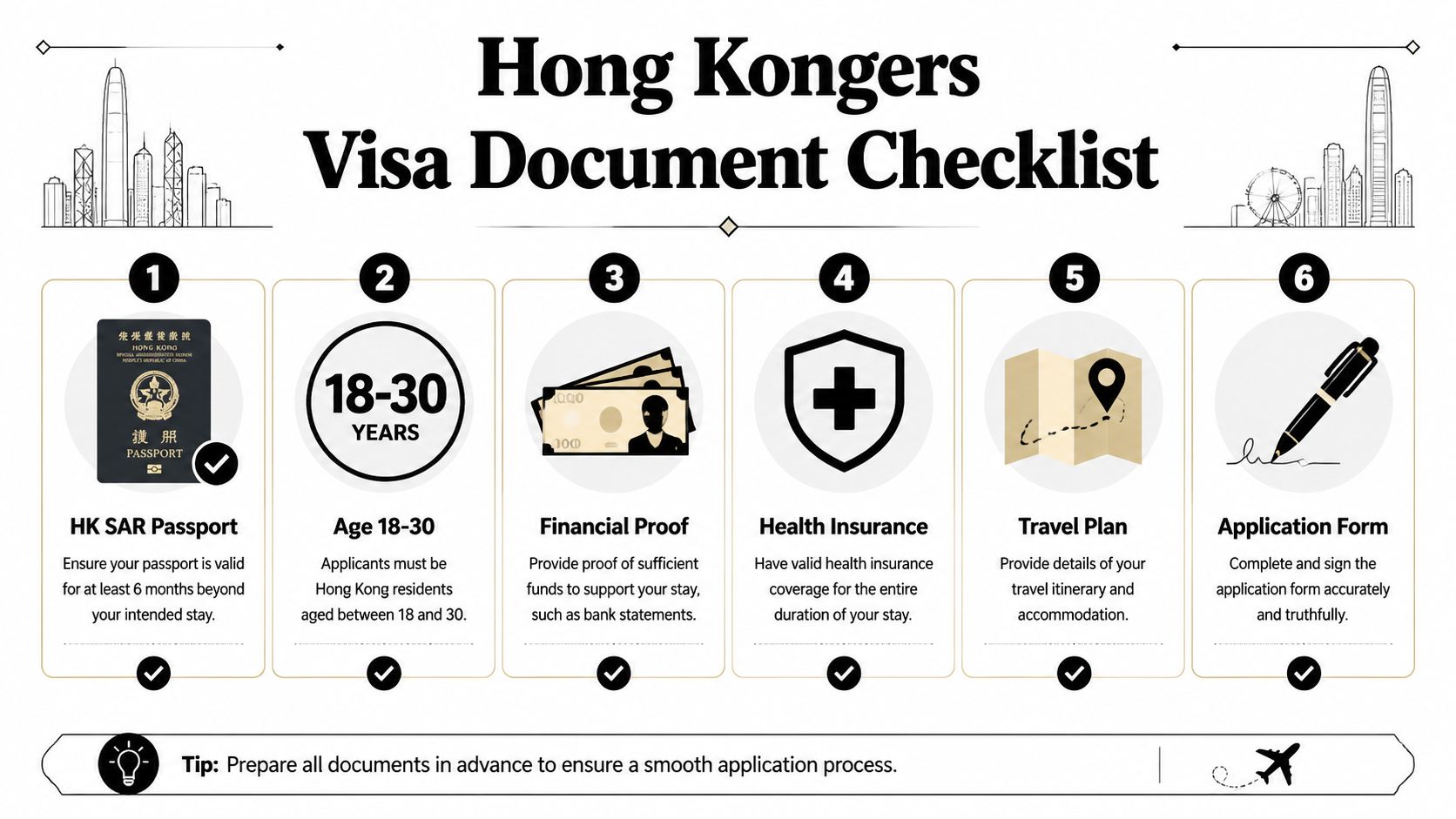
The Hong Kong Labour Department identifies several core requirements for Germany:
- Financial proof: Show at least €2,000 in available funds, as specified in the Labour Department factsheet. The Hong Kong scheme page separately presents the requirement as HK$20,000, so applicants should confirm the current presentation and acceptable evidence with the German Consulate General before filing.
- Return travel: Hold a return air ticket or demonstrate the funds needed to purchase one.
- Insurance: Maintain liability and medical insurance for the entire stay.
- Duration: The approved stay can be up to 12 months.
- Employer limit: You can't work for the same employer for more than three months. (Hong Kong Labour Department Germany factsheet)
Self-audit before the appointment
Check the following against the latest consulate instructions:
- Identity: Valid HK SAR passport and proof that you ordinarily live in Hong Kong.
- Application: Correctly completed visa application materials and any appointment confirmation required by the mission.
- Photograph: A compliant biometric photograph with a clear image.
- Money: Bank evidence that meets the stated financial threshold and is easy to verify.
- Insurance: Medical and liability cover that applies throughout the intended stay.
- Travel: Return ticket or sufficient funds for the return journey.
- Purpose: A coherent travel plan explaining why you want to experience Germany and how limited work supports the trip.
Don't assume a document is acceptable because another European visa accepted it. Translation and certification rules can differ between authorities. If you need guidance on preparing documents translated for immigration, use it as a general document-preparation reference, then confirm whether the German mission requires a particular format.
The most preventable problems are blurry copies, mismatched names or dates, unclear insurance coverage, and financial evidence that doesn't demonstrate accessible funds. Print the final checklist, tick each item, and keep a digital backup in a secure folder.
Using German Language Prep to Strengthen Your Application
German isn't listed as a formal language requirement for the Hong Kong Germany Working Holiday Scheme. It still deserves serious attention. Applicants who arrive without German often face more friction with registration, housing, workplace communication, and everyday administration.
A realistic target is A2 to B1, depending on your intended work and starting point. A2 can support basic interactions, while B1 gives you more control in situations where employers, landlords, or public offices expect you to explain yourself clearly.
Language preparation also improves the quality of your motivation letter. You can describe a concrete plan for integrating into daily life rather than presenting Germany as a vague travel destination. That distinction matters because the scheme is designed around cultural exchange and temporary work, not an unrestricted employment search.
Match study to the intake
A focused plan works better than last-minute vocabulary memorisation:
- Daily practice: Use regular listening, speaking, reading, and writing rather than only grammar exercises.
- Structured progression: Move through an A1 to B1 sequence with clear assessment points.
- Exam timing: If you want a Goethe-Zertifikat, schedule the exam early enough for the result to be available when you submit your visa file.
- Practical vocabulary: Prioritise accommodation, transport, employment, healthcare, banking, and introductions.
For independent study ideas, this guide to how to learn German can supplement, but it shouldn't replace teacher feedback on pronunciation and written accuracy. Hong Kong applicants preparing for a recognised exam can also review German proficiency test registration and fees in HK.
The German Cultural Association Hong Kong(GCA) offers native-speaker instruction, small-group and private lessons, structured A1 to B1 learning, and preparation for exams including the Goethe-Zertifikat and TestDaF. Parents and professionals can use the same preparation principle that supports other overseas plans, including DSE, IB, IGCSE, and study abroad in Germany or Spain. CEF funding eligibility, if relevant to your personal circumstances, should be checked separately against the current funding rules.
Alternative Visa Routes If the Quota Does Not Fit
Missing the working holiday quota doesn't automatically end your Germany plan. It means you need to match your purpose to a different immigration category, rather than trying to force a capped youth-mobility route to support full-time employment or long-term study.
The most suitable alternative depends on your qualifications, job offer, study admission, finances, and German level. The following comparison is a planning tool, not a substitute for checking the current German mission requirements.
Germany visa alternatives for HK applicants
| Visa Route | Duration | Work Rights | German Level | Best For |
|---|---|---|---|---|
| Opportunity Card, or Chancenkarte | Confirm current period with the German authorities | Job-seeking and permitted work depend on the applicable rules | Qualifications and language evidence may be relevant | Qualified applicants seeking employment |
| Au Pair visa | Confirm the approved placement period | Work is tied to the host-family arrangement | Basic German is useful and may be required under the current rules | Applicants wanting cultural exchange and family-based accommodation |
| Language course visa, or Sprachkursvisum | Confirm with the course and mission | Work rights are restricted and must be checked carefully | German level depends on the enrolled course | Learners preparing for further study or work |
| Employment or study route | Tied to the job offer or university admission | Governed by the specific employment or study conditions | Depends on the role or programme | Applicants with confirmed employment or admission |
Choose the route by purpose
The Chancenkarte suits a qualified applicant whose priority is finding a job, not taking a temporary holiday. An Au Pair route is more structured and depends on a genuine host-family placement. A language course route may work for someone who wants to build German in Germany before pursuing another legal pathway.
A confirmed job offer or university admission offers the clearest purpose, but it requires evidence that the applicant meets the relevant employment or study conditions. Before applying for a short visit to research options, read the guidance on Germany Schengen visa from Hong Kong in 2026, remembering that a Schengen visa isn't a substitute for work authorisation.
B1-level preparation can support several of these plans, but language alone doesn't create eligibility. Treat German study as reusable preparation, while treating each visa route as a separate legal application with its own conditions.
Contingency Plans When the Quota Fills Early
Quota exhaustion should trigger a decision, not a period of passive waiting. First confirm the status through the German Consulate General in Hong Kong. Don't rely on a forum post claiming that places have closed or reopened.
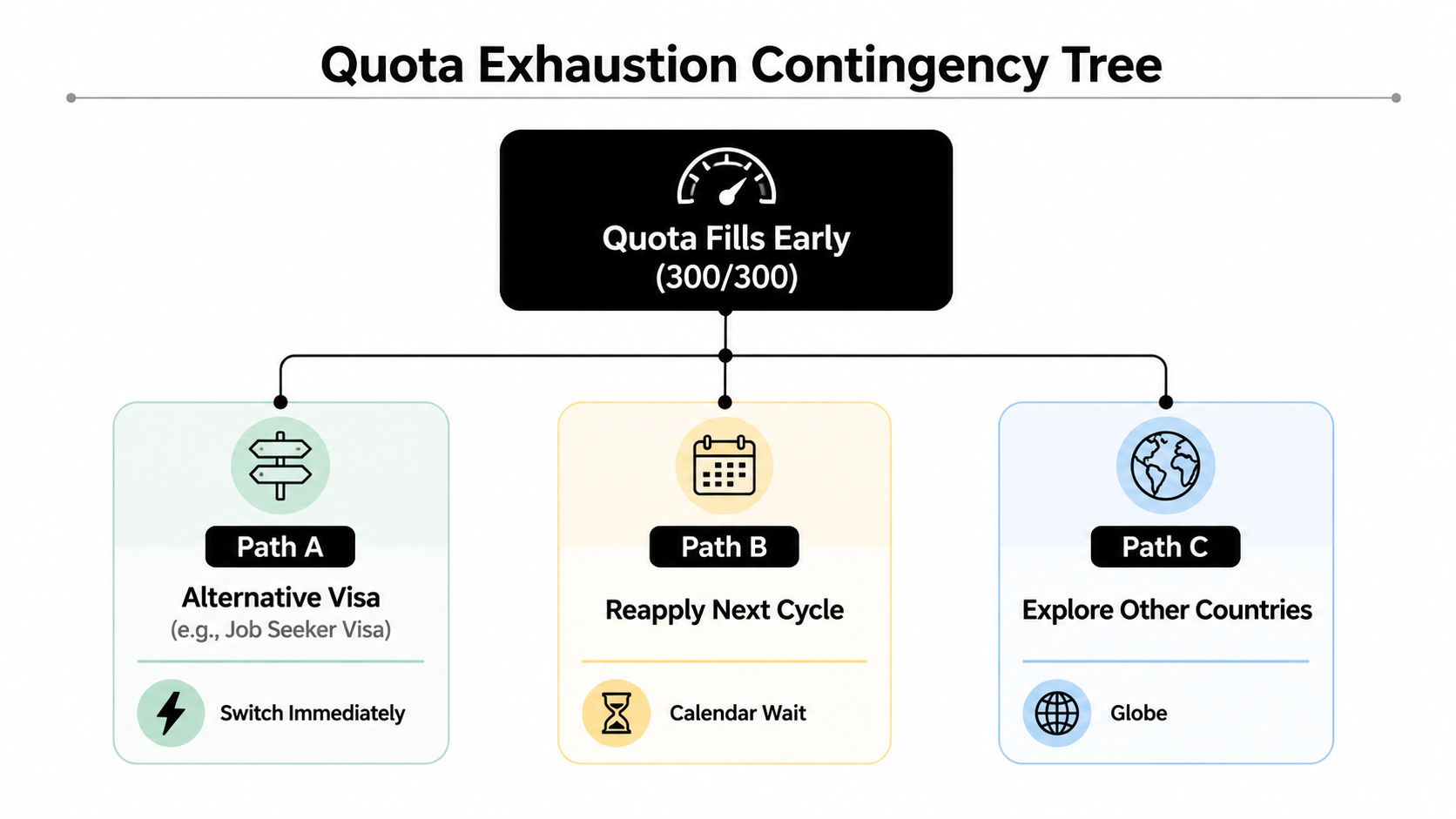
If the quota has filled, use this decision tree:
- Your main purpose is travel with limited work. Consider another working holiday destination available to Hong Kong residents, then verify that country's current conditions separately.
- Your main purpose is learning German. Explore a language course route and ask a registered school what enrolment evidence it can issue.
- Your main purpose is structured cultural exchange. Investigate an Au Pair arrangement or another recognised placement route.
- Your main purpose is employment. Focus on a confirmed job offer and the appropriate work visa category.
- None of these fits your timing. Prepare for the next German intake instead of spending money on non-refundable arrangements.
Protect the work you've already done
Ask the consulate whether it operates a waiting-list or cancellation protocol. Don't assume a replacement arrangement exists, but do ask the question directly and follow only official instructions.
Keep monitoring the consulate and Federal Foreign Office pages. Phone alerts are useful for official announcements, while communities such as r/germany on Reddit can provide practical experiences, not authoritative visa decisions. For longer-term planning, review study in Germany options if education is a genuine alternative.
Within 48 hours of learning that the quota is unavailable:
- Confirm a route: Decide whether you'll switch to study, employment, Au Pair, another country, or the next intake.
- Notify referees: Tell employers, schools, or referees whether you still need supporting letters.
- Review insurance: Keep your travel insurance research and quotes organised, but don't buy cover for a trip that isn't approved.
- Contact schools: Ask about course dates and enrolment evidence if a language route is realistic.
- Secure your file: Preserve certified documents and your completed drafts for the next application cycle.
A failed intake should cost you time, not your entire preparation effort.
Ready to Start Preparing for Your Germany Working Holiday
The most useful preparation is the part you can control. You can't expand the 300-place ceiling, but you can make sure your documents, finances, language plan, and travel purpose are ready before the Hong Kong intake opens.
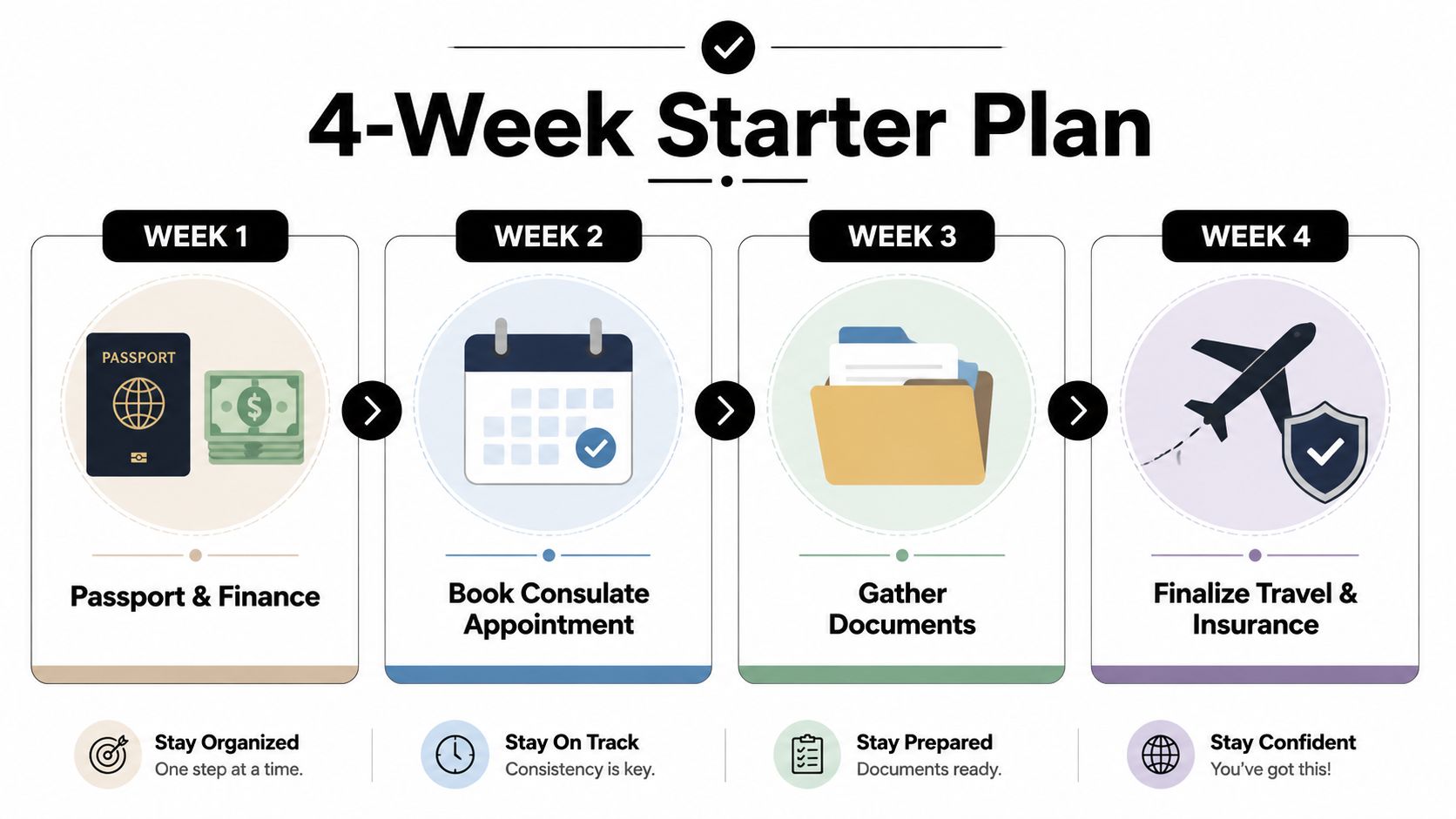
Use this four-week starter plan:
Week 1, verify your foundation
Check your passport, Hong Kong residence evidence, and financial documents. Create one digital folder and one printed folder, using the same names and dates across both.
Week 2, monitor and organise filing
Check the German Consulate General in Hong Kong's official instructions and prepare to follow the appointment or submission process as soon as the intake announcement is published. Don't book non-refundable flights just because an opening is expected.
Week 3, start structured German preparation
Take a placement assessment and choose an A2 or B1 target that matches your departure plans. Practical speaking ability can widen your options in cities such as Berlin, Hamburg, and Munich, although every job still depends on the employer and the legal work conditions of your visa.
Week 4, draft the personal case
Prepare a clear motivation statement, travel outline, employment plan, insurance evidence, and any other current supporting documents. Explain why Germany is your destination, what you want to experience, and how you'll respect the limits on work and study.
If you're in Hong Kong and want practical support, use a German course with a clear progression rather than scattered apps and emergency cramming. The right next step is simple: pick one date on your calendar this week and lock it.
German Cultural Association Hong Kong(GCA)offers native-speaker German lessons Hong Kong, structured A1 to B1 tracks, small-group and private classes, and preparation for Goethe-Zertifikat and TestDaF exams. Visit German Cultural Association Hong Kong(GCA) to arrange a trial class, assess your level, and speak with an advisor about preparing your language and visa documents for the Germany working holiday intake.
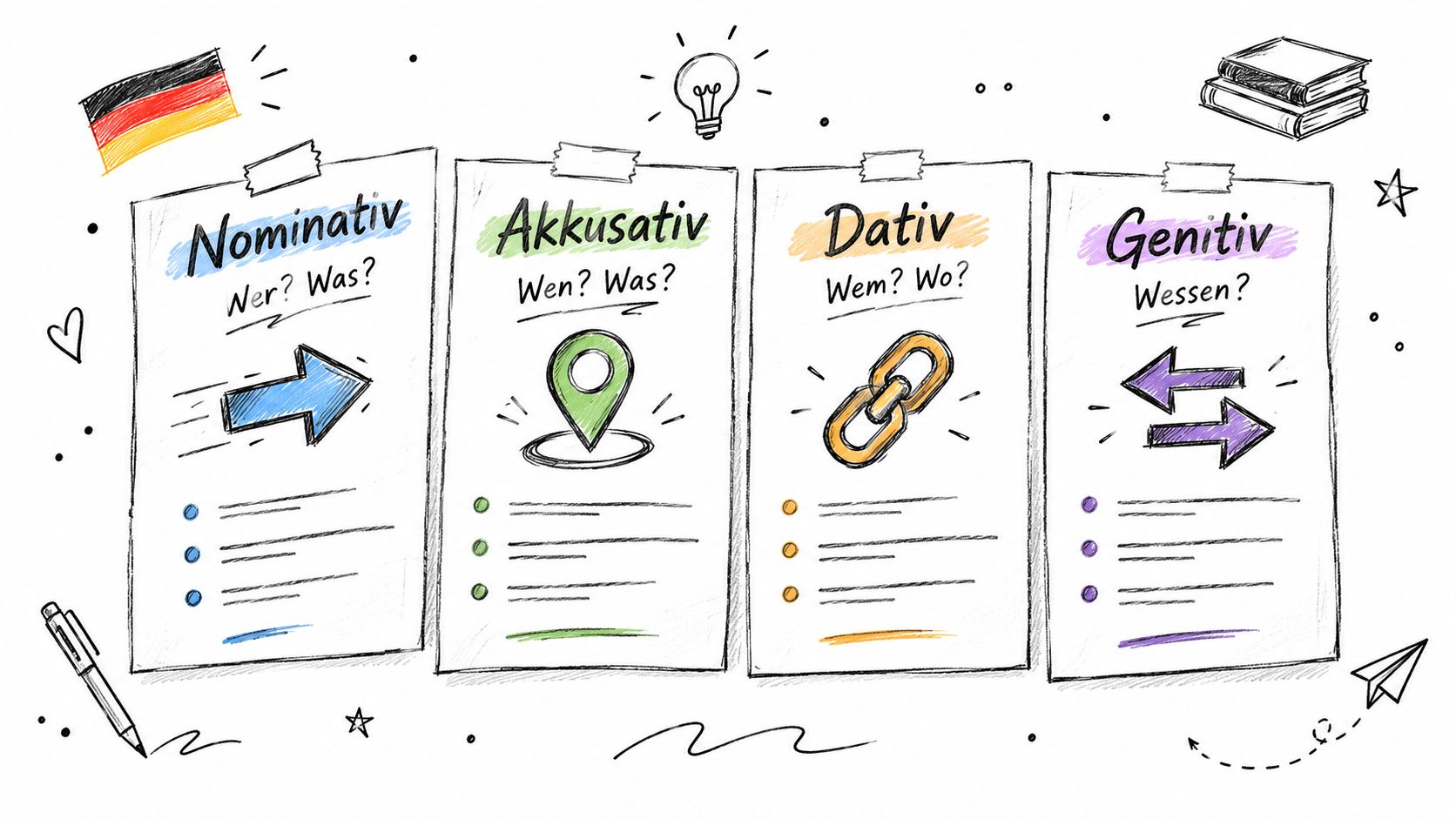
German Prepositions: Which Case Does Each One Take? Complete Tables
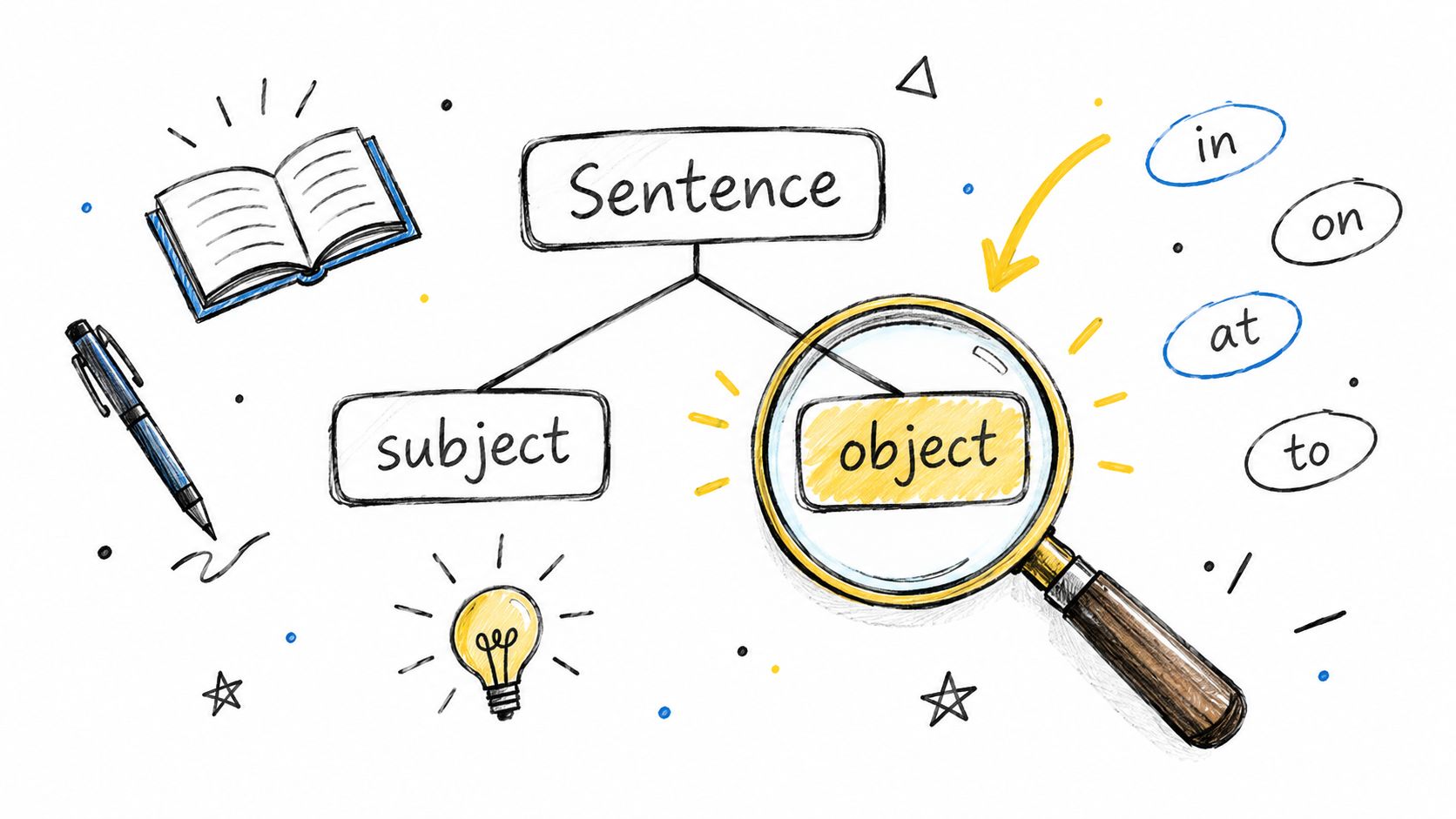
German Accusative Case Explained: When and How to Use Akkusativ


