.png)
.png)

BLOG

香港德國文化協會
The German Cultural Association
Toddler Summer Activities HK 2026: Is German Right for Your Child?
You're probably looking at the summer calendar right now and seeing the usual Hong Kong parent problem. Too many options, too little time, and no room for a poor choice.
For toddlers, summer shouldn't become a mini primary school term. But it also shouldn't be random childcare dressed up as enrichment. If you're considering Toddler Summer Activities HK 2026: Is German Right for Your Child?, the core question isn't whether German sounds impressive. It's whether German fits your child's age, temperament, and your family's long-term priorities in Hong Kong.
My view is simple. German is a smart toddler summer choice for some families, and a poor one for others. It works best when you want structured exposure, strong teaching, and a future pathway. It's the wrong fit if you just want your child tired out by lunchtime.
The 2026 Summer Dilemma What Are My Toddler's Options in Hong Kong
Toddler summer activities in Hong Kong usually fall into four groups: physical programmes, creative classes, language and cognitive courses, and play-based social activities. The right choice depends on your child's current developmental need, your weekly schedule, and whether you want pure fun, practical skill-building, or long-term academic value.
Most parents in HK aren't choosing between “good” and “bad” activities. They're choosing between different benefits.
That's why you need a clear map before you decide whether German belongs in your child's summer.
| Activity type | Best for | What parents should know | Good fit for German-minded families |
|---|---|---|---|
| Physical and outdoor | Energy release, coordination, routine | Great for active toddlers who need movement first | Yes, as a second activity |
| Creative and arts | Expression, imagination, attention | Better for children who enjoy calm, guided tasks | Yes |
| Language and cognitive | Listening, memory, structured learning | Needs the right teaching style or toddlers switch off fast | Strong fit |
| Play-based and social | Confidence, sharing, flexibility | Useful if your child is shy or new to group settings | Sometimes, but less targeted |
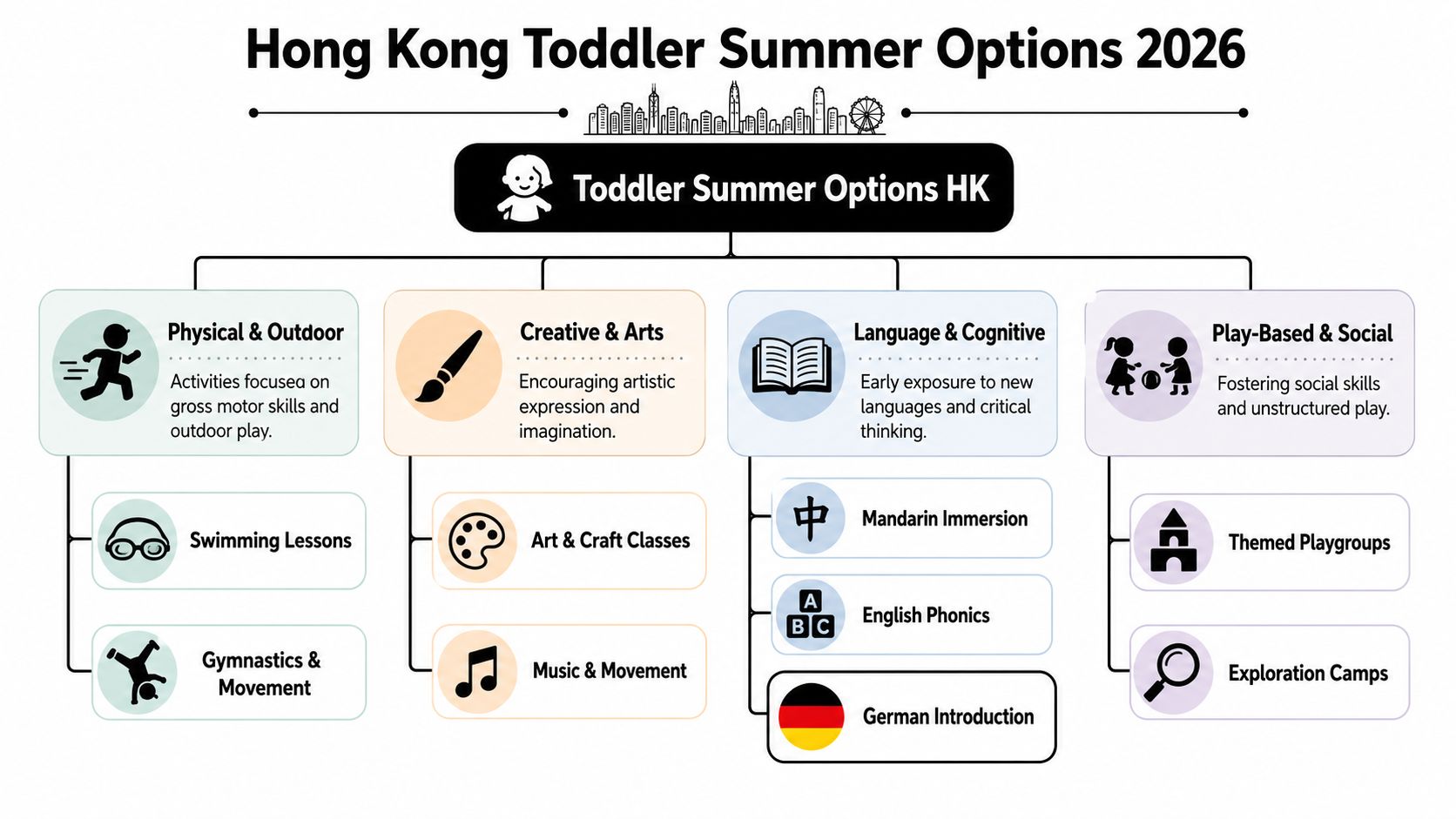
The four main categories parents are choosing from
Physical programmes include swimming, movement classes, and toddler gymnastics. These are excellent if your child needs body confidence, stamina, and a healthy outlet for energy.
Creative classes include art, craft, music, and sensory activities. They're useful for toddlers who like hands-on exploration but don't yet thrive in heavily structured settings.
Language and cognitive courses cover English phonics, Mandarin exposure, and increasingly, European language introductions such as German. If you want something with long-term educational value, this is the category to examine carefully.
Play-based social options include themed playgroups and exploration camps. These can be a good reset for younger toddlers who need social practice more than formal skill-building.
A toddler doesn't need the “most academic” summer. They need the activity that matches their next developmental step.
For many families, the best week isn't packed wall to wall. It's a well-paced mix of one anchor activity and plenty of free play. If your weekends include outdoor family time, practical planning helps too. Even something simple like these tips for easier family picnics can make your summer rhythm much easier to maintain.
If you want a broader look at why parents are paying more attention to structured language options, this overview of HK children's summer classes and why German programmes stand out is a useful local reference point.
Why Consider German for a Toddler at All
Most parents don't ask about German first. They ask about Mandarin, phonics, swimming, or art. That's normal.
German becomes worth considering when you stop treating summer as a filler and start treating it as early positioning. Not pressure. Positioning.
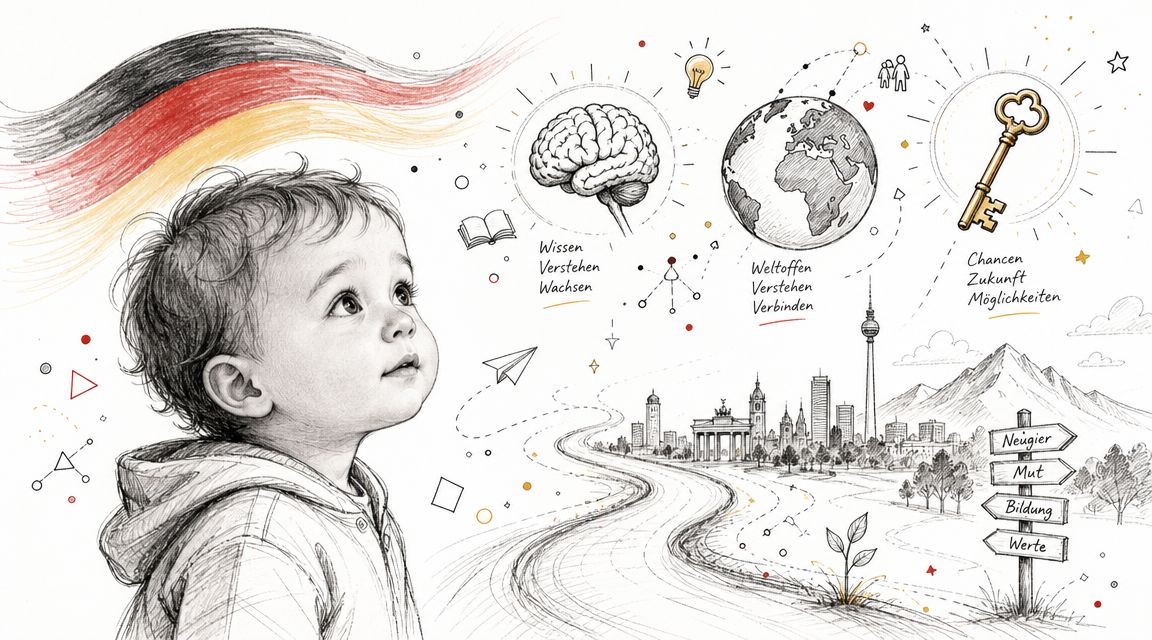
German has real long-term weight
Germany isn't a small, marginal language market. According to the summary published on German courses for kids in Hong Kong, Germany's population was about 84.7 million in 2024, making it the most populous country in the European Union, and its economy remains one of the largest globally.
That matters for Hong Kong families because it turns German into more than a hobby. It connects to future school exchange, university study, visa pathways, and international careers.
For a toddler, that doesn't mean chasing fluency now. It means making sure the language feels familiar later, rather than foreign and intimidating.
German is a differentiator, not a default
In Hong Kong, English already occupies a practical position in school and daily life for many families. German does something different. It gives a child exposure to a major European language without merely repeating what they already hear around them.
That can be a strategic advantage later, especially for families thinking beyond local schooling alone.
Early exposure works best when it stays playful
A toddler German class should look like songs, stories, movement, turn-taking, and routine. It should not look like desk work.
That's why I'm in favour of German for toddlers only when the programme is genuinely age-appropriate. If the class is too academic, it fails. If it's too loose, there's no real language gain.
Practical rule: For toddlers, German should feel like play with a linguistic purpose, not school in disguise.
Parents also often want reassurance that bilingual or multilingual exposure is worthwhile at this age. This short guide on why raise a bilingual child is a sensible companion read, especially if you're still deciding whether a second or third language belongs in your child's early years at all.
German Lessons vs Other Activities A Developmental Comparison
German shouldn't be judged against every summer activity by the same standard. That's where parents go wrong.
You don't compare German with swimming by asking which is “better”. You compare them by asking what developmental job each one does.
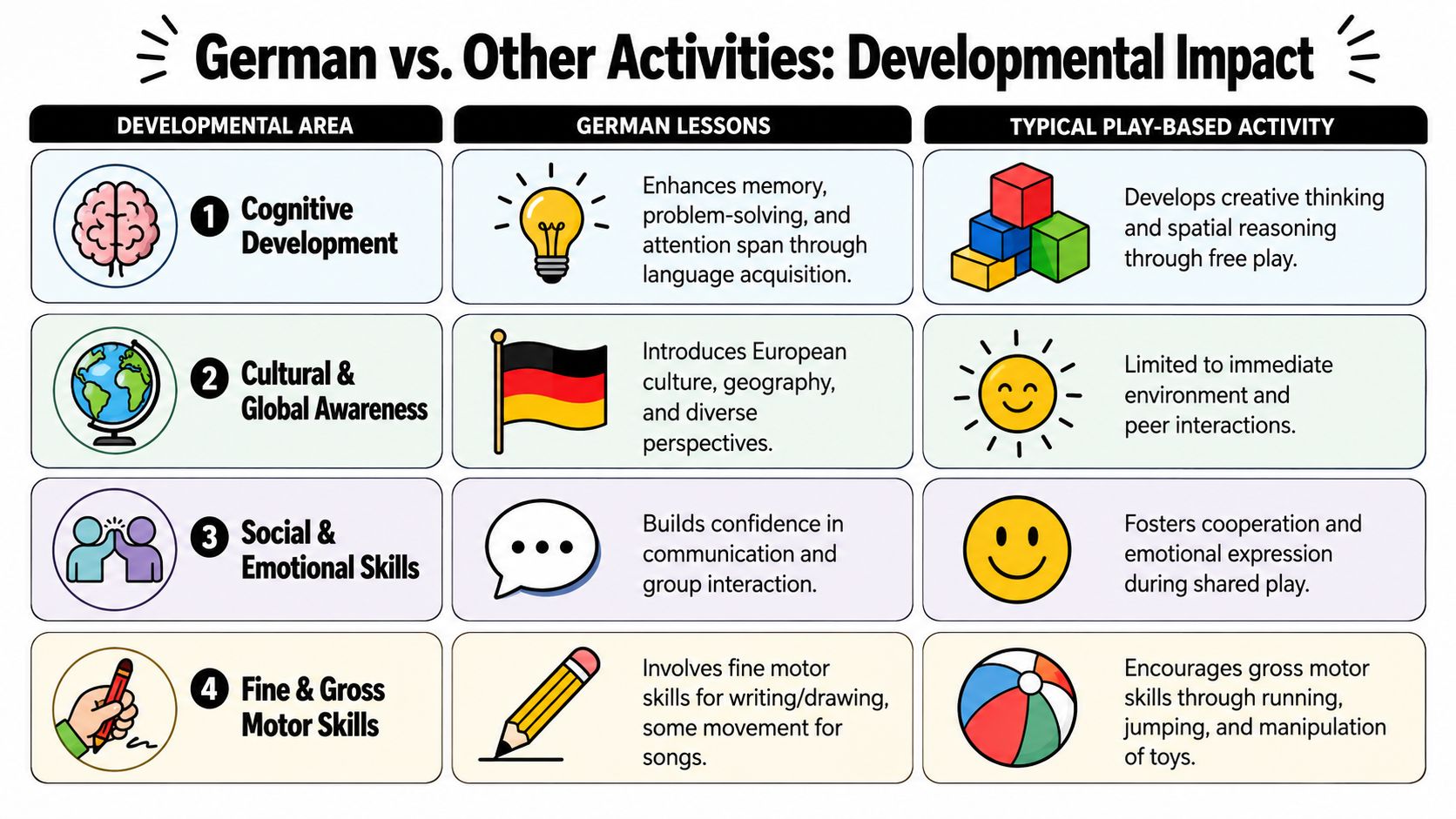
German vs unstructured play
Unstructured play is excellent for imagination, negotiation, and self-direction. It gives toddlers room to invent, test, and repeat.
German classes do a different job. They train listening under structure. A child learns to attend to sound patterns, respond to cues, copy words, and follow routines in a new language.
Choose unstructured play if your toddler is socially hesitant, overstimulated by adult-led settings, or already has a packed schedule.
Choose German if your toddler enjoys songs, repetition, predictable group routines, and verbal engagement.
German vs swimming and movement classes
Swimming, movement, and toddler gymnastics are often the easiest decision in HK because the benefit is obvious. Children move, burn energy, and sleep better.
German won't replace that. It develops a different set of habits.
| Comparison point | German lessons | Physical programmes |
|---|---|---|
| Main focus | Listening, memory, verbal response | Gross motor control, stamina, body awareness |
| Best child profile | Verbally curious, routine-responsive | High-energy, movement-seeking |
| Parent expectation | Gradual familiarity over time | Immediate physical outlet |
| Summer role | Enrichment anchor | Energy management anchor |
If your child is bouncing off the sofa all day, start with physical activity. If your child already gets plenty of outdoor movement from helpers, grandparents, playground time, or regular classes, German can become the more distinctive addition.
German vs Mandarin exposure
This is the comparison many Hong Kong parents care about but don't always say aloud.
Mandarin has obvious regional utility. German has a different value. It isn't about local convenience. It's about broadening the child's linguistic frame early and building a potential future pathway into European education and mobility.
That means the decision often comes down to your family's actual goal:
- Choose Mandarin if household use, school reinforcement, or regional communication matters most.
- Choose German if you want a less common but more distinctive long-term language track.
- Choose both only if your child already handles transitions and language input well. Too much structure can backfire.
Some toddlers thrive with one anchor activity and one light secondary activity. Very few thrive with a timetable built around adult ambition.
German vs generic “academic-lite” camps
This category includes light phonics, basic numeracy, and school-readiness classes. These can help, but many are repetitive and not especially memorable for toddlers.
A well-run German class often has an advantage here. It's novel. Novelty keeps attention high when paired with music, movement, and objects toddlers can touch and name.
If you're comparing options, look at the actual lesson experience, not the brochure. Parents exploring German language playgroups in Hong Kong for ages 1 to 4 should pay attention to whether the format supports interaction, not just exposure.
What a Good Toddler German Programme Looks Like
A weak toddler language class is easy to spot. Too much sitting, too much teacher talk, and too much emphasis on “content”.
A strong one looks simple from the outside. That's deceptive. The best toddler language teaching is highly organised.
Non-negotiable quality markers
Native-speaking teachers
Toddlers learn sound first. If pronunciation and rhythm matter later, they matter now.Play-based delivery
Songs, actions, picture cards, story time, routine phrases, and guided games work. Worksheets don't.Very small groups
Toddlers need repeated turns, eye contact, and quick correction. Large classes dilute all three.Clear age grouping
A younger toddler and an older child should not be taught in the same way. Their attention span, verbal readiness, and classroom behaviour are different.
What local parents should look for in Hong Kong
According to a Hong Kong programme comparison published here on 2026 summer programme recommendations for toddlers, one strong regional benchmark is the age-to-modality split. The programme described distinguishes preschoolers aged 3 to 5 from kids aged 6 to 9, with the younger group using play-based engagement and the older group adding classroom routines and CEFR alignment. The same comparison also notes a maximum of 6 students per class, with native German speakers, in Causeway Bay and Tsim Sha Tsui across late June to August.
That's the right direction. It tells you what quality looks like in practical terms.
One factual example worth noting
The German Cultural Association Hong Kong(GCA) offers the type of structure many parents should look for: native-speaking teachers, small-group teaching, and central locations that suit family routines in Hong Kong.
If the class format would frustrate your toddler in English, it won't somehow work better in German.
My screening checklist for parents
Before you enrol, ask these questions:
- Who teaches the class: Is the teacher a native speaker with experience teaching young children?
- How is the lesson run: Are there songs, games, movement, and visual prompts?
- How big is the group: Can your child participate instead of just watching?
- How are ages separated: Is the programme designed for toddlers?
- How easy is the commute: A great class becomes a bad choice if getting there exhausts everyone.
How Much Do Toddler Summer Activities in HK Cost
Parents always ask about cost, and they should. Summer spending in Hong Kong escalates very quickly.
What matters isn't finding the cheapest option. It's knowing what you're paying for.
The practical way to think about pricing
Most toddler summer activities in HK fall into three rough brackets:
| Category | Typical pricing pattern | What drives the fee |
|---|---|---|
| General play and group activities | Usually lower to mid-range | Venue, duration, staffing style |
| Specialised sports programmes | Mid to premium | Equipment, coach ratio, facility access |
| Premium language courses | Mid to premium, sometimes higher | Teacher quality, group size, curriculum, location |
I'm keeping this qualitative because precise fee ranges vary widely by provider, schedule, and format, and you shouldn't trust invented averages.
Why language programmes often cost more
A premium toddler language course usually costs more for four reasons:
- Smaller classes: More individual attention means higher staffing cost.
- Teacher profile: Native-speaking teachers with early-years experience are harder to replace than general activity staff.
- Curriculum design: A real programme is sequenced and intentional. It isn't just songs strung together.
- Prime accessibility: Centres near major MTR corridors save time, and in HK, time matters.
That's why parents should compare value per learning hour, not just the headline fee.
Don't pay premium fees for a casual class
If a programme charges like a premium course, it should deliver premium structure. That means clear grouping by age, proper lesson flow, and visible progression.
If you're researching the broader market, this guide to how much it costs to learn German in Hong Kong helps frame the local pricing logic.
Cheap toddler classes can be perfectly fine for play. They're a poor bargain if your goal is meaningful language exposure.
My advice is blunt. Pay more only when the programme is hard to replicate at home. Songs and flashcards alone are not enough. Native speech, structure, interaction, and consistency are what justify the spend.
Building a Balanced Summer A Sample 2026 Toddler Schedule
Parents often reject language classes because they fear the summer will become too rigid. That only happens when the schedule is badly designed.
German works best as one part of a balanced week, not the whole week.
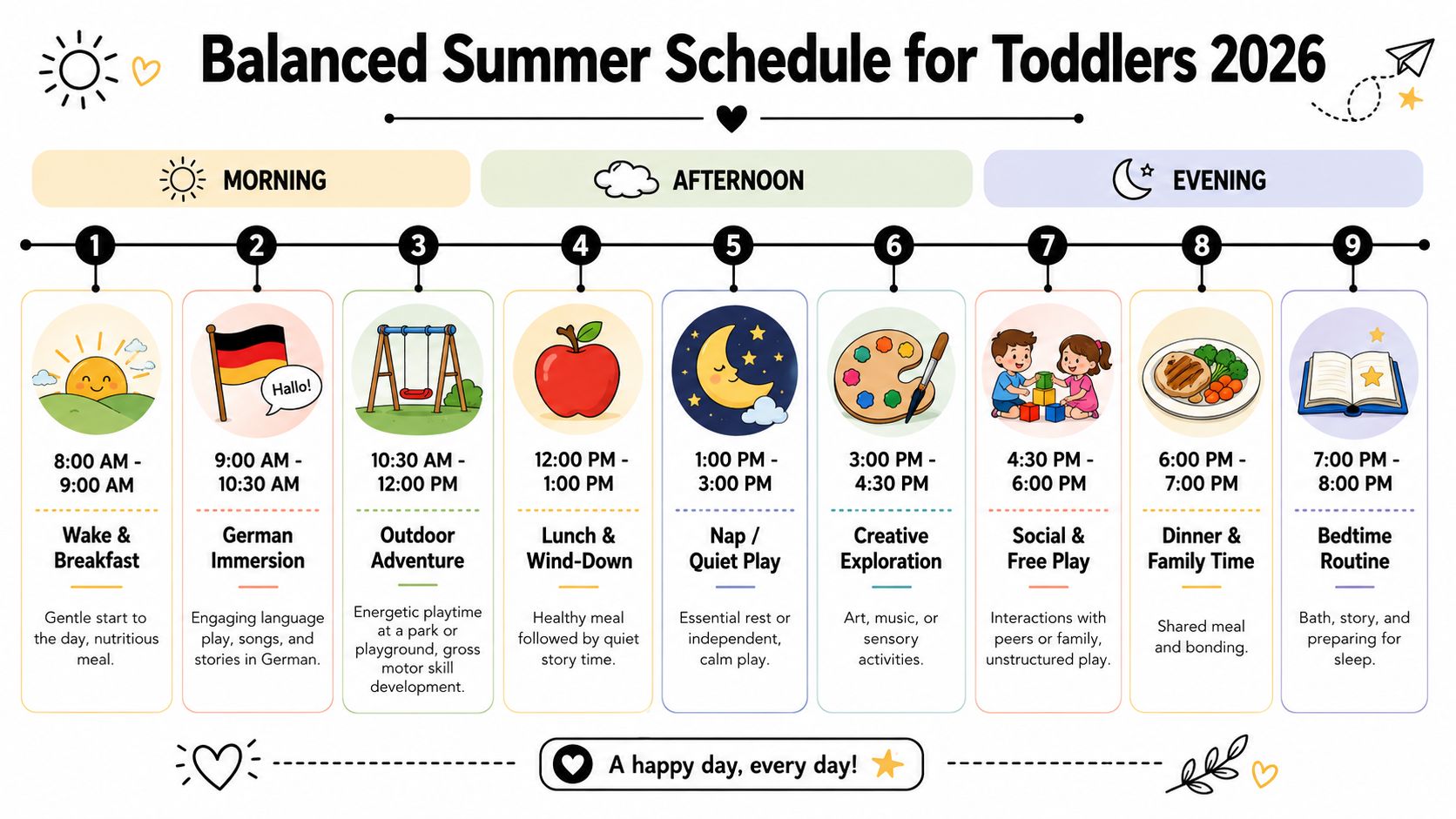
Why scheduling matters more for German in Hong Kong
A language like German doesn't appear naturally in most toddlers' daily environment here. The 2021 Population Census showed that among Hong Kong residents aged 5 and above, 88.9% reported Cantonese as their usual spoken language, while 8.2% reported English. That means German is usually an add-on language, so consistent scheduled contact matters more than broad casual exposure in Hong Kong, as noted in this summary on summer course choices for students in 2026.
That's why one well-chosen recurring class can do more than scattered exposure.
A realistic weekly model
Here's a practical toddler summer pattern for a working HK family:
Monday morning: German class
Afternoon nap, then quiet play at homeTuesday morning: Playground or swimming
Afternoon rest, books, early dinnerWednesday morning: German class
Afternoon art or sensory playThursday morning: Free playgroup or outing with caregiver/grandparent
Afternoon nap and home routineFriday morning: German class or music and movement
Afternoon family time if possibleWeekend: One outdoor block, one slow home block
Don't overbook it
A daily rhythm that actually works
A toddler usually handles language input best in the morning, before fatigue and overstimulation build up.
A simple day might look like this:
| Time of day | Best activity type |
|---|---|
| Morning | German, music, movement, or swimming |
| Midday | Lunch and wind-down |
| Early afternoon | Nap or quiet play |
| Late afternoon | Park, art, or free social play |
| Evening | Family routine, dinner, bedtime |
A balanced summer is not about squeezing in more. It's about repeating the right few things often enough that your toddler feels secure.
If you're considering Toddler Summer Activities HK 2026: Is German Right for Your Child?, this is the right lens. Don't ask whether German should replace play. Ask whether it can sit inside a week that still protects rest, movement, and boredom.
Ready to Plan Your Toddler's Summer Success
If your child needs nonstop motion, choose sport first. If your child needs social confidence, choose playgroup first. If your child responds well to songs, routines, and verbal interaction, German is one of the smartest structured summer choices you can make in Hong Kong.
That's especially true if you're thinking beyond this summer. German makes sense for families who value long-term educational options, international mobility, and a less common but more strategic language pathway.
My final recommendation
German is right for your toddler if most of these statements are true:
- Your child enjoys music and repetition
- Your family can commit to regular attendance
- You want structured enrichment, not just time-filling
- You see language learning as a multi-year path
- You're choosing quality teaching over a bargain class
German is not the right choice if:
- Your child is currently overwhelmed by group classes
- You mainly need a physical outlet
- You can't maintain a consistent routine
- You're choosing it only because it sounds impressive
The practical next step
Don't decide from marketing copy alone. Ask to see the class format, age grouping, teacher profile, and weekly schedule. A good toddler programme should feel calm, warm, organised, and repeatable.
That's the standard to hold.
If you want your child's summer to be both enjoyable and strategically useful, German deserves serious consideration. Not as a status symbol. As a well-chosen early foundation.
If you're weighing German against other toddler summer activities in Hong Kong, German Cultural Association Hong Kong(GCA) is a practical place to start. You can review the latest course schedule, ask about native-speaking teachers, and see whether a small-group, structured format in Causeway Bay or Tsim Sha Tsui suits your child's age and your family routine.

Konjunktiv II in German: Polite Requests with Würde
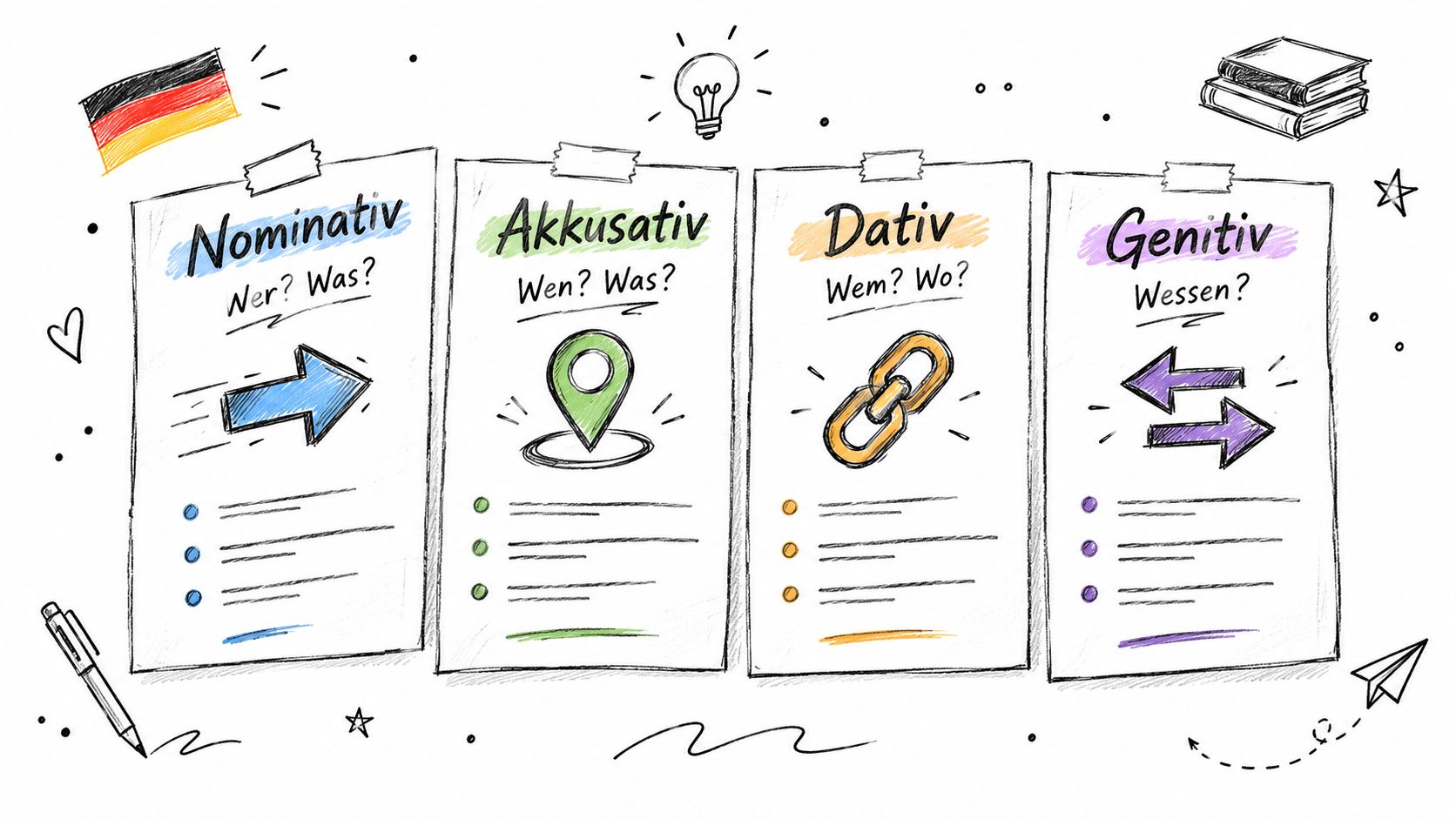
German Prepositions: Which Case Does Each One Take? Complete Tables


