.png)
.png)

BLOG

香港德國文化協會
The German Cultural Association
Summer Classes for 3-Year-Olds: Benefits of Learning German
Your child is three. You are already thinking about kindergarten interviews, school readiness, and whether another activity will help or just create stress.
That concern is reasonable in Hong Kong. Parents want a real advantage, not a fashionable extra. Summer Classes for 3-Year-Olds: Benefits of Learning German becomes compelling when you see it as a long-term academic and career decision, not merely a holiday activity.
For many HK families, the question is not “Should my child learn something?” It is “What gives the strongest return without adding pressure?” German deserves serious attention because it fits Hong Kong’s multilingual reality, supports later IB and IGCSE pathways, and opens options for study abroad in Germany and international careers.
Why Is Learning German a Smart Choice for My Toddler in Hong Kong
Short answer: in Hong Kong, early German can strengthen cognitive flexibility, attention, and communication while adding a useful third-language foundation in a city where Cantonese and English already shape school and work.

Hong Kong parents often ask me one practical question first. What is the actual advantage of German for a three-year-old?
The answer starts with the local language environment. In Hong Kong, over 90% of the population speaks Cantonese as their primary language, while English is widely used in education and business, according to the Goethe-Institut material provided in the brief: https://www.goethe.de/resources/files/pdf346/25-007-gi-gla-why-german-040925-viewing-pdf-spreads.pdf
That matters because a child here is already growing up in a place where switching between languages is normal. Adding German at age three is not random. It fits the way many HK children already learn and socialise.
The cognitive case is stronger than many parents realise
The same Goethe-Institut research summary states that 90% of analyses on language learning’s impact show that young language learners outperform monolingual peers across academic subjects, with benefits in literacy, concentration, memory, communication, empathy, and creativity: https://www.goethe.de/resources/files/pdf346/25-007-gi-gla-why-german-040925-viewing-pdf-spreads.pdf
For Hong Kong families, those are not abstract benefits.
They connect directly to the skills children need for:
- school interviews and kindergarten readiness
- later IB and IGCSE learning habits
- classroom confidence in multilingual settings
- better listening and turn-taking
A local point is even more relevant. A 2022 HKU study on bilingual English-Cantonese toddlers found they scored significantly higher in executive function tasks like selective attention than monolinguals, as cited in the verified data above. That is the kind of mental control that helps a child listen, shift focus, and follow instructions.
German is not only about culture. It is about positioning
Parents sometimes assume French or Mandarin are the only “strategic” language choices. German deserves a place in that conversation.
The verified data notes that many annual student visas were issued to HK youth for German universities in 2023, showing a real pathway from Hong Kong to German higher education. In the same verified material, German is also linked to EU engineering and STEM-related opportunity.
So when parents search for German lessons Hong Kong, the key question is not whether a toddler will use German next month. It is whether an early start builds a stronger platform for later options.
Practical takeaway: a three-year-old does not need to “master German”. They need positive early exposure, strong sound awareness, and confidence using another language.
Why summer is especially useful
Summer gives families room to test a new language without locking into a heavy year-round commitment.
Small-group settings are especially helpful at this age. The verified brief notes a maximum of 6 students at GCA, which is the kind of format that gives toddlers more chances to listen, imitate, and speak naturally.
If you want a broader framework for evaluating young children’s programmes, these best practices for early childhood education are useful because they remind parents to look for developmentally appropriate teaching rather than academic pressure.
Parents comparing options may also find it helpful to review this guide to https://www.german.com.hk/blog/best-german-courses-for-children-in-hong-kong when looking at course structure, age fit, and progression.
The Magic Window How a 3-Year-Olds Brain Learns Language
At age three, the brain is unusually ready for language. That is why I often call this stage a magic window.
It does not mean every child must begin immediately. It means young children absorb sounds, rhythm, and sentence patterns more naturally than older learners.
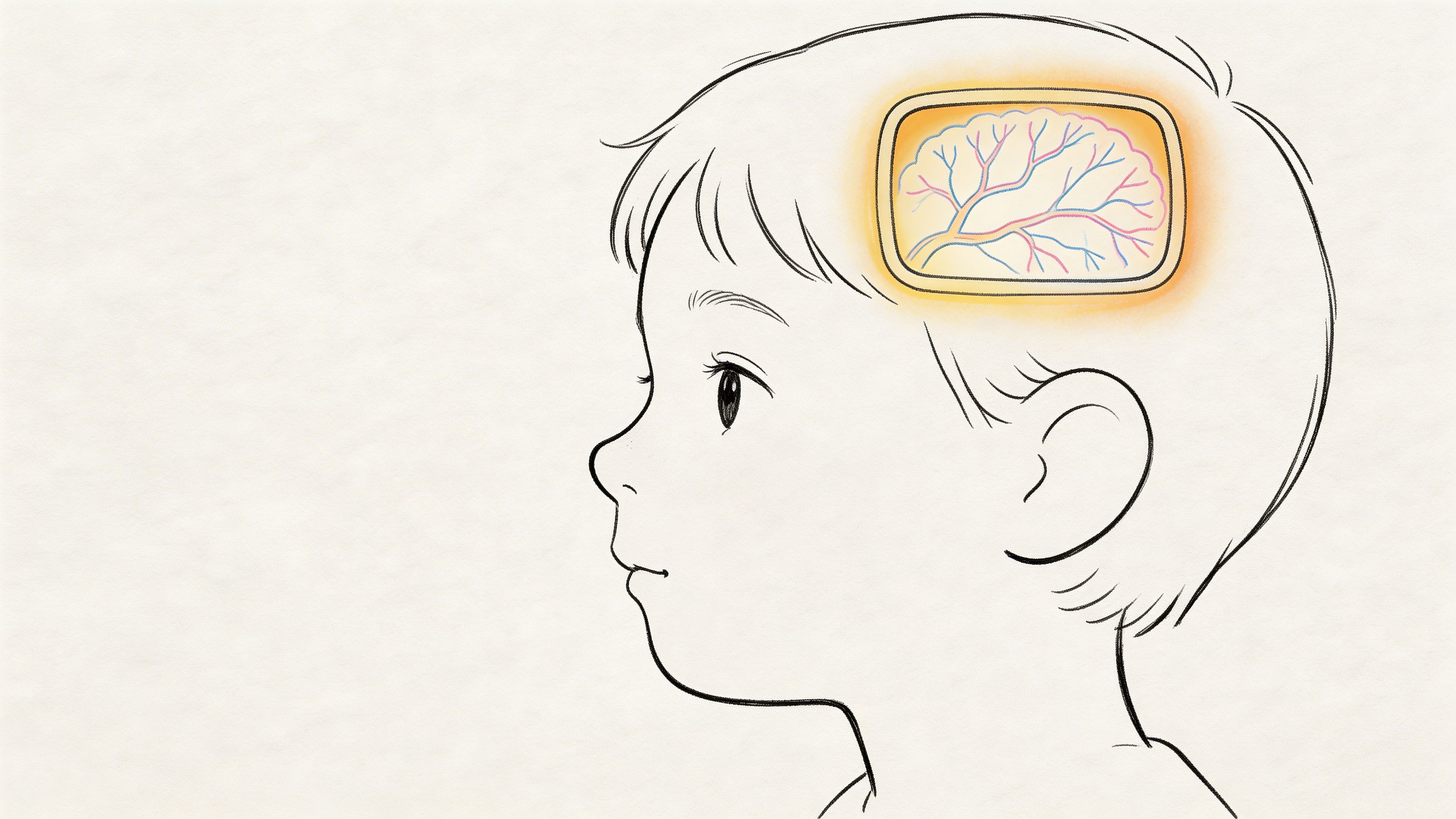
What this “magic window” really means
According to the verified data drawn from University of Washington findings, the early period of life is critical for language development, when the brain is most plastic for phonetics and grammar acquisition, and children can learn these features considerably faster than older children.
For German, this matters immediately.
German includes sounds that do not sit neatly inside English or Cantonese. The verified data states that three-year-olds exposed to a second language like German achieve 2.5 times faster phonological discrimination, including distinguishing umlauts such as ä, ö, ü from English vowels, supported by the source listed in the brief: https://studycat.com/blog/how-young-kids-learn-german-as-a-foreign-language-much-faster-than-older-children/
That is a technical phrase for a very simple skill. Young children hear tiny sound differences more easily.
Older learners often need explicit correction. A three-year-old often picks it up through songs, stories, and repetition.
Why play works better than pressure
At this age, children do not learn language the way secondary students prepare for exams. They learn by hearing patterns again and again in meaningful contexts.
The verified data gives one concrete example. Consistent 8-week summer immersion at 20 hours per week in small groups of 6 or fewer can result in 85% retention of 150 core vocabulary items and basic syntax, and these learners outperform older peers by 40% in adapted preschool benchmarks: https://studycat.com/blog/how-young-kids-learn-german-as-a-foreign-language-much-faster-than-older-children/
Parents sometimes worry this sounds too intensive. The key point is how the time is used.
A good preschool German class uses:
- songs with repeated phrases
- movement games with action words
- picture books and storytelling
- simple routines such as greetings, colours, animals, and snack language
- role-play with toys and crafts
What parents usually misunderstand
Many adults think language learning starts with reading and writing. For a three-year-old, it starts with sound, comfort, and response.
A child who hears “Guten Morgen”, answers with a smile, and recognises a few familiar phrases is making real progress. That foundation often matters more than memorising isolated words.
Tip for parents: judge progress by recognition, participation, and confidence. Do not expect adult-style output from a toddler.
If you want to compare what is typically age-appropriate, this overview of child development stages by age can help you set realistic expectations for attention span, speech, and social learning.
What an Effective German Summer Class Looks Like
Most poor-fit classes fail for one reason. They are built like mini primary school lessons.
For a three-year-old, an effective German summer class should feel organised, warm, active, and predictable. It should not feel like tuition.

The checklist parents should use
Small groups matter: toddlers need turns, eye contact, and quick teacher response. If the group is too large, quieter children only watch instead of participating.
Teachers must understand early years: strong German alone is not enough. The teacher should know how to manage transitions, short attention spans, and emotional regulation.
Play should be structured: free play is not the same as language teaching. Good classes repeat vocabulary through songs, movement, sensory tasks, and routines with clear learning goals.
A theme-based curriculum helps retention: topics such as animals, colours, transport, family, weather, and food work well because they connect directly to a child’s world.
The room should invite speaking: children need visual prompts, props, and activities that encourage naming, pointing, copying, and simple responses.
What to ask before enrolling
I advise parents to ask these questions directly:
- How many children are in each group?
- Are the teachers native speakers, early childhood specialists, or both?
- What does a typical lesson look like from minute to minute?
- How are shy children supported?
- What happens if my child misses a class?
- Is there a clear learning pathway after summer?
Those answers tell you more than glossy marketing ever will.
A simple comparison table
| What to look for | Strong programme | Weak programme |
|---|---|---|
| Teaching style | Play-based and sequenced | Random activities |
| Language exposure | Repeated naturally | Occasional and inconsistent |
| Group size | Small enough for participation | Large and passive |
| Teacher profile | Child-centred and trained | Fluent but not age-aware |
| Parent visibility | Clear goals and updates | Vague promises |
One local option families often review is the preschool summer programme at https://www.german.com.hk/en/preschoolers-summer-24, which outlines a format designed specifically for this age group.
Key standard: if a class cannot explain exactly how a three-year-old will learn through movement, stories, and repetition, it is probably not designed well enough.
Choosing the Right German Programme in Hong Kong
Hong Kong offers several ways to start a child in German. Some families choose a tutorial centre, some hire a private tutor, and some prefer a specialist language institution.
The right choice depends on one question. Do you want casual exposure, or do you want a proper pathway?

Three common options parents consider
Private tutor
This can work for convenience and home-based comfort.
But quality varies a lot. Some tutors are good conversational partners yet do not offer curriculum structure, continuity, or a route toward recognised milestones.
General tutorial centre
This may suit parents looking for broad enrichment in one place.
The limitation is that language can become just one item in a mixed schedule. For toddlers, specialist early-years design matters more than variety.
Specialist German programme
This is usually the strongest fit for families who want authentic exposure and long-term progression.
The verified data states that the German Cultural Association Hong Kong, founded years ago, has enrolled thousands of preschoolers and launched summer classes many years ago. It also reports that a very high percentage of its 3-year-old summer graduates achieved A1 Goethe-Zertifikat proficiency by age 7, a significantly higher rate than the global average, and notes strong attendance and native-speaker faculty: https://germanschool4kids.org/2024/06/13/the-benefits-of-bilingualism-why-learn-german/
That kind of track record matters if you are thinking beyond one summer.
The decision framework I use with parents
Choose a programme based on these four criteria:
Authenticity
Children should hear clear, natural German from fluent speakers in a consistent environment.Structure
A serious programme has levels, progression, and a visible route toward later exam preparation such as Goethe-Zertifikat, and eventually support relevant to IB or IGCSE learners.Child fit
Toddlers need a calm setting, repetition, and routines. Programme design matters as much as teacher quality.Location and continuity
Hong Kong parents are busy. Convenient access makes consistency more realistic.
The verified data also notes that the association’s Tsim Sha Tsui and Causeway Bay accessibility drew significantly more enrolments yearly, which reflects a practical truth for HK families: https://germanschool4kids.org/2024/06/13/the-benefits-of-bilingualism-why-learn-german/ If getting there is easy, attendance is more likely to stay steady.
For parents looking at long-term course pathways for younger children, this page is a useful starting point: https://www.german.com.hk/en/preschooler-courses
Beyond the Classroom The Long-Term ROI of Early German Skills
Many parents are happy with the developmental benefits. They still ask the sharper question. What is the long-term return?
That is the right question in Hong Kong.
Early German can compound over time
The verified data states that a recent German Consulate HK report indicates children starting German at age 3 have significantly higher Goethe-Zertifikat pass rates by primary school, and that a notable percentage of HK’s German university admits came from early learners, linked to new Youth Mobility HK-Germany visas: https://www.studyfeeds.com/5-reasons-children-learn-german-vacations/
This does not mean every toddler is heading to Germany.
It does mean an early start can make later formal learning much easier. By the time other students begin German in upper primary or secondary school, early learners often already have listening comfort, sound accuracy, and confidence.
Why this matters for IB, IGCSE, and study abroad
For ambitious families, German is useful because it can serve several purposes at once.
It may support:
- future subject choice in IGCSE or IB settings
- Goethe-Zertifikat progression
- applications for study abroad in Germany
- a differentiated profile for university admissions
The same verified data also notes that German skills yield a significant premium in bilingual finance jobs in HK, citing roles associated with banks such as HSBC and Deutsche Bank: https://www.studyfeeds.com/5-reasons-children-learn-german-vacations/
That is one of the clearest ROI arguments for practical parents. German is not only an academic language. In Hong Kong, it can also connect to real commercial value.
Not only for expat families
Some local parents hesitate because they assume German is mainly for European families or children already in elite international schools.
I would push back on that.
For non-expat HK families, early German can be a strategic differentiator precisely because it is less common. In a crowded enrichment environment, distinctive language capital can matter later.
Adviser’s view: the return is rarely immediate. It builds through easier later learning, stronger exam outcomes, and wider university and career options.
The verified data also reports a recent enrolment spike in toddler summer programmes, presented as a recent development rather than a current broad-market certainty: https://www.studyfeeds.com/5-reasons-children-learn-german-vacations/
That rising interest suggests more Hong Kong parents are beginning to view early German as an investment, not an extra.
Frequently Asked Questions from Hong Kong Parents
Will learning German confuse my child’s English and Cantonese
For most children, no. In fact, the verified data cites a 2023 Hong Kong Education Bureau study showing multilingual preschoolers had notably better executive function scores than monolinguals in urban settings: https://www.olesentuition.co.uk/single-post/german-classes-for-children-fun-engaging-and-effective
The key is good teaching. Young children can separate languages when adults use them consistently and naturally.
Is three too young for a structured class
It depends on what “structured” means.
A suitable class for this age should be playful, short, predictable, and interactive. It should include movement, songs, stories, and visual support. It should not look like worksheet-based tuition.
I am worried about burnout
That concern is common. The verified data notes that many HK parents worried about toddler burnout in recent surveys: https://www.olesentuition.co.uk/single-post/german-classes-for-children-fun-engaging-and-effective
A well-run summer German class should reduce pressure, not increase it. The right environment feels like guided play with purpose.
What class size is safest and most effective
Smaller is usually better for three-year-olds.
A small group gives each child more speaking turns, more teacher attention, and less sensory overload. It also helps shy children settle more quickly.
Does my child need to continue after summer
Not necessarily.
Summer can be a test phase. Some families continue because the child responds well. Others use the summer as a first exposure and decide later. The right next step depends on your child’s interest, routine, and school load.
Is interest in preschool German really growing in HK
The verified data cites a rise in German preschool enrolments after the DAAD-HK partnership, described as an emerging trend: https://www.olesentuition.co.uk/single-post/german-classes-for-children-fun-engaging-and-effective
That does not mean every family should rush in. It does mean more parents are treating early German as a serious option.
Ready to Give Your Child a Global Advantage
A well-designed German summer class can give a three-year-old something valuable without pushing too hard. Better listening, stronger language awareness, and a foundation that may support later school, exam, university, and career choices in Hong Kong.
If you want a practical next step, review the schedule, compare class formats, and ask for advice based on your child’s age, personality, and language background. The right start should feel calm, enjoyable, and worth the investment.
If you want a structured, native-speaker-led starting point for your child, explore the programmes at German Cultural Association Hong Kong(GCA). Parents can review the latest preschool summer options, ask about Tsim Sha Tsui, Causeway Bay, or Zoom formats, and contact an adviser to find the right fit for their child’s first German class.

German Verb Tenses Overview: Präsens Made Simple
German Passive Voice (Passiv): Formation Guide


