.png)
.png)

BLOG

香港德國文化協會
The German Cultural Association
Music & Language Programmes (0-3): A Parent's Guide
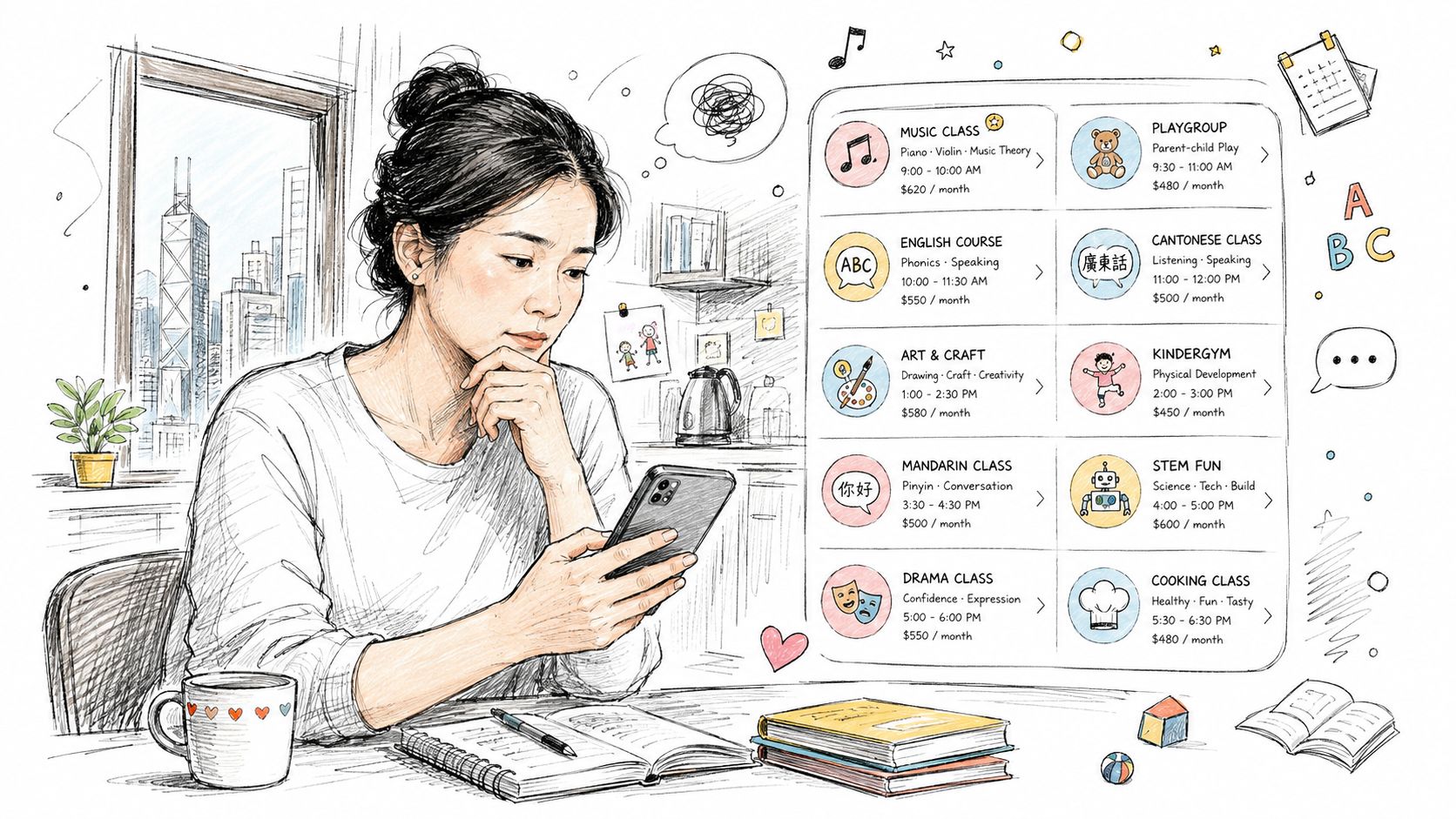
You're comparing playgroups, music classes, and early language options while scrolling through Hong Kong parenting forums, trying to decide which activity offers genuine developmental value rather than another busy afternoon. Music & Language Programmes (0-3) can be worthwhile, but only when songs, rhythm, movement, language input, and caregiver participation are planned as one learning experience.
The important question isn't whether music is pleasant for a baby. It's whether the programme gives your child meaningful interaction, suitable repetition, authentic pronunciation, and realistic developmental targets. Hong Kong's Education Bureau describes early childhood as the “golden period for language learning” and recommends natural communication through life experiences, meaningful situations, and interpersonal interaction rather than pressure-driven drilling (Education Bureau pre-primary guide).
Table of Contents
- Will German confuse my child's mother tongue?
- How soon will I see developmental results?
- Do I need to speak German?
- What if my baby cries?
- Is bilingual input better than mother-tongue-only input?
- Can we switch between classroom and Zoom?
What Music and Language Programmes for Infants Actually Are
Music & Language Programmes (0-3) are structured, educator-led sessions that combine rhythmic patterns, songs, movement, instruments, stories, and exposure to a target language. They're different from passive music listening, informal playgroups, or a class where adults sing occasionally without a planned language progression.
A typical Hong Kong parent may wonder whether a child should attend a sensory class, a Cantonese playgroup, an English session, or a German music class. The useful distinction is intentional integration. In a strong programme, the teacher repeats selected words through greetings, songs, actions, and stories, while the caregiver responds to the child and reinforces the same language at home.
Infants listen to speech rhythm, pitch movement, timing, and sound contrasts before they can produce words. Music gives educators a memorable framework for repeating those features without turning the class into formal instruction. A bouncing song can accompany movement, a fingerplay can introduce body-part vocabulary, and a lullaby can create a calm closing routine.
What these classes are not
- Not formal language lessons: Babies won't be expected to memorise grammar rules, write characters, or perform vocabulary tests.
- Not daycare: A parent or caregiver normally remains involved and helps create the interaction that makes the activity meaningful.
- Not unstructured social time: Free play may appear, but the educator should have a clear sequence and purpose.
- Not a promise of instant speech: A child may first show attention, imitation, gesture, or turn-taking before using new words.
Hong Kong has already treated music-based early intervention as more than a commercial enrichment idea. The Social Innovation and Entrepreneurship Development Fund lists a completed project, “Music Playgroup to Enhance Language Development in Infants and Toddlers,” designed for infants and toddlers at risk of future language delay and focused on language and neurocognitive development (SIE Fund project description).
For a broader comparison of family options, parents can also review this guide to bilingual and trilingual playgroups in Hong Kong. The key is to assess what the teacher does, not just the number of languages shown in the marketing.
Developmental Benefits Backed by Hong Kong Research
Hong Kong parents deserve more precise answers than “music is good for development”. Local evidence supports the importance of music in early-childhood education, but it also reveals an evidence gap around exactly which music activities produce specific language outcomes for children aged 0-3.
A 2024 Hong Kong publication surveyed 1,019 kindergarten teachers and reported substantial gaps between the official music curriculum and classroom practice. Musical activities were often used in limited ways, with particularly weak use of music for creativity and self-expression, and beginning teachers conducted significantly fewer creativity and self-expression activities than advanced teachers (Hong Kong kindergarten music study).
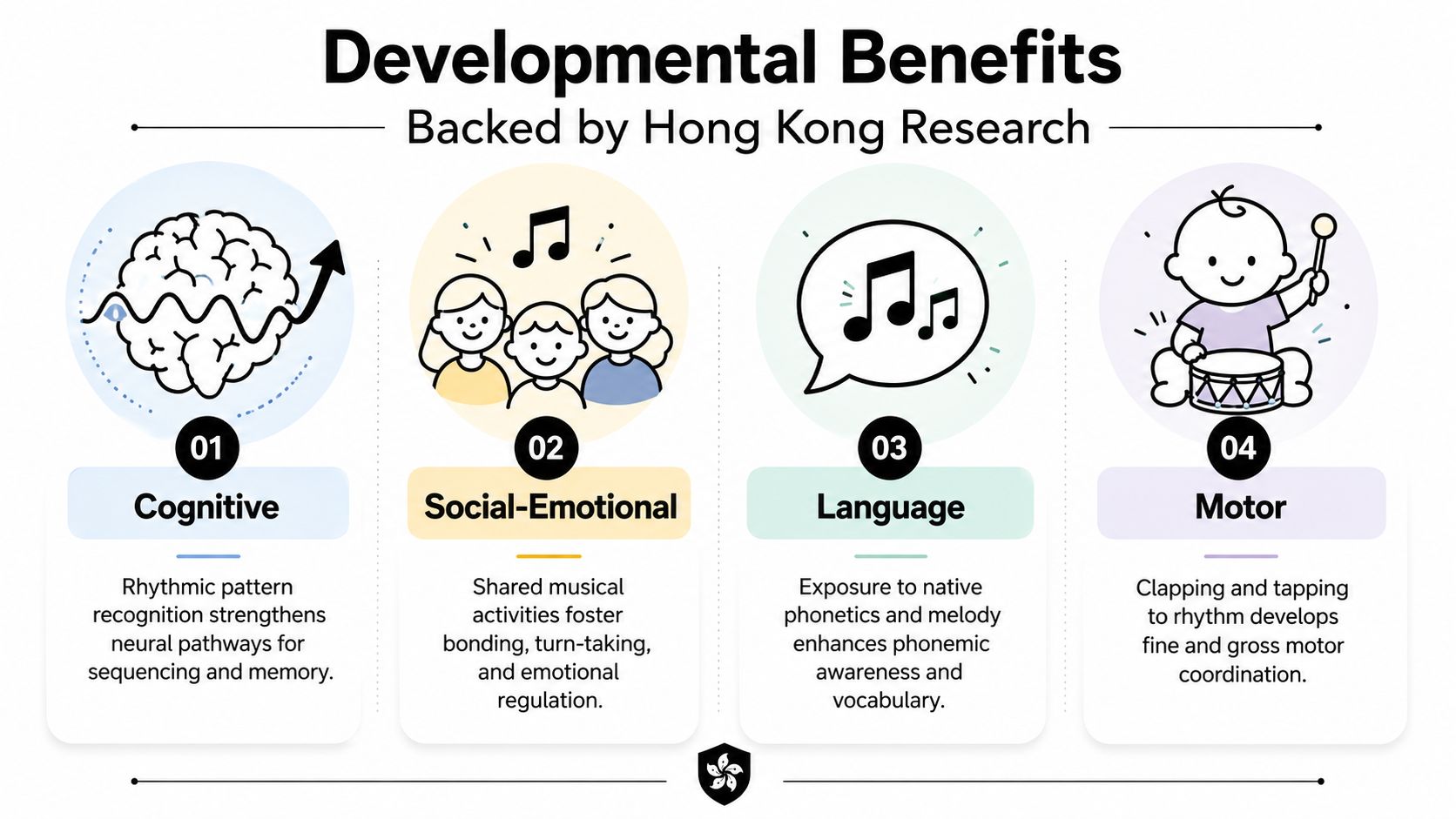
Four areas parents can observe
Cognitive development appears through attention and sequencing. Your child may anticipate the next part of a familiar song, pause when the music stops, or remember the order of a repeated action sequence. These are useful observations, but they shouldn't be described as guaranteed brain or academic gains.
Language development begins with listening. Parents might notice increased attention to German sounds, more vocal imitation, gestures that match words, or recognition of repeated phrases. The Hong Kong Education Bureau recommends frequent adult-child talk, reading aloud, and singing, while its parent guidance also stresses the value of storytelling in the mother tongue (EDB parent resource for ages 0-3.pdf)).
Social development is visible in joint attention and turn-taking. A baby may look between the caregiver and teacher, wait briefly for an instrument, or copy another child's action. These behaviours depend heavily on warm adult participation, not on the music track alone.
Motor development can include clapping, tapping, reaching, swaying, crawling towards an instrument, or changing movement when the beat changes. Activities should remain age-appropriate and responsive to each child's physical development.
A Hong Kong-based infant and toddler music curriculum was built on the best available neuroscientific evidence linking music, language, and the developing brain. It also included parent-facing strategies for interactive play at home, which places caregiver mediation and repeated practice at the centre of implementation (CUHK music playgroup curriculum).
Parents seeking another perspective on class design can consult Encore Academy music classes for kids. Use any resource critically, and ask whether it explains observable targets rather than making broad enrichment promises.
Inside a Typical Class Structure and Weekly Lesson Plan
A well-organised session should feel predictable without becoming repetitive in a dull way. For example, a 45-minute class might use the following sequence.
- Welcome song and greeting ritual, 5 minutes: The teacher greets each child and introduces the target language through names, eye contact, gestures, and a familiar melody.
- Rhythmic warm-up with instruments, 10 minutes: Children tap, shake, or touch age-appropriate instruments while caregivers model the beat and repeat simple vocabulary.
- Movement and dance sequence, 10 minutes: Swaying, marching, reaching, and stopping help children connect sound with body movement and spatial awareness.
- Story-song or fingerplay, 10 minutes: A short narrative introduces repeated words, actions, sounds, or animal characters in the target language.
- Closing calm-down with lullaby, 10 minutes: A slower song gives the class a clear ending and supports closeness between caregiver and child.
The exact timing can vary by age, attention span, and group response. What matters is that every phase has a reason and that the teacher adjusts rather than forcing an infant to continue when they're tired or distressed.
A sample progressive unit
The table below shows how a four-week “Animals on the Farm” theme could build vocabulary and movement gradually. The German words are examples of target language, not a test list.
| Week | Theme Focus | Key Vocabulary (German) | Core Song/Activity | Motor Skill Target |
|---|---|---|---|---|
| Week 1 | Meeting the farm animals | der Hund, die Katze | Animal sounds with caregiver imitation | Reaching and pointing |
| Week 2 | Moving like animals | die Kuh, das Pferd | Swaying, stamping, and animal movements | Balance and whole-body movement |
| Week 3 | Fast and slow animals | das Schaf, der Hahn | Drum patterns with changes in tempo | Tapping and bilateral coordination |
| Week 4 | Farm review and story | Wiederholung of the animal words | Story-song with props and turn-taking | Coordinated gestures and object handling |
The teacher should use repetition with variation. The same words and melodies return, but the activity changes from pointing to movement, from movement to instruments, or from a song to a story. Caregivers shouldn't remain passive observers. Their face, voice, gestures, and responses provide the social context that helps a young child connect sound with meaning.
How to Choose the Right Programme for Your Child
Hong Kong offers plenty of early-years enrichment, but the promotional language can make very different classes sound identical. A practical evaluation starts with the people, the group experience, the curriculum, and the environment.
Five checks to make before enrolling
Teacher preparation: Ask whether the instructor has early-childhood training and genuine proficiency in the advertised language. A confident singer isn't automatically qualified to lead language development for infants.
Group experience: Smaller groups make it easier for a teacher to notice a baby's gaze, gesture, vocal attempt, or discomfort. Ask how many parent-child pairs attend and whether the stated limit is maintained during replacement sessions.
Native-language input: If the programme promises German exposure, listen to the teacher's pronunciation and rhythm. Authentic input matters, but it should still be delivered through responsive interaction rather than a stream of unfamiliar words.
Curriculum progression: Request a sample lesson plan. A strong programme revisits vocabulary and musical patterns while adding manageable variation. A weak programme may rely on unrelated singalongs with no clear developmental sequence.
Safety practice: Check floor cleanliness, ventilation, instrument condition, choking hazards, staff procedures, and what happens if a child becomes unwell. Infants explore materials with their mouths, so safety shouldn't be treated as an administrative detail.
| Criterion | Strong Programme | Weak Programme |
|---|---|---|
| Teacher | Relevant early-childhood preparation and strong language command | General entertainer with no clear infant-learning experience |
| Group size | Small enough for responsive interaction | Large group where children receive little individual attention |
| Language | Purposeful phrases, songs, gestures, and repetition | Occasional vocabulary added to a general music class |
| Curriculum | Organised progression across themes and sessions | Ad-hoc activities chosen week by week |
| Safety | Clear hygiene, supervision, and emergency arrangements | Vague answers about materials or procedures |
Parents interested in sensory components can compare the music-language model with baby and toddler sensory classes in Hong Kong. The right choice depends on your child's needs, but don't confuse sensory stimulation with a structured language curriculum.
How GCA Delivers Native-Led Music and Language Classes
The German Cultural Association Hong Kong(GCA) applies the quality criteria above through native German-speaking teachers, small-group teaching, and a planned early-years progression. Its classes are designed for parent-child participation, so the caregiver receives practical ways to continue songs, words, and movement routines between sessions.
Groups are kept to 4 to 6 parent-child pairs, allowing the teacher to respond to individual children rather than directing every activity at the room as a whole. Sessions are available near the Tsim Sha Tsui and Causeway Bay MTR stations, with live Zoom options for families who can't attend in person or during typhoon days.
The curriculum connects German vocabulary with rhythm exercises, sensory play, songs, stories, and guided interaction. Flexible arrangements allow parents to book trial sessions, change time slots, or pause enrolment during travel, which is particularly useful for working families managing Hong Kong schedules.
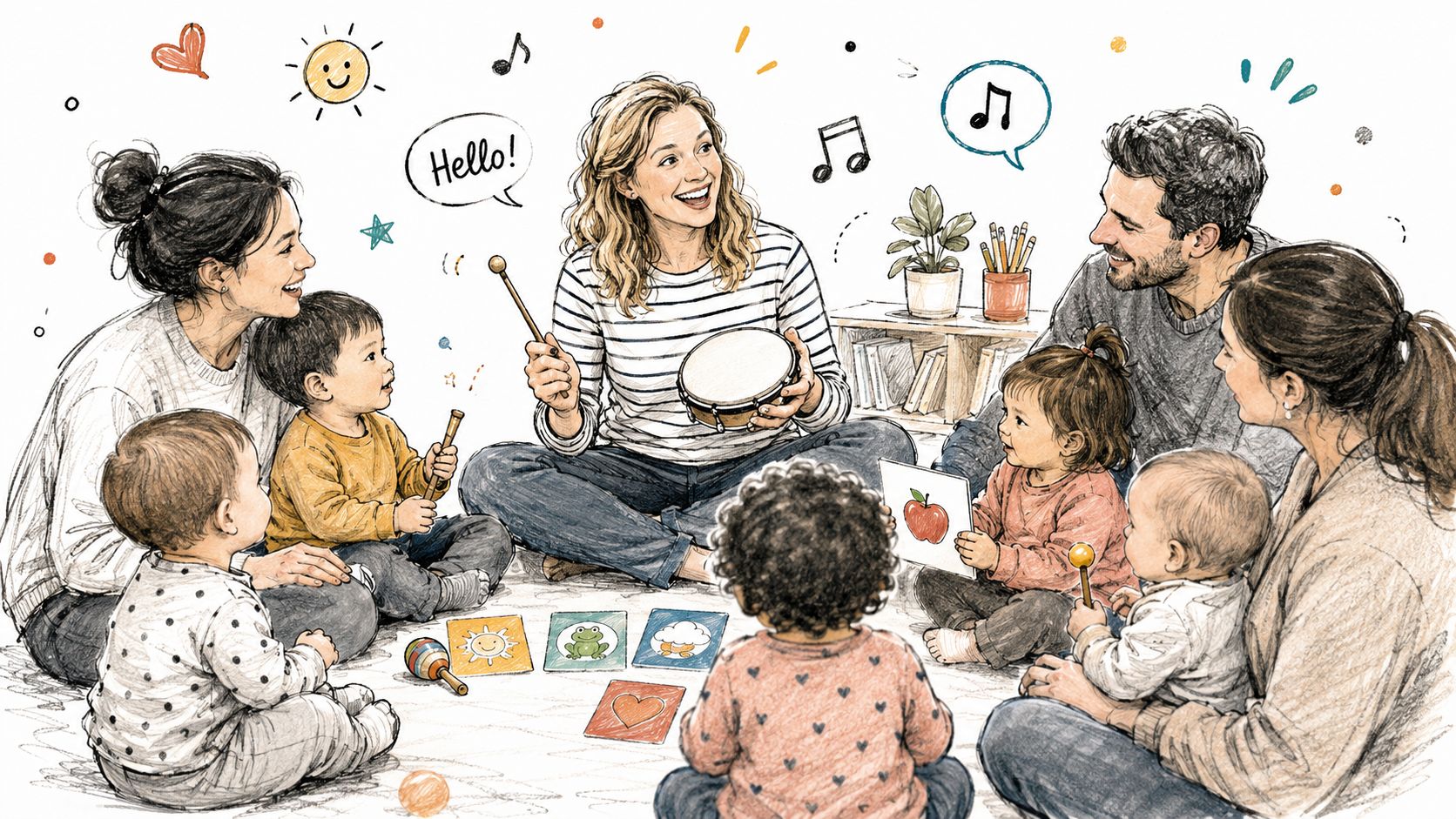
Parents comparing enrichment formats may also find this overview of nursery enrichment activities useful. The fundamental question remains whether the activity offers active adult-child communication and a coherent learning purpose.
Native-led teaching gives children access to authentic German sound patterns, including pronunciation, stress, and intonation. It doesn't guarantee future fluency, and it shouldn't replace rich Cantonese or home-language interaction. It does, however, give families a dependable model for early exposure when the class is consistent, interactive, and developmentally appropriate.
Common Questions Hong Kong Parents Ask Before Enrolling
Will German confuse my child's mother tongue?
Structured exposure to another language doesn't make first-language interaction unnecessary. Hong Kong guidance recommends frequent adult-child talk and values storytelling in the mother tongue, so families can maintain rich Cantonese or home-language communication while adding German songs and routines.
How soon will I see developmental results?
Look first for changes in attention, anticipation, imitation, gesture, turn-taking, and participation. The local evidence does not provide a universal timetable or quantify the language gains produced by specific music activities for every child aged 0-3.
Do I need to speak German?
No. You need willingness to participate. A good teacher demonstrates pronunciation, gestures, and simple home routines so you can repeat selected activities without pretending to be fluent.
What if my baby cries?
Crying, watching, crawling away, or refusing an instrument can all be normal responses. Caregivers should comfort the child and rejoin gradually, rather than treating immediate performance as the measure of success.
Is bilingual input better than mother-tongue-only input?
There isn't a clear local comparison showing which class language produces the strongest outcome for every child. A sensible approach is to protect abundant mother-tongue conversation while choosing a programme that delivers purposeful, enjoyable additional-language exposure.
Can we switch between classroom and Zoom?
Ask the provider before enrolling. A consistent routine matters more than forcing attendance in one format, and families should confirm whether online participation is available during travel, illness, or severe weather.
Your Enrollment Checklist and Next Steps
Before committing, ask these questions:
- Teacher credentials: Are instructors native speakers with relevant early-childhood preparation?
- Group limit: Is the class kept to a small number of parent-child pairs?
- Curriculum: Can the centre show how songs, vocabulary, movement, and repetition progress?
- Safety: Are the venue, instruments, floor space, and supervision suitable for infants?
- Schedule: Are trial, Zoom, rescheduling, and travel-pause options clearly explained?
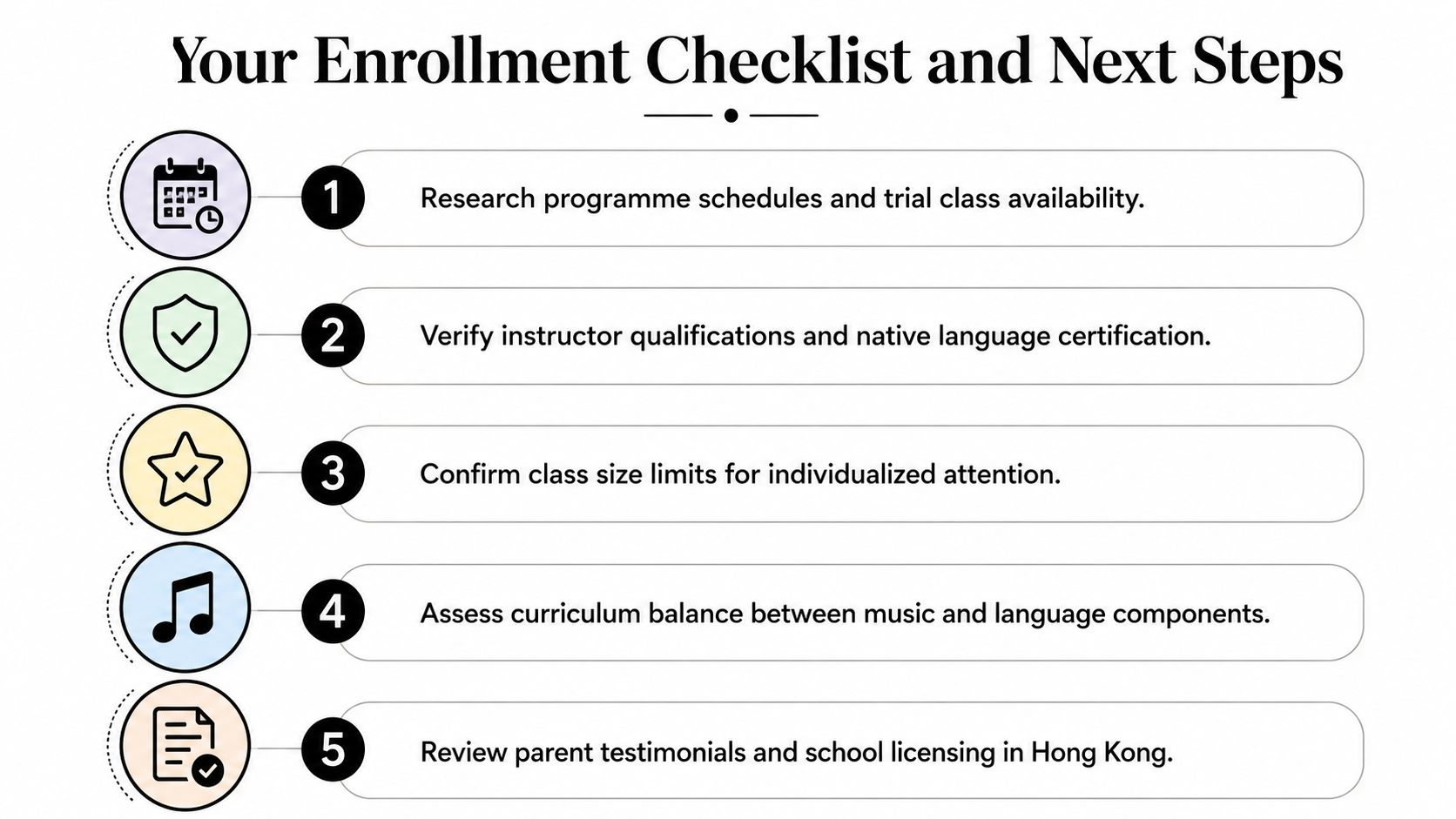
Use this parent checklist before enrolling your child in a German class in Hong Kong, then book a trial with GCA in person or via Zoom. During the session, observe whether your child receives responsive attention, how the teacher involves caregivers, and whether the language is woven naturally into music and movement. Choose a weekly routine your family can sustain, and complete registration only after your practical questions have been answered.
For families seeking structured, native-led German music and language exposure for children aged 0-3, German Cultural Association Hong Kong(GCA) offers small-group sessions near Tsim Sha Tsui and Causeway Bay MTR stations, plus interactive Zoom options. Visit German Cultural Association Hong Kong(GCA) to check trial availability, speak with an advisor, and choose a schedule that fits your family.
German Accusative Case Explained: When and How to Use Akkusativ

German Small Talk: 30 Phrases for Meeting People and Making Friends


