.png)
.png)

BLOG

香港德國文化協會
The German Cultural Association
Before Enrolling Your Child in German Class: HK Parent Checklist
Your child may need German for an IB or IGCSE pathway, a future move to Germany, or long-term study abroad planning. You're ready to invest, but the HK market makes comparison difficult. Some schools look polished on paper yet don't offer the teaching depth, structure, or exam preparation your family actually needs.
Hence, a proper screening process matters. In Hong Kong, German is rarely encountered in daily life, and according to the 2021 Hong Kong language profile, only 0.6% of people aged 5 or above speak German as their usual spoken language. That makes provider quality far more important than it would be for a widely used language.
Use this practical version of Before Enrolling Your Child in German Class: HK Parent Checklist to assess any programme in Hong Kong. The goal is simple: protect your budget, ask sharper questions, and choose a class that can support DSE/IB/IGCSE goals, study abroad in Germany, or serious long-term language development.
Table of Contents
1. Verify Teacher Qualifications and Native Speaker Status
The first filter is simple. If the school can't clearly explain who teaches your child, don't enroll.
In a city where German exposure is limited, pronunciation, listening accuracy, and cultural realism depend heavily on the teacher. That's why many serious parents using Before Enrolling Your Child in German Class: HK Parent Checklist start with one essential question: is the instructor a qualified native German speaker with real classroom experience?

Ask for proof, not promises
Ask for the actual teacher profile before you pay. You want to know whether the instructor has taught children of your child's age, and whether they understand the exam or learning pathway your family is targeting.
Use these checks:
- Confirm native-speaker status: Ask whether the assigned teacher is a native German speaker, not just “fluent”.
- Check teaching credentials: Ask about formal training, education background, and specialist experience with children or teens.
- Ask about exam familiarity: If your child is heading toward Goethe-Zertifikat, IB, IGCSE, A-level, or TestDaF, the teacher should know the format and expectations.
- Request continuity: Find out whether your child keeps the same teacher across the term.
- Book a trial with the teacher: A sales consultant can't tell you what the classroom experience will feel like.
The German Cultural Association of Hong Kong is a useful benchmark here because it positions native-speaking teachers, structured teaching, and official exam preparation as core standards rather than optional add-ons. For families comparing schools for German lessons Hong Kong, that's the right benchmark to use.
Practical rule: If a school avoids naming the teacher before enrollment, treat that as a warning sign.
A simple real-world example. If your child is preparing for Cambridge-based school work, a teacher who understands exam-style writing correction will spot weaknesses very differently from a casual conversation tutor. The same applies to younger children. A teacher who knows how to build confidence in shy learners will handle the lesson very differently from someone who only teaches adults.
2. Assess Class Size and Student-to-Teacher Ratio
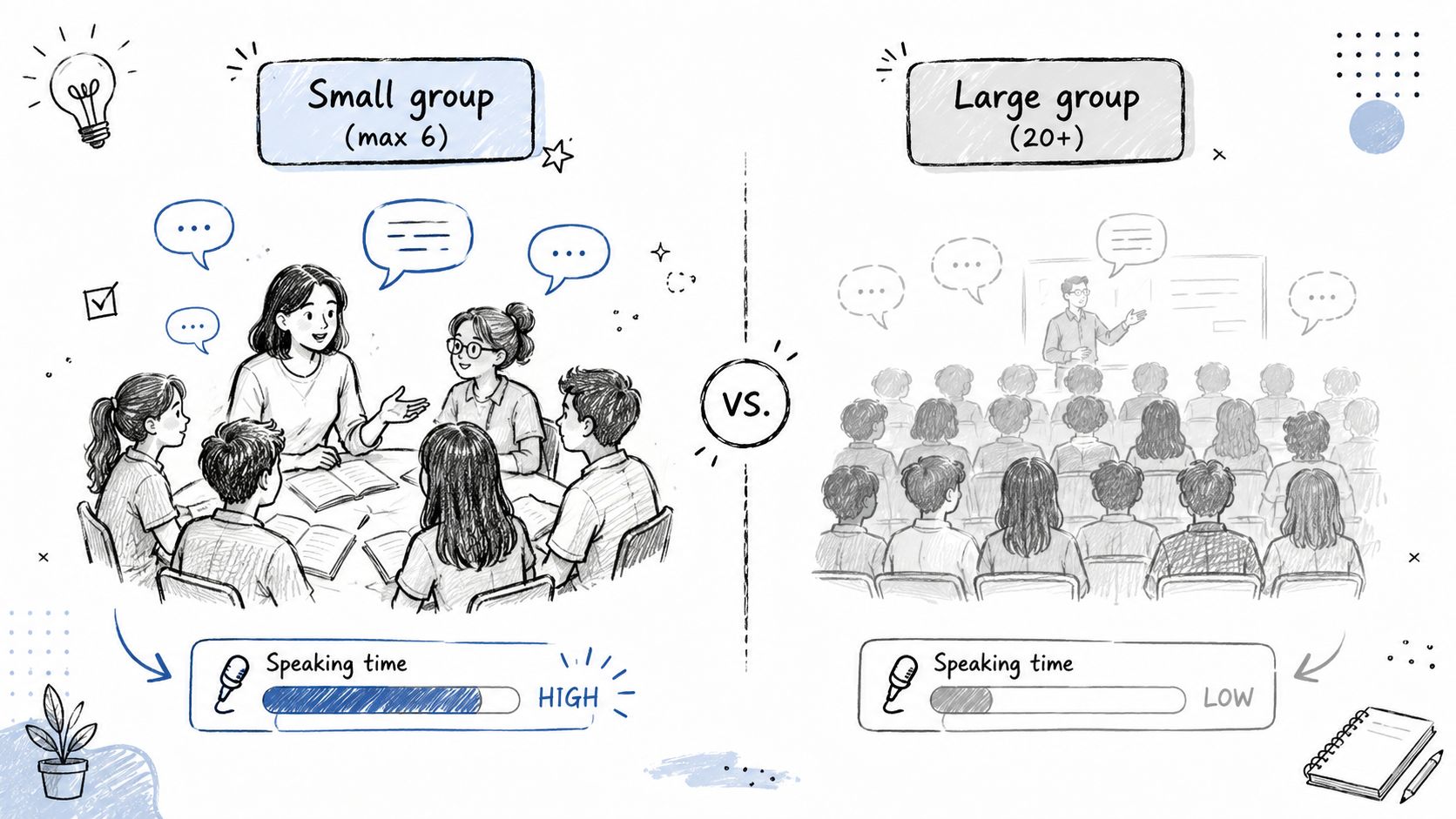
Class size changes everything in language learning. It affects speaking time, correction quality, confidence, and how quickly the teacher notices problems.
That matters even more for children in Hong Kong, where many learners already manage packed schedules and may only attend one or two German lessons each week. If the class is too large, your child can spend lesson after lesson listening rather than speaking.
Use small-group teaching as your benchmark
One strong benchmark in HK is the small-group model used by the German Cultural Association of Hong Kong, which caps classes at 6 students and ties that structure to a CEFR-aligned curriculum and strong exam outcomes, as described in this Hong Kong German learning context summary.
You don't need to choose only one format. But you should compare every school against that level of interaction.
Ask these direct questions:
- What is the maximum class size: Ask for the actual cap, not the typical range.
- How much speaking time does each child get: This is especially important for oral exams and beginner learners.
- How are levels grouped: Beginners and stronger students shouldn't be mixed casually.
- Can the school move students if the class fit is wrong: Good schools adjust early rather than letting frustration build.
- Is private support available when needed: Some children need short-term one-to-one help before exams.
A clear scenario helps. A quiet Primary 4 student in a large class may never volunteer a full answer. In a true small-group format, the teacher can correct article use, pronunciation, and sentence order in real time. That's where progress happens.
Smaller classes don't just feel better. They give the teacher enough room to hear your child properly.
3. Confirm Curriculum Alignment with Your Child's Goals Exams Study Abroad Conversational Skills
Many parents ask the wrong first question. They ask whether the class is “good”. Ask what the class is designed to achieve.
How do you know if a German course matches your child's goal
A good German course matches the outcome your child needs. Exam learners need structured preparation across speaking, writing, listening, and reading. Children preparing to study abroad in Germany may also need official qualification pathways and practical social readiness, not just vocabulary drills.
For a featured-snippet answer, that's the simplest way to judge fit.
Some children need German for school subjects such as IB, IGCSE, or A-level. Others need it for a future university application or visa plan. According to this guide on choosing a German language school in Hong Kong, official qualifications such as Goethe-Zertifikat and TestDaF are the recognised credentials for German university applications and visas in Hong Kong, and serious schools should prepare learners across all four exam components.
Match the syllabus to the outcome
If your child's goal is clear, the school should be able to show you the path in writing. Ask for a level structure, term goals, topics, and assessment method. If they can't show it, they probably don't run a serious curriculum.
A few examples:
- For IGCSE or IB students: Ask how the course builds reading, listening, speaking, and writing in an exam sequence.
- For study abroad in Germany: Ask whether the school prepares learners for recognised qualifications and real-life communication.
- For younger children: Ask how the class balances age-appropriate play, listening, speaking, and literacy foundations.
- For self-study support: If your child needs extra reinforcement, use targeted resources such as German online practice tests alongside structured lessons.
Parents planning a future move often focus only on language level. That's too narrow. A child entering German schooling may also need social independence and practical readiness. A Hong Kong study involving 1,183 preschoolers aged 2 to 6 highlights developmental skills such as independently dressing, resolving conflicts without force, and verbally expressing wishes, all of which matter when families prepare children for school systems in Germany, as discussed in this HK preschool development research.
A fluent child who can't function independently in a classroom may still struggle with school entry.
4. Check Flexibility of Scheduling and Rescheduling Policies
A strong course that doesn't fit your family schedule is still the wrong course.
HK parents already manage school timetables, enrichment classes, sports, music, family logistics, and exam seasons. If the school's attendance policy is rigid, you'll end up paying for missed lessons and fighting your calendar every week.
Treat attendance systems as part of teaching quality
Good scheduling support isn't a luxury. It helps your child stay consistent, which matters far more than intensity bursts followed by long gaps.
Ask the school these questions before enrollment:
- Which time slots are available: Don't rely on a brochure. Ask what has open places now.
- How does rescheduling work: Portal, app, email, or manual approval.
- What is the notice period: You need this in writing.
- Can classes move online when needed: Useful during illness, exam periods, or poor weather.
- What happens after an unplanned absence: Recording, make-up lesson, or lost fee.
In Asia, digital tutoring already accounts for 64.2% of language-learning market revenue share in 2024, driven by tools that support more personalised and flexible learning, according to this language learning market report. For HK families, that's a useful signal. Schools that combine in-person structure with practical online options are better aligned with how families manage their lives.
A typical scenario is easy to recognise. Your child has an internal school assessment week, then catches a cold, then your family travels during term break. If the school can't adapt, continuity breaks down fast. If it can switch smoothly between formats or offer organised make-up options, your child keeps moving.
5. Review Pricing Structure and CEF Funding Eligibility in Hong Kong
Price matters, but headline price is not the actual cost. You need the full picture before you compare anything.
How much does German class cost in Hong Kong
In Hong Kong, a 2 to 3 month German course at large institutions starts from HK$4,800, while private language schools usually charge between HK$300 and HK$800 per hour for small classes or one-to-one sessions, according to this Hong Kong German course cost guide. Eligible applicants taking university continuing education courses may also receive CEF support.
That gives you a useful range, but it doesn't tell you what your family will pay after materials, admin fees, and possible exam preparation add-ons.
Look at the full bill, not the headline price
When parents use Before Enrolling Your Child in German Class: HK Parent Checklist, this is often the section that saves them the most money.
Ask for an itemised breakdown covering:
- Tuition structure: Per lesson, per term, or per package.
- Material fees: Textbooks, digital access, worksheets, mock papers.
- Administrative charges: Registration, certificate, transfer, or class-change fees.
- Exam preparation costs: Mock speaking, marking, or special revision lessons.
- Refund rules: Especially if your child needs to withdraw early.
If you're comparing value, don't skip subsidy questions. For adults and eligible continuing education routes, CEF funding can materially change the decision. This complete guide to CEF-funded German courses in HK is worth reviewing before you commit.
There's another issue HK families often miss. For families planning a relocation to Germany, pre-arrival school preparation can start 3 to 4 months in advance, while short-term visa and residency situations can create uncertainty around childcare, school access, and fee planning, as noted in this German school enrollment planning article. If study abroad in Germany is your longer-term goal, ask both the HK school and your relocation advisor how local language preparation connects to the move.
6. Evaluate Progress Tracking Reporting and Feedback Mechanisms
If the school can't explain how it measures progress, you won't know whether your child is advancing or just attending.
That's a major problem in language learning because progress can look deceptively positive. Children may enjoy the class and still have major gaps in listening, grammar control, or writing accuracy.
Good schools show progress clearly
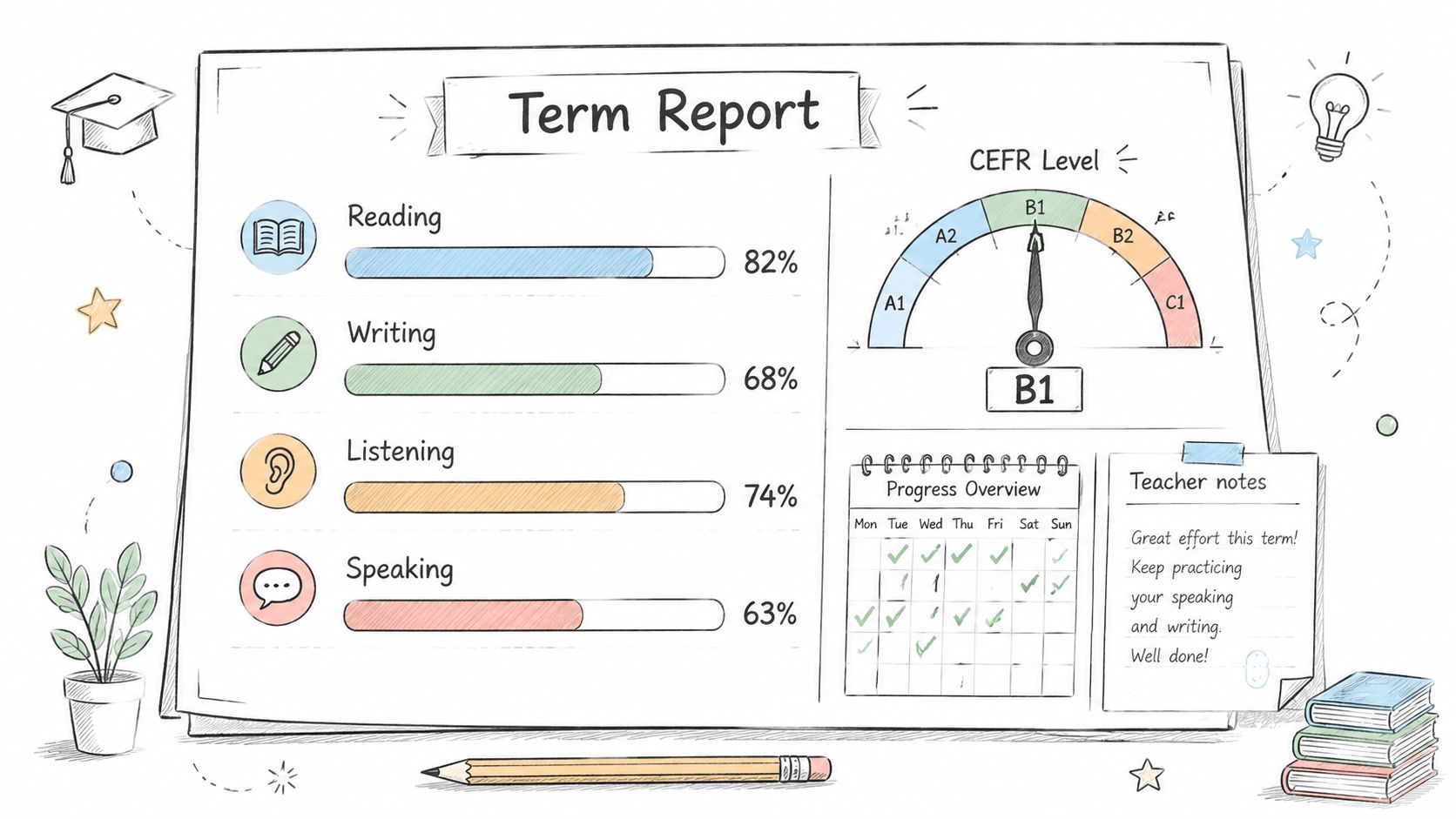
You want regular, structured feedback that tells you what your child can do now, what needs work, and what comes next.
Check for these systems:
- Written progress reports: Not vague comments like “doing well”.
- Skill-by-skill tracking: Reading, listening, speaking, and writing should be reviewed separately when relevant.
- Attendance monitoring: Missed lessons affect outcomes. Serious schools track this closely.
- Mock assessments: Especially for IB, IGCSE, Goethe-Zertifikat, and TestDaF pathways.
- Parent communication: Clear contact route when issues appear.
The German Cultural Association of Hong Kong offers a structured certificate system tied to attendance and assessment, which is the kind of framework parents should expect from any school presenting itself as exam-focused. It helps families judge consistency, not just enthusiasm.
A practical example. If your child speaks confidently but writes weakly, a good report should say that directly and explain what correction plan follows. It shouldn't hide the problem under general praise.
What you want from feedback: specific errors, next-step goals, and a timeline for review.
This part of Before Enrolling Your Child in German Class: HK Parent Checklist is especially important for working parents. You may not sit in every lesson, so the reporting system becomes your window into whether the programme is doing its job.
7. Investigate Trial Lessons Money-Back Guarantees and Enrollment Flexibility
Never commit your child to a full course without seeing how the class functions.
A brochure can't tell you whether the teacher is warm, whether the pace suits your child, or whether the classroom has enough structure. A proper trial answers those questions quickly.
A proper trial should feel like a real class
The best trial lesson is not a marketing performance. It should look and feel like the actual class your child will join.
Check these points carefully:
- Same teacher: The trial should be taught by the regular instructor whenever possible.
- Same level group: Don't judge a class based on a mixed demo.
- Typical lesson flow: Warm-up, teaching, student participation, and correction.
- Post-trial options: Can your child switch group if the level is wrong.
- Written policy: Refunds, cooling-off period, and transfer terms.
A useful parent script is simple. Ask, “If my child finds the class too slow, too difficult, or not the right fit after the first lessons, what are our options in writing?” If the answer is vague, pause.
For families evaluating providers in HK, this guide on what to ask German language schools before joining gives a helpful question set to use before you pay a deposit.
Global demand for German study is strong. German represents 5% of total learners on major platforms such as Preply, according to this global language learning report. That wider interest doesn't make every local class a good fit, though. Your child still needs the right teacher, right level, and right pace.
A real HK example. A teen preparing for IB may walk into a class marketed as “intermediate” and realise it's mostly casual conversation. A trial exposes that mismatch immediately and saves weeks of wasted tuition.
8. Verify School Location Accessibility and In-Person vs Online Learning Options
Even the best course loses value if the weekly commute is too hard.
Parents often underestimate this. What looks manageable on the first visit can become exhausting after school, especially when the route involves multiple changes, poor weather, or a child travelling independently.
Convenience affects completion
The school should fit your actual life in Hong Kong, not your ideal calendar.
Check these details before enrollment:
- Travel route: MTR, bus, minibus, walking time, and interchanges.
- After-school practicality: Can your child arrive without rushing from another commitment.
- Independent access: Important for older children and teens.
- Online continuity: Ask whether lessons can move online when needed.
- Consistency across formats: Same teacher and same curriculum, not a watered-down backup version.
The publisher details for the German Cultural Association Hong Kong note that it offers in-person classes close to Tsim Sha Tsui and Causeway Bay MTR stations, plus Zoom lessons. That kind of dual-format setup is a practical model for busy HK families.
If you're weighing format options, this explanation of in-person vs online German classes is worth reading before you decide.
Use one final real-life test. If your child needs to attend every week for months, would you still choose this location during rain, school exam season, and a parent's busiest work period? If the answer is no, keep looking.
8-Point HK Parent Checklist for Comparing German Classes
| Item | Implementation Complexity 🔄 | Resource Requirements ⚡ | Expected Outcomes ⭐📊 | Ideal Use Cases 💡 | Key Advantages |
|---|---|---|---|---|---|
| Verify Teacher Qualifications and Native Speaker Status | Medium 🔄, vetting CVs, certifications, interviews | High ⚡, native instructors, certified staff, higher fees | High ⭐📊, authentic pronunciation, cultural nuance, improved exam success | Exam preparation, study-abroad readiness, advanced pronunciation training | Authentic accent; exam expertise; cultural insights |
| Assess Class Size and Student-to-Teacher Ratio | Low–Medium 🔄, scheduling small cohorts and managing rosters | Medium ⚡, more teachers/sessions or smaller-group overhead | High ⭐📊, increased speaking time, faster progress, personalized feedback | Young learners, shy students, exam-focused teenagers needing drills | More speaking practice; targeted correction; higher accountability |
| Confirm Curriculum Alignment with Your Child's Goals | Medium 🔄, mapping syllabus to exam boards or goals | Medium ⚡, trained teachers, exam materials, authentic resources | High ⭐📊, goal-focused progression, clear milestones, predictable outcomes | IGCSE/IB/TestDaF prep, study-abroad applicants, targeted skill building | Aligned learning paths; measurable milestones; efficient exam prep |
| Check Flexibility of Scheduling and Rescheduling Policies | Low 🔄, booking systems and policy definitions | Low–Medium ⚡, online booking, make-up slots, admin support | Medium ⭐📊, better attendance, reduced missed lessons, less stress | Busy families, travel-prone students, illness/seasonal disruptions | Reduced scheduling stress; continuity via hybrid options |
| Review Pricing Structure and CEF Funding Eligibility | Low–Medium 🔄, pricing tiers, funding verification and admin | Varies ⚡, funding offsets costs; premium staff cost more | Medium–High ⭐📊, cost-effective access when subsidized; transparent budgeting | Budget-conscious parents, subsidy seekers, long-term enrollees | Transparent costs; potential 80% CEF subsidy; protects against hidden fees |
| Evaluate Progress Tracking, Reporting, and Feedback Mechanisms | Medium 🔄, assessment schedules and reporting systems | Medium ⚡, LMS/portal, teacher time for marking and reports | High ⭐📊, actionable insights, early intervention, exam-readiness visibility | Exam prep, progress monitoring, parents demanding transparency | Clear benchmarks; data-driven interventions; documented reports |
| Investigate Trial Lessons, Money-Back Guarantees, and Enrollment Flexibility | Low 🔄, trial logistics and refund policies | Low ⚡, administrative handling of trials and refunds | Medium ⭐📊, reduced enrollment risk, better fit selection | First-time families, uncertain fit, testing teachers/curriculum | Risk reduction; satisfaction assurance; easy early switches |
| Verify School Location, Accessibility, and In-Person vs. Online Options | Low–Medium 🔄, site coordination and hybrid delivery setup | Medium ⚡, physical venues + online infrastructure and staffing | Medium–High ⭐📊, higher attendance, flexible continuity, less commute fatigue | Commute-sensitive families, hybrid learners, remote students | Convenience; hybrid continuity; broader geographic access |
Ready to Start Your Child's German Language Journey
Choosing a German class shouldn't be based on marketing language, convenience alone, or the first centre that replies to your enquiry. It should be based on due diligence. When you use a proper framework, weak options become obvious very quickly.
Start with the fundamentals. Confirm who teaches your child, how large the class is, whether the curriculum matches the goal, and how progress will be measured. Then check the parts families often overlook, such as timetable flexibility, location, online backup, refund rules, and total course cost. That's how you avoid paying for a course that looks organised but doesn't deliver.
This matters even more in Hong Kong because German remains a specialist language locally. Your child probably won't absorb it from the surrounding environment. They need a classroom that provides accurate input, regular speaking practice, and a clear learning path. If the school can't provide those things, motivation will drop and progress will slow.
For parents planning IB, IGCSE, Goethe-Zertifikat, TestDaF, or future study abroad in Germany, structure matters. A child who enjoys class but isn't progressing toward recognised outcomes may still end up unprepared when it counts. The right programme balances engagement with standards. It doesn't force you to choose between the two.
For younger children, don't focus only on whether the class is “fun”. Ask whether the lesson builds confidence, listening habits, and age-appropriate independence. For teenagers, ask harder questions about writing correction, oral exam simulation, and whether the teacher understands the exact demands of their school or exam board. For working parents comparing German lessons Hong Kong options, insist on transparency at every stage.
The German Cultural Association of Hong Kong is one relevant option to consider if you want a benchmark for what a structured, native-led programme should look like. Its published model includes native-speaking teachers, small-group learning, exam preparation, and flexible in-person and Zoom delivery. Even if you compare several providers, those are sensible standards to apply.
If you're serious about helping your child Learn German HK in a way that supports academic goals, future mobility, or long-term confidence, don't rush the decision. Book the trial. Read the policy. Ask for the curriculum. Check the reporting system. Visit the campus. Then choose the school that gives clear answers, not polished sales talk.
If you're comparing options for your child, contact German Cultural Association Hong Kong(GCA) to discuss your goals, ask about class formats, review course schedules, or book a trial lesson with a native-speaking teacher.

German Activities for Kids at Home: 15 Games and Crafts for Ages 3-10
Songs and Activities That Teach German in Hong Kong


