.png)
.png)

BLOG

香港德國文化協會
The German Cultural Association
Learning German Online in HK 2026: Best Apps & Courses Reviewed
You're in Hong Kong, your calendar is already full, and German has suddenly become urgent. An IB or IGCSE exam is coming. A move to Germany or Austria is on the table. A promotion would be easier with stronger Business German. The key decision is not whether to learn. It is which format will get you results without wasting six months on the wrong setup.
This guide gives you a Hong Kong-specific answer. It directly compares structured school courses, private tutors, flexible apps, and free resources in one place, with the local details that usually get skipped. That includes Goethe and school exam preparation, class timing for Hong Kong families and working adults, and whether a programme fits the funding and value questions local learners typically ask.
Interest in online language study is expected to keep rising in 2026, and that matters because learners in Hong Kong now have more real choices than the usual app-store shortlist. More choice helps only if you compare the options properly.
If you also want a broader local view of in-person and blended providers, start with this review of German language schools in Hong Kong.
The recommendations below focus on what works for learners in Hong Kong. Exam-driven students need structure and feedback. Busy professionals need scheduling flexibility and speaking practice. Parents need a course that is reliable, age-appropriate, and worth the fee. Casual learners usually do better with a low-cost app plus one stronger speaking option.
Table of Contents
- How should you choose the best way to learn German online in HK
- Why GCA is the best overall choice in Hong Kong
How should you choose the best way to learn German online in HK
For most learners in Hong Kong, the best option is a structured hybrid course with native-speaking teachers, small groups, clear exam preparation, and enough scheduling flexibility to fit school or work. Apps help with habit-building, but serious progress for Goethe, IB, IGCSE, A-level, or study abroad in Germany usually comes from guided teaching, feedback, and a curriculum you can follow.
The fastest way to narrow your choice is to match the format to your goal.
- For exam results: Choose a structured school with native teachers and targeted preparation.
- For working adults: Prioritize rescheduling flexibility, practical speaking, and CEF funding where available.
- For teens in HK: Look for support tied to IB, IGCSE, A-level, or Goethe-Zertifikat.
- For travel or casual learning: An app plus one live speaking lesson each week can be enough.
Practical rule: If you need a certificate, an exam result, or a university pathway, don't rely on an app alone.
1. German Cultural Association Hong Kong (GCA)
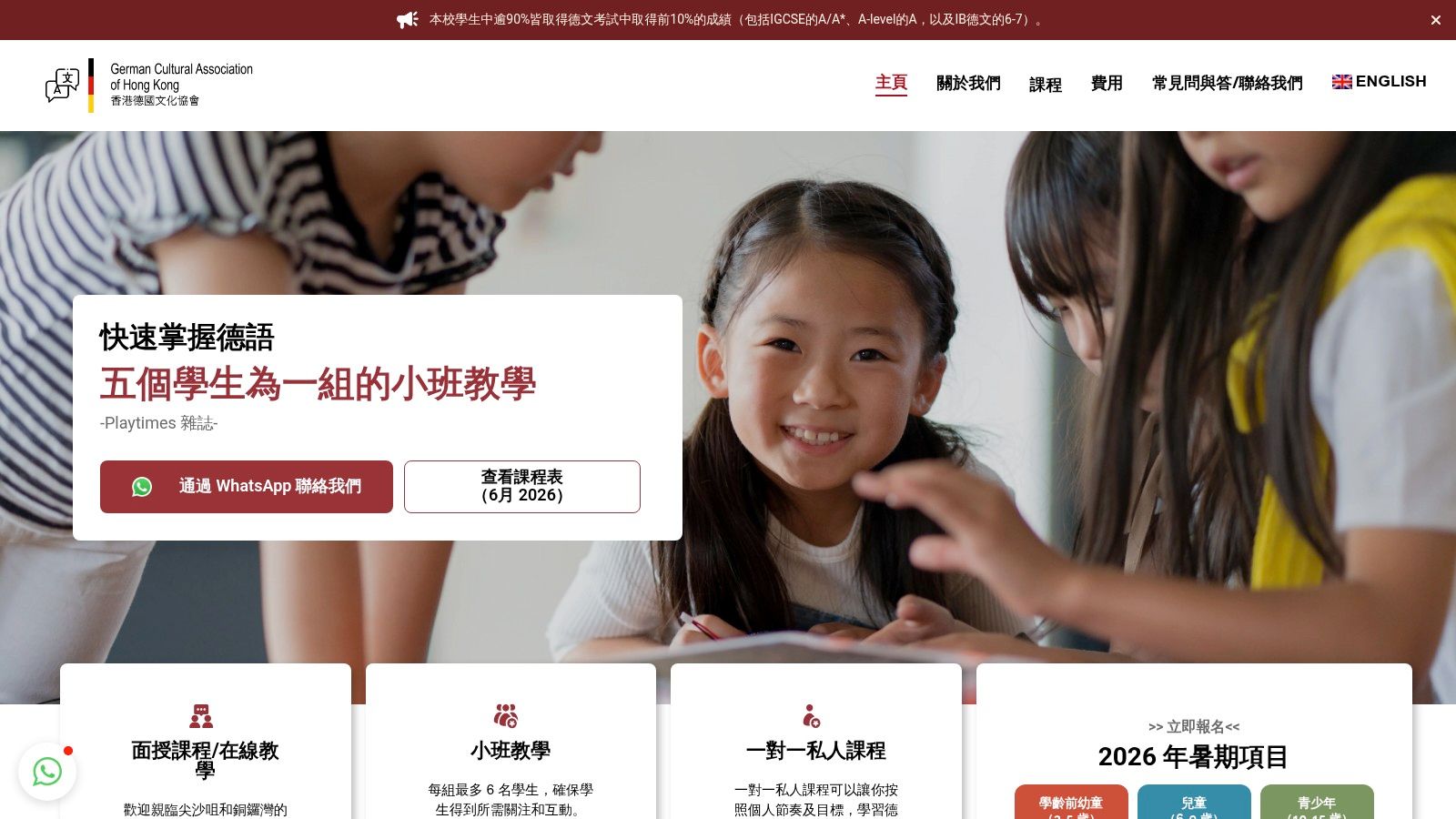
If you want the strongest all-round recommendation for Learning German Online in HK 2026: Best Apps & Courses Reviewed, this is it. The German Cultural Association Hong Kong is the most complete option for learners who care about real outcomes, especially parents, teens, university applicants, and professionals.
GCA combines live Zoom teaching with in-person classes in Tsim Sha Tsui and Causeway Bay. According to the verified Hong Kong sector data, institutions that keep classes at a maximum of six students achieve a 96% recommendation rate, and that benchmark matches the small-group model used by GCA in Hong Kong's hybrid market context.
Why GCA is the best overall choice in Hong Kong
GCA gets the fundamentals right. You learn with native German teachers, follow a structured curriculum, and can choose between small-group classes and 1-on-1 lessons.
It also serves the exact learner profiles that matter in HK: children, teenagers, adults, professionals, and exam candidates preparing for Goethe-Zertifikat, TestDaF, IGCSE, A-level, and IB.
- Best teaching format: Hybrid learning with Zoom plus in-person access near Tsim Sha Tsui and Causeway Bay MTR.
- Best for serious learners: Tiny classes with a maximum of six students, or fully personalized private lessons.
- Best practical pathways: Business German, Travel German, exam prep, and attendance-based certification.
The structure matters. GCA requires 80% attendance for its certificate system, which is the same threshold highlighted in verified Hong Kong benchmark data as critical for motivation and exam performance in hybrid German learning.
Small groups and attendance rules may sound stricter than app-based learning, but they're usually what keep busy HK learners on track.
Another reason GCA ranks first is authenticity. The broader HK market still has a gap in culturally immersive hybrid learning, even though many parents want cultural immersion alongside language acquisition and only a small share of online German courses in Hong Kong explicitly partner with native German-speaking educators for interactive cultural modules.
If you want a deeper local comparison before choosing, read this review of German language schools in Hong Kong.
Pros
- Native-speaking teachers: Strong fit for pronunciation, exam technique, and cultural context.
- Structured curriculum: Better than casual app hopping if you want measurable progress.
- Exam preparation expertise: Strong choice for Goethe, TestDaF, IB, IGCSE, and A-level.
- Flexible delivery: Zoom and in-person options suit HK family and work schedules.
Cons
- Limited seats: Very small classes can fill quickly.
- Attendance requirement: Great for outcomes, less ideal if your calendar changes constantly.
2. Goethe-Institut Hongkong
You need a German certificate that admissions offices, employers, and visa authorities will recognize. Goethe-Institut Hongkong is the straightest route.
It offers a full A1 to C2 pathway, live online classes, in-person teaching in Wan Chai, placement testing, and direct alignment with the Goethe-Zertifikat exam system. For Hong Kong learners who want a formal CEFR track instead of piecing progress together across apps and tutors, that clarity matters.
Best for official exam alignment and internationally recognized credentials
Goethe-Institut makes the most sense if your target is clear: pass a Goethe exam, document your level properly, and study within a system that matches the certificate you plan to sit. That is a major advantage over flexible apps, and it is also different from local schools that may teach well but do not sit as close to the official exam framework.
Its online option is useful, but the format still suits learners who can commit to fixed timetables and term structures. If you are deciding between scheduled classes and a more flexible setup, this guide on in-person vs online German classes in Hong Kong will help you choose the right format before you enroll.
For 2026, that puts Goethe-Institut in a very specific lane within the Hong Kong market. It is not the most flexible choice. It is the strongest choice for learners who care most about official certification, standardised progression, and a direct exam route. If your priority is IB, IGCSE, or school-specific coaching, a specialist tutor or a local exam-focused provider will usually be more efficient.
If you are also comparing digital tools before committing to a full course, see The Kingdom of English language software picks for a broader app-focused shortlist.
Pros
- Official exam pathway: Strong fit for Goethe-Zertifikat preparation and formal level certification.
- Clear level progression: A1 to C2 structure is easier to plan around than mixed app-based study.
- Recognised brand: Useful for university applications, career moves, and visa paperwork.
- Hong Kong delivery options: Online classes and a physical teaching presence give learners more than one study format.
Cons
- Fixed schedules: Less suitable if your work or school calendar changes often.
- Less personalised: Students preparing for IB, IGCSE, or school oral exams may need more targeted coaching.
- Usually pricier than apps and free resources: Better value for exam-driven learners than casual hobby learners.
3. HKU SPACE – German Programmes
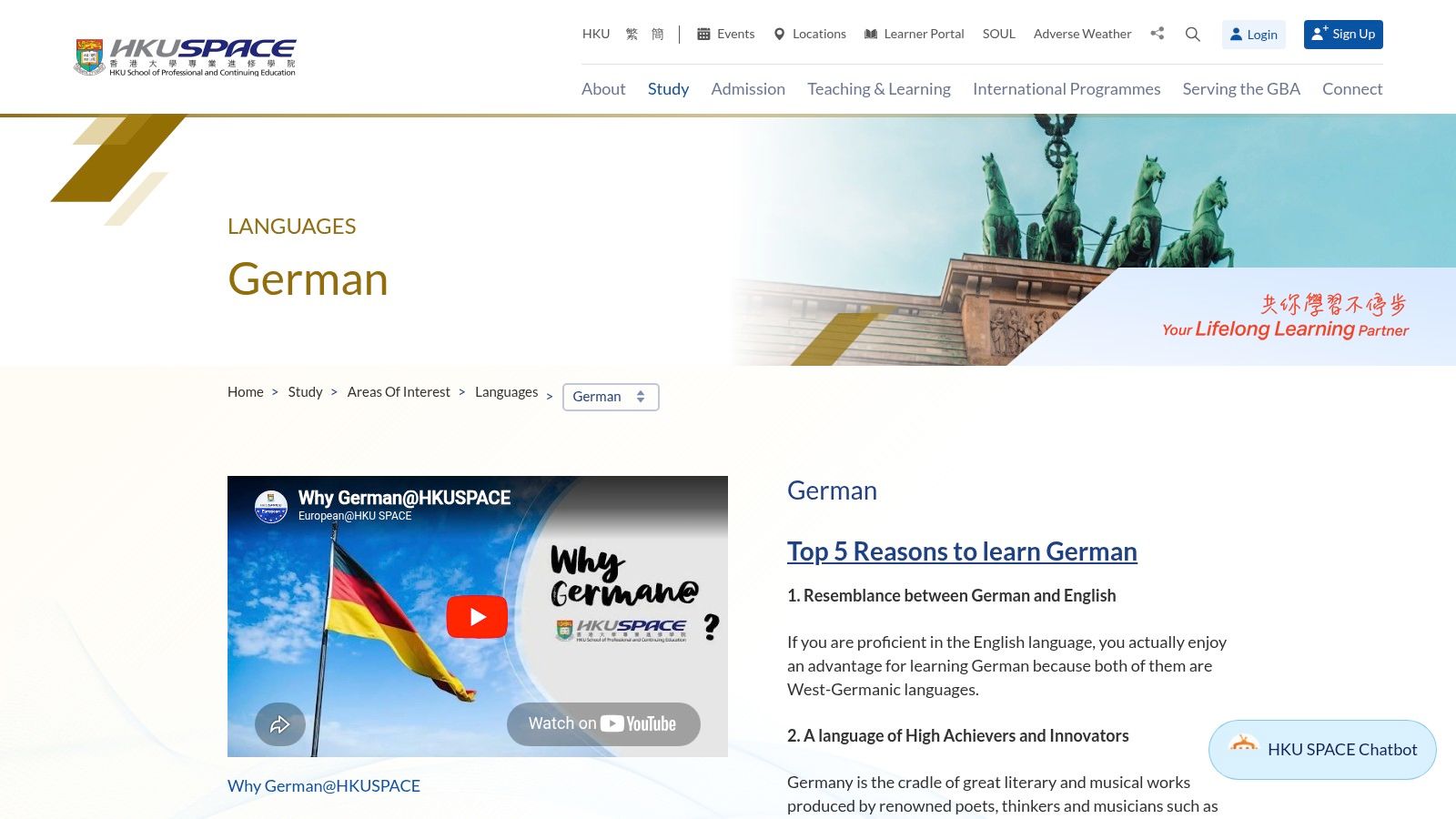
You work full-time, need a course provider your employer or family will recognise, and do not want the loose structure of an app-only plan. HKU SPACE fits that brief well. It gives Hong Kong learners a university-linked route that feels more formal than a private tutor and more practical than a purely academic degree setting.
This option makes the most sense for adults who want timetabled classes, standard enrolment procedures, and a course format that is easy to justify for career development. CEF matters here too. If funding support is part of your decision, check the official Continuing Education Fund course and reimbursement information before you enrol, because eligibility and reimbursable courses can change.
Best for working adults who want structure and possible funding support
HKU SPACE is stronger on administration and predictability than on speed or personalisation. That suits professionals, career switchers, and adult beginners who learn better with deadlines, attendance expectations, and a fixed class calendar.
It is a weaker fit for students who need targeted IB, IGCSE, or Goethe exam drilling. In those cases, a specialist tutor or a focused language school usually gets you to the exam format faster. If you are still deciding between fixed classes and a more flexible setup, this guide on in-person vs online German classes in Hong Kong will help you choose the right format.
HKU SPACE sits in a useful middle ground in this 2026 Hong Kong comparison. It offers more institutional weight than most apps and freelance tutors, but less flexibility than platforms built around rolling online lessons. If you want to compare digital tools before committing to a formal course, see The Kingdom of English language software picks.
Pros
- Recognisable university affiliation: A sensible choice for professionals who want a credible provider on paper.
- Structured delivery: Good for learners who do better with term dates, class routines, and formal administration.
- Possible CEF relevance: Worth checking if you want to reduce out-of-pocket costs.
- Better fit for serious adult learners than casual app users: More accountability, less drift.
Cons
- Limited flexibility: Fixed schedules do not suit shift workers or learners with unpredictable calendars.
- Less exam-specific than specialist providers: You may still need separate coaching for IB, IGCSE, or speaking-heavy test prep.
- Usually less individual attention: Group formats can slow speaking progress if you need frequent correction.
4. Busuu

Busuu is one of the better apps for busy HK learners who need a low-friction way to study on the MTR, during lunch, or between meetings. It's mobile-first, structured enough for beginners, and easier to stick with than many free tools.
But keep your expectations realistic. In Hong Kong's 2026 digital language market, standalone self-learning apps captured only 56.35% of 2025 market revenue, while hybrid platforms with Zoom-based small-group instruction and exam preparation achieved far stronger recommendation rates in the verified data.
Best as a low-cost study companion
Busuu works best as a supplement, not your only system. Use it to build vocabulary, review grammar, and stay consistent between live lessons.
That's especially true if you're preparing for exams or comparing in-person against online formats for serious progress in Learn German HK pathways. This comparison of in-person vs online German classes explains that decision well.
Where Busuu fits well
- Beginners: Clear lesson flow and manageable daily tasks.
- Working adults: Easy to use in short bursts.
- Supplementary study: Good between formal classes.
For broader edtech context, this roundup of The Kingdom of English language software picks shows why app choice still matters, even when teacher-led learning does the heavy lifting.
Limits to watch
- No full exam coaching: It won't replace targeted instruction for Goethe, IB, or IGCSE.
- Speaking depth varies: Community features help, but live teacher feedback is still stronger.
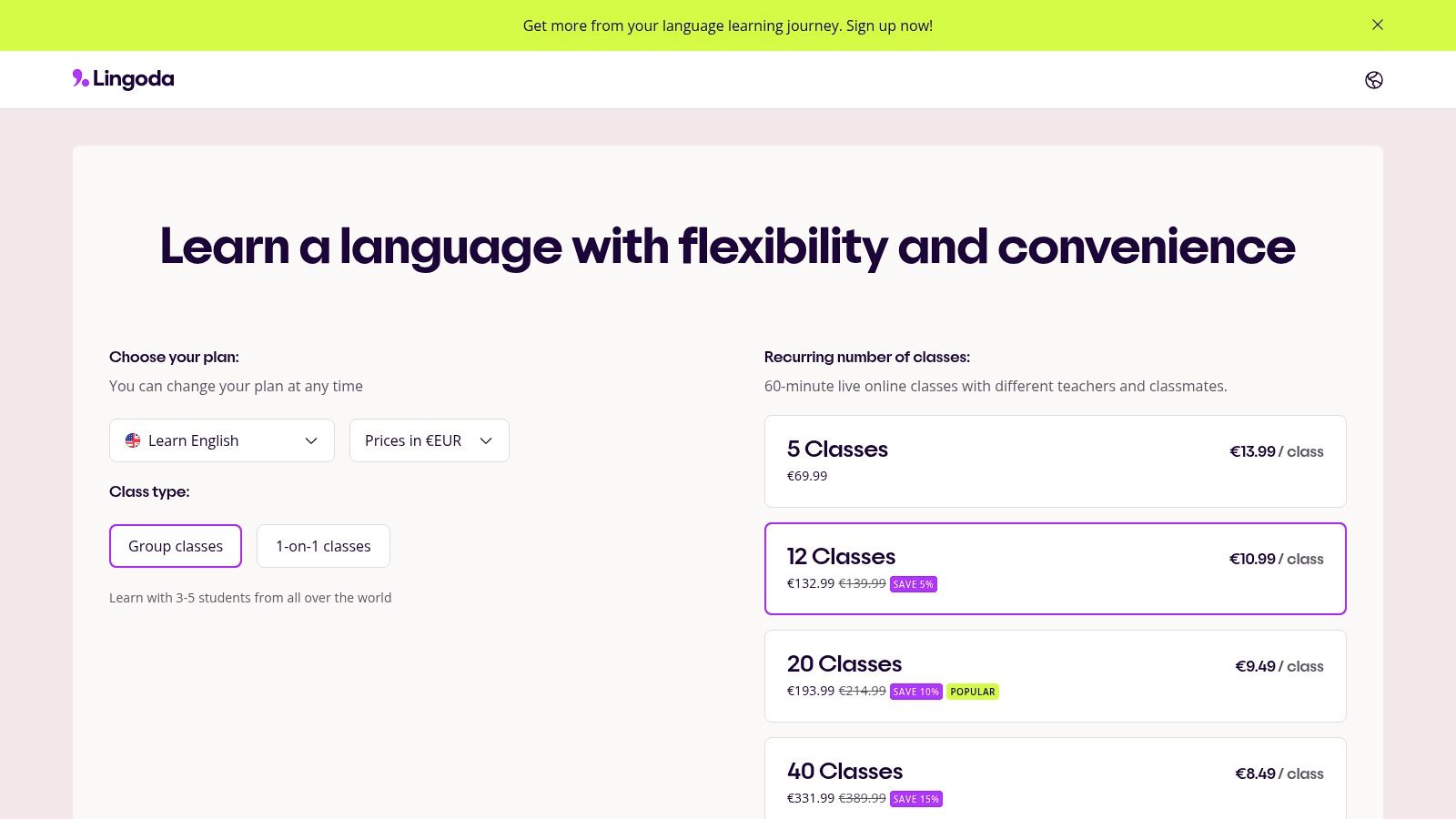
5. Lingoda
Lingoda is built for flexibility. If your work hours are irregular, or you travel often between Hong Kong and Europe, its frequent class availability is the main selling point.
It offers live online lessons in small groups or 1-to-1 format, with a CEFR-sequenced syllabus and subscription-based access. For learners who need speaking practice at odd hours, that's particularly useful.
Best for flexible live scheduling
This is the strongest choice if timetable access matters more than local context. You can book classes often, keep momentum going, and study around your actual life instead of around a center timetable.
Still, Lingoda is a better fit for general progression than for HK-specific school exam preparation. If your child needs IB, IGCSE, or A-level support in Hong Kong, a local specialist will usually be sharper.
If your schedule changes every week, a live platform with frequent start times is safer than a fixed term course you'll keep missing.
Pros
- Flexible booking: Good for professionals and shift-based schedules.
- Live teaching: Better than app-only learning for speaking practice.
- Small-group options: More interaction than large webinar-style classes.
Cons
- Subscription pressure: You need steady attendance to get full value.
- Not localized for HK exams: Better for general German than school-specific targets.
6. Deutsche Welle (DW) – DW Learn German
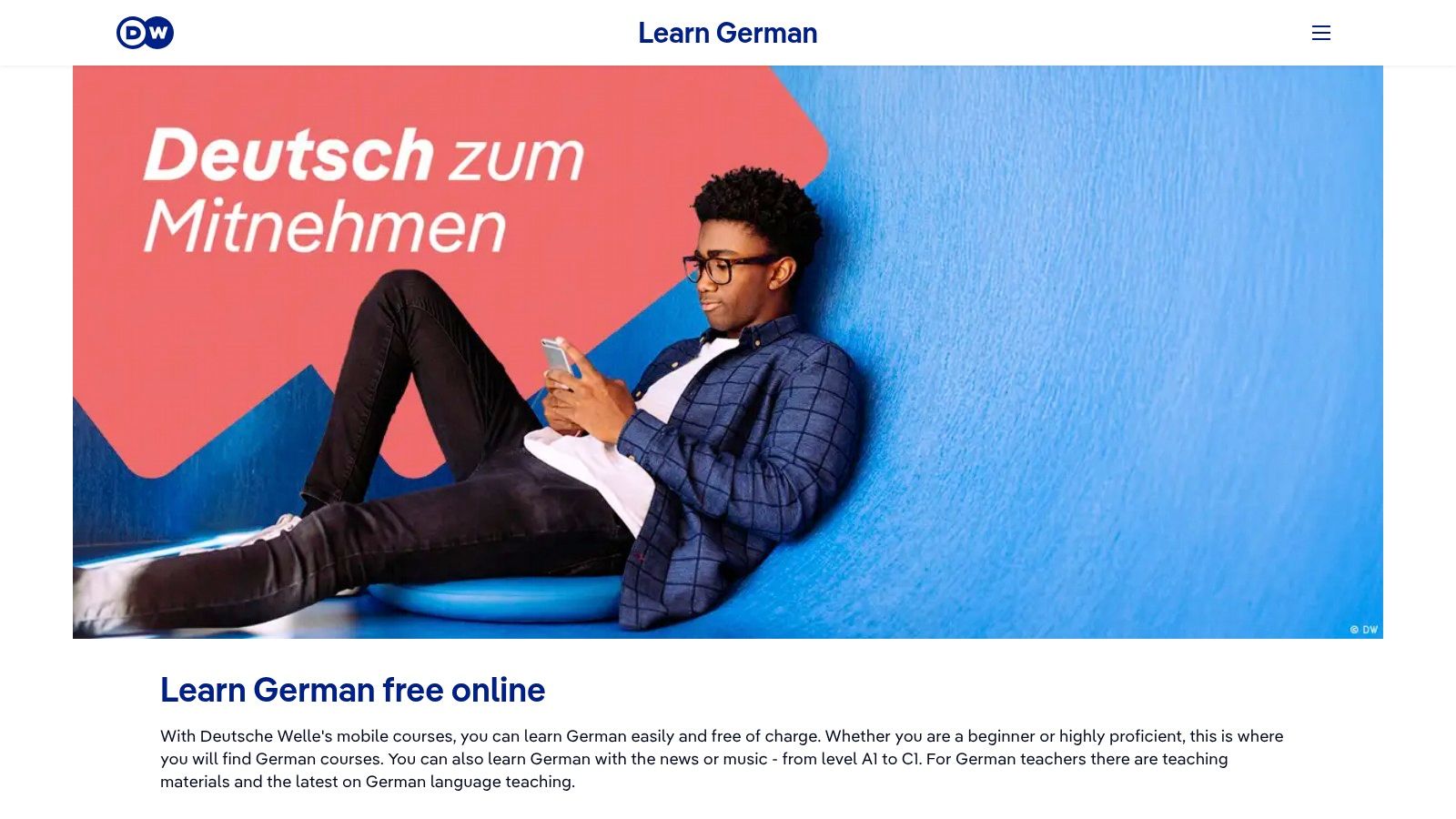
If you want the best free resource, choose DW Learn German. It's especially good for learners who need structured self-study, listening practice, and a reliable daily routine without paying for another app subscription.
The standout feature is its media-rich format. Video, transcripts, self-tests, and story-based lessons make it more complete than many free tools.
Best free resource for daily exposure
DW is ideal as a second resource. Use it for listening, vocabulary review, and extra input alongside lessons with a teacher.
For Hong Kong learners, that combination makes sense. Verified local analysis shows a strong gap in culturally immersive hybrid models, so free tools like DW help with repetition, but they don't replace native-speaker interaction and feedback.
Pros
- Completely free: Strong value for students and budget-conscious adults.
- Good daily habit tool: Works well for revision and listening.
- Clear beginner pathway: Especially helpful if you're starting from zero.
Cons
- No live correction: You won't get speaking feedback.
- Requires discipline: Easy to bookmark, easy to ignore.
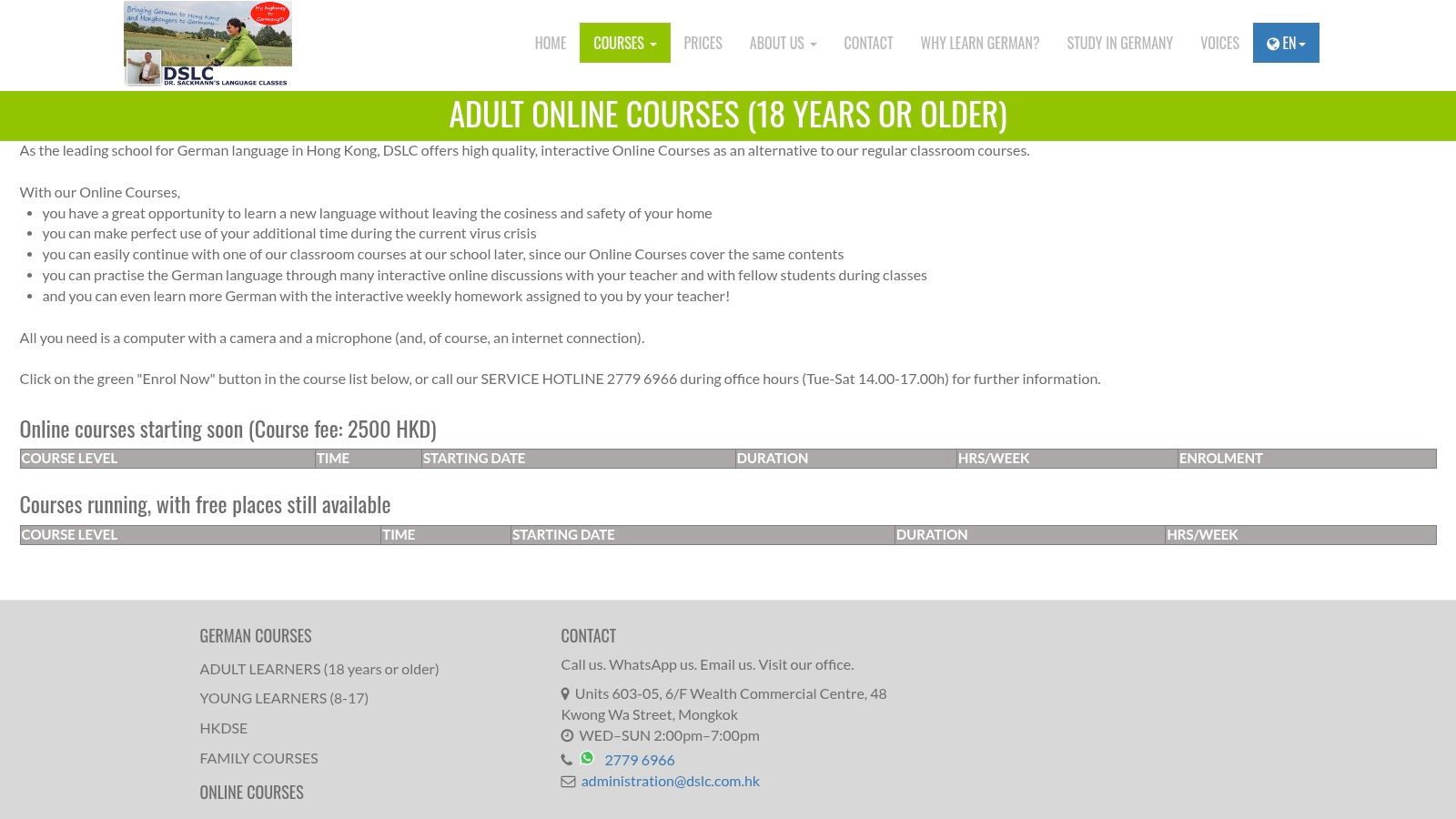
7. Dr. Sackmann's Language Classes (DSLC)

DSLC is a recognizable local option for learners who want a scheduled German course in Hong Kong without using an app-only system. Its online group structure mirrors a classroom model, which some adults and teens prefer.
This kind of course works well if you like visible start dates, homework, and a weekly rhythm.
Best for learners who want a local scheduled course
DSLC fits students who want local support and a more traditional pace. It can be a good middle ground between a large institution and a private tutor.
That said, it's less compelling if you need maximum flexibility. You'll likely get more freedom from a private tutor, or more extensive hybrid support from a specialist school.
Pros
- Local support: Easier for HK learners who prefer dealing with a local provider.
- Clear logistics: Weekly course structure helps with consistency.
- Family and teen options: Useful for households learning together.
Cons
- Fewer class-time options: Less flexible than broad online platforms.
- Best to confirm details directly: Dates and availability can shift.
8. Hong Kong Institute of Languages (HKIL)
HKIL is a practical option for families and professionals based around Central. It offers German for adults, teens, and children, with both online and in-center formats.
That broad age range makes it useful if more than one family member wants to learn. You don't have to juggle completely different providers.
Best for families and Central-based professionals
HKIL is strongest when convenience matters. If location, online flexibility, and access for different age groups are your main priorities, it does the job well.
Verified Hong Kong content gaps also show that many families want cultural immersion plus language learning, but not all online German options provide strong native-led cultural modules. That's where you should ask detailed questions before enrolling.
Pros
- Family-friendly range: Adults and children can learn through one provider.
- Native-speaker policy: Important for authentic input.
- Central convenience: Good for learners who work nearby.
Cons
- Pricing often requires enquiry: Harder to compare quickly.
- Availability depends on intake: Popular times may be limited.
9. Berlitz Hong Kong
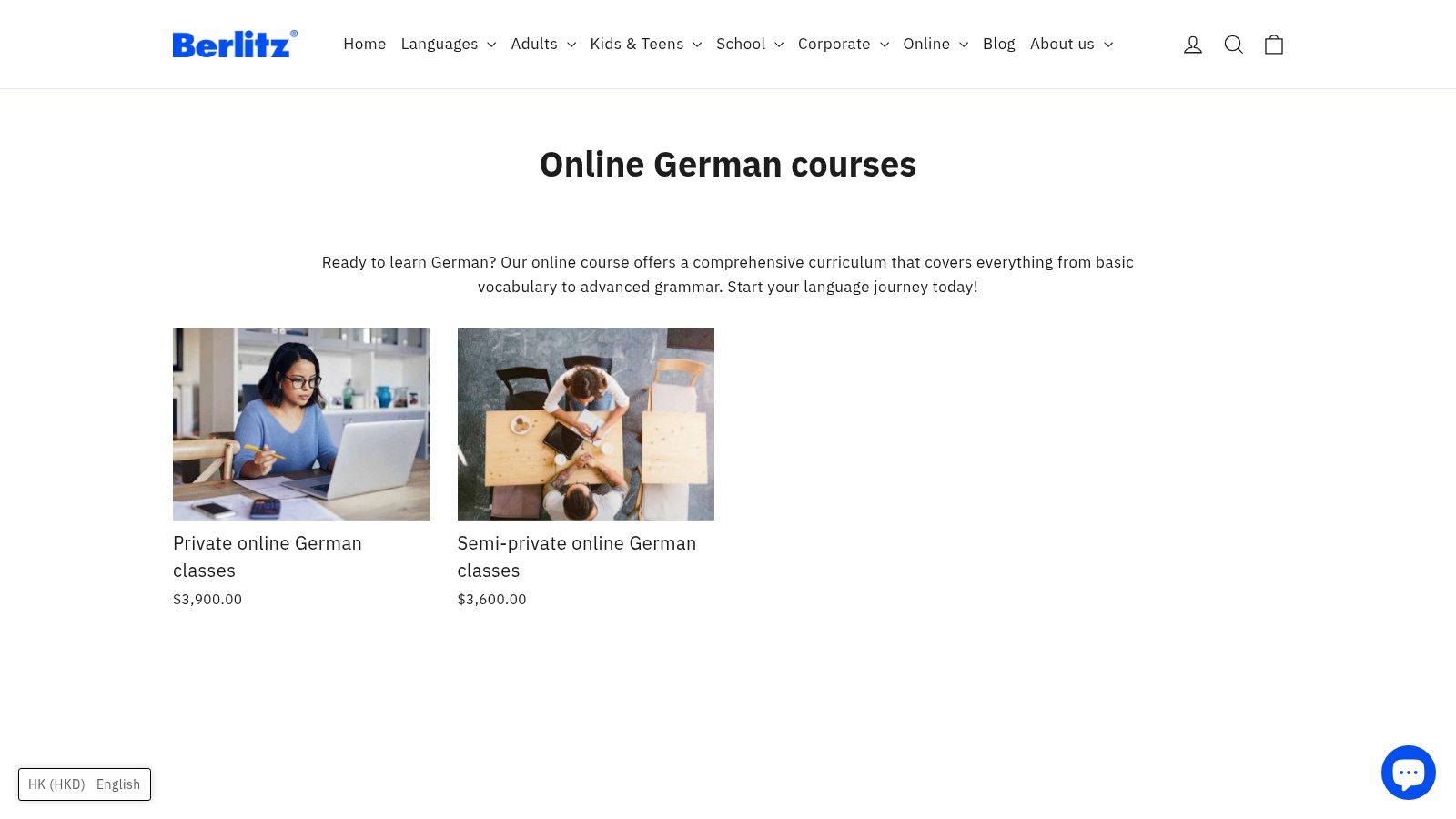
Berlitz Hong Kong is a clear option for adults who want speaking confidence for work, meetings, or travel. Its method is conversation-focused, and the platform supports live online classes with scheduling flexibility.
If your target is verbal confidence rather than academic exam performance, that focus can be useful.
Best for business-focused speaking practice
Berlitz is most suitable for professionals who want a polished, structured speaking environment. It's also relevant if your company is paying, or if you need corporate-friendly scheduling.
The tradeoff is depth in local exam context. For Business German in HK, it can help. For IB, IGCSE, or high-stakes school-specific coaching, I'd still put a specialist local school ahead of it.
- Best for professionals: Strong speaking orientation.
- Best for schedule flexibility: Easier than many academic-term programmes.
- Best for corporate learners: Fits business training needs.
Cons
- Premium pricing: Often more expensive than simpler alternatives.
- Large network variation: Teacher experience can differ.
10. German Tutor HK – Birgit Rommel
If you need highly focused individual support, Birgit Rommel is one of the strongest 1-to-1 choices in Hong Kong. This is the route for learners who need precision, not just general progress.
That includes students targeting IB, IGCSE, A-level, DSD, or CEFR-linked goals, and adults who want personalized coaching rather than a fixed syllabus.
Best for highly targeted 1-to-1 exam coaching
Private tutoring works best when the problem is specific. Maybe your child is underperforming in writing, needs oral exam practice, or has a school curriculum that doesn't align neatly with a standard A1 to B2 pathway.
That level of customization is the main benefit here. The main downside is simple. One-to-one expertise is usually more expensive, and availability can tighten during exam season.
For a student under pressure before IB or IGCSE, a good private tutor can solve a specific weakness faster than a generic app ever will.
Pros
- Maximum personalization: Every lesson can target an immediate need.
- Good fit for HK exam systems: Strong relevance for international school students.
- Flexible scheduling: Easier to arrange around school and activities.
Cons
- Higher cost per hour: Private tutoring is an investment.
- Limited capacity: Solo tutors can't always take students at short notice.
Top 10 German Online Courses & Apps in HK, 2026 Comparison
| Provider | Core features ✨ | Target audience 👥 | Quality & Outcomes ★🏆 | Pricing 💰 | Best for / Unique edge ✨🏆 |
|---|---|---|---|---|---|
| German Cultural Association Hong Kong (GCA) | Native teachers, small groups (max 6), hybrid Zoom + in‑person | 👥 Parents, teens, uni applicants, professionals, travellers | ★★★★★ 🏆 96% rec., 90%+ top exam results | 💰 Group from HK$1,100; adults ~HK$4,180; private on request | ✨ Exam-focused prep, MTR‑near centres, flexible reschedule |
| Goethe‑Institut Hongkong | Full A1–C2 CEFR pathway, official exam centre | 👥 Serious cert seekers, university/visa applicants | ★★★★☆ 🏆 Official Goethe exam recognition | 💰 Higher fees; exam costs extra | ✨ Globally recognised certificates, structured syllabus |
| HKU SPACE – German Programmes | University‑affiliated modules, certificate-bearing | 👥 Working professionals, CEF applicants | ★★★★ University credibility, assessed courses | 💰 Mid-range; possible CEF reimbursement | ✨ University credit & CEF eligibility |
| Busuu (app) | Guided lessons, spaced review, community corrections | 👥 Beginners, mobile learners, commuters | ★★★★ Good for vocab/grammar; limited live speaking | 💰 Low / freemium; Premium subscription | ✨ Mobile micro‑learning + community feedback |
| Lingoda | 24/7 live classes, CEFR syllabus, subscription model | 👥 Learners needing max schedule flexibility | ★★★★ Frequent speaking practice, small live groups | 💰 Subscription model (monthly) | ✨ Round‑the‑clock classes, Sprint intensives |
| Deutsche Welle (DW) – Learn German | Free structured courses, videos (e.g., Nicos Weg) | 👥 Self‑learners, budget learners, all levels | ★★★★ High‑quality free content; no live feedback | 💰 Free | ✨ Media‑rich, excellent daily listening resources |
| Dr. Sackmann's Language Classes (DSLC) | Scheduled A1–C2 online groups, family options | 👥 Teens, adults preferring local schedules | ★★★ Clear logistics, local support | 💰 Mid-range; published pricing | ✨ Localised syllabus, WhatsApp support |
| Hong Kong Institute of Languages (HKIL) | In‑centre & online, native faculty, tailored 1:1 | 👥 Families, Central professionals, exam candidates | ★★★★ Native teachers, exam pathways | 💰 Enquire for pricing | ✨ Central location, broad age coverage |
| Berlitz Hong Kong | MyBerlitz portal, conversational Berlitz Method | 👥 Business travellers, working adults | ★★★★ Strong conversational focus | 💰 Premium pricing | ✨ Conversation-first, corporate training options |
| German Tutor HK – Birgit Rommel | Bespoke 1:1 online lessons, exam specialist | 👥 IB/IGCSE/A‑level students, adults needing tailored help | ★★★★★ Highly personalised, exam‑proven | 💰 Premium (private tutor rates) | ✨ One‑to‑one expert coaching, exam success focus |
Ready to Start Learning German in Hong Kong?
A Form 4 student in Kowloon needs IGCSE support. A university applicant wants Goethe results for Germany. A banker in Central needs business-ready speaking without wasting three months on random apps. These learners should not choose the same format, and that is exactly why this 2026 Hong Kong guide compares schools, private tutors, apps, and free resources side by side, with local exam pressure and CEF realities in view.
Here is the clear recommendation. Use an app to keep your daily habit alive. Use free content to build listening. Use a real teacher if your goal includes exams, academic writing, confident speaking, or career progress.
For many learners in Hong Kong, structured teaching wins because it gives correction, accountability, and a syllabus that moves forward. German Cultural Association Hong Kong (GCA) remains a strong first option for learners who want small classes, native-speaking teachers, online and in-person study, and support for goals such as Goethe exams, TestDaF, IB, IGCSE, and A-level. That mix suits families who want oversight, adults who need fixed progress, and students who cannot afford gaps in grammar or writing.
Other choices still make sense for specific cases. Goethe-Institut suits learners who want an official institute route. HKU SPACE is the practical pick for adults comparing continuing-education options and possible CEF-related value. Lingoda fits chaotic work schedules. Deutsche Welle is the free resource I would add to almost any plan. If you need exam repair fast, a specialist private tutor is often the smartest spend.
So do not pick based on brand recognition alone. Pick the format that matches your deadline, budget, and reason for learning German in Hong Kong.
Take the next step:
- Check the latest online and in-person course schedule at GCA
- Book a trial lesson to test the teaching style before you commit
- Contact the advisory team on WhatsApp at +852 9824 9861 for guidance on level, timetable, and exam goals
If you want native-led, structured, flexible German lessons in Hong Kong, GCA is a sensible place to start, especially for Goethe exam prep, IB or IGCSE support, Business German, or practical speaking for study and travel.
Online German Classes for Kids and Teens: Do They Actually Work?

Beginner German for Teens: A Starter Roadmap for Ages 12-18


