.png)
.png)

BLOG

香港德國文化協會
The German Cultural Association
Fit in Deutsch: Goethe Youth Exams (A1/A2) for HK Kids & Teens
If you're a Hong Kong parent staring at your child's packed calendar, German can feel like one more demanding decision. The question isn't whether your child should “learn some German”, it's whether Fit in Deutsch is the right exam, at the right time, for the school path you're already planning.
For families in HK, that choice matters because the youth exams are tied to clear CEFR levels, official age bands, and real exam logistics in Hong Kong. If your child is aiming for an international-school track, DSE/IB/IGCSE support, or eventual study abroad in Germany or Austria, you want a certificate that matches the stage they're in, not just the one that looks easiest on paper.
Table of Contents
- Build the plan around the exam, not around vague study time
- Make the oral test the centre of practice
Why Hong Kong Families Are Choosing Fit in Deutsch
A typical HK parent starts with a familiar problem. The child is already juggling school, homework, extracurriculars, and maybe another language, so the parent wants a German credential that proves something. That is where Fit in Deutsch becomes practical, not decorative.
What the youth exams are really for
In Hong Kong, Goethe-Institut officially positions Goethe-Zertifikat A1: Fit in Deutsch 1 for children and young people aged 10 and above, while Goethe-Zertifikat A2: Fit in Deutsch is recommended for teens aged 12 and above. Goethe Hong Kong also lists recurring teen-specific sessions in 2026, including Fit A1 (Teens) on 29 Jan 2026 and Fit A2 (Teens) on 26 Feb 2026 and 24 Sep 2026, which shows this is a stable local pathway, not a one-off offering. See the official Hong Kong exam page for the schedule and age bands, and the related article on why taking a German certification exam matters for Hong Kongers.
The point is simple. These are CEFR-aligned youth exams with age-appropriate content, so a child is not being pushed into an adult test environment before they're ready.
Why this matters in Hong Kong
HK families think in timelines. Parents are usually planning around school transitions, selective admissions, and whether a language certificate helps later with IB, IGCSE, or a move into a German-speaking academic route.
Practical rule: if German is part of a bigger education plan, don't treat the exam as a side project. Treat it as a timed milestone.
That mindset is what separates useful preparation from random enrichment. A youth certificate gives you a defined target, and that is much easier to manage than “keep learning German and see what happens.”
For parents who want a structured route rather than a loose tutorial-centre approach, a native-led programme with exam alignment is usually the cleaner option. The German Cultural Association Hong Kong fits that profile in a practical sense, especially for families who want a curriculum that leads somewhere instead of just filling class hours.
Understanding the Fit in Deutsch Exam Format and Scoring
The exam format is where many families misjudge readiness. They assume German ability is just vocabulary size, but the test is built around how a child performs under time pressure, especially in speaking.
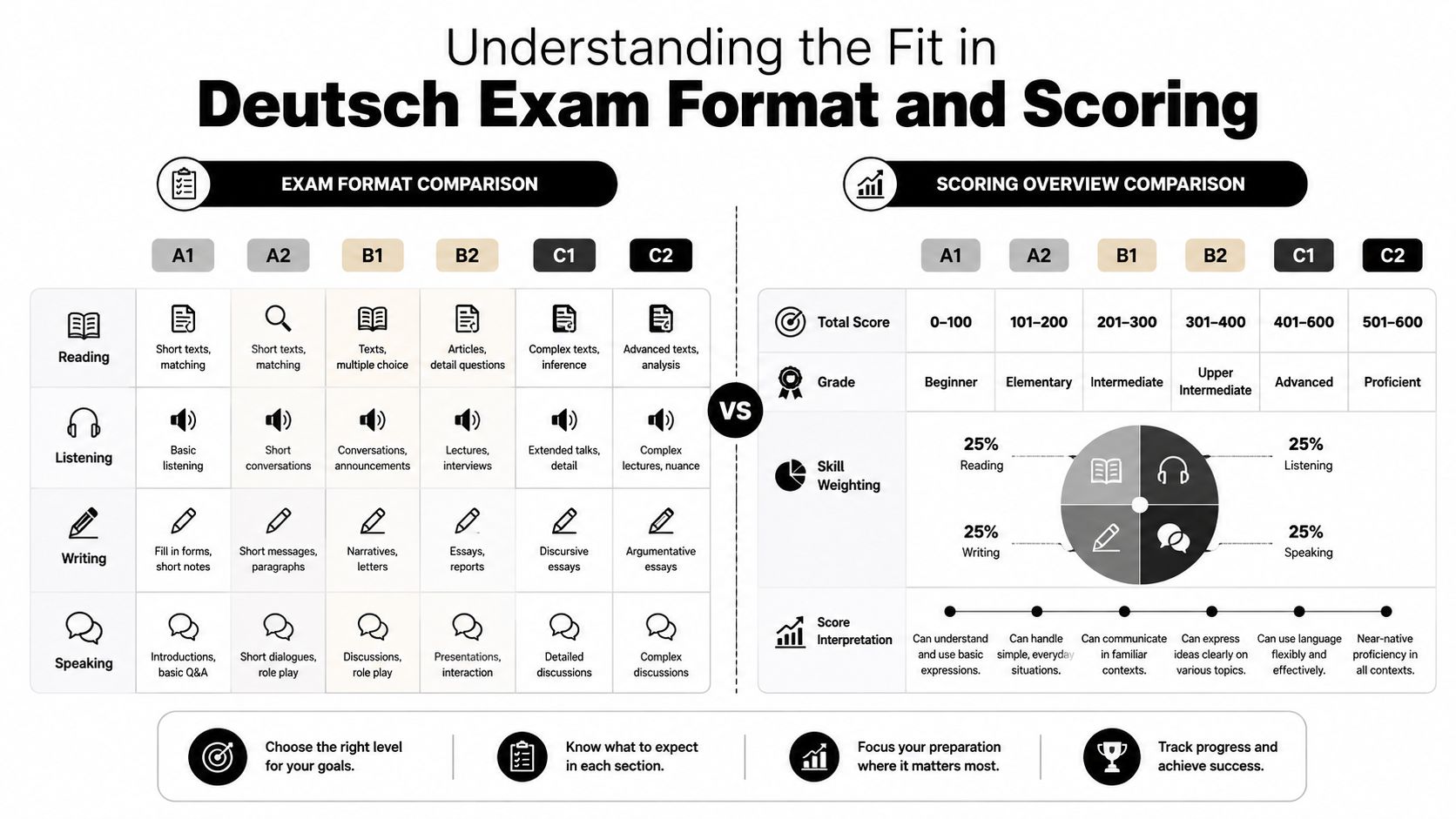
The four parts every candidate faces
For Fit in Deutsch A1, Goethe Hong Kong states that listening, reading, and writing are each 20 minutes, and speaking is 15 minutes, for a 75-minute core exam window. That means the exam is not long, but it is tightly controlled, which is exactly why practice under timing matters. The youth exams use the same CEFR levels as the adult versions, but with age-appropriate vocabulary and scenarios, so the standard is still real.
The Hong Kong practice materials also cover all four modules, listening, reading, writing, and speaking, and the official A1 exam is a group oral test with up to six candidates. That group format changes the coaching job immediately. Children have to listen, wait, respond briefly, and stay calm while others speak.
A1 and A2 side by side
| Level | Who it suits | Format emphasis | What parents should notice |
|---|---|---|---|
| A1 Fit in Deutsch 1 | Younger beginners | Short, controlled tasks | Time pressure is tightly packed |
| A2 Fit in Deutsch | Older teens with more German | More range, still age-appropriate | Children need broader classroom and daily-life vocabulary |
The assessment issue is not just “Can my child speak German?” It's “Can my child answer fast enough, stay understandable, and manage the speaking task with other candidates in the room?”
Goethe also states that Fit in Deutsch 1 is administered worldwide under uniform rules and assessment criteria, which matters in Hong Kong because families can prepare against a stable standard instead of guessing what one centre might prefer. That's the kind of consistency ambitious parents should want.
Is the Youth Exam Right for Your Child or Should You Choose the Adult Version
This is the decision most public exam pages leave too vague. Parents often know the age band, but they don't know whether the youth version is the better fit than the adult exam at the same level.
Start with age, then look at maturity
Goethe Hong Kong says A1 Fit in Deutsch 1 is designed for learners aged 10 to 16, while A2 Fit in Deutsch is for young people aged 12 and above. That age band matters because the youth exam uses age-appropriate vocabulary and scenarios while keeping the same proficiency level as the adult route.
For a child in lower secondary school, the youth version usually makes more sense. The topics are more relatable, the language is better matched to school age, and the speaking test feels less abstract.
When the adult version may be a better fit
A teen who is already comfortable with more formal exam language, or who is working toward school-based German such as IB or IGCSE, may eventually be better served by the adult version at the same CEFR level. The issue is not age alone, it's whether the student can handle the exam style without being distracted by the setting.
Use this quick filter:
- Choose youth exams if the child needs age-appropriate tasks, more structured support, and a gentler exam entry point.
- Consider adult versions if the student is older, more exam-seasoned, and already training in a more adult academic style.
- Watch the speaking format if the child is shy. The group oral test can be a problem for learners who freeze in front of peers.
A child who understands German but struggles to speak in a group may still be ready for the language level, but not for that format.
That distinction matters. Parents in Hong Kong often focus on school grades and overlook exam mechanics, but the better question is whether the child can show the language under exam conditions.
If you want a local benchmark, a structured class with native-speaking teachers and small groups can help reveal readiness fast. One Hong Kong option that families often compare at this stage is the German Cultural Association Hong Kong, because it offers small-group German classes and exam-prep pathways that match the youth levels rather than treating all teenagers as the same learner.
How to Prepare Effectively for Fit in Deutsch A1 and A2
Preparation needs a plan, not optimism. Goethe Hong Kong lists a minimum teaching-load estimate of 80–200 45-minute units for A1: Fit in Deutsch 1 and 200–350 units for A2: Fit in Deutsch, so families can map revision against the exam level instead of guessing.
Build the plan around the exam, not around vague study time
For busy HK families, those unit ranges translate into a simple decision. A1 works as a shorter, tighter prep cycle, while A2 needs a longer runway with more repetition and review.
Start with the date, then work backwards.
A practical preparation routine should include:
- Listening practice with short, repeated input.
- Reading practice with simple exam-style texts.
- Writing drills that focus on accuracy, not just length.
- Speaking rehearsal under timed conditions.
The official Hong Kong A1 practice page gives materials for all four skills, and that is the right model for children. If the child only memorises vocabulary lists, the exam will expose the gap. For a more detailed routine, use a guide to passing the A1 German exam and turn it into a weekly checklist.
Make the oral test the centre of practice
The speaking section is where many children lose confidence. Because the exam is a group oral test with up to six candidates, they need to practise turn-taking, quick responses, and short exchanges with other learners, not just memorised answers.
Parents should also use evidence-based study techniques to structure revision around recall and repetition, not passive rereading. That approach fits exam prep far better than piling on more homework.
If a child can answer slowly at home but freezes in a live exchange, the problem isn't knowledge. It's exam timing.
For families who want exam-focused classes rather than a loose conversation club, German lessons Hong Kong should mean a structured curriculum, steady correction, and clear level targets. That setup also helps with the youth-versus-adult decision, because the teacher can tell you whether the child is moving toward A1, ready for A2, or still needs more oral confidence before booking.
Exam Logistics and Registration for Hong Kong Families
This is the section where good intentions usually die. If you wait until your child “feels ready”, you risk missing the right sitting or cramming into a timetable that already has no spare room.
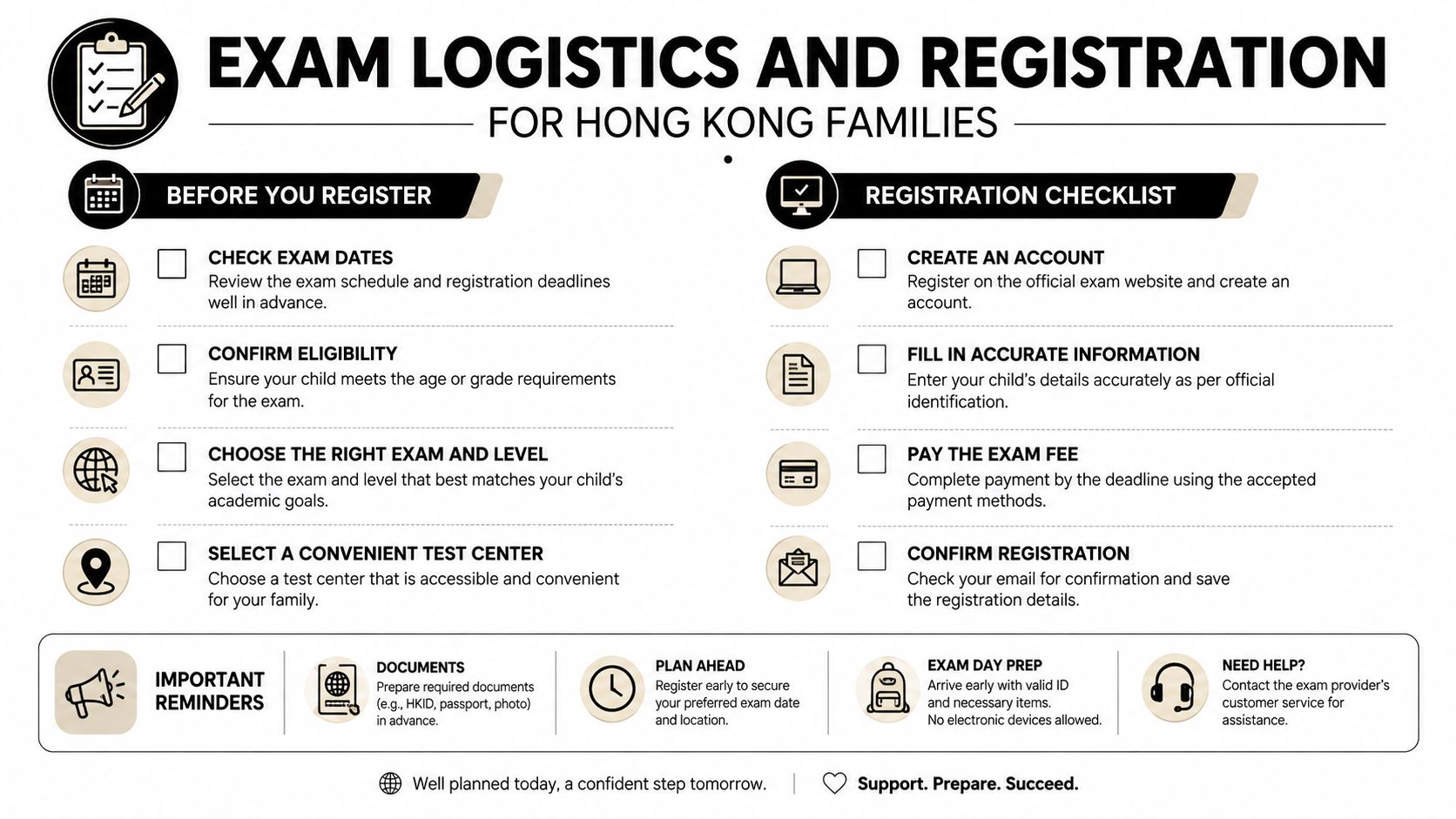
The official Hong Kong schedule shows multiple A1, A2, and teen-specific sessions throughout 2026, so families can choose a date that fits the school calendar rather than forcing the child into an awkward week. The local 2026 dates are laid out on Goethe Hong Kong's exam schedule page, and the dedicated 2026 dates guide is available at Goethe-Zertifikat exam dates 2026 in Hong Kong.
What Hong Kong families should check first
- Key date fit: choose a session that leaves enough revision time before school exams, mock exams, or sports tournaments.
- Registration timing: book early enough to avoid late panic, especially if your child needs a specific teen session.
- CEF relevance: Hong Kong's Continuing Education Fund lists Goethe-Institut Hong Kong as an approved test body for Goethe-Zertifikat A1, A2, B1, and C1, so German study can matter for funding-linked planning.
- Exam centre logistics: confirm travel time, because a calm arrival matters for children more than parents usually admit.
For parents who want classes alongside logistics support, the German Cultural Association Hong Kong offers a structured route with native-speaking teachers, small groups, and flexible scheduling near Tsim Sha Tsui and Causeway Bay MTR stations, which makes routine attendance easier for school-age learners and working parents alike.
The practical advantage here is not just convenience. It's continuity. A child who can attend consistently is more likely to stay aligned with the exam timetable, and that matters more than buying a pack of worksheets and hoping for the best.
Success Tips for Kids and Teens Taking the Exam
The children who do well usually aren't the loudest. They're the ones who have practised the exact exam behaviour, especially in the speaking task.
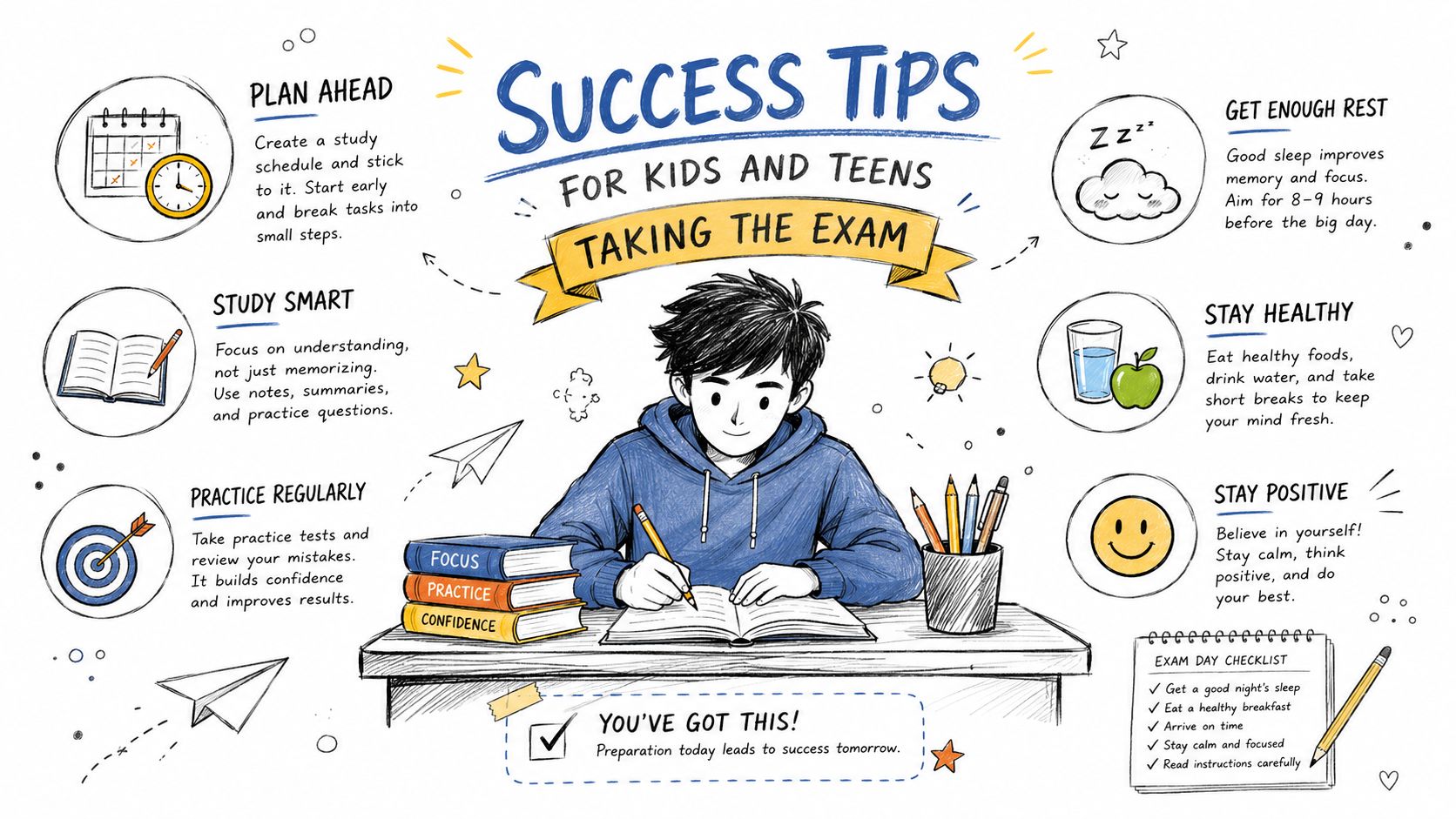
What to drill in the final stretch
- Turn-taking: practise giving short answers, then handing the conversation back.
- Oral pacing: rehearse speaking clearly within the 15-minute oral window.
- Reading control: stop over-reading. Train the child to find the answer and move on.
- Writing discipline: keep answers simple and accurate rather than trying to sound advanced.
The last two weeks should be about stability, not ambitious new material. That means revising familiar vocabulary, repeating speaking prompts, and doing short timed tasks instead of introducing completely new topics.
Parents should keep pressure low and structure high. A child who feels judged for every mistake will speak less, and that is the opposite of what this exam rewards.
Calm repetition beats last-minute cramming every time.
If a teen is preparing for a bigger academic route later, the exam should feel like a manageable checkpoint, not a life verdict. That mindset helps with confidence, and confidence helps with output.
Frequently Asked Questions and Next Steps
Parents often ask whether the certificate works for visa purposes, and the honest answer is that the exam is a useful language credential, but visa acceptance depends on the specific authority and requirement, not on the exam title alone. They also ask how long the certificate is valid. For most practical planning, the bigger issue is whether the certificate still reflects the level a school, course, or institution wants to see.
If a child doesn't pass first time, don't make it dramatic. Use the result to identify whether the gap is listening, writing, or speaking, then rebook when the child is ready. The youth route is also a sensible stepping stone toward later Goethe levels such as B1 and B2, so the exam should be treated as part of a longer German pathway, not the final destination.
If you want to judge readiness properly, book a trial class, speak to an advisor about your child's age and school stage, and compare the youth and adult options against your real timeline.
German Cultural Association Hong Kong(GCA) supports families who want a structured, native-led route for Fit in Deutsch preparation, with small-group classes and exam-focused German that fits HK school schedules. If you're planning around a child's next school transition, check the latest course schedule and see whether the current class format matches your target level on German Cultural Association Hong Kong(GCA).
Learn German for Kids: How Children Actually Pick Up a Third Language
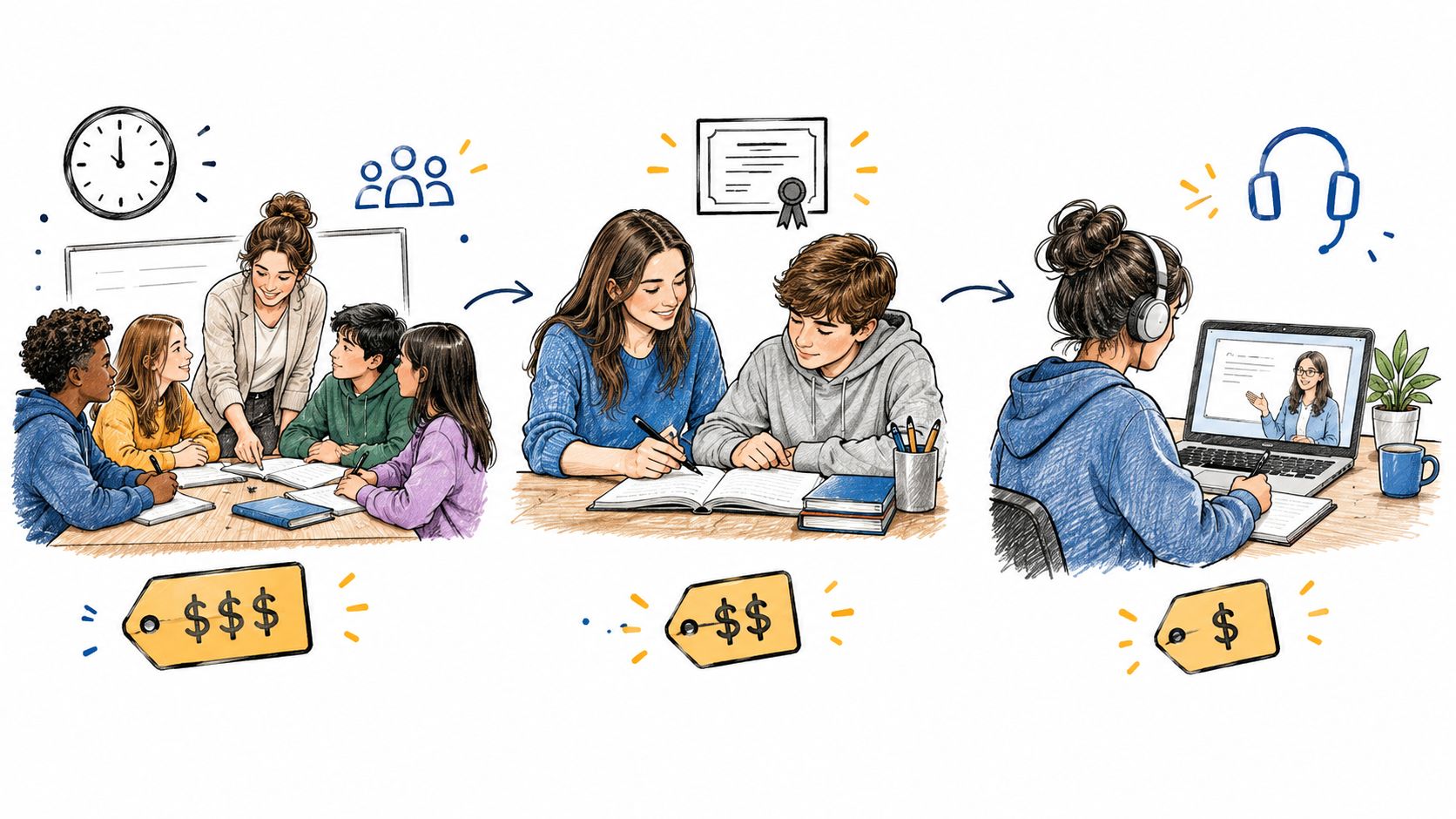
German Lessons HK: Formats and Prices Compared


