.png)
.png)

BLOG

香港德國文化協會
The German Cultural Association
Children's Language Courses Hong Kong 2026: German
You're already making the Hong Kong parent decision tree in your head. Your child has school, homework, maybe piano or swim, and now you're asking whether Children's Language Courses Hong Kong 2026: German is worth the time, money, and Saturday morning traffic.
My answer is yes, if you want a language with real academic and mobility value, and you choose the right format. In Hong Kong, German is not a casual add-on. It works best as a structured, exam-aware path for children who may later need Goethe-Zertifikat, IGCSE, A-level, or IB support, or a longer-term route for study abroad in Germany.
Table of Contents
Why Hong Kong Parents Are Choosing German for Their Children
A typical Hong Kong family starts here. One child is already overloaded with schoolwork, another parent is weighing Mandarin, coding, or a second instrument, and German looks unusual at first glance. Then the practical question lands, if the goal is not just enrichment but future academic advantage, why not choose a language that can support exam pathways, international-school preparation, and long-term mobility?
That's why Children's Language Courses Hong Kong 2026: German matters. In this city, the language isn't mainly for daily street use, it's a strategic language choice for families who think ahead.
German gives Hong Kong children a clear edge if the family is thinking about:
- International school routes, where language breadth helps a child stand out.
- University planning, especially if study abroad in Germany may become realistic later.
- Future career mobility, because a rare language often looks stronger than a generic extra activity on a profile.
For HK parents, the key is simple. Don't treat German like a hobby class unless that's your goal. Treat it like a long-term academic asset, and the course choice gets much easier.
If you want a useful age-planning reference before you choose, this guide on the best age for kids to start learning German is worth reading once before you commit.
Understanding the German Learning Options in Hong Kong
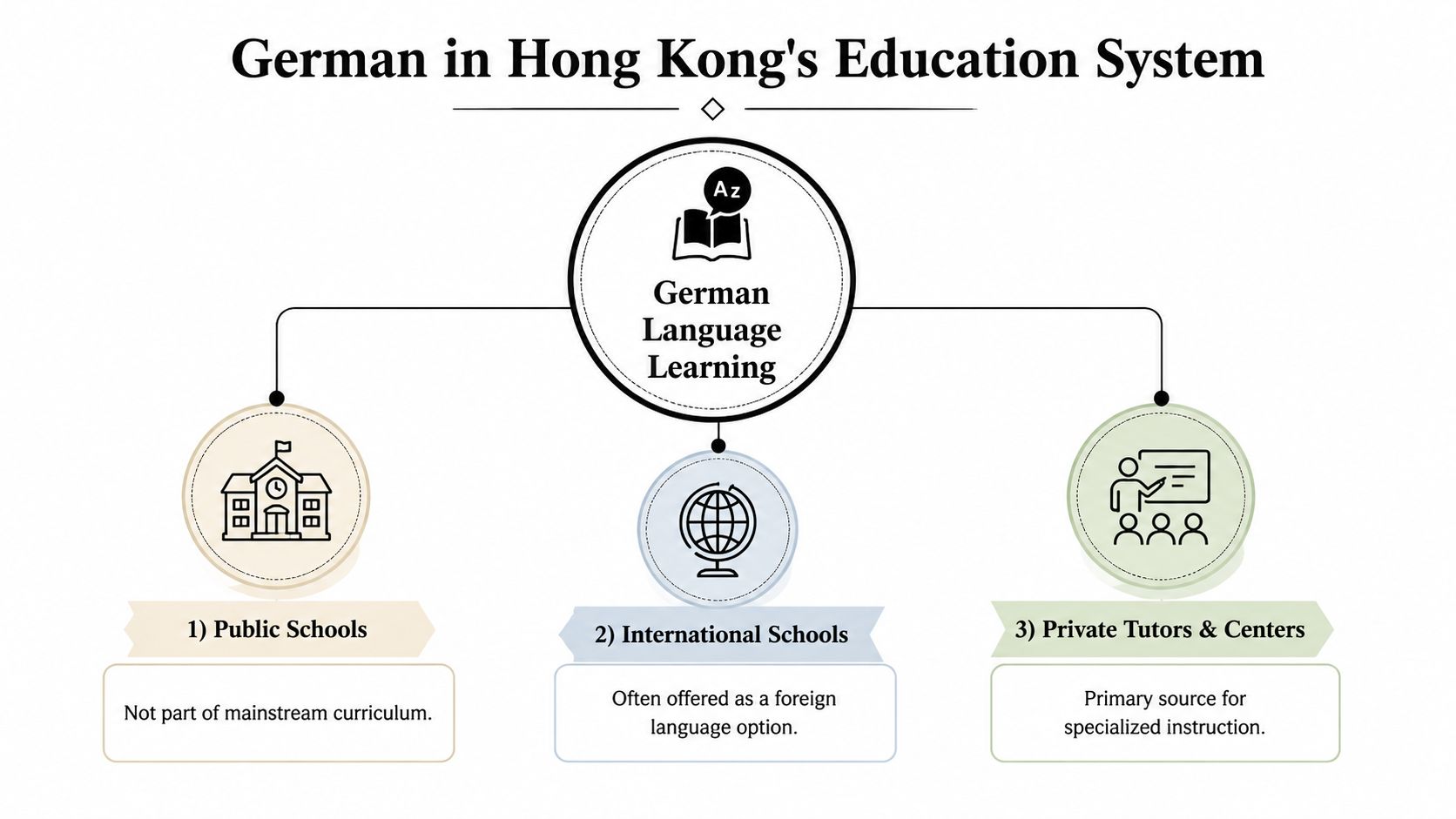
Hong Kong's school system makes German a niche choice by structure, not by lack of value. The Education Bureau's official statistics portal shows a mainstream public-school model built around Chinese and English, so German is usually taken as an additional foreign language, not a core subject in the local system. That matters because most families have to place German outside regular classroom delivery, through private classes and exam-focused training. See the official context in the Education Bureau statistics portal.
That structural reality changes how parents should shop. In places where German is built into the school system, a child can pick it up through normal classes. In Hong Kong, families have to choose the provider, the timetable, the exam target, and the pace.
What that means for parents
If your child is learning German in HK, the course is usually being asked to do four jobs at once:
- Build language ability from zero or near-zero.
- Support exams such as Goethe-Zertifikat, IGCSE, A-level, or IB.
- Keep motivation alive through a school year already packed with pressure.
- Create a path that still makes sense if the family later wants German-speaking university options.
That is why the provider matters so much more than in a market where German is everywhere. A weak course in Hong Kong does not just waste a term. It breaks momentum, and that is expensive when the language is learned outside the school system.
Practical rule: In Hong Kong, choose German like you would choose an academic tutor, not a casual activity club. The wrong setup slows the child down from the first month.
The market also splits into different levels of formality. Some families want early exposure, some need certificate-driven study, and others want a strong speaking base first. The smart move is to match the course to the actual goal, not the brochure language.
Comparing Class Formats and Group Sizes for Children
A child's German progress changes fast once class size changes. In a crowded room, quieter children get fewer speaking turns, fewer corrections, and less exposure to a proper pronunciation model. In a small class, the teacher hears the child's actual German more often, and that is where real improvement starts.
Why density matters more than parents think
GCA's kids groups are capped at 3–6 students German Cultural Association of Hong Kong. Many Hong Kong children's language programmes run up to 12 students per class, so the gap is not cosmetic. It changes teacher talk time, oral correction, and how quickly a child gets pushed to respond in German. That matters most in early stages, where pronunciation and recall need repeated live feedback.
Hong Kong German courses also sit in a premium price band. Published course comparisons list summer-program pricing from HK$3,800 for a 3-week basic course to HK$10,300 for a 6-week intensive course Goethe-Institut Hongkong course page. The practical message is clear. German tuition in Hong Kong costs real money, and more intensive formats usually cost more.
| Children's German Class Formats in Hong Kong | Group Size | Session Length | Typical Pricing Range |
|---|---|---|---|
| Small-group classes | 3 to 6 students | Structured weekly lessons or short-course formats | Premium pricing, varies by provider |
| Larger group classes | Up to 12 students | Often weekly or term-based | Lower than small groups in many cases |
| Private one-on-one sessions | 1 student | Flexible by arrangement | Highest per hour, varies by teacher |
Which format fits which child
- Small group: Best for children who need confidence, correction, and regular speaking practice.
- Larger group: Acceptable for casual exposure, but less efficient for oral growth.
- One-on-one: Good for a child with a very specific exam target or a need for total pacing control.
Parents should be blunt about the outcome they want. If the child is serious, small-group native-led teaching is the stronger use of money. Bigger groups can look cheaper on paper, but they usually give less speaking per dollar, and that slows progress in a language that only improves through repeated use.
Exam Preparation Pathways for Young German Learners
German learning in Hong Kong should be mapped to the exam, not to vibes. If your child is still young, the first milestone may be simple confidence and listening ability. If your child is already in secondary school, the target needs to be more explicit, because exam pathways reward planning far more than last-minute revision.
Start with the exam family, then choose the class
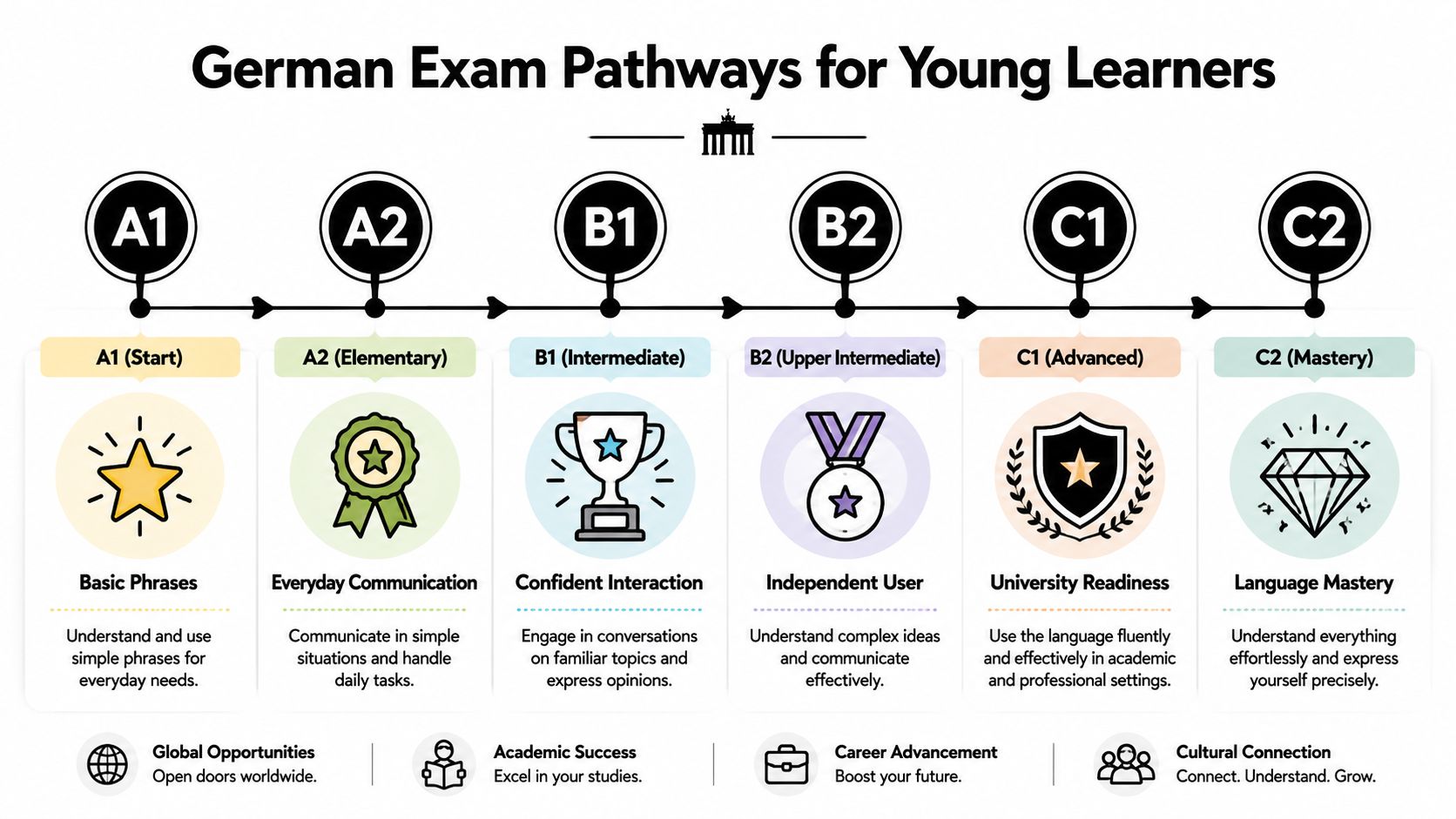
The main pathways families ask about are Goethe-Zertifikat (A1 to C2), IGCSE German, A-level German, and IB German. A child who starts young can move through the early Goethe levels first, then shift into school-exam preparation later. That is the cleanest route for many HK families.
For younger learners, the early Goethe exams are a practical benchmark, especially if the child is building towards a future school or relocation goal. This overview of Goethe youth exams A1 and A2 for HK kids and teens is a helpful reference if you want to see how the progression starts.
Here's the planning logic:
- A1 and A2 suit children who are still building simple language control.
- B1 and B2 matter once the child can handle longer answers and more independent reading.
- C1 and C2 are for advanced academic use, not early enrichment.
- IGCSE, A-level, and IB work best when the child already has a stable base, not when they're starting from scratch.
What parents should expect in practice
A child's German journey is usually gradual. You don't buy fluency, you build it through repeated exposure, correction, and exam-oriented checkpoints. The better schools keep the level structure visible so parents can see progress instead of guessing.
Direct advice: If your child is entering secondary school, choose the exam target first. Then build the course around that target, not the other way around.
Generic enrichment centres often fall short. They may teach “German”, but not a clear route through the exam system. Families who want outcome-driven learning need a programme that treats speaking, listening, writing, and reading as separate skills that must all be trained.
Scheduling, Locations, and Enrolment Process
Busy Hong Kong families don't need a romantic story about language learning. They need a class that fits the calendar, the commute, and the child's energy level. Convenient access matters, and so does the ability to move a lesson when school life becomes messy.
What a workable setup looks like in Hong Kong
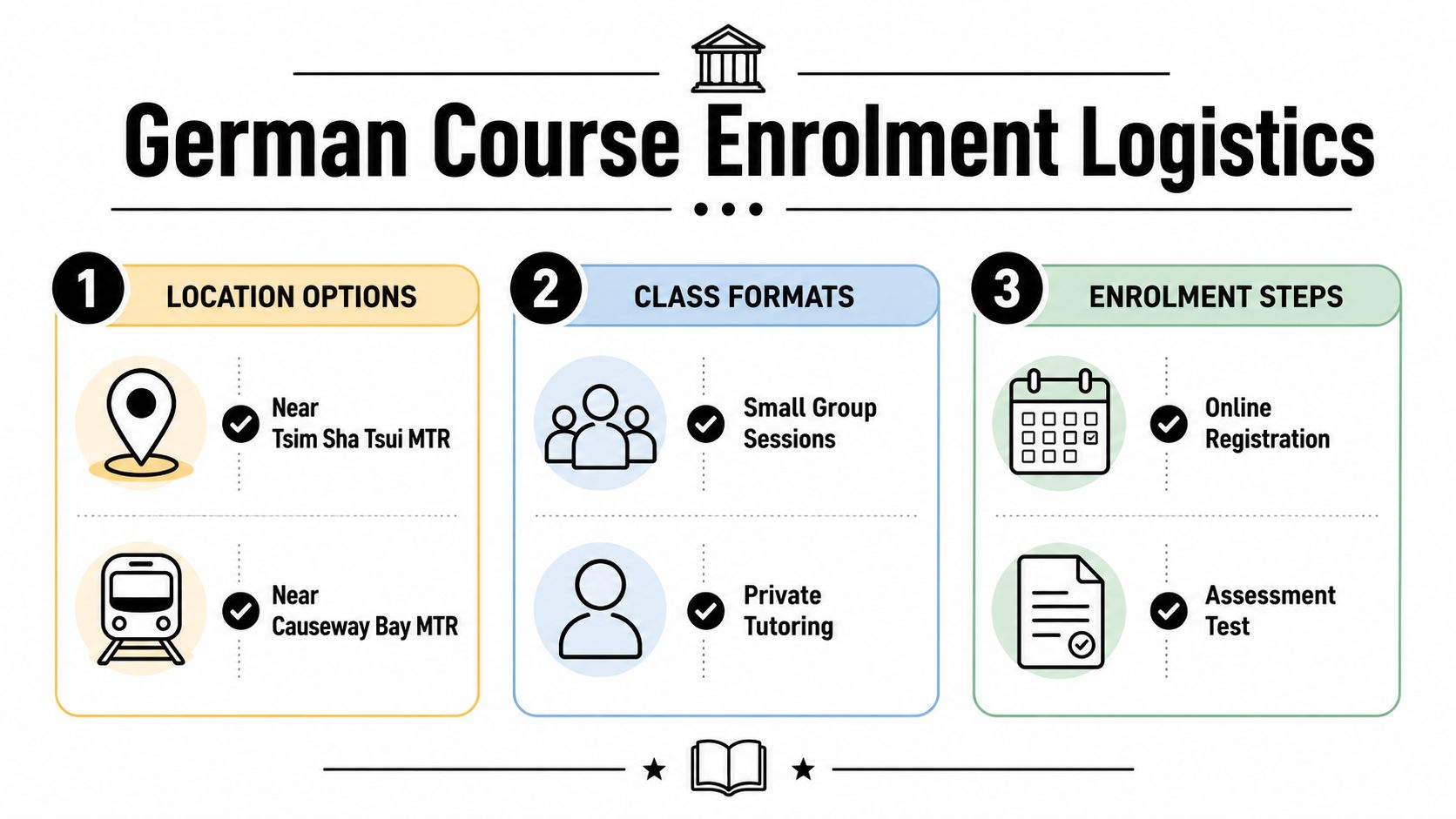
The clearest local pattern is convenience near transport hubs and flexible online delivery. The course schedule matters because parents often have to choose between weekday discipline and weekend convenience.
A typical enrolment flow should look like this:
- Initial consultation: Clarify the child's age, prior exposure, and end goal.
- Placement assessment: Check whether the child belongs in a beginner, starter, or more advanced group.
- Course selection: Match the format to the goal, whether that's early exposure or exam preparation.
- Payment and confirmation: Lock the schedule and avoid drift.
A structured certificate system is also useful because it keeps the child accountable. In Hong Kong, attendance gets pushed aside easily when schoolwork piles up, so a course that requires consistency is usually the better one.
Where location and format matter most
For children, a class near an MTR station isn't a luxury. It's the difference between a sustainable routine and a stressful one. If parents have to fight through transport every week, the language course becomes the first thing to get dropped.
Practical rule: The best schedule is the one your family can repeat for months, not the one that looks impressive on a brochure.
Online classes via Zoom also have a place, especially for families with late work hours or multiple children. But for young learners, the format should still feel interactive, not passive. The child needs live correction, not just a screen.
Why the German Cultural Association Leads in Children's German Education
A Hong Kong parent choosing German for a child faces a simple test. If the goal is real progress, the class must give native-speaking teaching, a clear syllabus, and exam-focused practice that does not rely on guesswork. That is the standard parents should expect.
The language teacher SEO playbook is a useful reminder that teacher quality shapes trust, but the family decision is more practical than that. Who can take a child from first contact with German to exam readiness without wasting time?
GCA is built around that answer. It uses native-speaking faculty, small groups, flexible scheduling, and a structured certificate system with 80% attendance as the completion benchmark. Its published outcomes include a 96% recommendation rate and over 90% of students ranking in the top 10% of public examinations.
What that means for ambitious families
Those results matter because they point to a teaching setup that keeps children active, corrects errors often, and pushes them toward a clear target. That is what ambitious families need when German is part of school planning, university preparation, or later career options.
The structure also matters for children who need consistency. Small groups give the teacher more room to correct pronunciation, check speaking accuracy, and stop weak habits before they harden. In a large tutorial room, that feedback gets diluted fast.
There is a broader reason to take German seriously as well. It can support university routes in Germany and help with careers in multinational environments, especially for children who continue the language into the teenage years and beyond.
Parents who want results should make three choices without hesitation.
- Choose native-led instruction if pronunciation and oral accuracy matter.
- Choose a structured curriculum if you want exam progression, not random exposure.
- Choose a small-group format if you want your child to speak, not just sit.
German Cultural Association Hong Kong(GCA) is one of the few providers in the city that combines those elements in a way that suits Hong Kong's education pressure. Families that want a serious outcome should ask for the current course schedule, request a placement recommendation, and compare the class format against the child's real goal before enrolling.
Frequently Asked Questions About Children's German Courses
What is the best age to start German?
For most children, earlier is easier. Preschool years are strong for listening and pronunciation, while primary school is a very practical time to build a stable foundation. If your child is older, start anyway, but make the course more structured and exam-aware.
How long does it take to become conversational?
There's no honest shortcut. Children who learn consistently with live teaching, repeated practice, and clear goals progress far better than children who only attend irregular enrichment classes. For Hong Kong families, the answer is that conversational ability comes from sustained study, not short bursts.
Does CEF funding apply to children's German courses?
Not automatically. CEF is tied to specific approved courses, so parents need to check the current eligibility of the programme they're considering. Don't assume funding applies just because the provider offers German.
Can German fit alongside other activities?
Yes, if the timetable is disciplined. One reliable class beats three rushed ones, so choose a weekly slot your child can keep. In Hong Kong, consistency matters more than stacking too many extras.
Should I choose German if my child is already busy with DSE, IB, or IGCSE work?
Only if the goal is clear. German is worth it when it supports school exams, overseas study, or a long-term mobility plan. If it's just another random activity, the family will feel the pressure quickly.
If you want a course that treats children's German as a serious academic pathway, German Cultural Association Hong Kong(GCA) can help you choose the right level, schedule, and exam direction. Visit German Cultural Association Hong Kong(GCA) to check the latest course schedule, ask about a trial class, and get advice on the best route for your child in Hong Kong.
Online German Classes for Kids and Teens: Do They Actually Work?
Beginner German for Teens: A Starter Roadmap for Ages 12-18


