.png)
.png)

BLOG

香港德國文化協會
The German Cultural Association
Best German Language Apps 2026: Babbel vs Pimsleur vs Italki
You're in Hong Kong, you've decided German matters, and now you're stuck choosing between apps that all claim to help. A parent wants a clear path for IB or IGCSE. A working professional wants German for study abroad in Germany, a visa plan, or a better role. Many learners start with an app, then realise too late that app progress and exam-ready German are not the same thing.
That's why Best German Language Apps 2026: Babbel vs Pimsleur vs italki isn't just an app comparison. In HK, the core question is simpler. Which tool helps you build grammar, which one improves listening, and which one effectively gets you speaking well enough for Goethe-Zertifikat, TestDaF, or daily conversation?
Table of Contents
Choosing Your German Learning Path in Hong Kong
A typical HK learner starts the same way. Download Babbel. Try Pimsleur on the MTR. Maybe book one lesson on italki after a few weeks. The problem isn't motivation. The problem is choosing the wrong tool for the wrong goal.
For Best German Language Apps 2026: Babbel vs Pimsleur vs italki, the biggest mistake I see in Hong Kong is assuming these tools are interchangeable. They aren't. One is much better for structure, one is better for audio habit-building, and one is built for real speaking.
The exam problem most app reviews ignore
If your target is casual travel German, almost any decent app can help. If your target is Goethe-Zertifikat, IGCSE, IB, TestDaF, or study abroad in Germany, the standard app advice falls short.
For the Hong Kong exam market, there's a specific gap between grammar-heavy self-study and real speaking ability. One published comparison notes that 80% of students need to pass Goethe-Zertifikat or IGCSE within 12 months but lack speaking practice, and that 68% of learners using Babbel alone fail to pass speaking sections of standardised German exams in that context (Clozemaster's German app comparison).
That's the point many “best app” roundups miss.
- Parents in Hong Kong often focus on visible progress like vocabulary and grammar exercises.
- Adult learners often pick whatever fits a lunch break.
- Professionals usually want flexibility and lower cost before they commit to proper German lessons Hong Kong options.
All of that makes sense. But if speaking is part of the goal, app-only study usually leaves a hole.
What I tell learners in HK
Use apps as tools, not as your whole plan.
- Choose Babbel if your weakest area is grammar control and sentence building.
- Choose Pimsleur if you need listening rhythm and spoken recall during commute time.
- Choose italki if you need to speak to a real person and stop freezing when someone answers back in German.
If you're still comparing broader beginner tools before narrowing down to German, this guide to beginner language apps is a useful starting point because it helps you sort apps by learning style rather than marketing.
For anyone comparing digital tools with proper local courses, this Hong Kong German course comparison guide is worth checking before you spend months on the wrong format.
App progress feels satisfying. Exam progress is harsher. If you can't listen, answer, and recover under pressure, you're not ready yet.
How Do Babbel Pimsleur and italki Actually Teach German
The short answer
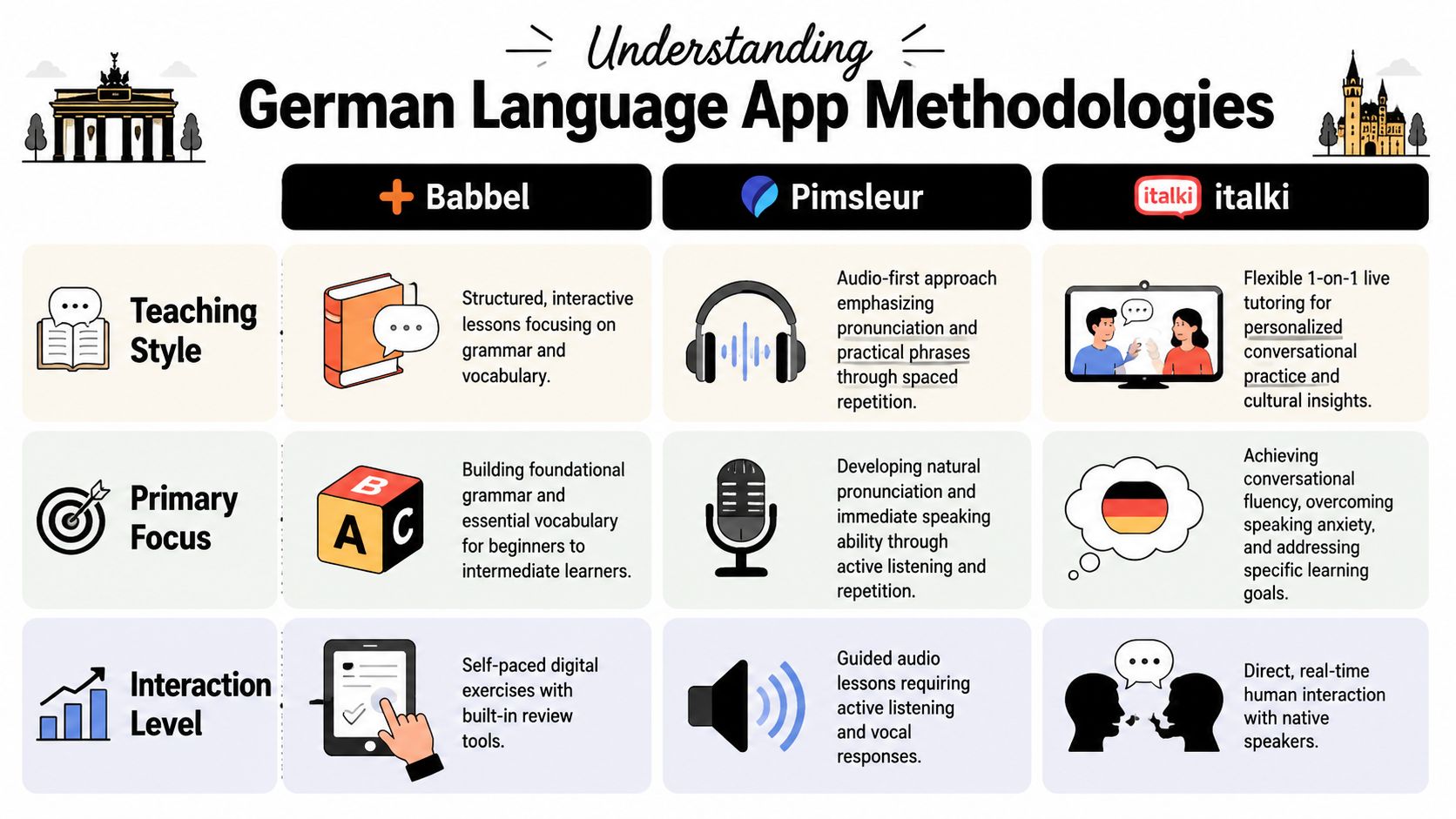
Babbel teaches German through short, structured lessons with explicit grammar practice. Pimsleur teaches through audio-first repetition and spoken response. italki teaches through live one-to-one lessons with real tutors. If you want grammar, start with Babbel. If you want listening habit, use Pimsleur. If you need speaking fluency, italki is the strongest option.
| App | Core method | Main strength | Main limitation | Best fit in Hong Kong |
|---|---|---|---|---|
| Babbel | Structured interactive lessons | Grammar and sentence patterns | Limited real conversation | Learners preparing for written components |
| Pimsleur | Audio-first repetition | Listening and pronunciation habit | Weak writing development | Busy commuters and auditory learners |
| italki | Live one-to-one tutoring | Real speaking practice | Quality depends on tutor match | Learners needing oral confidence and exam speaking practice |
What each app is really training
Babbel is the closest thing here to a digital workbook. It breaks German into manageable lessons and explains patterns directly. That matters because German grammar punishes guessing.
Pimsleur takes the opposite route. You hear, repeat, recall, and respond. It's less about understanding the rule first and more about building automatic verbal response.
italki isn't a self-study course in the usual sense. It gives you access to actual teachers and conversation practice, which means you're forced to produce language under live conditions.
A published comparison for German in 2026 says Babbel's curriculum reports a 72% retention rate for grammar structures after 30 days, while Pimsleur's audio-first method reports 85% listening comprehension in 6 weeks but only 32% writing proficiency in the same period (Babbel comparison page).
That lines up with what serious learners already feel in practice:
- Babbel helps you understand what you're saying.
- Pimsleur helps you hear and say things faster.
- italki makes you deal with unpredictability, which is what real German conversation feels like.
If you're choosing one, don't ask which app is “best”. Ask which skill you're missing right now.
Babbel and Pimsleur A Deep Dive for Structured Learning
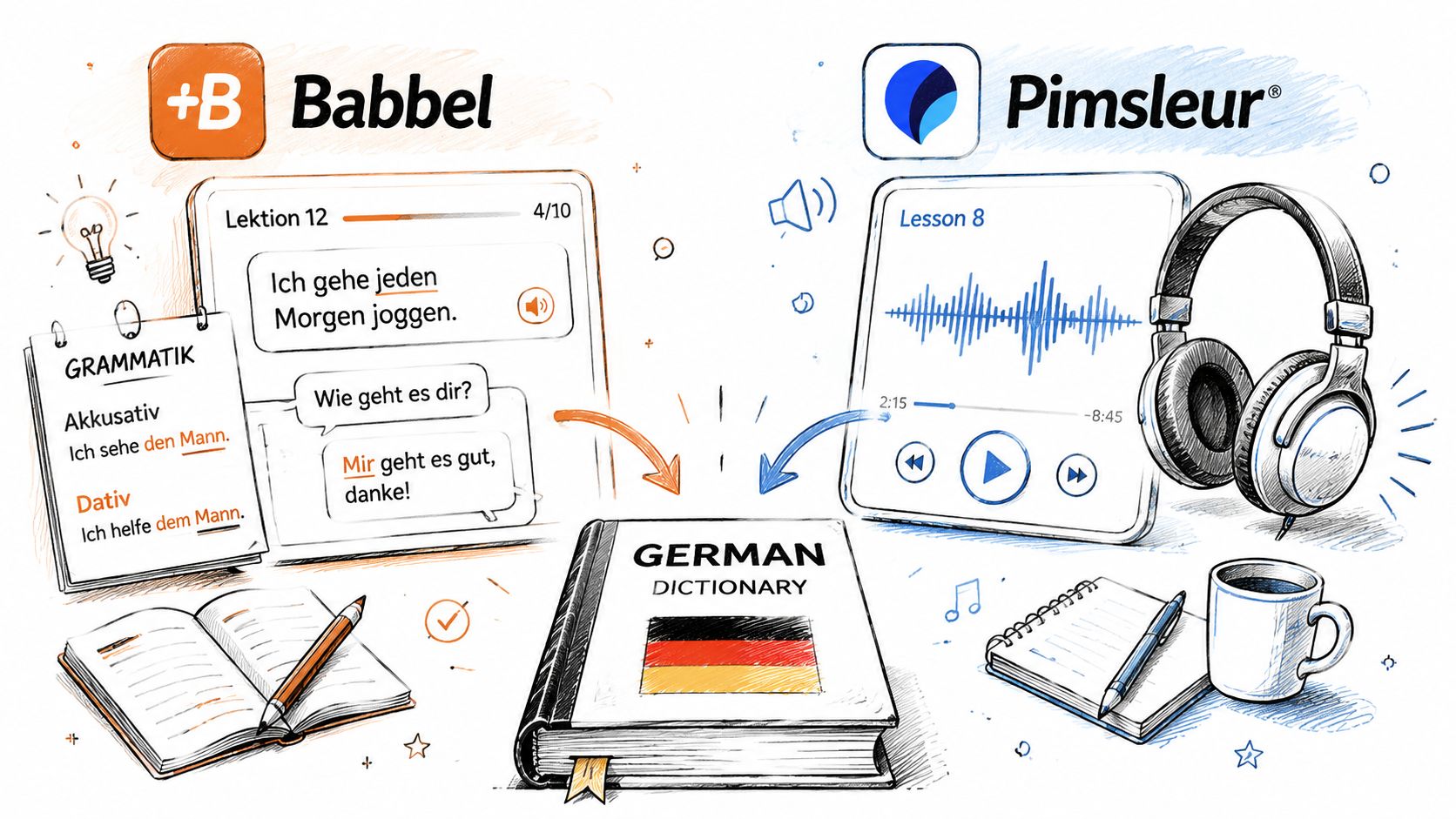
Babbel and Pimsleur get compared constantly because both are popular self-study tools. That comparison is useful, but only if you stop treating them like substitutes. They train different muscles.
Where Babbel is stronger
Babbel is better for learners who need order.
If you're in Hong Kong preparing for an exam, or you like seeing grammar explained clearly, Babbel makes more sense. German articles, cases, word order, and verb patterns are easier to manage when the app teaches them directly instead of hoping you'll infer them.
Babbel also suits learners who need shorter study blocks. Its lessons average 10 to 15 minutes according to the comparison data already cited on Babbel's own overview page. That's a realistic fit for office workers, parents, and students juggling packed timetables.
Use Babbel when your problem sounds like this:
- “I recognise words, but I can't build the sentence properly.”
- “I need more control over grammar for writing and exams.”
- “I want a clear progression instead of free-form conversation.”
Where Pimsleur is stronger
Pimsleur is better for rhythm, recall, and pronunciation habit.
If you spend a lot of time commuting in HK, this app fits that lifestyle well. It's built around 30-minute hands-free sessions, so it works on the MTR, on a walk, or during a drive. You don't need to stare at a screen.
The trade-off is obvious. You may sound more comfortable before you can write comfortably. That's fine for early conversation confidence, but it's not enough if your goal includes written accuracy.
Use Pimsleur when your problem sounds like this:
- “I know some German on paper, but my ear is slow.”
- “I freeze when I need to answer out loud.”
- “I need a hands-free tool that fits my daily routine.”
If you need grammar and writing, pick Babbel. If you need spoken recall during your commute, pick Pimsleur. If you need both, start with one and stop pretending it replaces live speaking.
My verdict on Babbel vs Pimsleur
For most Hong Kong learners, Babbel is the smarter first app because German grammar matters early.
Pimsleur is the better second tool if your listening is weak or your schedule makes audio learning more realistic than screen study. But I wouldn't choose Pimsleur alone for anyone targeting Goethe-Zertifikat, school assessments, or formal German use. It doesn't cover enough of the written side.
italki Gaining Conversational Fluency with Native Tutors
At some point, every serious learner hits the same wall. You've done the lessons. You've reviewed the vocabulary. You still hesitate when someone asks a simple question in real time.
That's where italki earns its place.
Why live tutoring changes your German
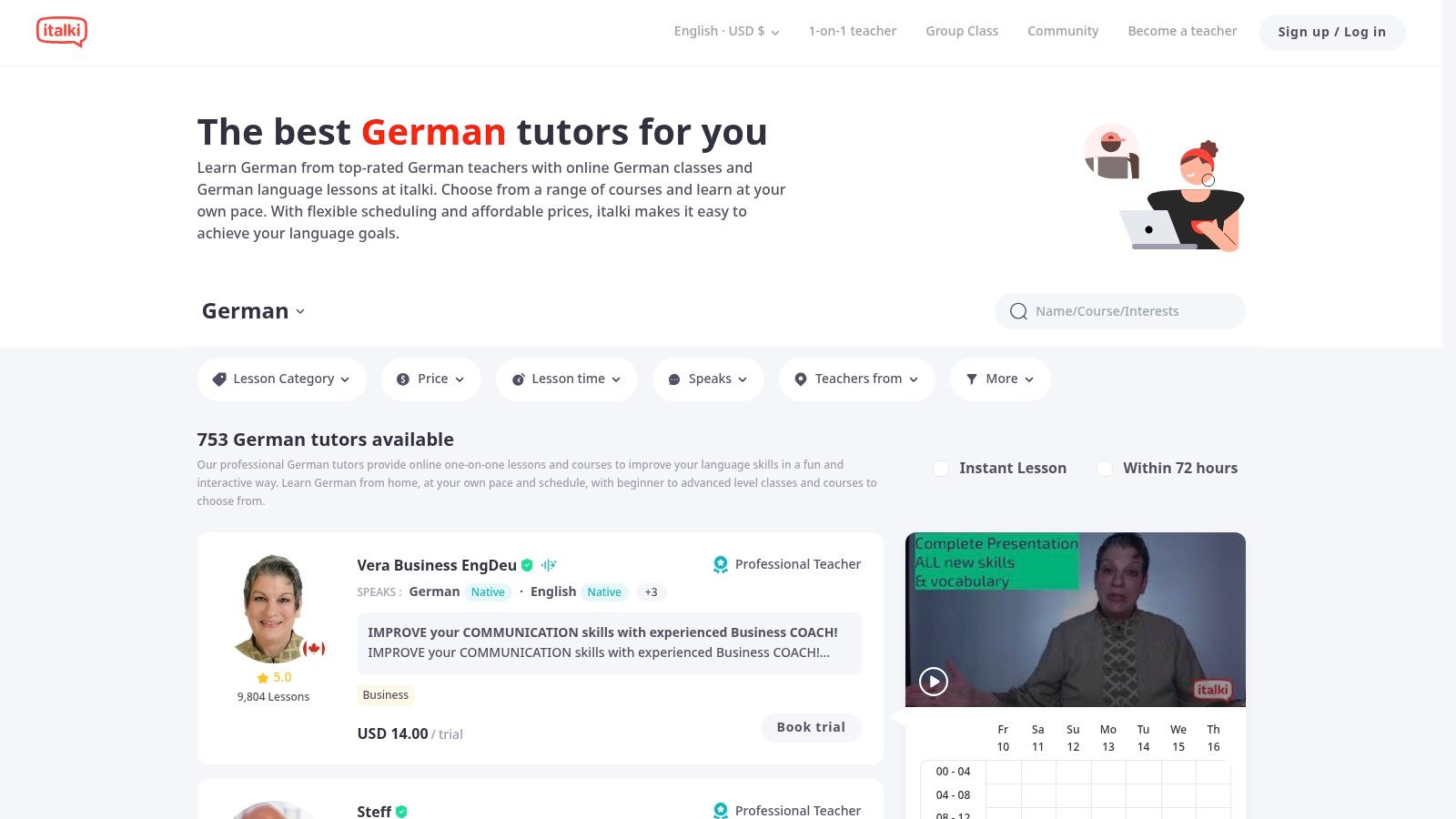
italki's model is simple. You book a lesson with a tutor, speak live, get corrected, and adjust in real time. That sounds basic, but it fixes the exact weakness most self-study apps leave untouched.
According to italki's 2026 platform overview, the service connects learners with 30,000+ professional teachers across 150+ languages, with lessons starting at $4/hour. For Hong Kong learners who complete 20+ hours of live tutoring, the platform reports a 94% conversational fluency benchmark within 90 days for German-focused live tutoring outcomes (italki app comparison overview).
That's the value of human correction. You're not just repeating prepared lines. You're learning how to recover, reformulate, and keep going.
Who should use italki in Hong Kong
italki makes the most sense for learners with a specific speaking target.
- Goethe-Zertifikat candidates who need oral practice, not just grammar drills
- TestDaF applicants who need more precise spoken responses
- IB or IGCSE learners who must speak more naturally under pressure
- Adults preparing for study abroad in Germany who need confidence before interviews, travel, or university life
It also suits Hong Kong schedules unusually well. The platform's own 2026 comparison says it supports 98% lesson availability during HK business hours from 9 AM to 6 PM for Asia-Pacific scheduling, which is a practical advantage for working adults and parents arranging lessons around school pickup or office hours.
For learners who want to understand what good native-led support looks like locally as well, this article on native German-speaking tutors in Hong Kong is a useful reference.
Speaking practice isn't optional for German exams. It's the part most self-study learners postpone, then regret.
A quick overview of how tutor-based learning works in practice:
- Pick by goal: Choose a tutor who fits conversation practice, exam prep, or general German.
- Use lessons actively: Bring your own questions, writing samples, and speaking topics.
- Treat corrections seriously: The value is in the feedback, not just the chat.
This short video gives a feel for the platform and how live tutoring fits into a modern learning routine.
How Much Do These German Learning Apps Cost
This is the question HK readers usually ask first, and rightly so. Cost matters. But the cheaper option isn't automatically the better option if it delays exam readiness or forces you to pay twice.
2026 German app cost comparison estimated
| App | Pricing Model | Estimated Monthly Cost (HKD) | Best For |
|---|---|---|---|
| Babbel | Subscription | Varies by plan | Learners who want structured grammar study |
| Pimsleur | Subscription or purchase model | Varies by plan | Learners who want audio-first study |
| italki | Pay per lesson | Depends on tutor frequency | Learners who want flexible speaking practice |
This table is deliberately conservative. For Babbel and Pimsleur, monthly cost depends on the plan you choose. For italki, the price depends on your tutor and how often you book. The only precise public figure available in the verified data is that italki lessons start at $4/hour on its platform overview already cited earlier.
What HK learners should compare
A better cost question is this: what are you comparing apps against?
In Hong Kong, a 2 to 3 month German course at large institutions can cost from HK$4,800, while private language schools charge from HK$300 to HK$800 per hour (Hong Kong German school cost guide). That's why many adults begin with apps. The barrier to entry feels lower.
But there's a catch.
- App subscriptions spread cost over time, which feels manageable.
- Pay-per-lesson tutoring gives flexibility, especially if your schedule changes.
- Structured local courses may offer stronger accountability and may align better with CEF funding than casual self-study.
If you're budgeting carefully, compare total learning path cost, not just monthly app price. A cheap app that leaves you weak in speaking can become an expensive detour.
For a fuller local breakdown, this guide on how much it costs to learn German in Hong Kong gives useful context for app users weighing classes, tutors, and flexible course options.
The Hybrid Model The GCA Advantage for Serious Learners
You have six months before a Goethe exam, a university deadline, or a visa interview. That is not the time to gamble on app streaks.
Use a hybrid plan. Apps give you repetition. Teachers give you correction, structure, and exam discipline. Hong Kong learners with serious goals need both.
What a hybrid plan looks like
The right mix depends on the job you need German to do.
For the exam student
Use Babbel for daily grammar drills, sentence patterns, and vocabulary review. Put your main effort into a structured course with native-speaking teachers who correct writing, train speaking under pressure, and teach the exam format properly. That combination gives you a realistic path to Goethe-Zertifikat, IB, IGCSE, and A-level results.
For the working professional
Use Pimsleur on the MTR, in taxis, or during walks to build listening speed and cleaner pronunciation. Add weekly live lessons and formal instruction once your target shifts to meetings, interviews, relocation, or visa paperwork. Passive exposure is not enough when your German will be judged live.
For the parent planning ahead
Let the child use an app for short reinforcement sessions. Keep the core programme in a proper curriculum with teacher feedback, level tracking, and exam preparation. Children improve faster when someone checks output, not just completion.
Why this model works in Hong Kong
Hong Kong schedules are tight. School calendars are packed. Adult learners are juggling work, family, and deadlines. A hybrid model fits that reality better than app-only study.
Apps are good at repetition. Teachers are good at spotting bad pronunciation, weak sentence control, and exam mistakes before they become habits. A structured course also forces progression. You know your level, your gaps, and your next target.
That matters if your goal is high-stakes performance rather than casual learning. The German Cultural Association reports that over 90% of students rank in the top 10% of public examinations, and it also reports a 96% student recommendation rate. Those outcomes come from organised teaching, native-speaker feedback, and clear academic standards.
One more practical point. If you use speech tools for pronunciation logging or oral drafting between lessons, an AI-powered voice writing solution can help you capture spoken German practice quickly. It does not replace a teacher. It makes your self-study more usable.
My advice is simple. Use the app to build daily momentum. Use professional instruction to fix mistakes, prepare for assessment, and stay on schedule. If the goal is a certificate, a school place, or a visa, that is the model I recommend.
Final Recommendations and Your Next Steps in HK
You don't need more app marketing. You need a decision.
My direct recommendation
Choose Babbel if you need grammar, writing support, and a clear study structure.
Choose Pimsleur if you need audio practice and want to use commute time well.
Choose italki if speaking is your weak point and you need live correction.
Choose a hybrid model if your goal is exam success, visa readiness, or study abroad in Germany.
That's the clean answer.
If you're an adult in Hong Kong learning for work or immigration, don't rely on app streaks. If you're a parent, don't confuse engagement with measurable progress. If your child needs DSE/IB/IGCSE-style performance or Goethe-Zertifikat results, self-study alone usually won't be enough.
Can apps alone get you visa ready German
For low-pressure casual learning, apps can carry a lot of the load. For high-stakes outcomes, they usually can't.
One verified comparison shows that 52% of learners who switch from app-only study to a hybrid model with a weekly professional session achieve 90%+ pass rates in Goethe-Zertifikat, compared with 38% for app-only users (video reference on hybrid language study outcomes). That gap matters if you need university admission, immigration paperwork, or dependable speaking performance.
My practical advice is simple:
- Use an app daily
- Add weekly professional speaking correction
- Study to a curriculum, not to a streak
- Treat speaking as a core skill from the beginning
If you want a small extra tool for pronunciation notes or dictation practice between lessons, an AI-powered voice writing solution can help with spoken input and self-checking. It won't replace a teacher, but it can make solo review more useful.
If you're serious about German lessons Hong Kong options, stop asking which single app can do everything. None of them can. Pick the right app for the right job, then combine it with real instruction.
If you want a serious, structured route to German in Hong Kong, German Cultural Association Hong Kong(GCA) is the place to start. Their native-speaking teachers, small-group format, flexible online and in-person options near Tsim Sha Tsui and Causeway Bay, and strong exam preparation for Goethe-Zertifikat, TestDaF, IGCSE, A-level, and IB make them a strong fit for ambitious learners. Book a trial class, speak with an advisor, or check the latest course schedule if you're ready to move beyond apps and build a plan that works.

German Verb Tenses Overview: Präsens Made Simple
German Passive Voice (Passiv): Formation Guide


