.png)
.png)

BLOG

香港德國文化協會
The German Cultural Association
Baby Playgroup Hong Kong 2026: Best Classes for 0-2 Year Olds
You're choosing your baby's first class in Hong Kong while juggling MTR transfers, nap windows, and a calendar that already feels too full. In that kind of market, a good playgroup isn't just “nice to have”, it has to fit real family logistics, support development, and feel worth the weekly commitment. Baby Playgroup Hong Kong 2026: Best Classes for 0-2 Year Olds is best approached as a practical shortlist, not a brand beauty contest.
For Hong Kong parents, the timing matters too. The city's 2024 birth rebound created a larger pool of babies entering the 0 to 2 age band, and Hong Kong's strong broadband and Wi-Fi coverage make hybrid updates, digital enrolment, and parent communication easy to build into class delivery. That means the best options in 2026 are the ones that combine developmental value, location convenience, and schedule flexibility.
For a useful wider lens on childcare planning, see practical childcare solutions for families.
Table of Contents
- What makes a baby playgroup worth it in Hong Kong
- 1. German Cultural Association GCA Early Years German Programme
- 2. Kindermusik by Baumhaus
- 3. My Gym Children's Fitness Center
- 4. ESF Explore Playgroup
- 5. SPRING Learning Neurosense
- 6. Tutor Time WOW Bilingual Playgroup
- 7. Parkview International Pre-School PIPS Playgroup
- 8. BabySteps International Preschool & Playgroup
- 2026 Hong Kong Baby Playgroups, Top 8 Comparison
- Ready to Enrol? Your Next Steps
What makes a baby playgroup worth it in Hong Kong
The best baby playgroup in Hong Kong is the one your family can attend consistently, with the right mix of age fit, parent involvement, and developmental purpose. For 0 to 2 year olds, that usually means short sessions, flexible entry ages, and a format that works around feeding and naps rather than fighting them.
Hong Kong's playgroup market already reflects that reality. Local providers commonly organise around the 6 months to 2 years band for infants and toddlers, and many community options are small-group, neighbourhood-based, and tied to transit-rich districts such as Jordan, Mong Kok, and Sai Kung. That makes commute time and MTR convenience as important as the curriculum itself.
Practical rule: if getting to class feels like a weekly military operation, the “best” programme will stop being used.
Parents in Hong Kong should also think beyond the class title. If you want bilingual exposure, choose a programme with clear language input and native or highly consistent teacher delivery. If you want sensory or motor development, look for structured play instead of free play alone.
The legal context is simple too. The Education Bureau treats education for ages 6 to under 12 as compulsory primary education, while kindergarten is for ages 3 to under 6. That leaves playgroup as an optional early-learning stage, so the question is not whether you must enrol, but whether the class solves a genuine family need.
A strong short-list for 2026 should therefore balance:
- Age fit, especially for infants under 12 months.
- Logistics, including MTR access, parking, and session length.
- Teaching quality, particularly native-language or specialist-led delivery.
- Home carry-over, such as music packs, parent coaching, or digital follow-up.
In a city where families make decisions early, the best classes are rarely the flashiest ones. They're the ones that feel manageable every week.
1. German Cultural Association GCA Early Years German Programme
If your priority is early bilingual exposure with a structured language pathway, German Cultural Association Hong Kong (GCA) deserves the top spot on this list. It is the strongest choice for parents who want more than casual exposure, because the programme is built around native-speaking teachers, small groups, and a curriculum that moves from playful immersion into later exam-preparation pathways.
The best fit here is for toddlers, not young infants. GCA's parent-accompanied German playgroups start from 18 months to 36 months, so this is a better option for families ready for a language-forward class rather than a general baby sensory session. The location advantage is also practical, with centres in Tsim Sha Tsui and Causeway Bay, both helpful for HK parents who value MTR access and predictable commuting.
Practical rule: choose GCA if you want your child's first structured class to build a real language foundation, not just fill a weekly slot.
The programme's strengths are easy to understand:
- Native German-speaking educators, which matters for sound, rhythm, and natural language modelling.
- Small class size, with a maximum of 6 students for more individual attention.
- Structured playful immersion, using music, stories, and play instead of worksheet-style teaching.
- Clear progression, which supports later German learning and exam routes such as Goethe-Zertifikat.
There's a trade-off, and it's important. GCA is not the right pick for babies under 18 months, and it is intentionally language-focused rather than broad sensory enrichment. For families comparing baby playgroups in Hong Kong 2026, that is a strength if the goal is bilingual development with long-term structure.
For parents who like to plan ahead, the programme also sits naturally within a wider education pathway, especially if you later want your child to progress into structured German learning for school, international exams, or even future study abroad in Germany or Spain. See the German language playgroup Hong Kong 2026 complete guide for ages 1 to 4 for the broader preschool context.
2. Kindermusik by Baumhaus
Some families want the most natural first class possible, and that usually means music, movement, and parent-child bonding. Kindermusik by Baumhaus fits that brief well, especially for families who want a developmental programme from infancy through toddlerhood rather than a one-off enrichment class.
The appeal is its sequencing. Kindermusik classes are organised for foundations from 0 to 12 months and then move into toddler levels, so the programme can stay age-appropriate as your child grows. That matters in Hong Kong, where parents often want one provider that can evolve with the child instead of switching classes every term.
The programme's practical advantages are very parent-friendly:
- Accredited Kindermusik educators, which helps keep the teaching consistent.
- Digital and take-home materials, so the class continues at home.
- Free weekday playroom access for enrolled families at the Wan Chai centre.
- Paid trials and satellite locations, which help families test fit before committing.
The main downside is availability. Popular time slots can fill quickly, so if you only have narrow weekday windows, you'll need to plan ahead. Families should also check current rates and schedules directly before enrolling, because the best class for a 6-month-old is the one you can realistically attend every week.
Practical insight: music-based classes work best when parents are willing to repeat songs and routines at home. The value compounds outside the classroom.
Kindermusik is a good match for parents who want early communication, sensory engagement, and a calm, repeatable structure. It's less about language immersion and more about shared rhythm, attention, and developmental bonding, which makes it a strong alternative for younger babies.
3. My Gym Children's Fitness Center
For babies who already want to roll, crawl, pull up, and explore every surface in sight, a movement-first playgroup can be the better choice. My Gym Children's Fitness Center focuses on gross-motor development, with parent-accompanied classes that build confidence through soft play, balance work, and structured physical activity.
The baby entry point matters here. Programmes such as Tiny Tykes start at around 6 months, so this is not a newborn option, but it fits well once your child is ready to move more actively. The Hong Kong locations in Wong Chuk Hang and Tsim Sha Tsui also give families practical choices on either side of the harbour. If you are comparing movement-based options with later toddler programmes, this guide to toddler summer classes in Hong Kong helps you see how early physical classes can lead into the next stage.
A useful way to assess My Gym is by fit, not hype. It places less weight on academic enrichment and more on giving your child a safe, repeatable physical environment. That can suit toddlers who need room to test balance, coordination, and social confidence without being overwhelmed by a classroom-heavy format.
Useful features include:
- Age-specific baby levels, so your child is not pushed too fast.
- Soft-play equipment, which supports safe crawling and early climbing.
- Structured weekly lesson plans, with music, games, and beginner gymnastics.
- Open-gym sessions, which add flexibility for families who want extra free play.
The trade-off is straightforward. It does not start as early as some infant programmes, and pricing depends on package selection, so you need to contact the centre for current quotes. For parents whose children are nearing toddler mobility, though, it offers a disciplined way to channel energy into useful movement.
There is also a sequencing benefit. Families who begin with movement-heavy classes often find that toddlers settle more easily into later structured learning, because they are already used to turn-taking, routines, and guided group participation. If your child is physically active, this can be a stronger early fit than a quieter classroom format.
4. ESF Explore Playgroup
ESF Explore Playgroup is a strong option for families who want a familiar English-medium environment with a clear curriculum and multiple campus choices. It serves babies and toddlers from around 6 to 30 months, which gives it a useful range for families who want continuity without changing providers too often.
What stands out is the structure. Sessions combine sensory play, pre-literacy, music, and motor activities, so the class feels more intentional than a free-play parent group. For parents in Hong Kong who like to plan ahead, that kind of predictable format makes weekly attendance easier to manage.
The breadth of access is part of the appeal. ESF runs classes across multiple campuses, so families may find a location that better matches their commute. That matters in a city where district choice can decide whether a programme is viable or just theoretically attractive.
Important practical points include:
- Levelled classes starting from around 6 months, which helps with age matching.
- Multiple campus access, useful for cross-district families.
- Transparent guidance on admissions, including the fact that playgroup attendance does not give kindergarten priority.
- Occasional trial bundles, which let parents sample before making a longer commitment.
The honest downside is competition for places. Preferred times and locations can come with waitlists, so this is not always the easiest option for last-minute enrolment. Families should also understand the admissions boundary clearly, since playgroup here is enrichment, not a shortcut into kindergarten.
For parents weighing Baby Playgroup Hong Kong 2026 options, ESF Explore is a dependable middle-ground. It's broad enough for general early development, organised enough for busy working parents, and familiar enough for families who may later want to keep options open in the international-school ecosystem.
5. SPRING Learning Neurosense
If you want a playgroup that feels more developmental-science-led than entertainment-led, SPRING Learning's Neurosense programme is worth serious attention. It runs in Wan Chai, which is useful for Hong Kong Island families who want a central location and don't want to spend half the morning in transit.
The standout feature is the environment itself. The programme uses purpose-built sensory rooms and a Neurosense curriculum developed with input from therapists and clinical specialists. That creates a more curated experience than the average playgroup, especially for babies who respond better to calm, controlled stimulation.
The age range is unusually broad, starting from newborn through 36 months. That makes it one of the few options here that can serve families very early, although parents still need to judge whether their child benefits more from structured sensory input or a lighter, more social setting.
Practical rule: for younger babies, a well-designed sensory room can be more useful than a busy multipurpose classroom.
Key benefits include:
- Specialist-informed sensory environments, which support focused exploration.
- Early motor skills and caregiver coaching, not just child-led play.
- Birth-to-36-month coverage, which offers strong continuity.
- Central Wan Chai access, convenient for island-side families.
The compromise is mostly operational. Fees are not publicly listed, and families need to enquire directly for schedules, trials, and current term details. That extra step is common in specialist early-years programmes, but it does mean you need to be more proactive.
SPRING Learning suits parents who want a playgroup that feels carefully designed and developmentally intentional. It's a good match if you value sensory integration and guided parent education over a casual social play format.
6. Tutor Time WOW Bilingual Playgroup
Families looking for an early bilingual routine often ask for English and Mandarin together, and Tutor Time's WOW Bilingual Playgroup answers that need directly. It is targeted at 6 to 24 months, so it sits squarely in the baby-to-toddler stage and gives parents an early language environment without waiting until preschool.
The bilingual design is the key. English and Mandarin are used within the same session, which gives babies repeated exposure to both sounds and rhythms. For Hong Kong families who want early bilingual input, that can be a practical advantage, especially if one parent wants a more language-rich class than a general sensory group.
The class format is broad enough to support development beyond language. Activities cover sensory exploration, early language, music, and fine and gross motor play, so the session is not just about hearing words. It also sits within an established international preschool network, which appeals to parents who value continuity.
The practical upside looks like this:
- Age fit from 6 to 24 months, which covers most of the first two years.
- Two-language exposure in one class, useful for bilingual households.
- Developmentally balanced activities, not language only.
- Preschool pathway familiarity, which some families appreciate.
The limitation is flexibility. Campus availability and session timing can vary by district, so this may work better for some parts of Hong Kong than others. Fees also differ by campus and term, so families need to enquire before committing.
For parents comparing bilingual playgroup Hong Kong options, Tutor Time is a sensible mainstream pick. If your child thrives on structured language input, it deserves a spot on the shortlist.
The internal guide to English playgroup Hong Kong 2026 bilingual groups is useful if you want to compare language-first formats in more detail.
7. Parkview International Pre-School PIPS Playgroup
Parkview International Pre-School (PIPS) is a solid choice for parents who want clarity before they enrol. The playgroup is designed for children aged 12 to 24 months, so it is best suited to families with toddlers who are ready for a more settled classroom rhythm.
The transparency is one of its biggest selling points. PIPS publishes session times and sample fees online, which makes budgeting and planning much easier for Hong Kong parents. In a city where schedules shift quickly, that kind of upfront detail saves time.
The programme itself is broad and child-centred. Expect arts and crafts, music, creative play, story time, and, depending on campus, outdoor elements. That variety gives toddlers a comfortable bridge into preschool-style routines without making the class feel too formal.
A few things stand out:
- Published timetables, helpful for working parents.
- Example fees online, which reduces guesswork.
- Parent-accompanied format, appropriate for the age group.
- Campus-dependent variety, giving some flexibility in style.
The main limitation is age. Since entry starts at 1 year, it won't suit families looking for a younger infant programme. Activity differences between campuses also mean parents should check the exact site, not just the brand name.
PIPS works well for families who want a gentle, predictable transition from home to structured learning. If you're planning ahead and prefer visible schedules over sales-heavy presentations, this is the kind of programme that makes enrolment easier.
8. BabySteps International Preschool & Playgroup
For families in Central who want early continuity under one provider, BabySteps International Preschool & Playgroup is a practical option. It accepts children from around 6 months and can carry them through to preschool years, which is useful for parents who value an uninterrupted early-years pathway.
The location matters here. A Central Hong Kong site can reduce travel friction for parents commuting through the island core, especially if you're already balancing work hours and nursery logistics. In Hong Kong, that convenience can be the difference between steady attendance and a class that eventually drops off the calendar."
The programme's strengths are straightforward:
- Entry from around 6 months, which helps families start early.
- Continuity through the early years, reducing the need to switch providers often.
- Parent involvement in the early stages, which is important for babies.
- Central access, which is attractive for many island-based families.
The trade-off is predictability around demand. Popular Central-area time slots can fill quickly, so families should check availability early. Fees and trial options also need direct enquiry, which is typical for private early-years providers in Hong Kong.
BabySteps suits parents who want the convenience of one provider for the infant-to-kindergarten transition. If your priority is a stable routine and a central location, it belongs near the top of the shortlist.
2026 Hong Kong Baby Playgroups, Top 8 Comparison
| Program | Implementation complexity 🔄 | Resource requirements ⚡ | Expected outcomes ⭐ 📊 | Ideal use cases 💡 | Key advantages |
|---|---|---|---|---|---|
| German Cultural Association (GCA) – Early Years German Programme | 🔄 Medium, structured, parent‑accompanied immersion led by qualified native teachers | ⚡ Moderate, regular term commitment, small groups, convenient TST/Causeway Bay locations | ⭐ High, foundational German, cognitive bilingual benefits; 📊 clear pathway to exam prep | 💡 Parents seeking early German immersion and language advantage; ages 18–36 months | Authentic native instruction; small class size; structured curriculum; pathway to Goethe exams |
| Kindermusik by Baumhaus | 🔄 Low–Medium, sequenced music-and-movement curriculum with strong parent role | ⚡ Moderate, term enrolment includes digital/take‑home materials and playroom access | ⭐ Medium–High, improved bonding, early communication and musical foundations; 📊 strong home carry‑over | 💡 New parents wanting evidence‑based music programme from birth to ~2 years | Accredited Kindermusik curriculum; take‑home resources; free same‑day playroom access |
| My Gym Children's Fitness Center | 🔄 Medium, weekly structured lessons with equipment and lesson plans | ⚡ High, specialised soft‑play equipment, staffed centres, multiple class levels | ⭐ High, targeted gross‑motor, balance and confidence gains; 📊 progressive physical development | 💡 Parents prioritising motor development from ~6 months and continuity up to early school years | Quality soft‑play equipment; multi‑level progression; open‑gym/free play options |
| ESF Explore Playgroup | 🔄 Medium, levelled, school‑based curriculum across campuses | ⚡ Moderate, scheduled terms at multiple ESF sites; possible waitlists | ⭐ Medium, balanced early skills (pre‑literacy, music, motor); 📊 reliable structure for families | 💡 Families wanting a school‑backed programme with predictable scheduling; ~6–30 months | Clear curriculum and scheduling; wide campus access; trial/bundle options |
| SPRING Learning – Neurosense | 🔄 High, therapist‑informed curriculum in purpose‑built sensory rooms | ⚡ High, specialist environments and clinical input; fees/schedules by enquiry | ⭐ High, focused sensory integration, early motor skills and caregiver coaching; 📊 targeted developmental gains | 💡 Families seeking therapist‑led sensory support or intensive caregiver coaching; newborn–36 months | Specialist‑designed sensory rooms; evidence‑informed approach; parent education focus |
| Tutor Time “WOW” Bilingual Playgroup | 🔄 Medium, bilingual delivery (English + Mandarin) within structured preschool routine | ⚡ Moderate, run by established preschool network; campus/slot dependent | ⭐ High for bilingual exposure, early dual‑language input; 📊 smoother preschool transition within network | 💡 Families wanting early English–Mandarin exposure and pathway into preschool; 6–24 months | Natural bilingual sessions; structured progression to preschool; developmentally appropriate routines |
| Parkview International Pre‑School (PIPS) – Playgroup | 🔄 Low–Medium, multi‑activity sessions (arts, music, outdoor); campus dependent | ⚡ Moderate, published sample timetables and fees, variable outdoor elements | ⭐ Medium, gentle transition to preschool routines; 📊 predictable planning benefits | 💡 Families preparing for preschool routines who value transparent scheduling; 12–24 months | Transparent fees/timetables; multi‑activity format; campus options for outdoor play |
| BabySteps International Preschool & Playgroup | 🔄 Low–Medium, play‑based, parent‑involved early years with continuity | ⚡ Moderate, central location convenience; check availability and fees | ⭐ Medium, steady early development and prep for pre‑nursery/kindergarten; 📊 continuity advantage | 💡 Families wanting central access and single‑provider continuity from ~6 months | Continuity through preschool years; central location; integrated progression to nursery/kindergarten |
Ready to Enrol? Your Next Steps
Choosing the right playgroup is a foundational step in your child's early education in Hong Kong, but the best decision is rarely the one with the fanciest brochure. It's the class that fits your child's age, your commute, and your weekly reality.
Use this guide to narrow your list to 2 or 3 centres that match your family's goals, then book a trial class if possible. Trial visits show you what the room feels like, how the teachers manage transitions, and whether your child settles quickly or needs a different pace.
For families who want early bilingual development, especially in German, German Cultural Association Hong Kong (GCA) is a relevant option because its toddler programme combines native-speaker teaching, small groups, and a structured curriculum. That makes it useful for parents who want a clear language pathway rather than a generic enrichment class.
If you're weighing Hong Kong playgroups the way serious parents should, focus on three things: can you get there easily, does the teaching match your goal, and will your child enjoy returning every week? Those answers matter more than brand reputation.
Book the trial, talk to the teachers, and choose the class your family can sustain. A good early-years decision in Hong Kong is one that supports your child without making your week harder than it already is.
German Cultural Association Hong Kong (GCA) offers toddler German playgroups that suit families looking for early language exposure in a structured setting. If you want to compare bilingual options for your 0 to 2 year old and see whether GCA fits your child's stage, visit German Cultural Association Hong Kong (GCA) to check the latest course schedule and speak with an advisor.

German Activities for Kids at Home: 15 Games and Crafts for Ages 3-10
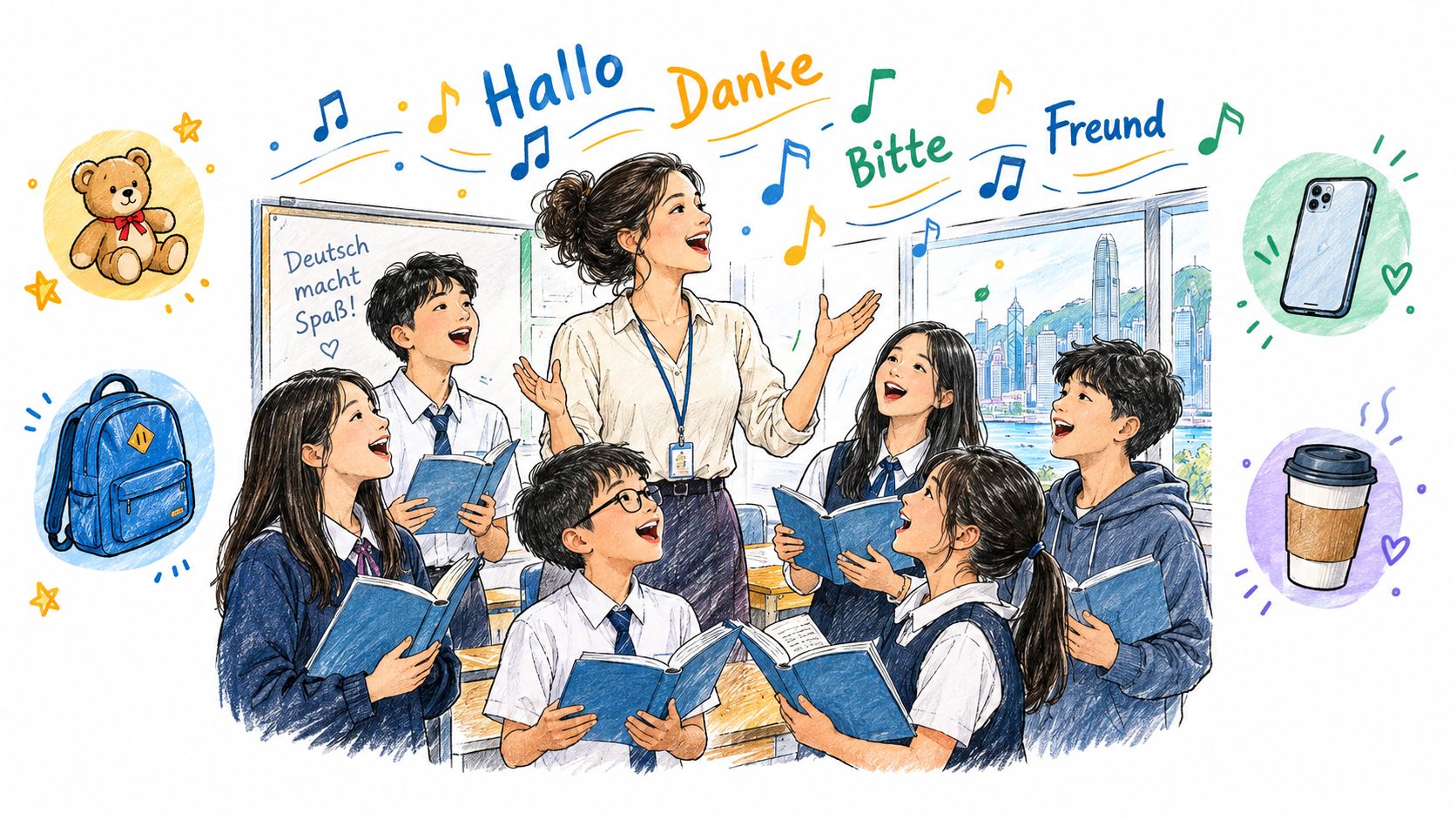
Songs and Activities That Teach German in Hong Kong


