.png)
.png)

BLOG

香港德國文化協會
The German Cultural Association
After-School Activities for Preschoolers in Hong Kong: A Guide for Ages 3-6
Your child starts preschool in Hong Kong and suddenly the flood begins. Flyers for drama, mini-sport, art, coding, swimming, phonics, playgroups, and trial classes pile up in the school bag. Other parents already seem to have a plan. You don't need more options. You need a filter.
That's what this guide is for. After-school activities for preschoolers in Hong Kong should support development, fit family life, and leave your child with enough energy to enjoy being little. If you're choosing for ages 3 to 6, don't build a packed timetable. Build a smart one.
Table of Contents
- Creative and arts options
- Sports and physical development
- Academic and STEM choices
- Language and cultural immersion
- Start with your child, not the brochure
- Use a practical parent checklist
- The decision parents usually regret
Navigating the Preschool Activity Maze in Hong Kong
A common HK parent mistake is assuming that more classes mean better parenting. They don't. A tired four-year-old dragged from school to class to class usually learns less, not more.
Hong Kong's enrichment market is deep, polished, and long-established. The private sector isn't a passing fad. Institutions such as Faust and ActiveKids have been operating for over 20 to 25 years in drama, STEM, arts, and related programmes, which tells you one thing clearly: parents in Hong Kong have valued structured after-school learning for a long time (Hong Kong Living on long-running activity providers).
Why parents feel pressure so quickly
The pressure starts because the options look endless and the messaging is relentless.
- Every programme sounds essential. Sports promise confidence. Drama promises creativity. STEM promises future readiness.
- Trial classes create urgency. They make it easy to start before you've decided whether the activity suits your child.
- Parent comparison is constant. In school WhatsApp groups, “What have you signed up for?” becomes a status question.
Practical rule: If an activity mainly solves your anxiety rather than your child's needs, skip it.
A better standard is simple. Ask whether the class helps your child become more coordinated, more expressive, more confident with peers, or more comfortable following routines. If the answer is vague, it's probably not worth the weekly commute.
What a better approach looks like
For most families, the right plan includes one physical outlet, one expressive or cognitive activity, and protected downtime. That's enough to create rhythm without turning the week into logistics management.
Parents who want a more focused framework for language-based enrichment can also look at German after-school classes for kids in Hong Kong by age group. It's a useful example of how age grouping changes what children can realistically handle.
Keep this in mind as you read the rest of this guide. After-school activities for preschoolers in Hong Kong should make life calmer and richer, not more frantic.
The Developmental Sweet Spot From Age 3 to 6
How to choose activities for ages 3 to 6
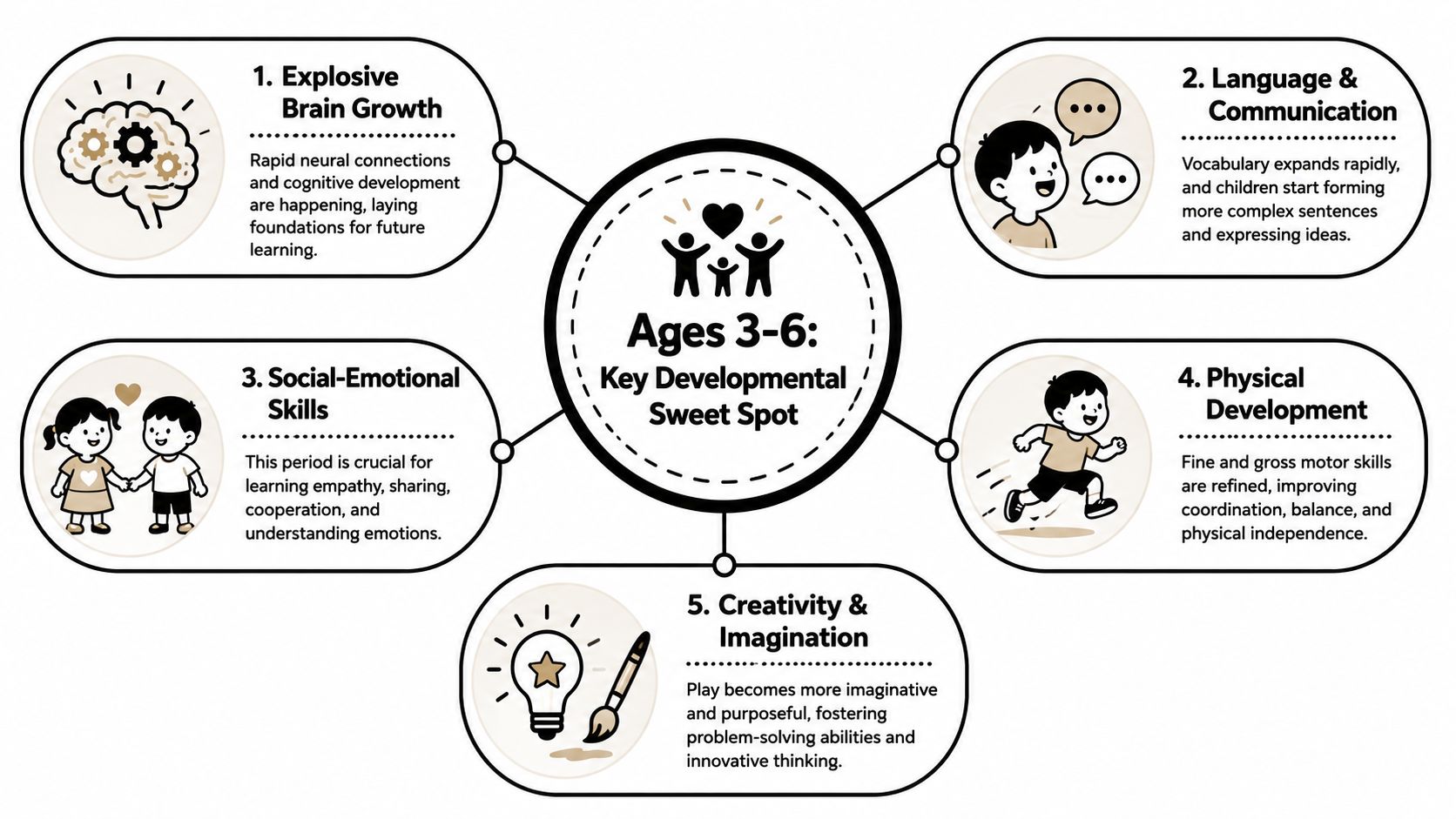
Children aged 3 to 6 benefit most from after-school activities that build language, emotional regulation, movement, and imagination through structured play. The best programmes are short, age-appropriate, and consistent. At this stage, quality matters far more than quantity, especially when parents are choosing among many after-school activities for preschoolers in Hong Kong.
These years matter because children are learning how to be with other people, how to manage their bodies, and how to use language with confidence. Don't choose classes based on what sounds impressive to adults. Choose them based on what your child is ready to absorb.
What changes most between 3 to 4 and 5 to 6
A three-year-old and a six-year-old are not the same learner. Treating them as if they are is one of the biggest planning errors I see.
Ages 3 to 4 usually need:
- Shorter routines: They cope better with predictable, repetitive class structures.
- Movement built into the lesson: Sitting still for too long works against learning.
- Simple social goals: Taking turns, following one instruction at a time, and joining group play are enough.
Ages 5 to 6 can usually handle:
- More structured tasks: They're often ready for multi-step activities and simple project work.
- Goal-based learning: They can understand practice, progress, and basic achievement.
- Introductory academic challenge: Early phonics, beginner language exposure, or simple STEM tasks can work if they stay playful.
If your child is melting down after class, resisting transitions, or becoming clingy, that's feedback. It doesn't always mean the programme is bad. It often means the format, timing, or expectations are wrong for that age.
For parents dealing with big emotions at this stage, I often recommend reading practical resources on helping parents with preschooler anger. Emotional regulation isn't separate from enrichment. It affects whether any class works.
What good activities actually build
A strong preschool activity should develop several areas at once.
- Social-emotional growth: Group classes teach waiting, listening, sharing space, and recovering from small frustrations.
- Cognitive flexibility: Art, construction, role play, and beginner language work all stretch attention and problem-solving.
- Physical literacy: Climbing, throwing, balancing, swimming, and dance build body awareness that supports confidence in other settings.
- Communication: Songs, stories, drama, and language classes help children express needs and ideas more clearly.
- Creative thinking: Open-ended tasks matter. Preschoolers need room to invent, pretend, and experiment.
Some of the best classes look almost deceptively simple. If a child is moving, listening, speaking, and enjoying repetition, the class is probably doing real work.
Parents exploring early language options can also read what is the best age for kids to start learning German. The key point isn't to start as early as possible at any cost. It's to start when the format matches the child.
A Parent's Guide to Preschool Activities in HK
Hong Kong gives parents almost too much choice. That's why I group preschool activities into four buckets. Once you do that, the market becomes easier to read.
Creative and arts options
Creative classes are often the right first step for children who are expressive, cautious in new settings, or not yet ready for highly structured instruction.
Think about:
- Art studios
- Music and rhythm classes
- Drama and storytelling
- Craft-based sensory sessions
These classes are useful because they let children participate without constant performance pressure. A child can observe, copy, and join gradually.
What to watch for:
- Process over product
- Teachers who speak clearly and warmly
- Enough structure to avoid chaos, but not so much that the class feels like school
Sports and physical development
If your child has a lot of energy after school, start here. Don't fight their body. Use it.
Common options in HK include:
- Swimming
- Gymnastics
- Mini-sport programmes
- Ball skills and movement classes
The purpose at preschool age isn't specialisation. It's coordination, balance, confidence, and following instructions in a lively setting.
If you want to compare how sports programmes explain structure and parent expectations, even examples outside Hong Kong can sharpen your eye. A useful reference is this breakdown of Futbol Club Madison programs and fees, because it shows the kind of clarity parents should expect from any organised activity provider.
Academic and STEM choices
This category attracts ambitious parents fast. Be careful.
Academic and STEM classes can work for some five- and six-year-olds, especially children who like patterns, building, or systems. But for younger preschoolers, many so-called enrichment classes are just early tutoring with better branding.
Choose these only if the programme is play-based:
- Hands-on
- Short
- Interactive
- Built around exploration rather than worksheets
If it looks like a primary school prep class with toys added for decoration, pass.
Language and cultural immersion
This is the most overlooked category, and I think that's a mistake.
Many Hong Kong activity guides still focus heavily on sports, arts, and general play, while missing the demand for structured foreign language learning beyond Cantonese or Mandarin. That gap matters because over 40% of Hong Kong preschoolers are enrolled in international or bilingual schools, which creates a real need for age-appropriate foreign language exposure such as German for future academic mobility (Angloinfo on HK playgroups and the foreign language gap).
That doesn't mean every preschooler needs European language lessons. It means parents should stop treating them as an odd niche. For the right child, they're a strategic choice.
Look for:
- Native-speaking teachers
- Small-group interaction
- Songs, routines, stories, and movement
- A proper curriculum, not random vocabulary exposure
One option in this category is the German Cultural Association Hong Kong(GCA), which offers structured German classes for children in small groups with native-speaking teachers and exam progression later on through the Goethe-Zertifikat pathway. For parents considering a language class, this parent checklist before enrolling your child in German class in HK is the right place to start.
How to Choose the Best Programme Without Guesswork
Hong Kong's preschool activity market is crowded. Providers such as ActiveKids operate at over 60 locations, and others design programmes specifically for the 2 to 6-year-old age group, which means convenience can easily disguise mediocre fit (Sassy Mama on activity options across Hong Kong).
That's why parents need a system. Not instincts alone. A system.
Start with your child, not the brochure
The glossy flyer isn't the point. Your child is.
Ask these questions first:
What gives my child energy?
Some children come alive in movement. Others want stories, music, building, or role play.How do they handle transitions?
If school already drains them, a demanding weekday class may be the wrong choice.Do they warm up slowly or jump straight in?
Shy children often do well in smaller groups with predictable routines.
Choose the class that fits the child you have, not the child you think would look impressive on paper.
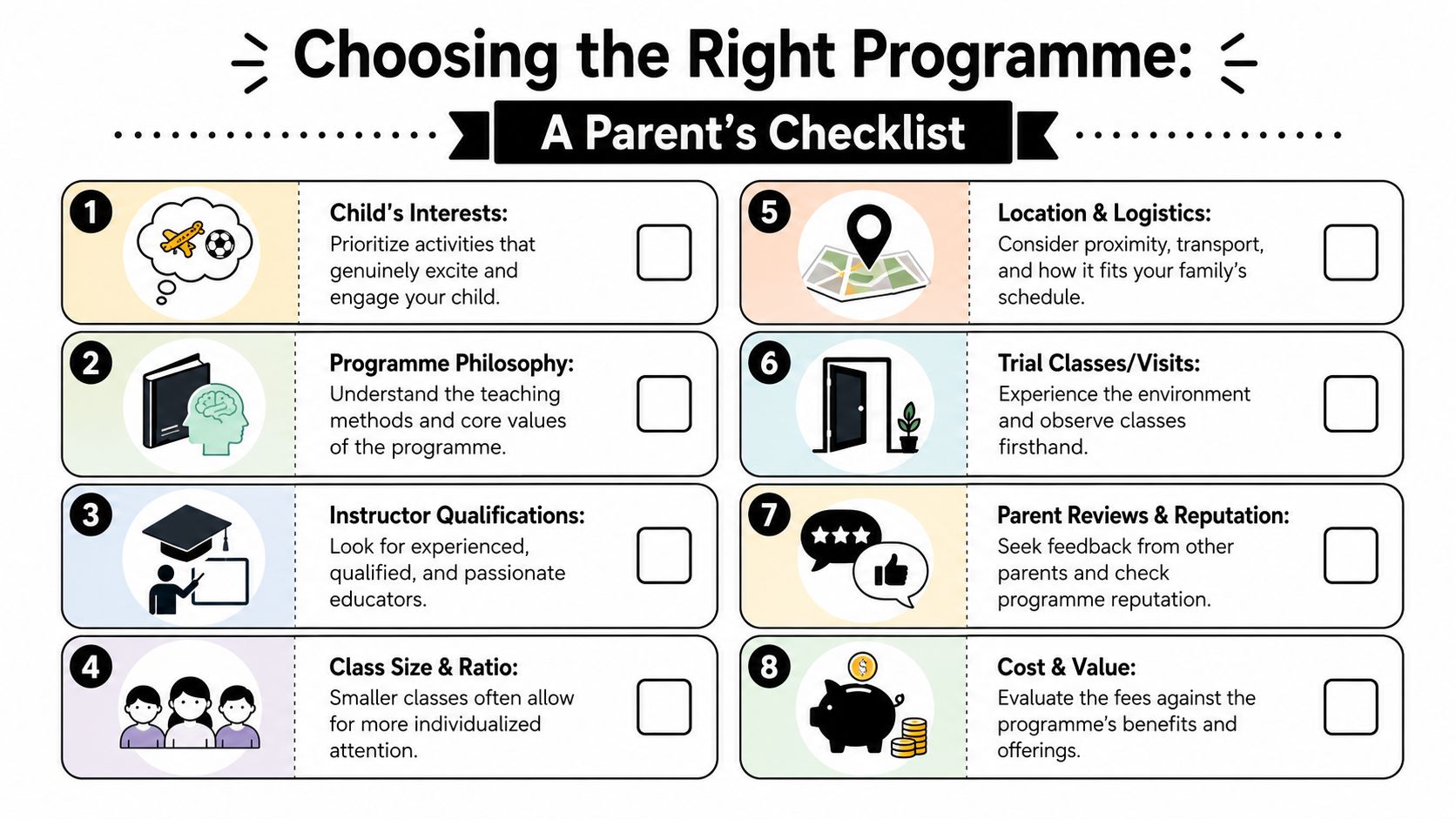
Use a practical parent checklist
Once the activity type is clear, compare programmes with discipline.
- Check travel reality: A good class that requires a miserable cross-harbour rush after school often fails within weeks.
- Look at class size: Small groups usually work better for preschoolers because teachers can redirect, comfort, and involve each child properly.
- Watch the teacher, not just the room: A beautiful centre means nothing if the instructor talks too much or misses children's cues.
- Test the rhythm of the session: Preschool classes need a clear opening, activity flow, and calm ending.
- Ask how they handle tears or refusal: This tells you more than any brochure.
- Use trial classes properly: Don't ask only “Did my child have fun?” Ask whether they were seen, settled, and included.
Here's a fast comparison tool:
| What to check | Good sign | Warning sign |
|---|---|---|
| Teacher style | Warm, clear, responsive | Talks at children, not with them |
| Class structure | Predictable and active | Long inactive stretches |
| Environment | Safe, calm, age-appropriate | Noisy, cluttered, overstimulating |
| Schedule fit | Realistic for your week | Constant rushing and missed naps |
| Parent communication | Specific and honest | Only sales language |
The decision parents usually regret
Parents rarely regret choosing one solid class and protecting family time. They often regret overbooking.
A realistic plan beats an ambitious one. That's especially true for after-school activities for preschoolers in Hong Kong, where the commute, school routine, and sleep schedule can make or break the experience.
How Much Do Preschool Activities Cost in Hong Kong?
How much does it cost
In Hong Kong, preschool activities range from free community playgroups to paid drop-in sessions and structured care programmes. A practical benchmark is that drop-in classes can cost around HK$200 per session, while structured after-school care for pre-primary children uses a bi-weekly tiered model from HK$250 to HK$500, depending on duration. Parents should budget by format, not just by subject.
Cost matters because families in HK aren't just choosing one class. They're choosing transport time, helper coordination, and how many weekly commitments they can sustain.
What parents usually pay
There are three useful pricing buckets.
1. Free or community-based options
Some community playgroups are free to families with babies through pre-schoolers, though voluntary contributions for resources may be encouraged. That makes them a smart option for social exposure without long-term financial commitment (The Little Adventurer on Hong Kong community playgroups).
2. Casual drop-in classes
Drop-in classes in areas such as Wong Chuk Hang and Tsim Sha Tsui are priced at approximately HK$200 per session, and trial classes are often free as providers compete for new families (Little Steps Asia on drop-in classes in Hong Kong).
These are useful if:
- You want to test readiness
- Your work schedule changes often
- You're still comparing activity types
3. Structured care and enrichment
For more formal after-school care, the fee structure is clearer. Pre-primary programmes may run in three daily sessions, including 9:30 AM to 12:30 PM, 12:30 PM to 4:30 PM, and 4:30 PM to 8:00 PM, with bi-weekly full fees set at HK$250 for up to 2 hours, HK$375 for more than 2 hours up to 3 hours, and HK$500 for more than 3 hours (HKFWS after-school care programme for pre-primary children).
Where to save and where to spend
Save on experimentation. Spend on quality.
- Save on first exposure: Use free trials or occasional drop-ins to test whether your child likes the activity.
- Spend on teacher quality: For language, music, or any high-interaction class, the adult in the room matters more than the décor.
- Don't overpay for branding: A fancy venue doesn't guarantee better teaching.
- Budget for consistency: One well-run weekly class usually delivers more value than several fragmented ones.
The cheapest class can become expensive if it wastes your child's energy and your family's time.
If you're comparing premium small-group formats such as language classes, measure value by structure, teacher quality, and how well the programme sustains attention week after week.
Sample Weekly Schedules for a Balanced Preschooler
A balanced week should feel repeatable. If the schedule looks impressive but leaves everyone exhausted by Thursday, it isn't a good schedule.
Below are two workable examples. They aren't rigid templates. They show how parents can combine enrichment with breathing room.
The Balanced Explorer
This suits a child who needs variety and does best with one structured activity at a time.
| Time Slot | Monday | Tuesday | Wednesday | Thursday | Friday | Saturday |
|---|---|---|---|---|---|---|
| After school / late afternoon | Home, snack, rest | Mini-sport class | Home play | Art class | Home, early wind-down | Morning family outing or sports class |
| Early evening | Free play and dinner | Travel home, bath, dinner | Playground | Story time at home | Family dinner | Afternoon rest |
| Focus of the day | Recovery | Physical confidence | Unstructured play | Creativity | Quiet reset | Social or outdoor activity |
Why this works:
- The child gets one physical and one creative activity.
- There are recovery days between classes.
- Saturday carries the optional extra, not the weekday rush.
The Future Polyglot
This suits a child who enjoys routines, songs, and verbal interaction, and whose parents want language exposure without overload.
| Time Slot | Monday | Tuesday | Wednesday | Thursday | Friday | Saturday |
|---|---|---|---|---|---|---|
| After school / late afternoon | Home, snack, rest | Language class | Home play | Second language class or story-based language exposure | Quiet evening | Weekend sports class |
| Early evening | Reading at home | Dinner and early bedtime | Playground or park | Songs and bedtime routine | Family time | Rest |
| Focus of the day | Recharge | Listening and speaking | Movement | Repetition and routine | Low stimulation | Physical outlet |
This model works well when parents care about future pathways such as study abroad in Germany later on, but still want the preschool years to feel age-appropriate. The key is repetition, not intensity.
Non-negotiables for any schedule
- Keep at least two low-demand weekdays
- Protect sleep
- Build in travel time
- Drop a class fast if it creates weekly battles
A preschool timetable should support family life. It should not become a second project manager job.
Ready to Explore a World of Language for Your Child
For the right child, early language learning is one of the smartest additions to an after-school routine. It develops listening, confidence, sound awareness, and comfort with difference. It also works especially well in preschool when the format is playful and highly interactive.
What matters is quality. Native-speaking teachers, a clear curriculum, and small-group teaching make a real difference, especially for young learners. If you're looking at German lessons Hong Kong or planning how your child might later learn German HK through a structured pathway, start with a programme that treats preschoolers as beginners who need movement, repetition, and warmth, not mini exam candidates.
At home, support matters too. Parents who want simple literacy games alongside language exposure can borrow ideas from these playful letter learning strategies. Keep it light. Preschoolers learn best when language feels alive and repeatable.
If you want a structured, native-led German programme for young children, explore German Cultural Association Hong Kong(GCA). Parents can book a trial class, speak with an advisor, and check the latest course schedule for preschool learners, with in-person options near Tsim Sha Tsui and Causeway Bay MTR stations as well as online classes.
Perfekt in German: A Clear Guide for Learners in HK

German Verb Tenses Overview: Präsens Made Simple


