.png)
.png)

BLOG

香港德國文化協會
The German Cultural Association
Playgroups in Hong Kong: District-by-District Guide (TST)
Choosing the right playgroup in Tsim Sha Tsui can feel like sorting through a crowded MTR interchange at rush hour. You want something close, structured, and worth the commute, not just a glossy name on a directory page. In Playgroups in Hong Kong: District-by-District Guide (TST), the question is simple, what gives your child useful early learning, and what fits family life in Hong Kong?
For TST-area parents, the pressure is practical. Hong Kong's district data shows how tight the early-childhood market is, with Yau Tsim Mong having 36 kindergartens and 26 in the Kindergarten Education Scheme, while Kwun Tong has 75 kindergartens and 71 in the scheme, and the territory-wide total is 958 kindergartens with 722 scheme-linked (Education Bureau district statistics). That density matters, because central Kowloon families often need playgroups that do more than fill time, they need a pathway.
Table of Contents
What makes a good playgroup in TST?
In Tsim Sha Tsui, a good playgroup solves three problems at once, convenience, development, and predictability. The best options are usually near the MTR, have a clear age band, and make it obvious what your child is learning from week to week.
Playgroups in Hong Kong: District-by-District Guide (TST) works best when parents stop thinking in generic terms like “nice activity” and start asking what the session builds. Some families need language exposure, some need motor skills, and some need a place where a child can learn to sit in a group without chaos.
That's also why Hong Kong parents keep comparing TST to surrounding urban districts. The Legislative Council's child-care table shows just how uneven supply can be, with Kowloon City at 255 child care places for 4,602 children, a 1:18 ratio, while the territory-wide figure is 2,027 child care places for 81,919 children under 2, an overall 1:40 ratio (LegCo district table).
Practical rule: In central Kowloon, choose the playgroup that solves your weekly logistics first, then compare curriculum second. If the timetable doesn't fit your commute, work hours, or childcare backup plan, the “best” class won't get used.
For parents who want a stronger language foundation, a structured, native-led German programme is often the cleanest long-term option. That's where the German Cultural Association Hong Kong (GCA) stands out, because it combines small-group teaching with a clear progression into later German study, including exam-oriented pathways such as Goethe-Zertifikat, TestDaF, IGCSE, A-level, and IB.
German Playgroups for Preschoolers | Small Groups Guaranteed
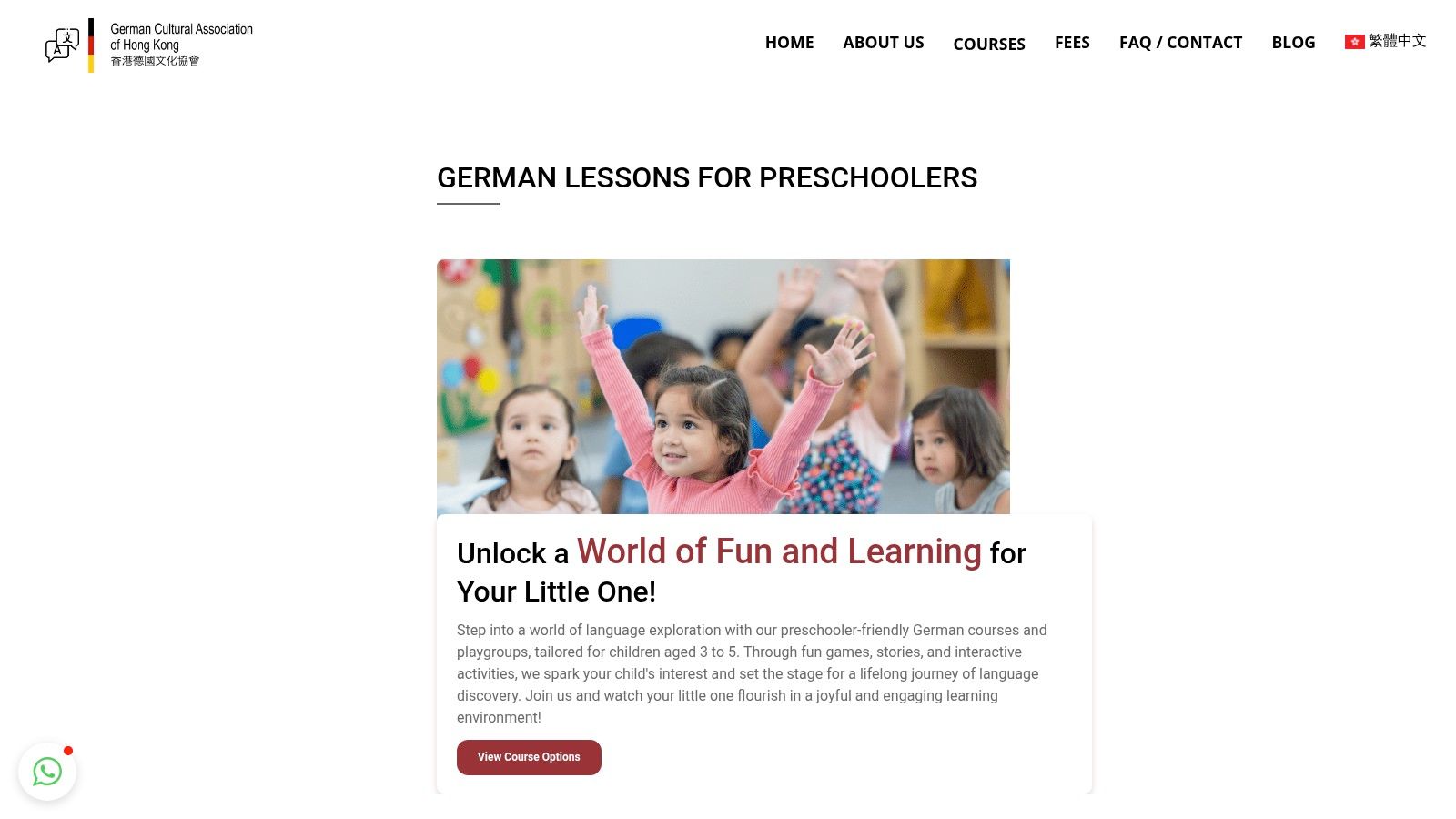
For families in TST who want early German exposure, the German Cultural Association Hong Kong playgroup is the most practical fit. It is a play-based, structured German programme for preschoolers, with weekly 1-hour sessions, small cohorts of 3 to 6 children, and delivery near Causeway Bay or Tsim Sha Tsui MTR stations, plus live online via Zoom at GCA preschooler courses. For parents comparing different German options for ages 1 to 4, the broader format is also explained in this guide to German language playgroups for ages 1 to 4.
Why it works for TST families
The small class size is the main advantage. In Hong Kong, preschoolers learn better when they hear the same language repeatedly, get more turns, and can respond without being lost in a crowded room.
GCA's teachers are native German speakers with strong academic teaching credentials, so the programme goes beyond casual foreign-language play. It gives children structured language input through playful activities, and the certificate system rewards 80% attendance, which helps families keep a steady routine.
The location fit matters too. TST parents often choose classes by transit access first, and that is a real advantage here. A class near the MTR, or available online when travel is inconvenient, makes a difference on wet days, during busy workweeks, and when siblings have different schedules.
A good early language playgroup should feel calm and predictable. If a provider cannot show a clear structure for continuity, the child gets activity, but not necessarily progress.
Best for and trade-offs
- Best for structured language exposure: Families who want German to become part of a child's routine, not just a one-off enrichment class.
- Best for long-term planning: Parents thinking ahead to German Cultural Association youth courses and eventual exam preparation.
- Best for attention and interaction: The 3 to 6 child format keeps the teacher close to each learner.
- Main trade-off: Weekly one-hour lessons are focused and realistic, but they are not an intensive track for parents who want rapid acceleration.
The bigger value is continuity. If you want a native-led institution with a clear curriculum, the GCA model is more coherent than a generic play centre, especially for ambitious HK families who see early language exposure as the first step toward future study abroad in Germany or Spain, or toward stronger multilingual confidence.
Which playgroup builds motor skills and confidence fastest?
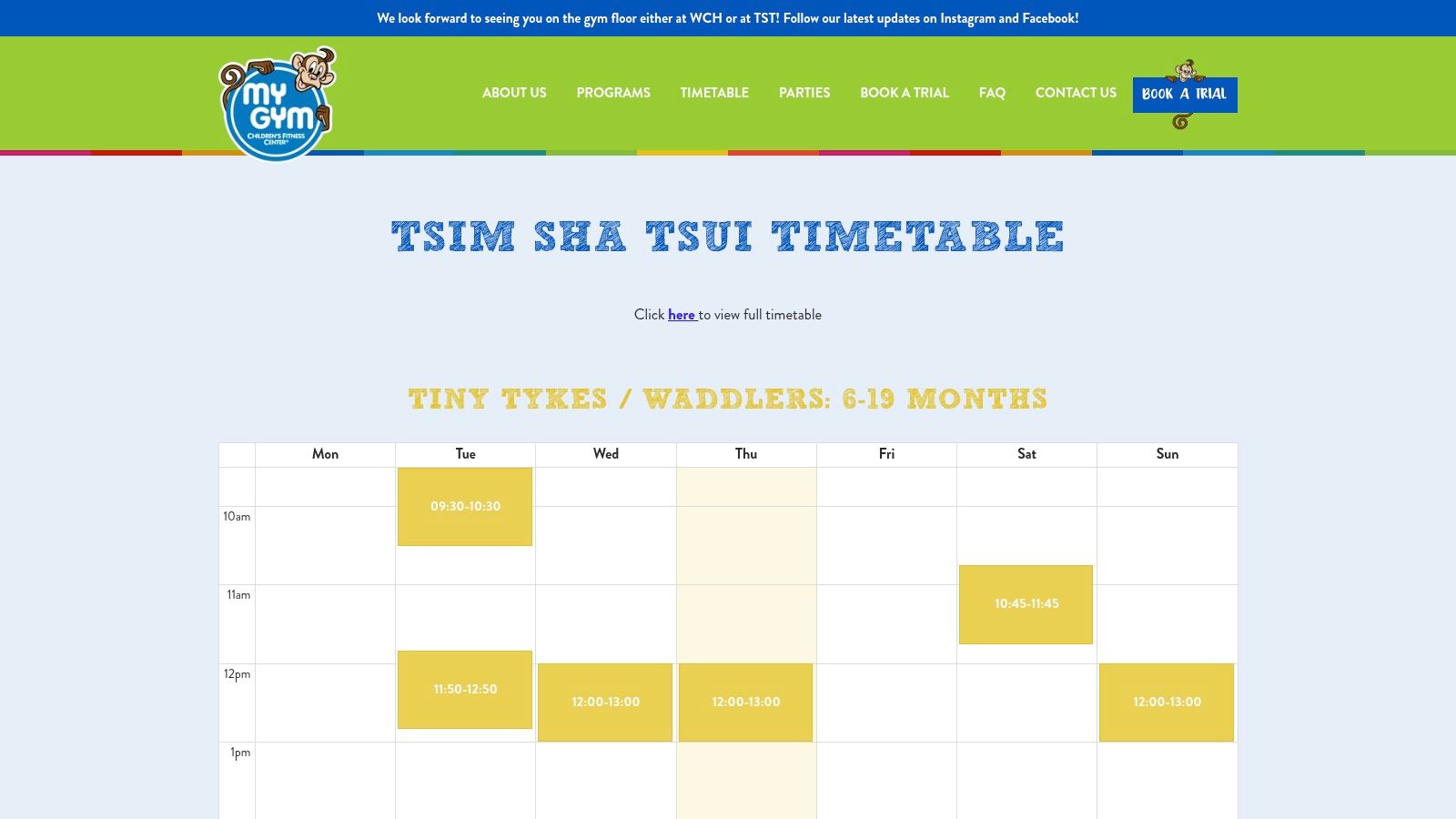
For a child who needs movement, coordination, and social confidence more than early language output, My Gym Children's Fitness Center in Tsim Sha Tsui is one of the clearest choices. The TST timetable covers ages from 6 months to 6 years, with age bands such as Tiny Tykes, Waddlers, Gymsters, Terrific Tots, and Mighty Mites, all arranged in a clear progression at My Gym Tsim Sha Tsui timetable.
The appeal is predictability. Parents can see which class fits their child now, and which class comes next, which makes weekly planning easier in a district where time is already tight.
The curriculum is physical rather than academic, and that is the point. Children move through songs, relays, swings, and tumbling in a purpose-built gym setting, so they practice waiting, following instructions, and trying again after slipping or missing a turn.
What parents like, and what they don't
The biggest strength is the age-segmented structure. It makes it easier to keep siblings on a similar routine without pushing a toddler into a class that is too advanced, and that matters for families managing different developmental stages at the same time.
My Gym also has a long presence in Hong Kong since 2003, which gives many parents confidence in the brand's format and consistency. For families who want a dependable weekly outlet for physical energy, that matters more than a trendy interior or a class that changes tone every term.
The trade-off is straightforward. This is more about gross motor development than arts, sensory play, or early language. If a child needs a broader mix of play-based learning, it works better as one part of the routine, not as the whole answer. For parents comparing it with other early options, the practical question is simple, do you want physical confidence first, or a class that also pushes vocabulary and classroom-style learning? If you want a wider overview of how movement-based activities compare with other preschool options, see after-school activities for preschoolers in Hong Kong.
Practical rule: Choose My Gym when your child needs movement first and social confidence second. Choose a language-led playgroup when the main goal is speaking, listening, and vocabulary.
For working parents, the fixed age bands reduce decision fatigue. The downside is also practical, popular time slots can disappear quickly, so advance booking is usually part of the routine.
Is a community playgroup enough for kindergarten readiness?
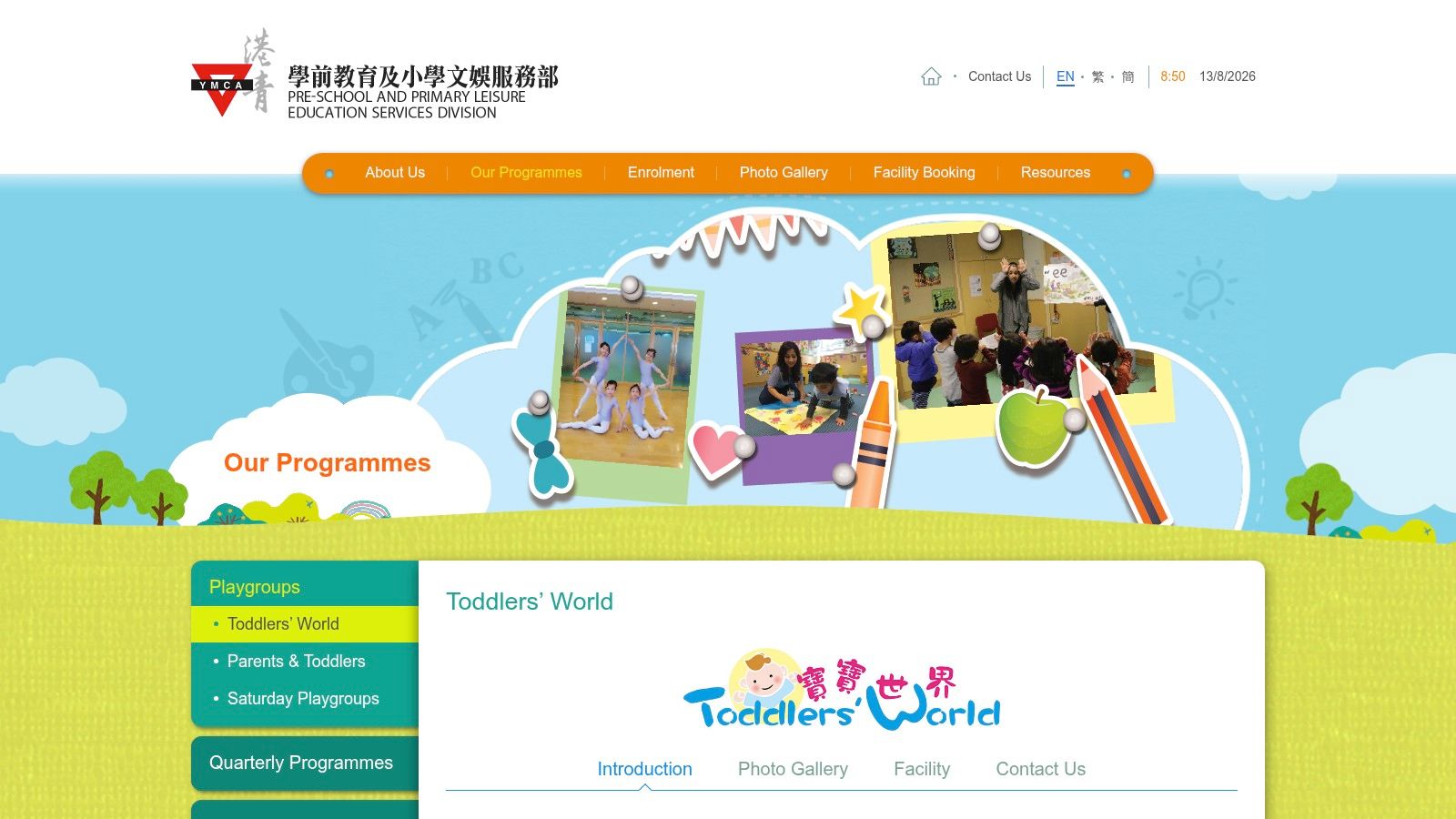
For some families, yes, if the goal is gentle socialisation rather than a premium branded programme. YMCA of Hong Kong Toddlers' World at Salisbury Road offers a 2-hour structured class for younger children, mixing music, movement, crafts, storytime, and free play at Toddlers' World.
The appeal here is balance. It feels less commercial and more community-led, which can be a relief for parents who want a calm first experience rather than a heavily branded environment.
Best fit for new parents
Toddlers' World works especially well if you want a predictable daytime schedule and a trusted institution in the heart of TST. The venue at 3/F, 41 Salisbury Road is convenient for parents already moving through central Kowloon.
It's also a good fit when a child is still very young and needs gentle transitions. The mix of music and free play gives children time to warm up without being pushed too hard into formal routines.
The limitation is flexibility. Term-based schedules can be rigid, and weekly slots are limited, so this is not the easiest choice for parents with irregular work hours.
For families comparing this to a more premium option, the trade-off is straightforward, community trust versus facility polish. If you care more about a stable early routine and social comfort than mall-style presentation, YMCA is a sensible choice.
What if you want sensory play with a premium feel?
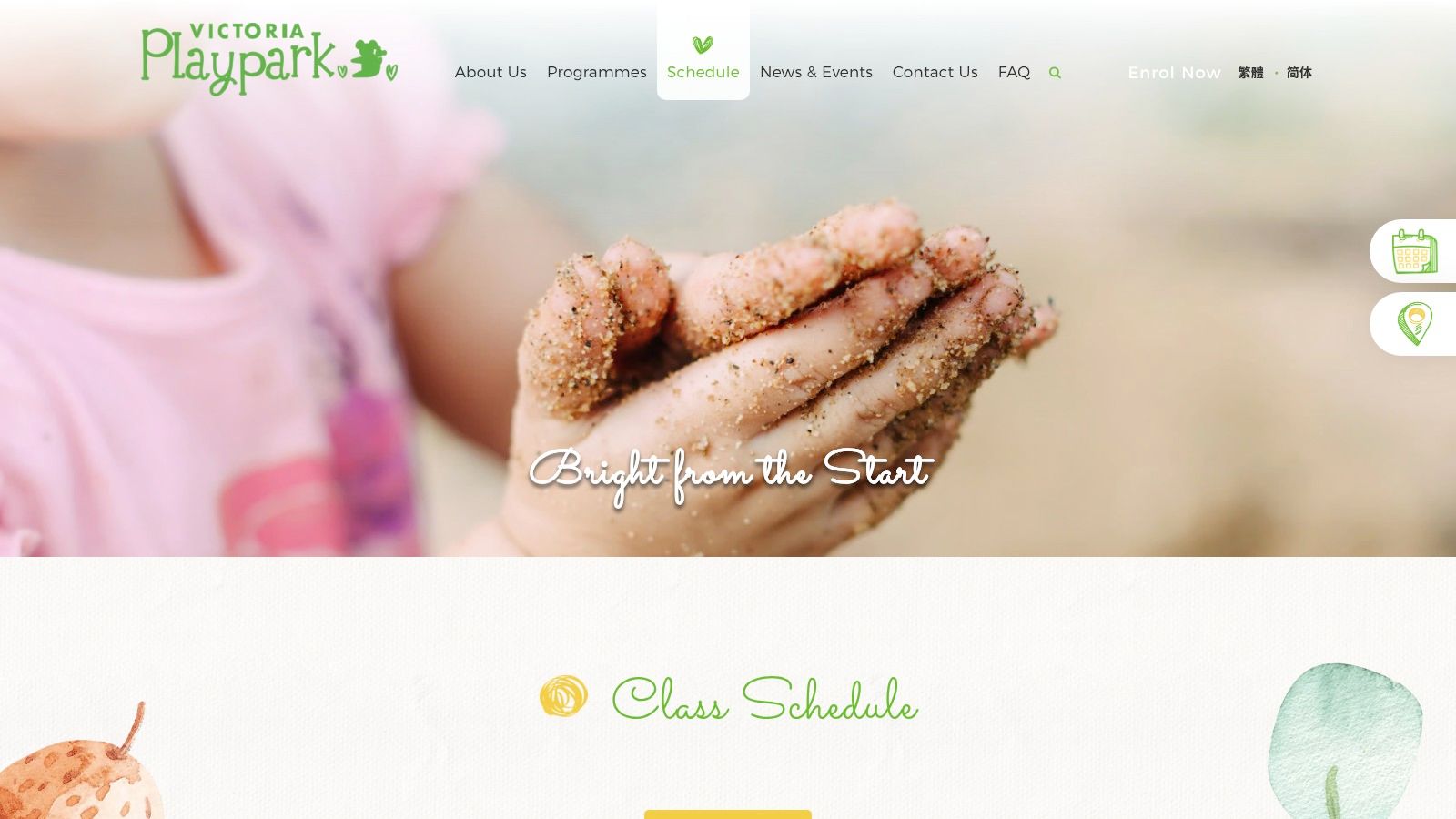
If you want a playgroup that feels closer to a curated early-learning environment, Victoria Playpark at K11 MUSEA is one of the most polished choices in TST. It offers infant-to-toddler sessions with themed zones, trilingual delivery, and a one-teacher-one-language approach at Victoria Playpark K11 MUSEA timetable.
This is a strong match for parents who want early exposure to English, Putonghua, and Cantonese in a highly structured setting. The playpark-style environment is designed for sensory exploration, socialisation, and early confidence.
Where it wins and where it costs more
The strongest advantage is the transition potential. Victoria is a known name in Hong Kong early education, so parents often see the playpark as a bridge into a broader kindergarten pathway.
It also gives families a premium mall-based experience with on-site amenities, which can be a real benefit if you're squeezing activities between errands. That said, the trade-off is obvious, premium pricing and limited popular slots.
This is not the best low-cost choice. It's the best choice for parents who want a premium feel, a structured multilingual approach, and a polished environment that supports early social learning.
If your family is also comparing early language options, a native-led institution like GCA still feels different. Victoria gives broad multilingual exposure, while GCA gives deeper German focus, smaller cohorts, and a more direct academic pathway.
Is gymnastics better than a traditional playgroup?
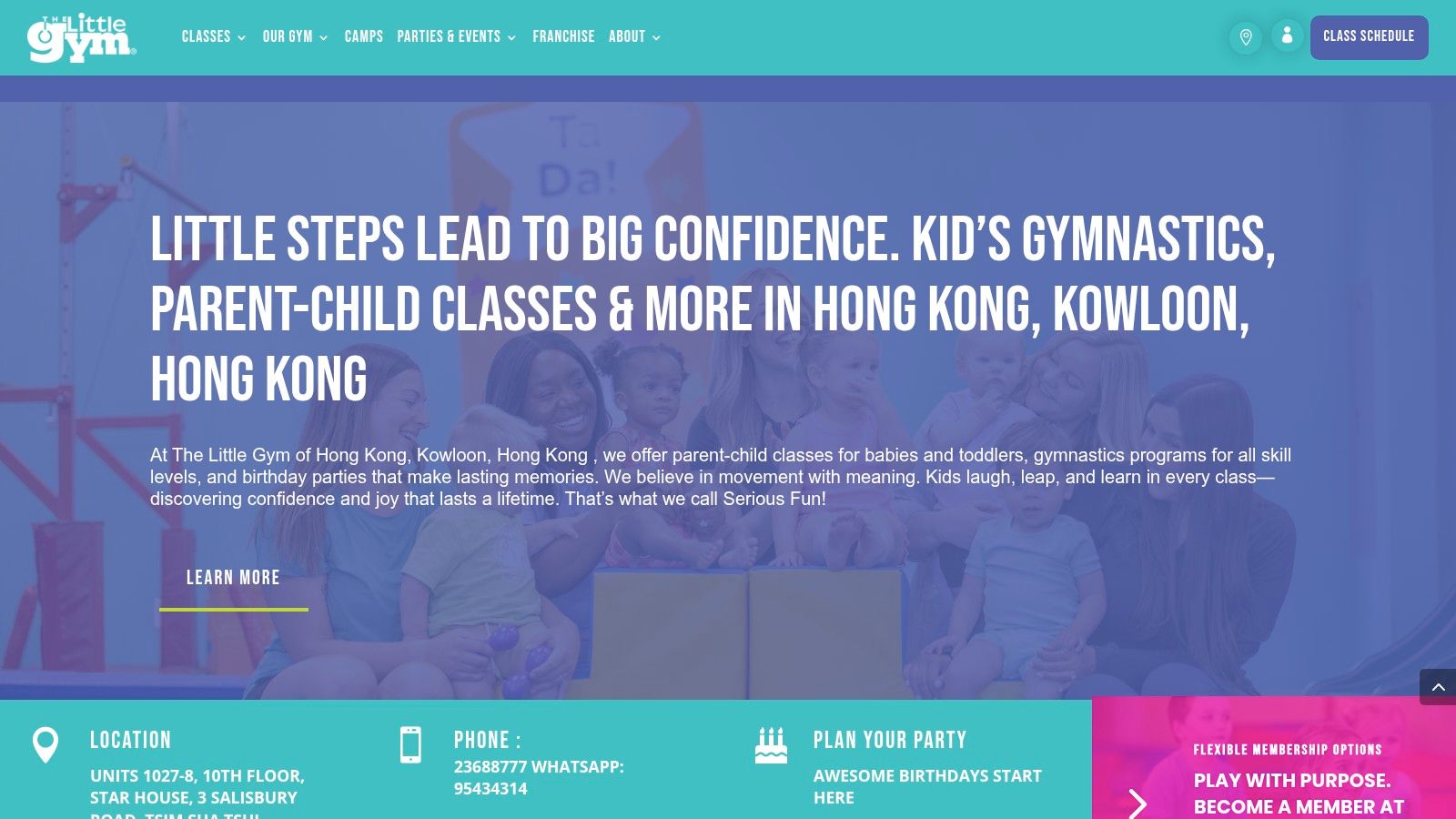
For some children, absolutely. The Little Gym in Star House, 3 Salisbury Road offers parent-child and pre-K gymnastics from 4 months to 12 years, so it can work for families with siblings or for parents who want one provider that lasts beyond toddler years at The Little Gym Hong Kong.
The brand's strength is breadth. It has a global curriculum, app-based booking, and long open hours, which makes it easier to work around Hong Kong family life.
What you get is movement with progression. Children build confidence through physical skills, imaginative play, and repetition, which can be especially good for cautious toddlers or high-energy kids who need structure.
Who should pick it
Pick The Little Gym if you want a multi-age solution and like the idea of a branded system with consistent delivery. It's also convenient if you're managing more than one child and want a provider that can accommodate different age ranges.
The downside is that the membership style may not suit families who want a simple drop-in arrangement. It also skews heavily toward physical development, so it won't replace a language-led or arts-led playgroup.
That's why the best use case is often as a companion activity, not the whole early-learning plan. For a child whose main gap is movement, it's very effective. For a child whose parents want language progression or academic readiness, another track may still be needed.
Can a music playgroup really build early learning skills?
Yes, if the class has a clear structure. Tom Lee Music Academy's Tommy Bee Playgroup uses themes, rhythmic activities, and simple instruments to support cognition, sensory-motor development, and social-emotional growth, with TST facilities near Cameron Lane at Tommy Bee Playgroup Series.
The learning pattern is the core advantage. Music provides young children with repetition, pattern recognition, and listening practice, which are useful foundations for later learning. A music-led setting also supports children who thrive on routine, as the class cues are typically straightforward to follow.
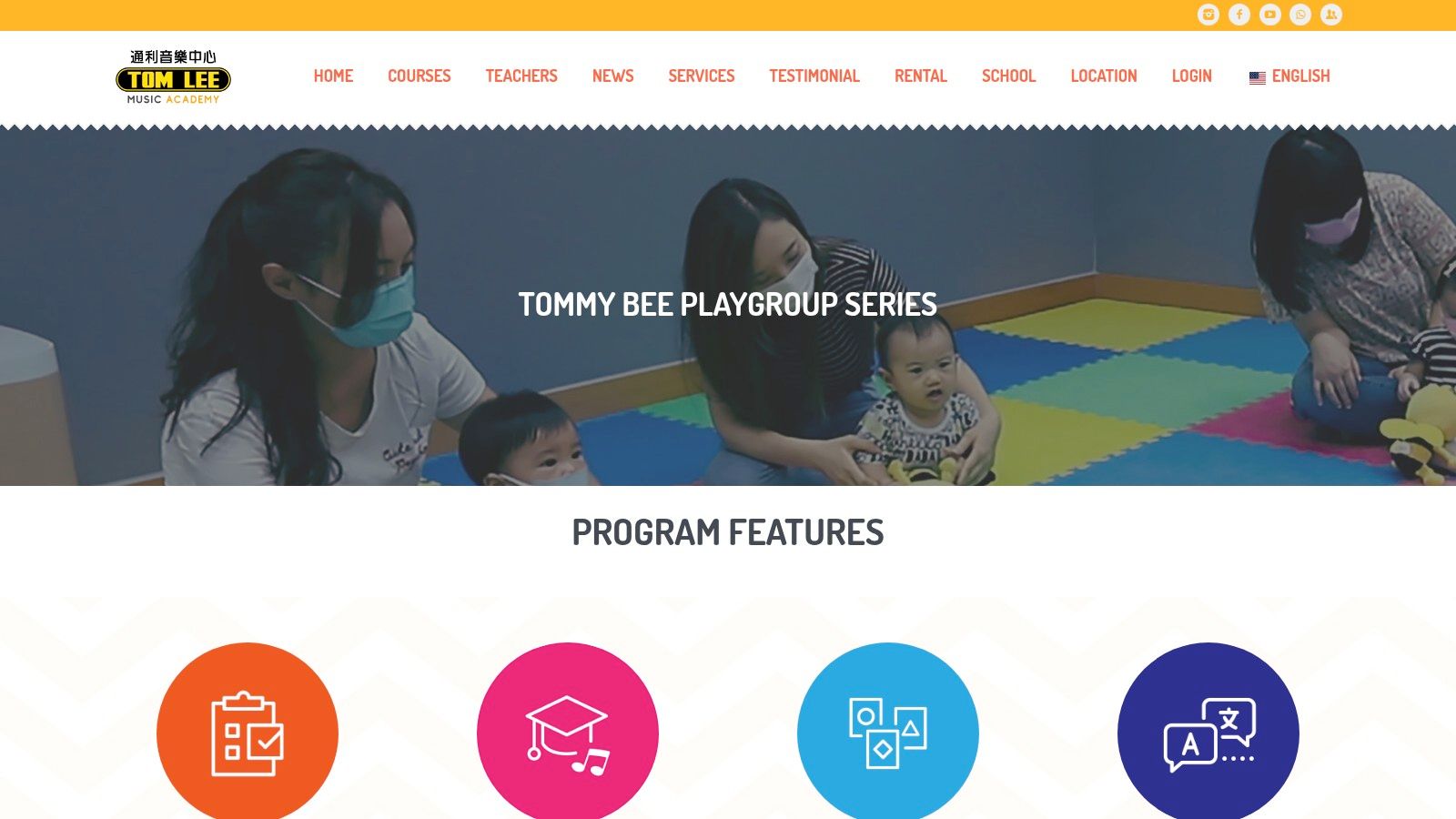
For parents comparing options in TST, the practical question is whether you want broad early-learning coverage or a narrower skill focus. Music-led playgroup sessions are strong for listening, turn-taking, and fine motor movement with instruments, but they do not replace language-heavy classes or a more academic readiness track. If you are also considering home reinforcement, this GCA blog post on German music for learning is a useful reference for how songs can support vocabulary work outside class.
When music-led play works best
This suits children who react well to rhythm, instruments, and guided repetition. It also fits parents who want an easier future path into beginner music learning, because the brand already sits inside a music education environment.
The trade-off is flexibility. Scheduling and language offerings can vary by branch, so TST families should confirm the exact slot and language before enrolling. That matters in a district like TST, where parents often weigh class quality against MTR access and the time cost of weekly travel.
Compared with a German playgroup, Tommy Bee is less about language depth and more about sensory and musical development. That difference is useful if your main goal is attention, listening, and early coordination. It is not the same as a language-first programme, so parents should choose based on the skill gap they want to fill.
Which community playgroup is best for social connection?
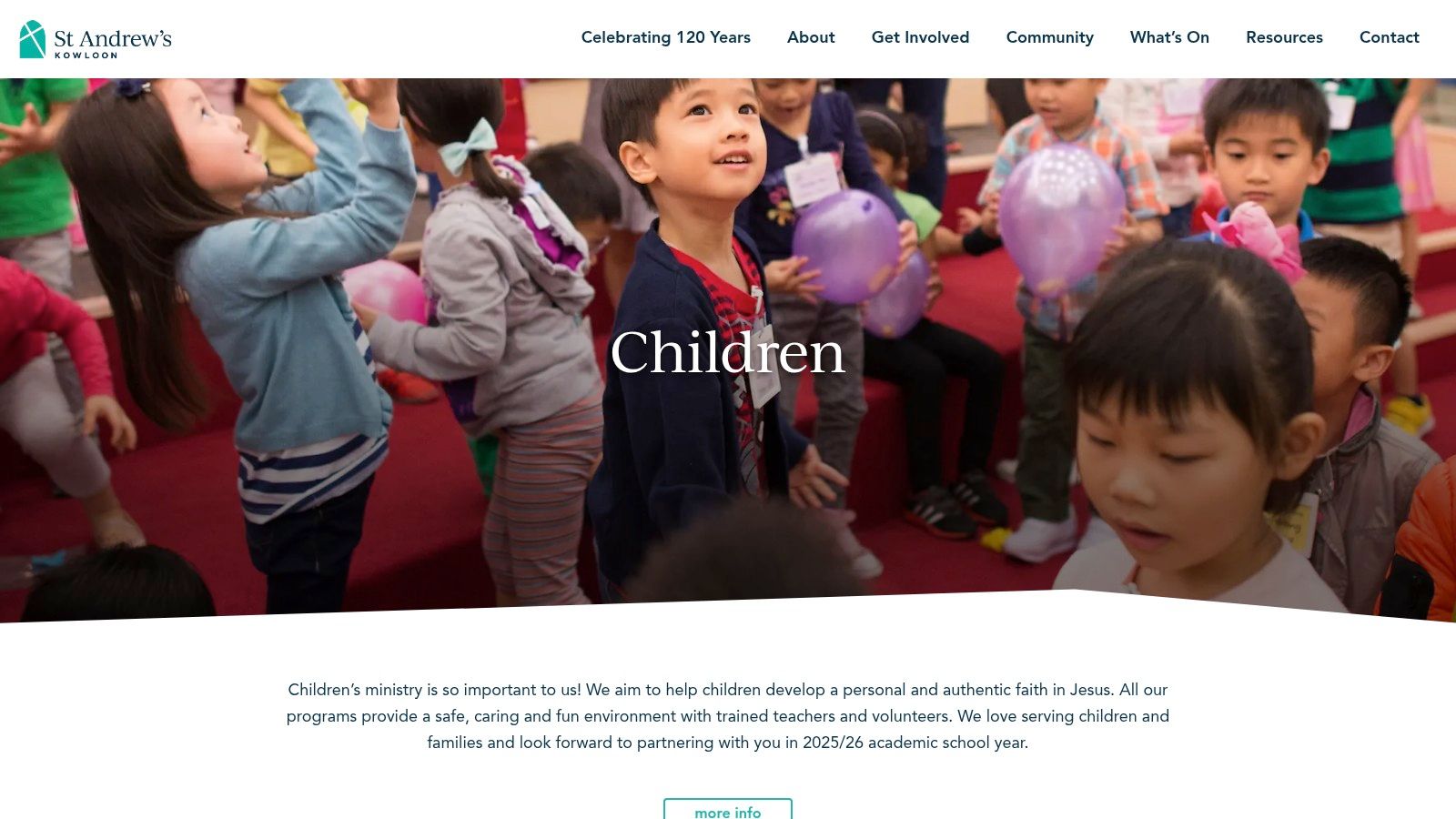
St Andrew's Church Kowloon Friendship Garden Playgroup is the best fit for families who want a warm community setting in TST. It offers English-medium preschool-style sessions with indoor and outdoor play, simple crafts, storytime, and music at St Andrew's Church children's programmes.
For many new Hong Kong parents, the big benefit is not just the class itself. It's the parent network that comes with it, especially when you're still building routines in a busy city.
The practical trade-off
The main strength is affordability relative to premium private centres. That makes it attractive for parents who want a social, welcoming start without committing to a high-cost membership model.
The limitation is that the calendar can change by season, so you should confirm schedules directly before planning around them. It's also primarily English-medium, so it's not the best fit for families looking for Putonghua or Cantonese-led instruction.
For parents who care about community and steady early exposure to group activity, this is a very usable option. For parents who want a clear long-term academic ladder, a more structured provider, especially one with native-led language teaching, still makes more sense.
TST Playgroups, 7-Point Comparison
| Program | 🔄 Complexity (implementation) | ⚡ Resources / Facilities | 📊 Expected outcomes (impact) | 💡 Ideal use cases | ⭐ Key advantages |
|---|---|---|---|---|---|
| German Playgroups for Preschoolers (GCA) | Moderate, structured curriculum, small cohorts, online option | Low–Medium, weekly 1‑hr, native teachers, downtown venues or Zoom | Strong spoken-German foundation; pathway to exams | Early language exposure; families planning long-term German study | Native German teachers, very small groups, institutional track record |
| My Gym Children's Fitness Center | Moderate, equipment-heavy, age-segmented curriculum | High, purpose-built gym, extensive apparatus, weekly themes | Improved motor skills, balance, social confidence | Active toddlers; families focused on physical development and routine | Clear age progression, rich equipment, established brand |
| YMCA Toddlers' World | Low–Moderate, play-based structure in community setting | Low, community venue, 2‑hr sessions, seasonal outings | Social-emotional development and kindergarten readiness | Families seeking affordable, routine daytime playgroups | Trusted community institution, transparent schedules |
| Victoria Playpark (VPP) | Moderate, themed zones with trilingual staffing model | High, premium mall location, playpark-style installations | Trilingual exposure, sensory exploration, smooth kindergarten transition | Families wanting premium facilities and structured trilingual exposure | Trilingual one-teacher-one-language approach; link to kindergarten network |
| The Little Gym (Star House) | Moderate, franchise curriculum, membership processes | Medium–High, gymnastics equipment, app booking, long hours | Confidence-building through movement; broad age skills | Families with multiple children; long-term gymnastics progression | Global curriculum consistency, wide age coverage and camps/parties |
| Tom Lee Music Academy, Tommy Bee | Low–Moderate, music-focused themed curriculum | Low–Medium, instruments, music specialists, branch-dependent languages | Enhanced rhythm, listening skills, early music readiness | Children likely to continue music lessons; music-centric development | Strong music education brand, structured music curriculum and reports |
| St Andrew's Church – Friendship Garden | Low, community-run, flexible activities | Low, church facilities, indoor/outdoor play spaces | Peer networks, play-based early development | Parents seeking community support and affordable English playgroup | Strong community feel, affordability, parent peer connections |
Ready to Start Your Child's Language Journey?
Choosing a playgroup is really a decision about your child's next step, not just this week's activity. In Hong Kong, where district supply, commute time, and timetable fit all shape what families can use, the smartest choice is usually the one that combines convenience with a clear developmental purpose.
If your priority is early language learning, GCA remains the strongest structured option in this guide because it links playful preschool classes with a genuine pathway forward. That matters for parents who want more than casual enrichment, especially if they're thinking ahead to Goethe-Zertifikat, later school placement, or a long-term multilingual education plan.
Parents also benefit from seeing the broader picture. Some children need movement first, some need social confidence, and some need a language-rich environment from the start. The best playgroup in TST is the one that fits your child's temperament and your family's real schedule, not the one with the flashiest brochure.
For ambitious HK families, that's where a native-led, structured institution stands out. A strong early programme should make life easier for parents, support the child's confidence, and leave room for real progression as they grow.
If you're comparing playgroups in TST and want a clear, structured path for your child, German Cultural Association Hong Kong(GCA) offers native-led German playgroups, small-group teaching, and a direct bridge into higher-level courses and exam preparation. Visit German Cultural Association Hong Kong(GCA) to check the latest schedule, book a trial class, and speak with an advisor about the best fit for your family.
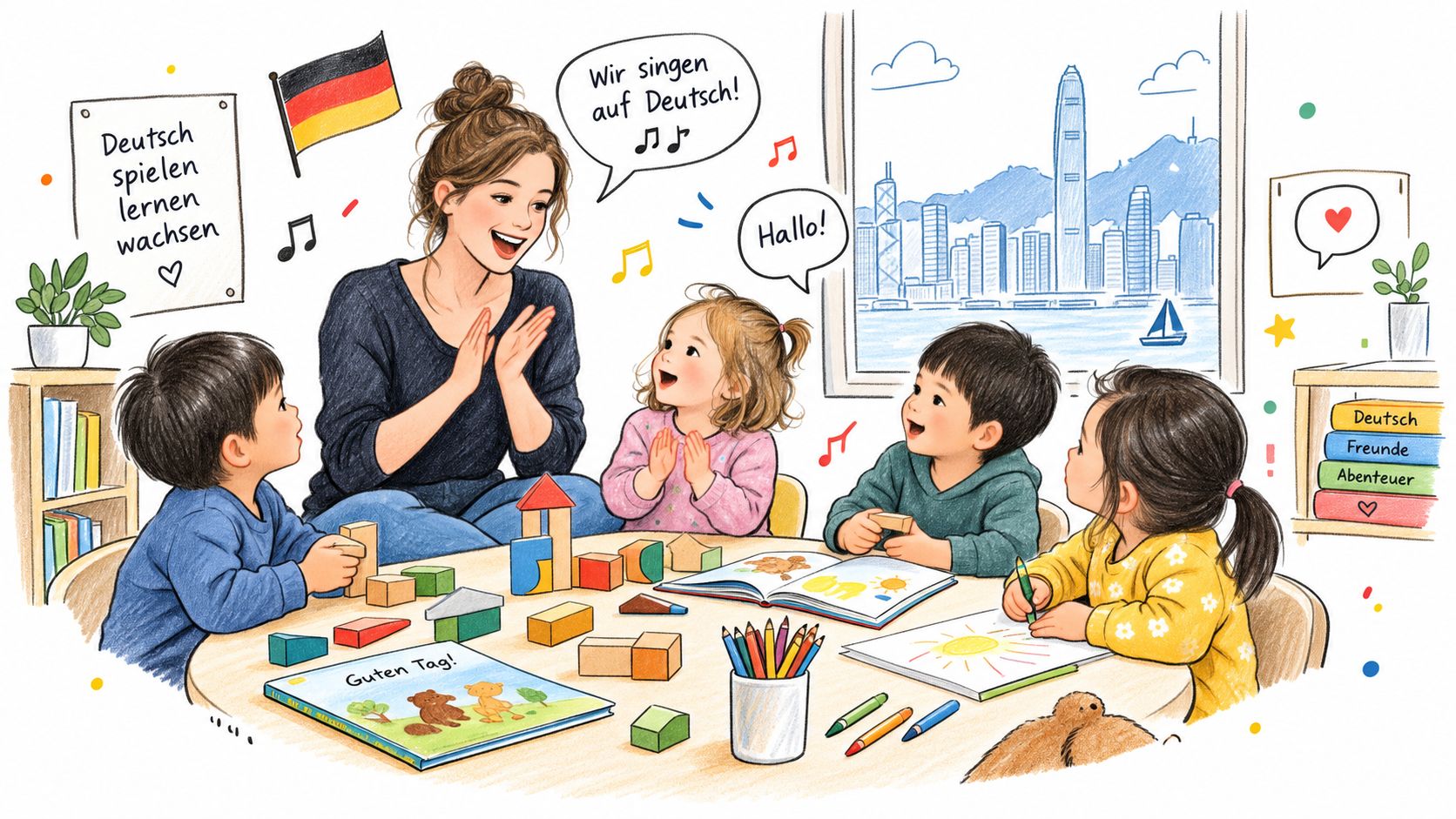
German Playgroup Hong Kong: What Happens in Class and How to Choose

German Activities for Kids at Home: 15 Games and Crafts for Ages 3-10


