.png)
.png)

BLOG

香港德國文化協會
The German Cultural Association
German Preschool Summer Camp Hong Kong 2026: Parent's Guide
You're probably looking at summer plans the same way many Hong Kong parents do. Not just as childcare, and not just as something fun for July, but as a decision that should help your child later. If your preschooler is curious, sociable, and still at the stage where language feels like play, a German camp can be a smart move.
That's the primary purpose of a German preschool summer camp Hong Kong 2026 parent's guide. Done properly, early German exposure isn't random enrichment. It builds comfort with listening, speaking, routines, and learning in another language long before IB, IGCSE, or study abroad choices become urgent.
Your Child's First Step into a Global Future
A typical Hong Kong parent doesn't think only about this summer. You're already thinking about primary school fit, future subject choices, and whether your child will grow into someone who can move confidently across cultures. That's why German deserves serious attention early.
For a preschooler, summer is the easiest entry point. There's less pressure, more room for songs, movement, crafts, and stories, and a much lower emotional barrier than starting with a formal academic class. Children this age don't ask whether a language is “useful” in the abstract. They absorb what feels natural and enjoyable.
Why this matters in Hong Kong
Hong Kong families tend to plan education in layers. English is a given. Chinese matters. Then comes the question of what gives a child a distinct edge later on. German is strong because it can develop from playful early exposure into a structured academic pathway in the secondary years.
That long view matters. A child who hears German early often reaches later German study with less resistance, better pronunciation habits, and more confidence in listening. That matters if your family later considers IB German, IGCSE, A-level options, or even a university path in Europe.
Start early if the environment is playful. Wait too long, and many children treat the language as another school subject instead of a living system.
What a good camp should actually deliver
A preschool camp should not look like a mini primary school. If it does, walk away.
What you want is a programme that combines:
- Language through routine so children hear the same useful words every day
- Hands-on activities such as crafts and games, because young children learn through doing
- Social development through turn-taking, sharing, and group participation
- Confidence-building in a small, predictable setting
That's why the right camp can be much more valuable than a generic holiday programme with a few foreign-language words added on top. The educational value comes from structure, repetition, and teacher quality, not from the label on the brochure.
The Strategic Advantage of Early German Immersion
Early German immersion gives preschool children a head start in listening, pronunciation, classroom confidence, and future academic pathways. In Hong Kong, that matters because a playful start can later support formal German study in IB, IGCSE, A-level, and longer-term options such as university study in Germany.
German is not the obvious default choice in Hong Kong. That's exactly why it can be strategically useful. Families who choose it early usually aren't chasing a trend. They're building a distinctive profile over time.
It builds habits before academics get heavy
Preschool is the best stage for low-stakes language exposure. Children aren't yet worrying about marks, correctness, or comparison with classmates. They sing, repeat, copy, and respond physically. That makes immersion far more natural.
The strategic gain is simple. If your child later studies German in a formal setting, they won't be starting from zero. They may already be comfortable with sounds, classroom instructions, greetings, and the idea that German belongs in daily life.
It supports later school pathways
In Hong Kong, parents often wait until secondary school to think about subject strategy. That's late.
A child who starts young has more runway. Even if the preschool camp is light and playful, it can become the first step toward a coherent progression: beginner classes, age-appropriate literacy, exam preparation in the teen years, and then stronger performance in school-based German options. That's one reason local German programmes have become more structured and exam-aware, as discussed in this Hong Kong guide on why German programmes stand out.
It opens a serious long-term option
Parents in Hong Kong are practical. They want to know where a language can lead.
German has a clear long-term logic. It can connect to European higher education, international mobility, and a broader academic identity beyond the usual English-only track. If your family is even remotely considering future study abroad in Germany, it makes sense to begin while the child is still open, flexible, and unafraid of making mistakes.
A preschool camp won't decide your child's future. But it can make future choices easier, cheaper, and more realistic.
My direct recommendation
If your child is still young enough to treat language as play, don't overcomplicate this. Start with a well-run German immersion experience now instead of waiting for a “more suitable age.” In my view, waiting usually helps the parent feel cautious. It rarely helps the child.
A Day in a German Immersion Summer Camp
It is 8:55 a.m. Your child walks in unsure, hears the same German greeting each morning, spots the same visual routine on the wall, and joins the group without a fight by day three. That is what a good preschool immersion camp looks like in practice. It builds comfort first, then language.
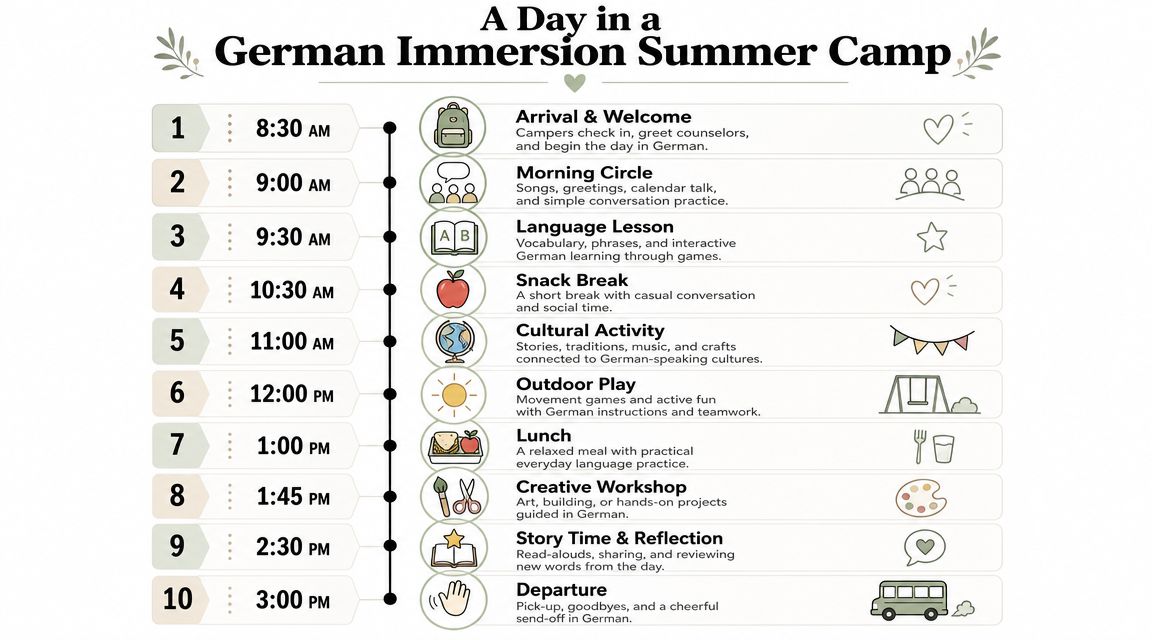
A strong camp day feels predictable, active, and well paced. Preschoolers do not learn German by sitting through explanations. They learn by hearing the same useful phrases in routines they understand, then responding with their bodies, their voices, and eventually their own words.
The daily rhythm should do the teaching
You want a camp where German is woven into the full morning, not squeezed into a short “language segment.”
A well-run day usually includes:
- Arrival routine with greetings, bag away, name recognition, and simple social German
- Morgenkreis or morning circle with songs, weather, days, names, and repeated classroom phrases
- Theme-based crafts that connect hands-on work to concrete vocabulary
- Story time with gestures, picture cues, and repeated sentence patterns
- Snack routine that teaches functional language such as asking, thanking, waiting, and tidying up
- Movement games and outdoor play where children hear action verbs and follow instructions in real time
That structure matters. Repetition in context is how young children build comprehension without pressure.
The strongest camps use themes, not random word lists
Good teachers do not jump from colours to animals to transport just to keep things busy. They build a weekly theme and return to it in different formats.
That is how vocabulary sticks. A child hears rot in circle time, sees it in a picture book, uses it during craft, and responds to it again in a game. By the end of the week, the word is no longer abstract. It belongs to an experience.
This is also why parents should stop judging camps by how packed the timetable looks. More activities do not mean more learning. Clear routines, repeated phrases, and a focused theme usually produce better language habits and a smoother start to later formal German study.
My advice: Choose the calmer camp with better structure over the camp with the flashier poster.
Expect spoken German to be practical and constant
For preschoolers, immersion should sound simple and useful.
You should hear teachers using the same classroom language again and again. Sit down. Wash hands. Your turn. What colour is it? Where is the ball? These phrases matter more than impressive vocabulary lists because they create automatic understanding. That automatic understanding is the base layer for later reading, writing, and school-based German.
In a competitive Hong Kong education path, that early base is valuable. Children who get used to hearing and responding to German in real situations often find later progression less intimidating. The summer camp is playful. The long-term payoff is serious.
What a good room tells you immediately
When you visit, look at the room before you look at the brochure.
| What you observe | What it usually means |
|---|---|
| Children singing, moving, pointing, and responding physically | The staff understand how preschool language learning works |
| Teachers repeating short German phrases throughout the session | The programme is building routine-based comprehension |
| Storybooks, visuals, labelled materials, and craft prompts | Language is tied to concrete objects and actions |
| Calm transitions and quick resets between activities | The adults know early years classroom management |
| Smiling children who still know what to do next | The camp has warmth and structure together |
If the room feels like a tuition class for older children, walk away. Preschool immersion should be disciplined, but it should still feel like early childhood education.
Duration changes the result
Length affects what your child retains.
A short camp can serve as a useful first exposure. A longer camp gives the child enough repetition to settle, recognise patterns, and start using German more confidently. That is where the main value begins. If you want a clearer sense of format, timing, and programme structure, review this 2026 guide to German summer camps in Hong Kong.
Parents often underestimate this point. The first few days are usually about adjustment. True language gains tend to come after the routine becomes familiar.
How to Choose the Best German Camp in Hong Kong
A preschool summer camp can be pleasant and still be a poor choice. If you want German to become an academic asset later, choose a camp that builds real listening habits, classroom confidence, and a clear next step after summer.
What strong programmes get right
Start with the teaching model, not the marketing.
The right camp for a preschooler uses German throughout the session, keeps groups small enough for frequent interaction, and separates younger children from primary-age learners. It should also show you how a child can continue after the summer. That progression matters in Hong Kong. Early exposure only becomes a long-term advantage if it leads to sustained confidence, stronger school language options, and later success in pathways such as IB German.
A weak camp usually fails in obvious ways. Too much English. Mixed ages. Busy craft time with very little spoken German. Staff who cannot explain what children are expected to understand by the end of the week.
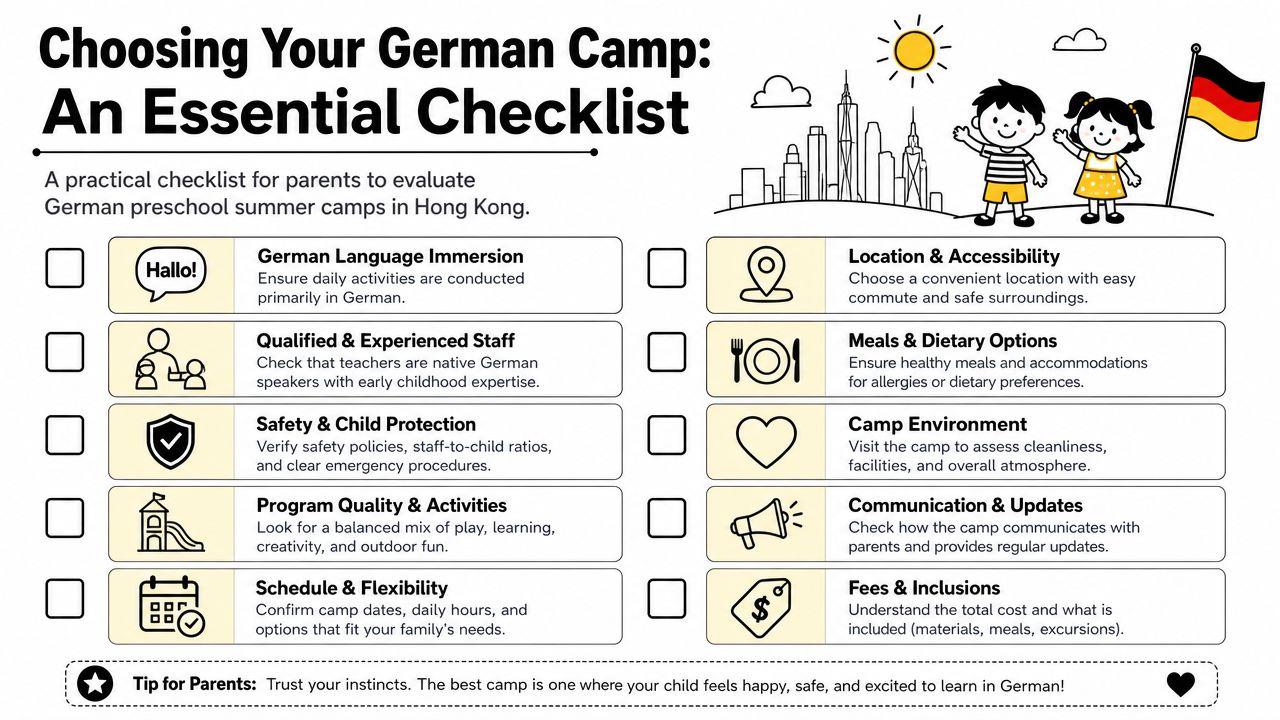
Use this checklist:
- Teachers speak German naturally and consistently during routines, play, songs, and transitions
- Class sizes stay small enough for each child to respond, not just watch
- Children are grouped by developmental stage rather than broad age ranges
- The programme has a defined learning plan with themes, vocabulary, and repetition built in
- There is a continuation path after camp if you want your child to keep going
For a broader view of formats, locations, and programme types, review this guide to German summer camps in Hong Kong.
Judge the camp by the future it creates
Ask one question: if my child enjoys this, what happens next?
That is the filter serious parents should use. A good preschool German camp is not only a holiday activity. It is the beginning of a language track that can later support stronger subject choices, better IB performance, and access to German universities that many Hong Kong families overlook until much too late.
If the provider cannot explain how a beginner preschooler can continue into term-time learning, the camp is probably designed for short-term entertainment rather than meaningful language development.
Practical points that affect the result
Convenience matters because tired children learn less.
Choose a location that keeps drop-off calm and predictable. Centres near Tsim Sha Tsui or Causeway Bay often work well for Hong Kong families because they reduce commuting stress and make half-day attendance realistic. A good programme loses value quickly if every morning starts with a rushed journey and an overstimulated child.
You should also ask exactly how the first day is handled. Preschoolers do better when the provider has a plan for separation anxiety, bathroom routines, snack breaks, and transitions between activities. Those details tell you whether the staff understand early childhood education or are merely running a language class for younger children.
Ask these questions before you enrol
Use this screening list in every trial call or school visit:
- How much German do teachers speak during the session
- How is the class designed specifically for preschool development
- What happens if a child is shy, upset, or reluctant to join
- What does the daily routine look like from arrival to pick-up
- What can a family do after summer if the child responds well
One local option many parents consider is the German Cultural Association Hong Kong(GCA), which offers native-speaking teachers, small-group teaching, and centres near Tsim Sha Tsui and Causeway Bay, alongside online options. Use that kind of structure as your benchmark when comparing providers.
If a camp cannot explain its teaching approach clearly, do not enrol.
What Are the Enrolment Dates and Costs for 2026
You are not just buying a few weeks of holiday entertainment. You are choosing whether your child gets an early start in a language that can later strengthen IB subject options, widen university choices, and make German feel normal instead of difficult.
A practical 2026 benchmark
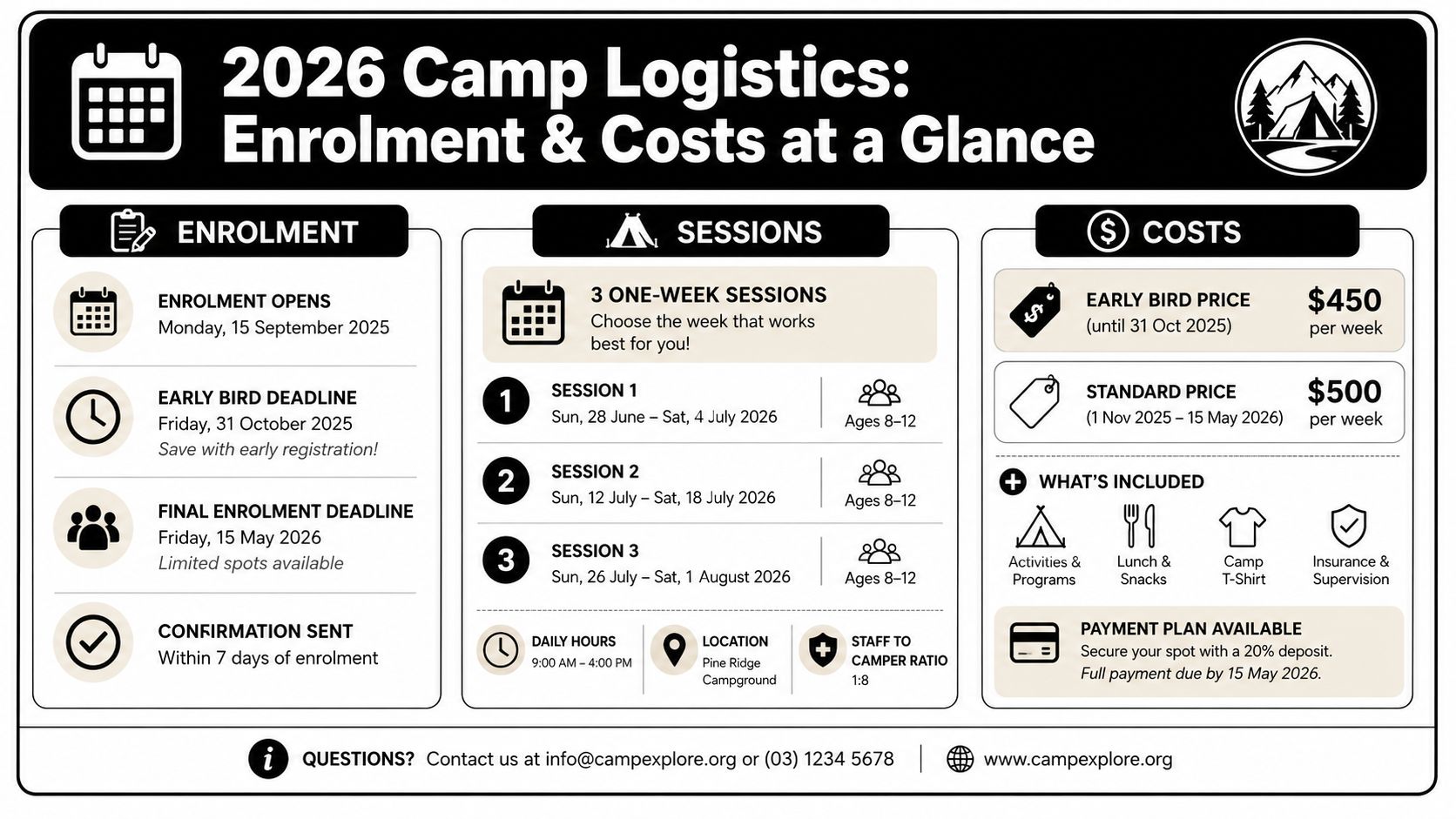
One useful comparison point is GISSV's Summer Camp 2026, which lists a June 29 to July 31 schedule, a preschool half-day session from 9 am to 12 pm, and published preschool pricing of US$440 per week or US$2,200 for five weeks on the GISSV Summer Camp 2026 page.
That pricing gives Hong Kong parents a realistic reference point. It reflects a structured preschool programme with language exposure, routine, and trained supervision. It also tells you that serious German camps are priced closer to specialist early education than casual holiday care.
What that fee should cover
Published programme details for that camp include:
- Crafts
- Games
- Stories
- Outdoor play
- Circle time
- Breakfast
- Teaching materials
Extended care is available separately.
The camp's inclusion list offers insight into its educational model. If a camp fee covers only class time, with every extra charged on top, compare carefully. If the fee covers routine-based activities, materials, and a child-friendly morning structure, you are paying for better immersion conditions. For preschoolers, that usually produces better language uptake and a calmer experience.
My advice on enrolment timing
Apply early.
Good preschool language camps fill fast because parents who understand the long-term value of early exposure do not wait until the last minute. In Hong Kong, the strongest families plan summer with September in mind. They use camp to test whether a child enjoys German, responds to immersion, and may be worth supporting further through primary years and into secondary pathways such as IB German.
Use this checklist before you pay a deposit:
- Confirm the exact age range for the preschool group
- Check whether the session is half day or full day
- Ask what is included in the fee, especially food, materials, and care hours
- Find out the deposit, refund, and cancellation terms
- Ask whether children hear German throughout the morning or only during set activities
- Check whether extended care is educational supervision or simple childcare
If you want a local comparison for younger children, review this 2026 summer German language programme for preschoolers before you decide.
Budget for value, not just price
Cheap camps often cost more in the long run. If the programme has weak routines, limited German exposure, or staff who treat preschoolers like older children, your child gets very little from the experience.
A better camp gives you three returns at once. Your child builds comfort with a new language. You get a realistic view of future fit. The family starts creating a language pathway that can later support stronger school performance and wider university access.
If your child is shy or sensitive in new environments, factor emotional readiness into value as well. A camp with warm transitions and predictable routines will usually outperform a cheaper option that feels chaotic. Parents who want to support that side of preparation can also read Soul Shoppe's SEL practical guide.
Preparing Your Child for a Great Camp Experience
Children don't need a long briefing. They need confidence, familiarity, and a sense that camp is safe and fun.
The biggest mistake parents make is overexplaining. If you talk about camp like a test, your child will treat it like one. Keep the message simple. There will be songs, play, stories, teachers, and new friends.
What to do in the week before camp
Focus on routine first.
Try these steps:
- Shift sleep gently if camp starts earlier than your normal holiday mornings
- Practise short separations if your child is clingy in new settings
- Use positive language about teachers, games, and activities
- Introduce a few German words such as Hallo and Danke in a playful way
If your child struggles with transitions, emotional preparation matters just as much as packing. I often recommend parents read practical wellbeing resources such as Soul Shoppe's SEL practical guide, because calm routines and emotional naming can make the first few days much smoother.
A sensible packing list
Don't overpack. Preschool camps work best when the child can manage their own things with some help.
Bring:
- Water bottle
- Change of clothes
- Hat
- Comfortable shoes
- Any required snack items if the camp asks for them
- A small comfort object if the camp allows it
What to say on the first morning
Keep it short and warm.
Good examples include:
- You're going to sing and play in German today
- Your teacher will help you
- I'll be back after camp
- You don't need to know all the words yet
Children borrow their emotional tone from the parent at drop-off. If you act unsure, they'll feel it immediately.
If there are tears, don't panic. A brief wobble on day one is normal. What matters is whether the staff can settle the child quickly and confidently.
Ready to Give Your Child a Head Start
A German preschool camp isn't just a summer filler. For the right child, it's an early foundation in listening, social confidence, classroom readiness, and global flexibility.
That's especially relevant in Hong Kong, where many families want options later. Not pressure now, but options later. A child who begins German in a playful environment may find future school study far less intimidating, and your family keeps more doors open than if you wait until adolescence.

The honest trade-off
There are real considerations.
A preschooler may need time to settle. A parent may need to reorganise transport and summer routine. And not every child is ready for a longer immersion block immediately.
But those are planning issues, not reasons to avoid the opportunity. If you choose a developmentally appropriate camp with a strong routine, most children adapt faster than their parents expect.
My recommendation for Hong Kong families
If your child is sociable, curious, and comfortable in group settings, start now. If your child is more cautious, choose a shorter or gentler format first, then build from there. What you shouldn't do is postpone every language decision until the secondary years and then hope motivation appears on command.
For families trying to organise the wider holiday routine around camps, travel, and changing schedules, practical systems help. I like Everblog family command center advice because it turns summer from a last-minute scramble into something manageable.
The main point is simple. If you want your child to grow up comfortable with languages, cultures, and international pathways, early German immersion is a smart start.
If you want clear advice on the right German pathway for your child, contact German Cultural Association Hong Kong(GCA) to check the latest schedule, ask about age-appropriate options, and book a trial or consultation. For Hong Kong parents who want structured, native-led German learning from the early years onward, it's a practical next step.

German Verb Tenses Overview: Präsens Made Simple
German Passive Voice (Passiv): Formation Guide


