.png)
.png)

BLOG

香港德國文化協會
The German Cultural Association
2026 Summer German Language Program for Preschoolers
Summer planning in Hong Kong usually comes down to a familiar trade-off. You want something enjoyable for your preschooler, but you also don’t want to waste six weeks on a programme with no lasting value.
That’s why the 2026 Summer German Language Program for Preschoolers matters. Done properly, it isn’t just another holiday activity. It’s an early, structured start to a language pathway that can later support IB, Goethe-Zertifikat preparation, and even study abroad in Germany.
Most parents I advise don’t need convincing that early exposure helps. What they need is a programme that fits HK family life, respects how young children learn, and gives a clear next step after summer ends.
Your Child's Gateway to German Starts Here
A lot of HK parents are in the same position right now. They’ve shortlisted swimming, phonics, art camp, maybe one general playgroup, and they’re still asking the real question: Which summer option gives my child both joy and a genuine edge?
For a preschooler, the answer shouldn’t be a cram-style class. It should be a language environment that feels natural, active, and age-appropriate.
That’s why the 2026 Summer German Language Program for Preschoolers stands out. It gives children early exposure to German through a format that suits short attention spans, growing confidence, and the way young children absorb sounds and routines.
The strongest signal for parents is simple. The programme achieved a 96% parent recommendation rate based on surveys from over 500 families in Hong Kong since 2020, as noted in this overview of German courses and summer camps.
Practical rule: For preschool language learning, choose a programme parents trust because the classroom experience works day to day, not because the marketing sounds impressive.
In Hong Kong, convenience matters almost as much as teaching quality. If a class is difficult to reach, families drop out. If the timing clashes with work and helper schedules, momentum disappears. A strong preschool programme needs to fit real HK routines, not an idealised timetable.
It also needs the right teachers. At this age, pronunciation, tone, and classroom warmth matter more than worksheets. Native-speaking instructors make a real difference because children imitate what they hear long before they understand grammar.
Why this matters beyond one summer
A preschool German course isn’t about forcing an academic outcome too early. It’s about building familiarity.
That means your child starts to recognise:
- Sounds and rhythm that make later speaking easier
- Simple routines such as greetings, colours, and classroom instructions
- Confidence in another language before primary school pressure begins
Parents often wait too long because they think serious language study starts later. I disagree. Preschool is exactly when language exposure is easiest to introduce without resistance.
If you want summer to count for something, start with a programme that treats early years seriously.
What to Expect from a Preschool German Curriculum
A strong preschool German curriculum uses play-based immersion to teach children aged 3 to 6 through songs, movement, storytelling, games, crafts, and repetition in context. It doesn’t rely on memorisation. It builds listening, speaking confidence, and early vocabulary through short, engaging routines designed for young learners.
For HK parents, that’s the key distinction. A preschooler doesn’t learn German the way a secondary student prepares for IB or IGCSE. Young children learn by doing, hearing, copying, and repeating.
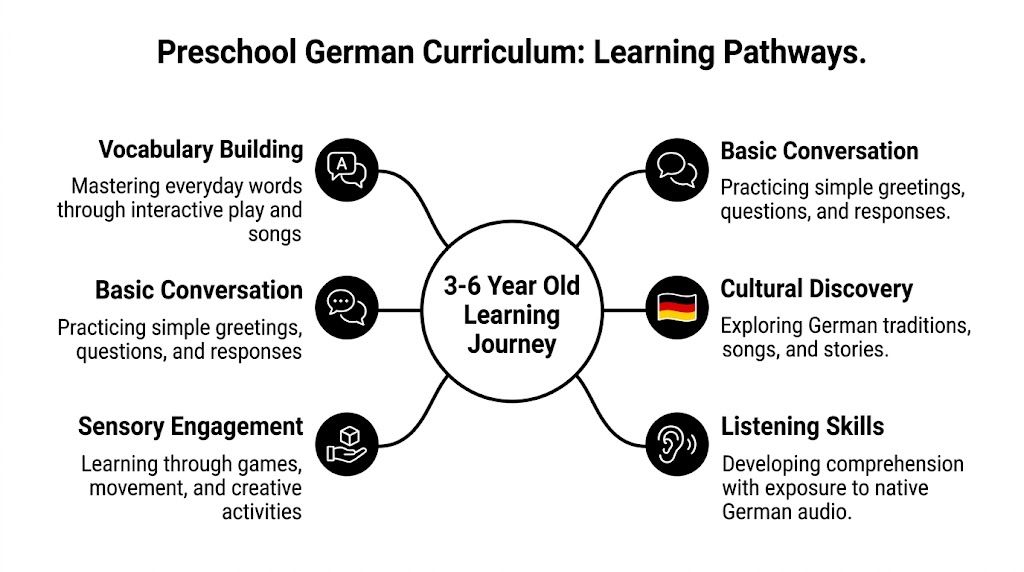
If you want to see how a dedicated early-years pathway is structured, the preschool German courses in Hong Kong page gives a useful starting point.
What a good class actually looks like
A proper preschool lesson should feel busy, but organised. Children move between short activities so they stay engaged without becoming overloaded.
Expect lessons built around things like:
- Songs and action rhymes that teach greetings, numbers, animals, and daily routines
- Story time with repeated key words so children hear vocabulary in context
- Games with movement because preschoolers learn faster when their bodies are involved
- Simple craft tasks linked to themes such as colours, seasons, food, or family
- Listening to native German so children become comfortable with real pronunciation early
This is why rote memorisation fails with young children. If a class expects a four-year-old to sit still and recite isolated words, the child may comply for a few minutes, but the language won’t stick.
Why small groups matter so much
The most overlooked part of a preschool language programme is class size.
With a maximum of 6 students per class, the teacher can hear each child speak, correct gently, and encourage participation before shyness sets in. In larger groups, quieter children disappear. In a small group, they’re seen.
That changes the learning experience in practical ways:
- More speaking turns: each child gets regular chances to answer and repeat
- Better classroom management: less waiting, less distraction
- Personalised support: teachers can adjust pace for a child who’s hesitant or energetic
- Higher confidence: children feel safe enough to try unfamiliar sounds
Small-group teaching isn’t a luxury at preschool level. It’s the format that makes active language learning possible.
What parents should look for in the curriculum
Not every “kids’ German class” is designed properly. Ask whether the programme includes:
- Native-speaking teachers
- Age-banded content for 3 to 6 year olds
- Interactive tasks rather than workbook-heavy teaching
- A clear progression route after summer
- Regular exposure to spoken German, not only vocabulary lists
That’s what separates a serious early-years programme from a generic tutorial centre offering a themed holiday class.
Why Start German Before Primary School
Starting early gives children one major advantage. They treat the new language as normal.
That matters in Hong Kong, where children are already navigating Cantonese, English, and often Mandarin. A well-run German programme doesn’t compete with that environment. It adds another layer of listening, switching, and pattern recognition when the brain is especially open to it.
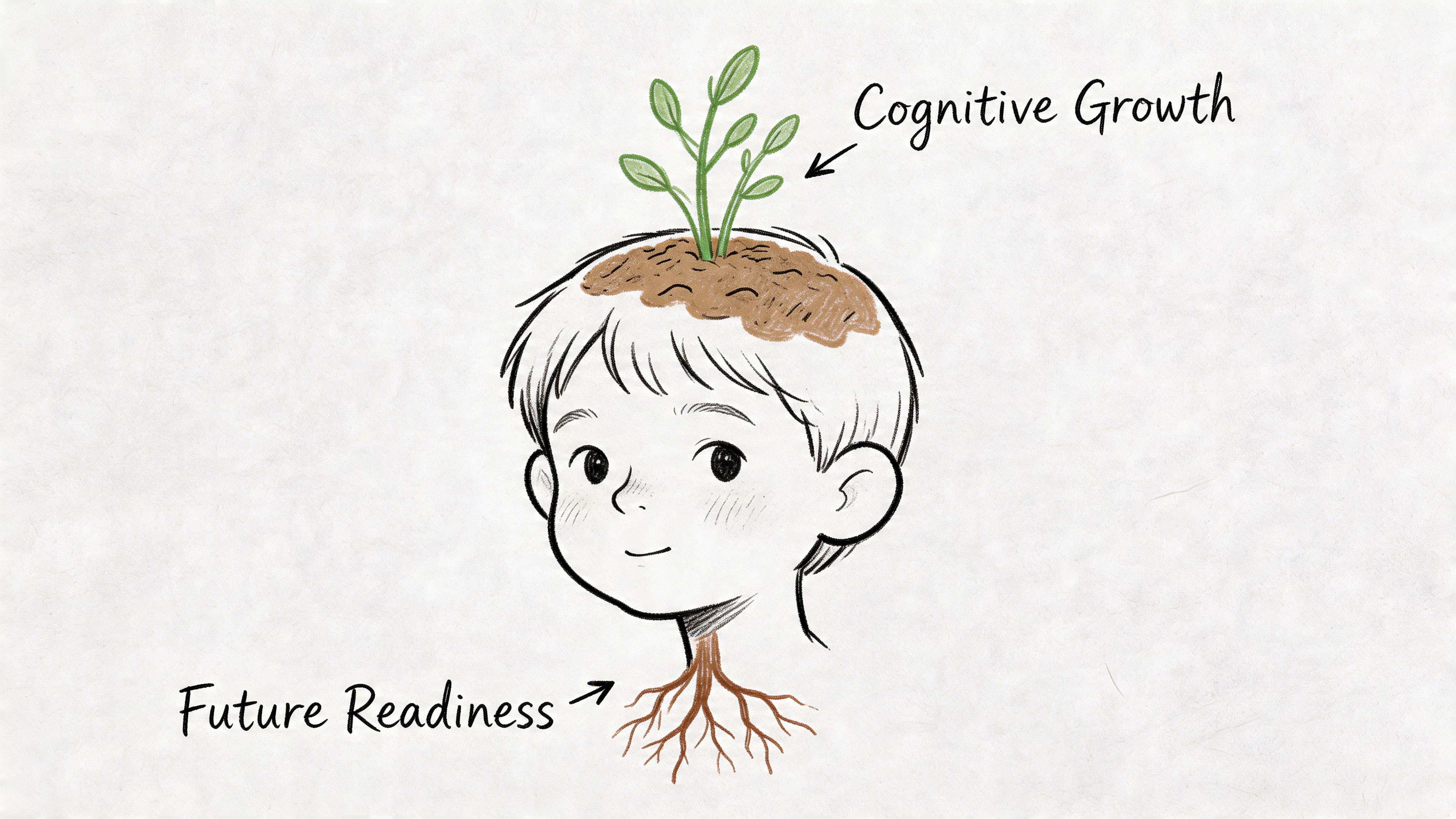
A recent HKU study in Q1 2026 found that targeted German immersion boosted executive function by 22% compared with standard English programmes in a group of 500 preschoolers, especially when daily instruction stayed manageable rather than excessive.
The HK academic context matters
Parents here usually think long term. They should.
A preschool programme isn’t about pushing a child into formal testing too soon. It’s about creating a smoother runway for later milestones that matter in Hong Kong:
- Primary school language confidence
- A stronger base for future IB or international school pathways
- Goethe-oriented progression later on
- Potential study abroad options in Germany when your child is older
If your child starts hearing and using German now, later stages feel less foreign. That reduces friction when learning becomes more structured.
Children who begin early usually don’t see German as a “hard subject”. They see it as part of their routine.
The right intensity beats maximum intensity
Some parents assume more hours always means better results. That’s the wrong approach for preschoolers.
Young children need manageable sessions, clear repetition, and a positive emotional experience. If the class is too long, too rigid, or too demanding, you may get compliance but not genuine language uptake.
For families who want a broader perspective on pace, immersion, and consistency, this guide on how to learn a new language fast is useful because it reinforces a point I often make to parents: speed comes from smart structure, not overload.
A short video can also help parents think about what early German exposure can lead to later on.
Why I recommend starting before formal school pressure rises
Once primary school starts, timetables fill up. Homework increases. Weekends disappear into enrichment classes and logistics.
Preschool is the easiest stage to introduce a new language without turning it into a burden. If you wait until your child is older, you often need more effort to achieve less comfort.
That’s why an early start is strategically smart in HK. Not because every child needs to race ahead, but because starting before resistance appears is usually the better move.
In-Person or Online How to Choose Your Class
Parents often ask which format is better. My answer is straightforward. Choose the format your family can sustain consistently.
If you live near central transport routes and your child enjoys classroom energy, in-person classes are usually the stronger fit. If your schedule is unpredictable or cross-harbour travel is unrealistic, online classes can work very well if the sessions are interactive and the child has support at home.
When in-person classes make more sense
For many HK families, physical classes have one obvious advantage. The classroom itself helps the child switch into learning mode.
That matters for preschoolers because routine is everything. Going to a centre near Tsim Sha Tsui or Causeway Bay MTR is practical for working parents, helpers, and grandparents handling pick-up.
In-person classes usually suit children who:
- Enjoy group energy and copy other children quickly
- Respond well to movement-based activities in a shared space
- Need a clearer separation between home and study
When online classes are the better choice
Online doesn’t have to mean passive. It works when the teacher knows how to keep sessions lively and when the home setup is calm enough for short participation bursts.
This format is often the smarter option for families who:
- Travel frequently during summer
- Live far from the centre
- Need flexibility because of work schedules
- Want continuity without cross-district commuting
For a closer look at the trade-offs, this comparison of in-person vs online German classes is worth reading before you decide.
GCA 2026 Preschool German Summer Program Formats
| Feature | In-Person Classes | Online Classes |
|---|---|---|
| Location | At HK centres near major MTR access points | From home via live online lessons |
| Typical schedule | Fixed class times with travel built in | Easier to fit around family plans |
| Class dynamic | Strong peer interaction and physical activities | Interactive but more dependent on screen engagement |
| Ideal learner | Children who thrive with routine and in-room social cues | Children who need flexibility or already manage screen-based sessions well |
| Parent logistics | Better for families already commuting through TST or Causeway Bay | Better for households prioritising convenience |
If you already know your family struggles with commuting consistency, don’t choose in-person just because it sounds more traditional. The better format is the one your child will actually attend.
There isn’t a universal winner. There’s only the format that fits your child’s temperament and your household rhythm.
How Much Does a Preschool German Program Cost
This is the right question. HK parents shouldn’t be shy about asking it.
A preschool German programme should be judged on value, not just fee level. If a course looks cheap but gives you oversized classes, weak teaching consistency, and no progression route, it’s expensive in the worst way. You pay, but your child doesn’t build momentum.
What you’re really paying for
For early-years language learning, the cost usually reflects the things that matter most:
- Native-speaking teachers who model real pronunciation from the start
- Small groups where preschoolers have speaking time
- A structured curriculum instead of ad hoc holiday activities
- A pathway beyond summer so the programme isn’t a dead end
That’s the right frame for cost-conscious families. Ask what the fee includes, and ask what happens after the final week.
If you want a practical overview of local pricing factors, read how much it costs to learn German in Hong Kong. It helps parents compare programmes on substance rather than brochure language.
What counts as return on investment
With preschoolers, “ROI” doesn’t mean exam scores next month. It means your child completes the course, enjoys the process, and is ready for the next stage.
A structured certificate system helps because it sets a clear expectation for attendance and completion. In the programme described earlier, 80% attendance is required for certification, and 85% of completers advance to kindergarten-level courses in subsequent terms, which is a strong sign that the summer course leads somewhere tangible.
That matters more than flashy packaging. A course has real value when children continue.
Questions to ask before you compare fees
Use this short filter:
How many students are in each class?
If the number is high, your preschooler won’t get much language practice.Who teaches the course?
At this age, teacher quality matters more than branded worksheets.Is there a certificate or progression route?
Completion should mean something.Does the schedule work for your family?
A cheaper course that creates weekly stress often gets abandoned.
Cost matters, but consistency matters more. The wrong format or class size can wipe out any savings.
For serious families in Hong Kong, the right preschool programme is an educational investment. Not because it promises miracles, but because it gives your child a realistic, well-supported start.
Choosing the Best German Program for Your Child
Most parents compare programmes the wrong way. They look at the flyer first and the teaching model second.
Reverse that. The right questions will tell you quickly whether a summer course is a serious language programme or just childcare with a foreign-language label.
Use this checklist before you enrol
Ask every provider these questions.
Are the instructors native German speakers?
Preschoolers copy sounds before they understand rules. That makes pronunciation quality non-negotiable.What is the maximum class size?
If the group is too large, your child may spend most of the lesson watching rather than speaking.Is the curriculum designed for early childhood, not older children?
A proper preschool course uses songs, movement, visuals, and predictable routines. It shouldn’t look like a mini primary-school worksheet class.Is there a learning pathway after the summer programme?
Summer should be the entry point, not the end point.How does the school communicate progress to parents?
You don’t need heavy reporting for a four-year-old, but you do need evidence that the programme is organised.
What a strong answer sounds like
You’re looking for specifics. Not slogans.
A credible provider should be able to explain:
- how lessons are structured,
- how teachers keep young children engaged,
- what happens if a child is shy,
- and what the next course level looks like.
One option in Hong Kong is the German Cultural Association Hong Kong(GCA), which offers preschool German in small-group and flexible formats with native-speaking teachers and a structured curriculum. That matters because families need continuity, not just a one-off holiday class.
Don’t be distracted by colourful branding. Ask how the child will learn, who will teach them, and what happens after summer.
How to prepare your child before the first lesson
You don’t need to “teach German” at home before class starts. You just need to reduce unfamiliarity.
A simple approach works best:
- Play German children’s songs during breakfast or car rides.
- Introduce a few words casually, such as hello, bye, colours, or numbers.
- Talk positively about the class, especially if your child is cautious in new settings.
- Keep expectations light. The first goal is comfort, not performance.
That preparation helps children settle faster and participate earlier. Parents who support the routine at home usually make the transition smoother, even with short and simple habits.
Ready to Give Your Child a Head Start
If you want your child’s summer to be enjoyable and useful, act early. Good preschool language classes fill because parents know small-group places don’t stay open for long.
The right next step is simple. Don’t overthink it.
What to do now
Review the programme details carefully
Check the age fit, class format, location, and teaching style. Make sure the class matches your child’s temperament, not just your ambitions.Choose the format you can sustain
In-person may suit families near TST or Causeway Bay. Online may be smarter if your summer schedule is less predictable.Ask about the follow-on pathway
A summer course is much more valuable when there’s a clear route into kindergarten-level German and later structured learning.Prepare your child gently before the first class
Keep it light. Songs, a few familiar words, and a positive routine are enough.Register early if the small-group format matters to you
Once a suitable time slot is gone, your second choice often means compromising on routine.
A final recommendation for HK parents
Treat preschool German as a foundation, not a short-term trick. If the teaching is play-based, the schedule is manageable, and the next level is clear, the value lasts far beyond one summer.
If you enjoy supporting language learning at home, this reading list of best books about language learning can give you extra perspective on how children and adults build languages over time. It’s useful for parents who want to make better long-term decisions, not just pick a camp quickly.
The families who get the most out of a preschool programme usually do three things well:
- They start before the calendar gets crowded
- They choose quality over convenience alone
- They commit to steady attendance once enrolled
That’s the key advantage. Not rushing. Not pushing. Just starting properly.
If you're considering a structured early-years pathway, German Cultural Association Hong Kong(GCA) offers programme information, class schedules, and advisor support for families choosing preschool German in Hong Kong.

Präteritum and Futur Compared: A Guide for HK Learners
Perfekt in German: A Clear Guide for Learners in HK


