.png)
.png)

BLOG

香港德國文化協會
The German Cultural Association
German Playgroups in Hong Kong for Toddlers
Hong Kong parents don’t need another vague lecture about bilingualism. You need a decision that fits a real life: long working hours, packed school calendars, rising costs, and the pressure to give your child an edge without turning toddlerhood into test prep.
That’s why German Playgroups in Hong Kong for Toddlers deserve serious attention. Done properly, they’re not babysitting, and they’re not random singalong sessions. They’re structured early immersion environments that build listening, speaking, confidence, routine, and cultural familiarity while your child is still in the phase where language comes naturally.
If you’re thinking beyond the next school term, German is a strategic choice. It opens a pathway to later study abroad in Germany, supports access to a major European language, and gives your child an early advantage that most families only start chasing far too late.
Give Your Toddler a Global Head Start with German
Parents in Hong Kong are forced to think early. Nursery interviews start early. School choices start early. Long-term academic planning starts early. Language planning should too.
German Playgroups in Hong Kong for Toddlers make sense for one reason above all: they align with how young children learn. A toddler doesn’t need grammar explanations. A toddler needs songs, repetition, movement, stories, and a teacher who can turn ordinary play into language exposure.
Why German is a smart long-term choice
English and Chinese dominate daily life in HK. That’s exactly why German stands out.
German connects to a major European academic and professional ecosystem. For families already thinking about international schools, future mobility, or study abroad in Germany, early exposure gives your child a much easier runway later. Starting at three is simpler than fixing resistance at eight.
Why the toddler years matter
The biggest mistake I see is waiting until a child is “old enough to study properly”. That’s backwards.
Early childhood is where pronunciation, listening habits, confidence with unfamiliar sounds, and natural communication patterns begin. A good playgroup makes German feel normal, not difficult.
If your household needs extra day-to-day support in more than one language, it can also help to reinforce exposure outside class with bilingual nanny services. That’s especially practical for families juggling helpers, grandparents, and mixed-language home routines.
Practical rule: If you want German to become part of your child’s world, start before they see it as “another subject”.
What ambitious parents should focus on
Don’t choose a programme because the classroom looks cute on Instagram. Choose it because it answers these questions:
- Is the language exposure consistent? One-off themed sessions won’t build much.
- Is the teaching intentional? Play matters, but unstructured play alone isn’t enough.
- Is the group small enough? Toddlers need frequent turns, eye contact, and direct prompting.
- Can the programme grow with the child? The strongest start is one that can later develop into proper German lessons Hong Kong families can build on.
The right start isn’t about doing more. It’s about doing the right thing earlier.
What Exactly Are German Playgroups and Why Start So Early
German playgroups are structured early childhood sessions where toddlers learn German through songs, stories, movement, crafts, and guided interaction. They combine language immersion with social, cognitive, and motor development, making them far more than simple childcare or casual free play.
That’s the definition parents need. Now let’s be clearer.
A proper German playgroup in Hong Kong is a purpose-built learning environment. The teacher doesn’t just supervise. The teacher guides vocabulary, routines, turn-taking, and comprehension through activities that toddlers can absorb naturally.

What children actually do in these sessions
The strongest providers in HK don’t isolate language from the rest of development. According to Sassy Mama’s reporting on the sector, programmes focus on language acquisition, visual arts, logical thinking, world exploration, and motor skills, and the early exposure principle is summed up: “the earlier children are exposed to languages, the better”. The same report notes that providers including GSIS and Hong Kong Kids Academy offer bilingual or conversation-based courses for children from 18 months upward, with small class sizes to support personalised attention at https://www.sassymamahk.com/sassy-scoop-new-german-swiss-international-school-kindergarten-campus-in-sai-kung/.
That matters because toddlers don’t learn in compartments. They learn while moving, touching, singing, noticing, and repeating.
Why early exposure works better than late catch-up
Parents often ask whether starting later is “good enough”. It can be, but it’s harder.
Before age five, children are more willing to copy sounds, repeat patterns, and accept a second or third language as part of normal life. You’re not fighting self-consciousness yet. You’re building familiarity.
For a deeper look at timing, this guide on the best age for kids to start learning German is worth reading if you’re deciding whether to begin now or wait.
Why German, specifically
French and Spanish are common choices. Mandarin is obvious in Hong Kong. German is different. It gives your child access to a language with real weight in Europe, especially for families who already think internationally.
Children who start German through play usually don’t experience it as “hard”. They experience it as part of routine.
That psychological point is underrated. Once a language feels familiar, formal learning later becomes far less intimidating.
A Week in a GCA German Playgroup What to Expect
Parents often struggle to picture what a German toddler class looks like. Fair enough. “Play-based learning” is one of the most abused phrases in education.
A good week has rhythm. Children know what’s coming. The teacher repeats core vocabulary in different contexts. The activities look playful, but the structure is deliberate.

Monday with music and routine
The week often starts with songs, greetings, and movement. That isn’t filler. Music gives toddlers an easy entry into sound patterns, rhythm, and repeated vocabulary.
A circle-time song about colours, body parts, or animals can do several things at once:
- Build listening habits through repeated classroom phrases
- Strengthen pronunciation through rhyme and melody
- Reduce anxiety because familiar songs create predictability
Children who are shy usually join music before they join conversation. That’s normal, and it’s useful.
Tuesday with stories and comprehension
Story sessions are where passive understanding grows. A strong teacher does more than read aloud. They pause, point, repeat, ask simple questions, and invite children to respond with gestures, sounds, or single words.
You want storytelling that includes:
- Clear visual prompts such as picture books or props
- Recycled target words instead of constant new vocabulary
- Simple participation so toddlers don’t feel put on the spot
If you want a practical sense of what preschoolers can realistically engage with by age and stage, this guide to age-appropriate activities is a helpful reference.
Midweek with crafts and tactile learning
Crafts are where parents often underestimate the educational value. Cutting, sticking, colouring, sorting, and matching all create natural opportunities for language.
A themed craft about weather or food can reinforce:
- Nouns through naming objects
- Verbs through action cues
- Following instructions through short German prompts
This is also where toddlers start associating German with doing, not just listening.
End of week with play, repetition, and confidence
By the end of the week, strong programmes circle back to familiar material. That repetition is where real retention starts.
For preschool options and formats currently available in HK, parents can review preschooler courses to see how structured small-group German exposure is typically organised.
Repetition isn’t boring for toddlers. In language learning, repetition is the mechanism.
A well-run playgroup doesn’t chase novelty every session. It uses familiar themes, recurring routines, and gradual variation. That’s how children start recognising words independently, then using them.
How to Evaluate and Choose the Right Programme in Hong Kong
Most parents compare playgroups the wrong way. They compare convenience first, price second, and educational quality last. For language learning, that order should change.
The correct question isn’t “Which class can fit my Tuesday?”. It’s “Which programme will give my child enough real interaction to make German stick?”.
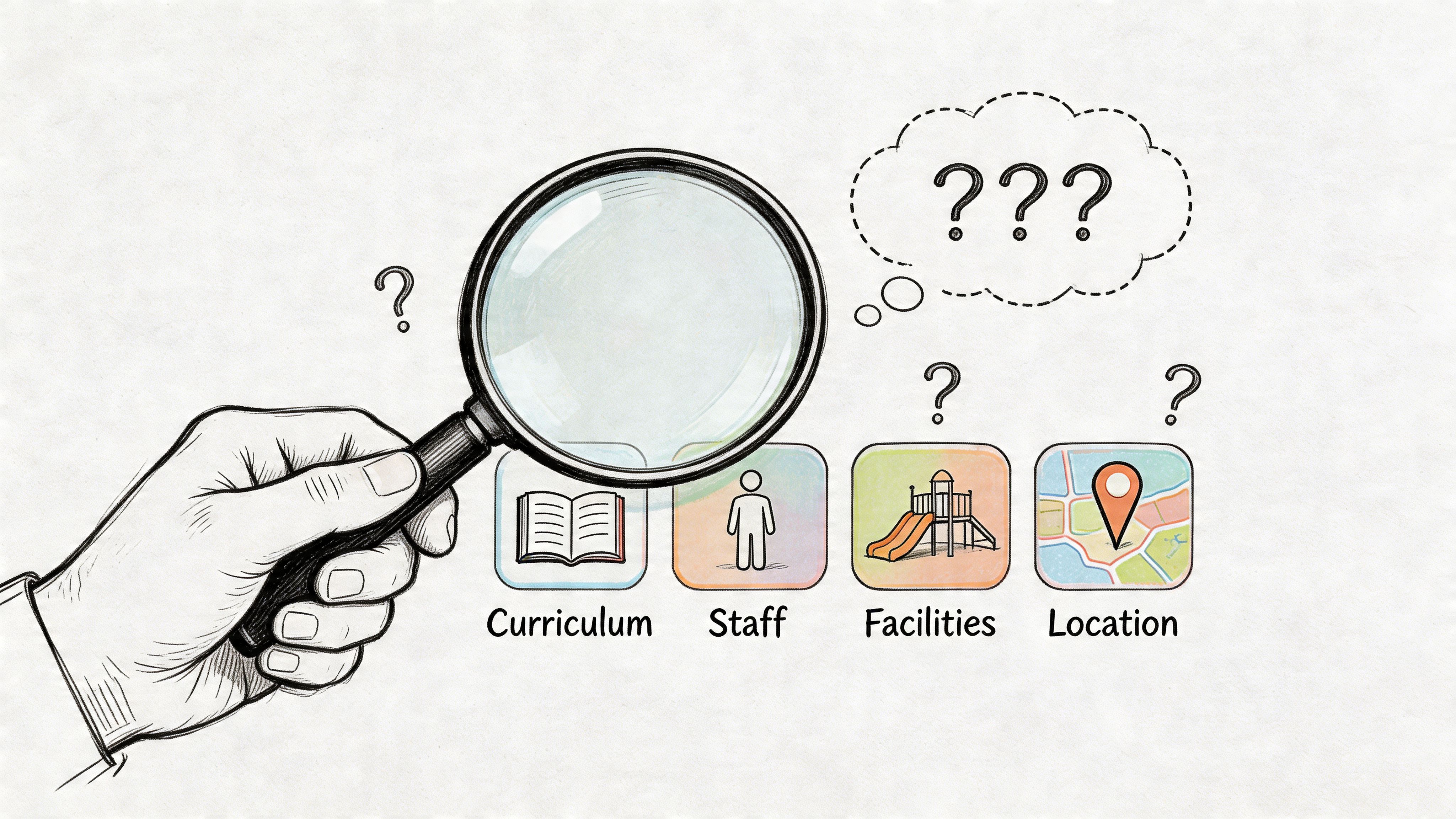
Use this checklist before you enrol
Hong Kong’s providers differ quite a lot. Hong Kong Kids Academy has run 2 to 5-year-old groups for 38 years with classes of up to 12 children, GSIS offers tiered playgroups by age, and the German Cultural Association uses a smaller model with a maximum of 5 to 6 students for ages 3 to 5. The same source also notes research comparing German and Hong Kong Chinese kindergartens, where German children scored slightly higher in social and cognitive play, supporting the pedagogy used in these HK programmes at https://hklanguages.com/german-playgroup/.
That gives parents a useful benchmark.
Teacher quality
Ask direct questions.
- Are the teachers native German speakers? Accent and natural language use matter at this age.
- Do they have early years teaching experience? Speaking German isn’t the same as teaching toddlers.
- Can they manage shy or mixed-ability children well? Classroom control should feel calm, not chaotic.
Curriculum structure
A serious programme should be able to explain what children do and why.
Look for:
- Theme-based planning such as animals, weather, family, food
- Repeated routines so toddlers build recognition
- Balanced activities across music, movement, storytelling, and hands-on work
If a centre can’t describe learning goals beyond “fun exposure”, move on.
Class size
Here, many parents make expensive mistakes.
A class of twelve may look acceptable on paper. In practice, it limits individual speaking turns, teacher attention, and behaviour support. For toddlers, smaller is better. That’s one reason some families prefer providers working in very small groups near transport hubs such as Tsim Sha Tsui and Causeway Bay MTR.
A simple comparison frame
| Factor | What to look for | What to avoid |
|---|---|---|
| Teacher | Native-speaking, trained, toddler-aware | Fluent but untrained |
| Group size | Small enough for frequent interaction | Large group with long waiting time |
| Curriculum | Structured play with clear language goals | Free play with little direction |
| Environment | Safe, hygienic, calm, well-organised | Busy, noisy, overstimulating |
Advisor’s view: If two programmes cost roughly the same, choose the one with the smaller group and clearer curriculum. Those factors affect outcomes far more than décor.
One practical option in this market is the German Cultural Association Hong Kong, which offers small-group preschool classes and private sessions in Tsim Sha Tsui and Causeway Bay, alongside online formats. That setup suits families who want consistency without relying on a generic tutorial-centre model.
How Much Do German Playgroups Cost in Hong Kong
This is the question parents ask first, even if they pretend otherwise. Good. Cost matters.
The honest answer is that German playgroup pricing in Hong Kong varies, and families need to judge value, not just the fee line. According to the preschooler courses information published by the German Cultural Association, small-group summer pricing can include HK$1800 for 3 weeks, with classes at Tsim Sha Tsui and Causeway Bay and group sizes capped at 5 to 6 children. The same source notes that some providers run classes with up to 12 children, that 85% of HK parents prioritise smaller group sizes, and that hybrid online playgroups have grown by 50%, giving families more options around convenience and class format at https://www.german.com.hk/en/preschooler-courses.
What you’re actually paying for
Parents should separate price from educational value.
A higher-quality programme usually reflects:
- Smaller groups, which means more speaking turns
- Native-speaking teachers, which improves authenticity of exposure
- Structured planning, rather than casual supervised play
- Better continuity, so your child can progress into later Learn German HK pathways
Cheap classes can be perfectly fine for social exposure. They’re rarely the strongest choice if your goal is sustained language development.
How to judge value quickly
Use this simple test before you enrol:
- Count the likely speaking opportunities. In a smaller group, your child is seen and heard.
- Ask what a term is designed to cover. If there’s no answer, it’s not structured enough.
- Check whether online or in-person suits your family’s routine. Convenience only helps if attendance stays consistent.
For a broader cost breakdown of German lessons in the city, this guide on how much it costs to learn German in Hong Kong gives useful context.
The right mindset is simple. Don’t buy the cheapest seat in the room. Buy the format your child will benefit from.
Enrolment Steps and Getting Started with GCA
Many parents delay because enrolment feels like another admin task. It doesn’t need to be.
The process should be straightforward. You want clarity on age fit, schedule, location, and whether your toddler is likely to settle well in the group.
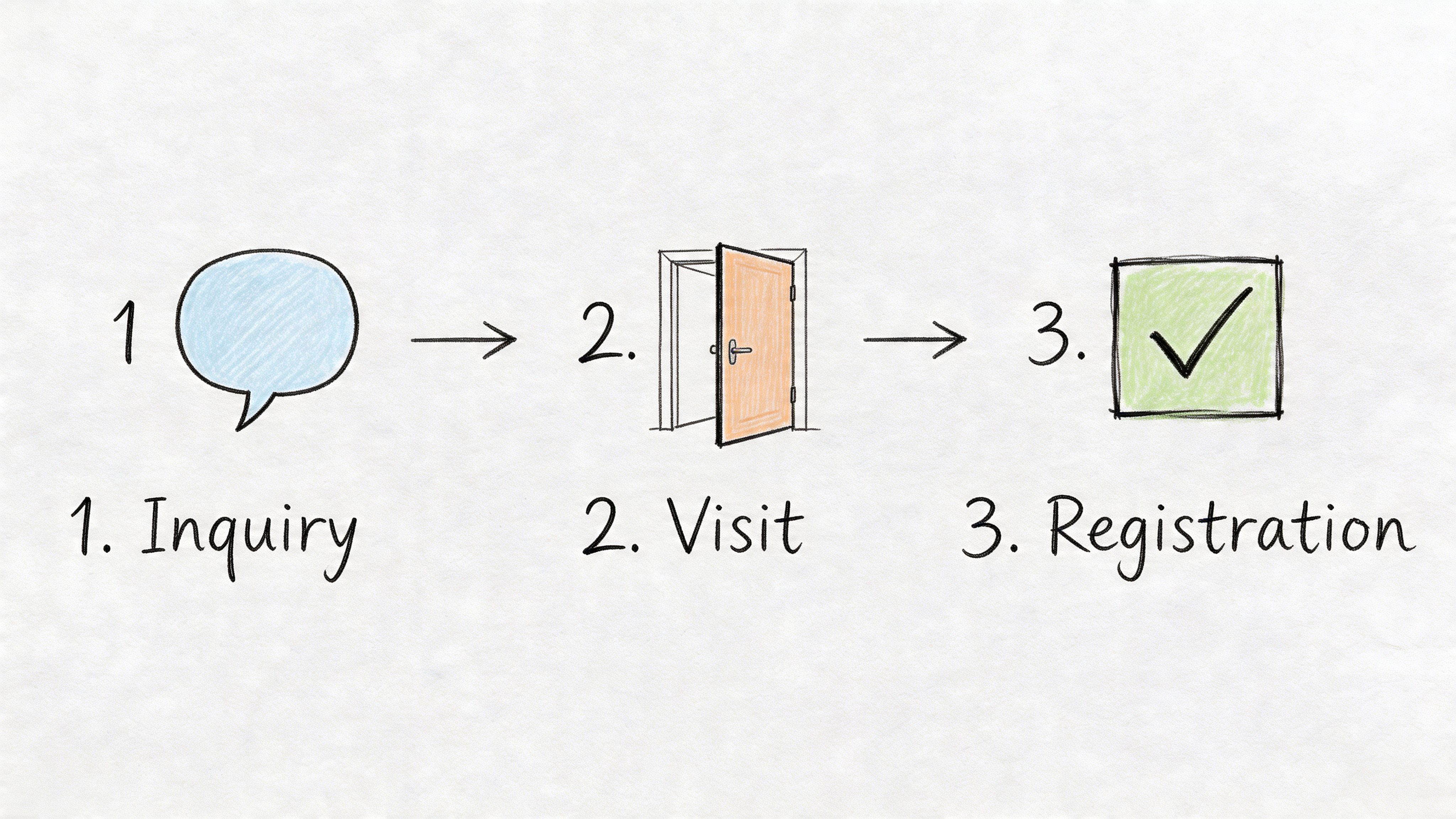
A simple way to begin
Review the available format
Decide whether you want in-person classes near Tsim Sha Tsui or Causeway Bay MTR, or whether an online option is better for your weekly routine.Ask about age placement
Toddlers vary a lot. A confident child may suit a group quickly. A younger or more reserved child may do better with gentler entry or a private arrangement.Speak to an advisor before committing
Don’t guess based on website wording alone. Ask how sessions are structured, how separation is handled, and what kind of parent support is expected.Arrange a trial or visit if available
This tells you more than any brochure can. Watch how the teacher redirects attention, handles transitions, and includes quieter children.Register with a realistic schedule
Choose a routine you can maintain. Consistency matters more than ambition.
A toddler who attends steadily in a suitable group will usually gain more than a child enrolled in a “better” programme with irregular attendance.
If you’re serious about early immersion, start with the timetable your family can sustain, not the one that looks ideal on paper.
FAQ Your Questions About German for Toddlers Answered
Will my child get confused if we don’t speak German at home
No. Children can separate languages when exposure is consistent and context is clear.
What matters is routine. If German appears in the same setting each week, with the same songs, phrases, and classroom expectations, toddlers usually adapt well even in non-German-speaking homes.
My child is shy. Is a playgroup still suitable
Usually, yes. Shy children often participate first through observation, then gestures, then repeated words.
Small groups help because the teacher can pace interaction properly. Forced performance is a bad sign. Gentle repetition and predictable structure are what you want.
Is in-person better than online
For most toddlers, in-person is stronger because movement, peer interaction, and physical cues matter. Online sessions can still work when travel time, naps, or family logistics make attendance difficult.
The right choice depends on whether your child can stay engaged through a screen and whether your household can support the session calmly.
What should I expect after the playgroup stage
You should expect a progression, not a one-off experience.
A strong early programme should make later structured learning much easier. Over time, children can move into more formal German study, and for older learners that pathway can eventually connect to recognised exam preparation such as Goethe-Zertifikat, as well as IGCSE, A-level, or IB routes where relevant.
How do I know a programme is too loose
Ask one question: “What language outcomes are you aiming for this term?”
If the answer is vague, be cautious. Play-based doesn’t mean random. It should still be organised around vocabulary themes, routines, listening goals, and teacher-led interaction.
Should I choose convenience or quality
Choose the highest-quality option you can attend consistently.
A brilliant class that’s impossible for your family to reach every week is not a brilliant choice in practice. But don’t sacrifice class size and teacher quality too quickly. For toddlers, those factors shape the entire experience.
Ready to Open a World of Opportunity for Your Child
Early German exposure isn’t about showing off. It’s about making a smart move while your child is still naturally open to sound, rhythm, and new language patterns. In Hong Kong, where competition starts early, giving your toddler an authentic and structured start can pay off for years.
Act while the window is favourable. Shortlist the right programme. Ask direct questions. Choose a class your family can attend consistently, and give your child a start that feels joyful rather than forced.
If you want a clear next step, explore German Cultural Association Hong Kong(GCA) for current preschool options, class schedules, and advisor support. You can check the latest course arrangements, ask about trial availability, and find a format that fits your child’s age, temperament, and weekly routine.

German Verb Tenses Overview: Präsens Made Simple
German Passive Voice (Passiv): Formation Guide


