.png)
.png)

BLOG

香港德國文化協會
The German Cultural Association
After-School Activities for Teens in Hong Kong: Enrichment Guide for Ages 12-15
Thursday night in Hong Kong has a familiar rhythm. A parent is scrolling through activity flyers on a phone, a 13-year-old is half-listening with IGCSE revision books open, and both of you are wondering whether the next choice should be a language class, a sports team, or yet another coding workshop.
That pressure is real. After-School Activities for Teens in Hong Kong: Enrichment Guide for Ages 12-15 is really about making one smart choice at a time, so your teen builds confidence, skills, and exam readiness without turning the week into a relay race between school, tutoring, and transport.
Table of Contents
- Build the week around energy, not wishful thinking
- Two sample weekly rhythms
- What parents should watch for
Why After-School Activities Matter More Now
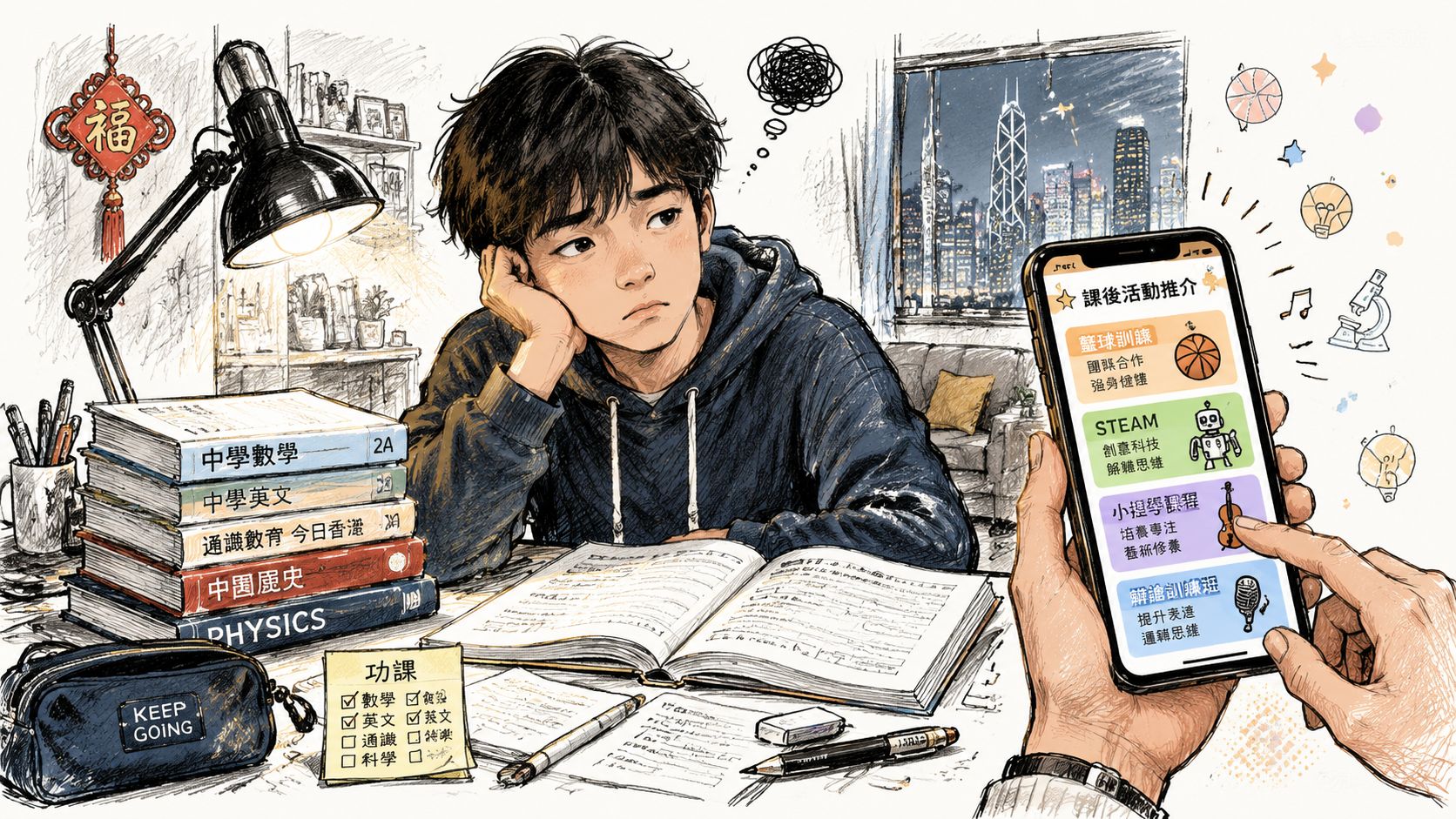
A Hong Kong parent can do everything right and still feel torn. One part of you wants your 13-year-old to strengthen a second language, another part wants them outside and moving, and a third part worries that any new commitment will eat into revision time for DSE, IGCSE, IB, or the next school test.
The good news is that after-school activity in Hong Kong is already mainstream, not unusual. In the 2022 Hong Kong report card on physical activity, 60.1% of secondary school students aged 12 to 18 participated in organized sport at least one day per week, and 28.6% reported active play for at least 2 hours per day, using a population-representative fitness survey commissioned by the Hong Kong Education Bureau and repeated since 1998 (report card source).
What that means for families
Those numbers matter because they show two things at once. Structured after-school activity is already a normal part of teen life in Hong Kong, and there's still plenty of room for higher-value enrichment such as languages, arts, STEM, exam support, leadership, and volunteering.
For ages 12 to 15, the question isn't whether to add activities. It's which mix supports school performance without draining energy. A strong choice usually does at least one of these jobs:
- Reinforces school success, such as targeted exam prep or language study
- Builds a new capability, such as speaking confidence, teamwork, or public presentation
- Creates a real pathway, such as German for study abroad in Germany or Spain, or a portfolio for future applications
Practical rule: if an activity can't be explained in one sentence to your child's school week, it's probably too hard to sustain.
That mindset is useful because the most valuable programme is often the one that fits the child, not the one with the biggest label. In Hong Kong, where commute time and exam pressure matter, thoughtful planning beats impulse enrolment every time.
Understanding the Hong Kong After-School Activity Options
A Hong Kong family choosing after-school activities for a teen usually starts with a timetable puzzle. School ends, homework remains, exams still sit ahead, and the question is whether an activity adds value or just fills an empty slot. The strongest choices do both, they fit the week and produce a clear outcome.
Hong Kong families usually narrow the field to six practical categories. These are the options parents compare most often when they are balancing time, budget, and results.
The six activity types that matter most
- Academic enrichment and exam preparation, which covers tutoring centres, subject support, and exam-focused classes for DSE, IGCSE, A-level, and IB
- Language classes, including English, Mandarin, German, Japanese, Spanish, and other foreign languages
- Arts and creative pursuits, such as drama, music, visual arts, and dance
- Sports and physical activities, from swimming and tennis to football, rowing, and gymnastics
- STEM and technology programmes, including coding, robotics, and related project-based classes
- Leadership and volunteering, which can build responsibility, presentation skills, and community awareness
These categories do not serve every teen in the same way. An academically driven student often does best with one steady academic class and one non-academic outlet. A creative teen may gain more from performance, music, or a collaborative sport. An undecided child often needs short trials before any long-term commitment makes sense.
Hong Kong's policy direction also shows that organised support is expanding rather than shrinking. In a 2025 Legislative Council question, the government said the School-based After School Care Service Scheme grew from 59 primary schools in 7 districts in 2023/24 to more than 120 primary schools in all 18 districts in 2024/25, with about 6,000 service places (LegCo record). The scheme is for primary students, but the broader signal is clear. Hong Kong is moving toward more structured and measurable after-school provision.
That shift matters for teens as well, because stronger providers now behave more like learning programmes than casual clubs. For a younger-age comparison, the German Cultural Association's earlier language comparison guide for primary ages shows how language enrichment can be matched to age and purpose instead of being chosen by category alone.
After-School Activity Types at a Glance
| Activity Type | Typical Format | Cost Range (HKD) | Key Benefits |
|---|---|---|---|
| Academic enrichment | Weekly tutorials, exam prep blocks | Varies by subject and intensity | Better grades, test confidence, subject coverage |
| Language classes | Small-group lessons, term courses | Varies by language and format | Communication, exam readiness, future study pathways |
| Arts and creative pursuits | Studio classes, ensemble practice, workshops | Varies by discipline | Expression, confidence, discipline |
| Sports and physical activities | Clubs, team training, drop-in sessions | Can start at lower entry levels | Fitness, teamwork, stress relief |
| STEM and technology | Project classes, labs, coding clubs | Varies by equipment and length | Problem-solving, technical literacy |
| Leadership and volunteering | Service projects, short certificates, clubs | Often lower-cost or mixed | Initiative, community awareness, portfolio value |
For parents who want to check supervision standards before agreeing to service-based activities, a practical reference is this guide on Background checks for after-school volunteers. That matters because leadership and volunteering only work well when the adults overseeing them are properly screened.
A useful way to judge the market is to ask one simple question, what does this activity change in my teen's week? If the answer is clearer confidence, stronger grades, better language use, or a concrete portfolio outcome, the activity has a real purpose. If the answer is only “it keeps them busy,” the fit is weaker.
In Hong Kong, the right category is only half the decision. The other half is whether the provider's structure matches the teen's age, energy, and school load.
How to Choose Activities Based on Your Teen's Profile
The simplest way to avoid overcommitting is to start with the child, not the brochure. A teen who loves structure, a teen who learns socially, and a teen who still feels undecided should not be given the same schedule.
The three-profile match
The Achiever is the student who likes clear goals, test results, and visible progress. This teen often does well with exam support, a second language tied to future study, and one physical outlet to keep stress manageable.
The Connector thrives on interaction. This teen usually gets more value from drama, music, team sport, community activity, and classes that require speaking, collaboration, or presentation.
The Explorer needs low-pressure trial periods. This teen benefits from short certificate courses, drop-in options, and a term-by-term search for what sticks.
The 20-hour weekly ceiling matters here. Local youth guidance in Hong Kong recommends keeping extracurricular load under 20 hours per week and limiting it to 2 to 3 long-term activities for students aged 12 to 15 (local guidance). That's a sensible boundary, especially if school nights already include homework and transport.
Matching matrix by personality and goal
| Profile Type | Key Traits | Recommended Activities | Avoid |
|---|---|---|---|
| The Achiever | Structured, exam-aware, likes measurable progress | Exam prep, language certificate tracks, one sport | Too many open-ended clubs |
| The Connector | Social, expressive, enjoys collaboration | Drama, team sport, volunteering, music ensembles | Isolated self-study classes only |
| The Explorer | Curious, still testing interests | Drop-in classes, short certificates, short courses | Long contracts before trial period ends |
Parents often get confused here. A teen can be talented at everything and still fail to benefit from a packed timetable. The question is whether the mix serves the next school term, not whether it looks impressive on paper.
Useful test: if your child would resent missing the activity after one busy week, it's probably a fit. If they'd forget it existed, keep looking.
For families who are weighing German alongside school subjects like IGCSE, A-level, or IB, the local pressure is not just about language level. It's about finding a format that fits the student's pace and exam calendar, which is why the strongest German programmes in Hong Kong build around structure rather than casual conversation.
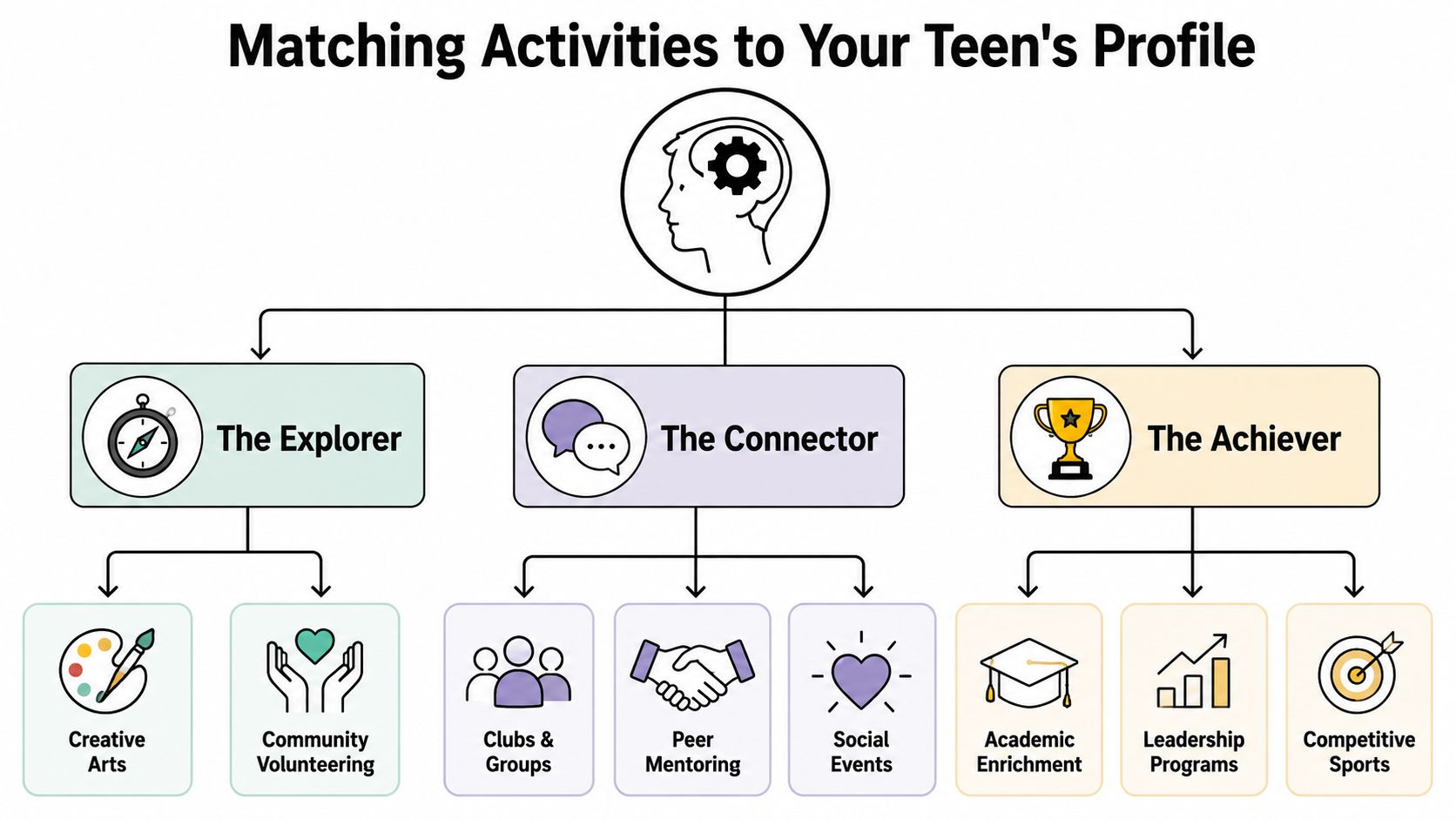
A chart like this is useful because it forces a simple question. Is your teen trying to build confidence, build credentials, or find a place where they belong?
Scheduling, Costs, and Time Management in Hong Kong
The biggest mistake Hong Kong families make is not choosing the wrong activity. It's choosing three good activities that clash with each other, the commute, and exam prep.
Build the week around energy, not wishful thinking
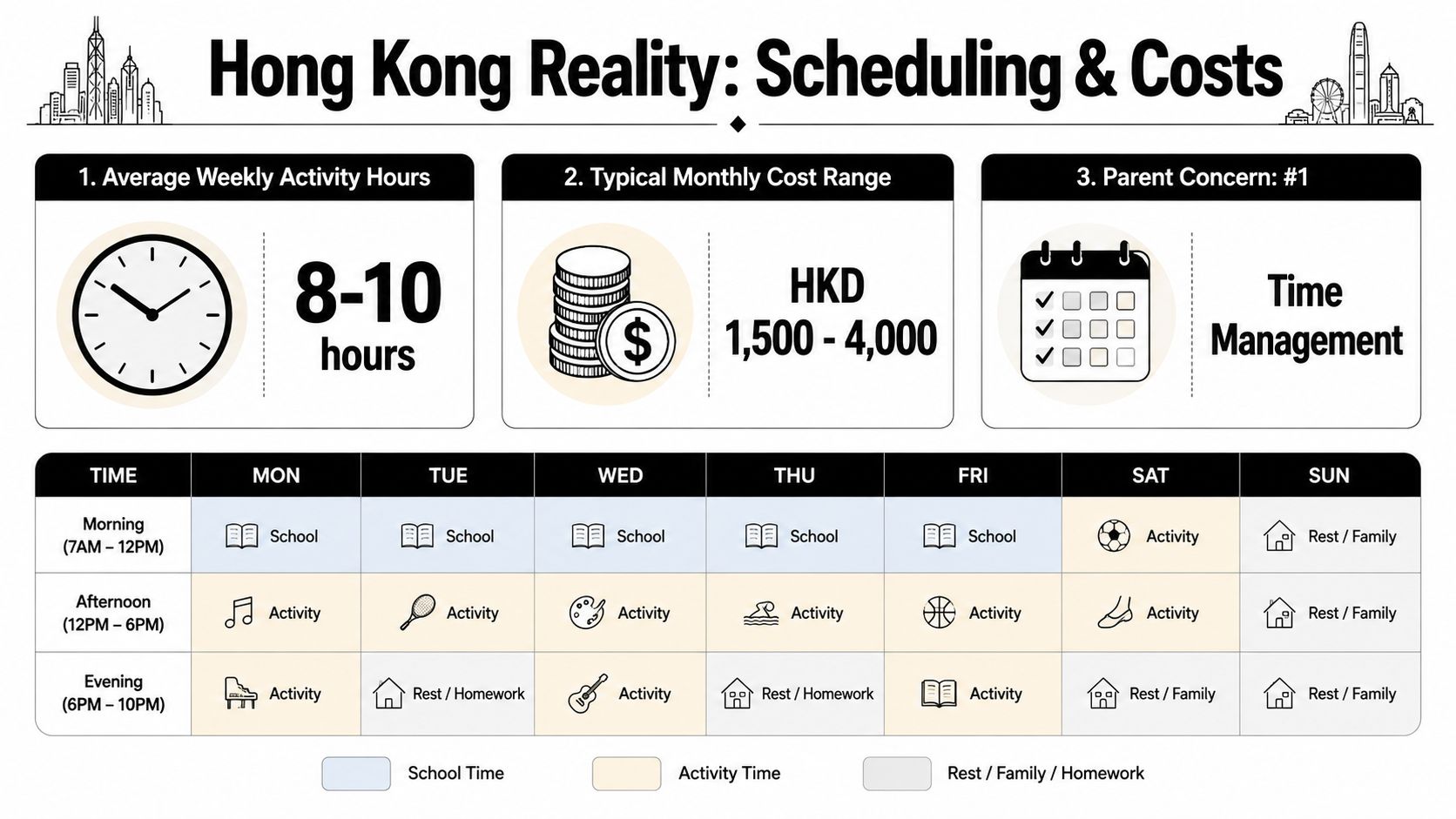
A workable schedule starts with three anchors, school, homework, and sleep. Everything else has to fit around those anchors, especially for teens in dense districts where travel between centres can eat the evening.
Hong Kong drop-in classes show why flexibility matters. One local guide lists gymnastics sessions for kids and teens starting at HK$350 per session in Wan Chai and Cyberport (drop-in classes guide). That gives families a concrete entry point if they want to test a sport before committing to a full term.
For families comparing structured programmes, it helps to think in terms of time cost as much as fee cost. A language class that is near school may be more valuable than a “better” class across town, because the actual budget includes travel, fatigue, and lost revision time. If you want a practical framework for protecting time, a simple time management guide can help parents think in terms of blocks, buffers, and firm commitments, even though it's not written for teens.
Two sample weekly rhythms
Academic-focused teen
- Monday to Friday: school, homework, and short revision blocks
- One weekday language class: one term-based lesson after school
- One sport session: a training night that clears the head
- Weekend: one review session, one family block, one rest block
Creative or exploratory teen
- Two short-format activities: one arts class, one short certificate or volunteering block
- One flexible skill class: a drop-in or short-term workshop
- Weekend: time for rest, catch-up, and one interest-led outing
The key is not perfect symmetry. The key is consistency. A teenager who can sustain a rhythm for a full term is usually getting more benefit than a child who starts six activities and drops four of them by month two.
Parents often ask whether a schedule should be full enough to keep a child busy. In Hong Kong, that's the wrong standard. The better question is whether the week still leaves room for sleep, school pressure, and genuine downtime.
What parents should watch for
- Transport creep: one extra district can turn a manageable class into a weekly headache
- Hidden material costs: equipment, books, uniforms, or exam registration fees
- Calendar collisions: mock exams, school events, and activity peaks rarely align neatly
- Energy drain: a teen who arrives home too tired to study is over-scheduled
If you want a language example, German works well when it sits inside a plan rather than floating outside it. The Hong Kong guide on German costs is a useful reference point for families comparing formats, especially when budgeting for a longer path.
Sample Weekly Schedules for Hong Kong Teens
A good schedule feels boring in the best possible way. It repeats, it leaves breathing space, and it doesn't collapse when a school quiz appears on Wednesday.
The balanced path for an academic teen
Monday
School, homework, light review.
Tuesday
School, then sport practice. Keep dinner simple and avoid adding anything else.
Wednesday
School, then a language lesson or exam-support session. This is the best day for a focused class because the week is already in motion.
Thursday
School, homework, and rest. No extra commitment unless it's very short and nearby.
Friday
School, social time, and family dinner. This matters more than parents sometimes admit.
Weekend
One longer revision block, one activity session, and one real break.
This type of schedule works because it respects the fact that a teen doesn't have unlimited mental energy. It also keeps the child close to the 2 to 3 long-term activity guideline and under the 20-hour limit already mentioned in the local guidance.
The focused track for a teen still exploring
Monday
School and homework.
Tuesday
A short creative class, such as art, music, or drama.
Wednesday
A free evening for rest or catch-up.
Thursday
Volunteering, leadership training, or a short certificate-style programme.
Friday
Unscheduled evening, which helps the week stay sustainable.
Weekend
One family outing, one block for school work, and one optional interest session if the teen still has energy.
That kind of structure is useful because it creates a habit of attendance without locking a child into a long-term identity too early. It also leaves room to swap activities at the end of a term, which is exactly what undecided teens need.
For families considering a German pathway, a structured language programme can sit neatly inside either weekly pattern. The GCA guide to German for teens and DSE/IB language choices is relevant here because language decisions for Hong Kong teenagers are often tied to exam routes, not just interest.
Local Enrichment Options and Exam Preparation in Hong Kong
Hong Kong parents usually end up comparing four broad provider types. The right one depends on whether your child needs credentials, confidence, discovery, or all three.
How the main provider types differ
- Academic centres work well for subject support and exam-focused families, especially when the goal is to reinforce school performance
- Sports clubs are strongest for stamina, teamwork, and regular physical discipline
- Arts and creative schools suit teens who express themselves through performance, design, or music
- Specialised language providers are the most useful when the goal is exam preparation, structured progress, and long-term study pathways
For families thinking about German specifically, one option in Hong Kong is the German Cultural Association Hong Kong (GCA), which offers small-group German classes, native-speaking teachers, and exam-oriented preparation for learners who want a more structured path than a casual hobby class. That kind of format matters when a teen is working toward a certificate or planning ahead for German-speaking universities.
The advantage of a serious language track is not just vocabulary. It's continuity. A teen who stays with one well-structured course can develop the discipline needed for later exams, interviews, and academic applications.
Top After-School Activity Providers in Hong Kong
| Provider Type | Best For | Key Strengths | Considerations |
|---|---|---|---|
| Academic centres | Exam-focused students | Subject support, assessment alignment | Can feel school-like |
| Sports clubs | Active teens | Fitness, routine, teamwork | Travel and training time matter |
| Arts schools | Creative teens | Confidence, performance, self-expression | Progress can be less linear |
| Language providers | Long-term learners | Structured curriculum, measurable levels | Needs regular attendance |
A useful lens for parents is whether the activity produces something you can point to at the end of term. That might be better grades, stronger speaking skills, a certificate, or a more confident child who speaks up in class.
The same logic applies outside language study. Families interested in youth development sometimes overlook volunteering and hobbies as future-facing choices, even though they can support confidence and career exploration. A practical article on hobbies helping autistic teens explore careers is a good reminder that after-school choices often shape identity, not just timetables.
Ready to Start Your Teen's Enrichment Journey
The best after-school choice for a Hong Kong teen is rarely the flashiest one. It's the one that fits the child's profile, respects the week, and produces a result that matters later.
Three rules hold up well in practice. First, use the Achiever, Connector, Explorer lens to narrow options fast. Second, protect the 20-hour weekly limit and the 2 to 3 long-term activity guideline. Third, choose activities that leave a visible outcome, such as a certificate, stronger communication, or better exam readiness.
For families leaning toward German, that means choosing a programme with structure rather than one that just feels convenient. If your teen needs native-led teaching, a clear curriculum, and exam preparation that can support long-term goals, it's worth comparing options early in the term instead of waiting until the schedule fills up.
Ready to move from planning to action? Book a trial class, ask about the current schedule, and see whether the format fits your teen's school week before you lock in the term.
German Cultural Association Hong Kong(GCA) offers structured German classes for teens, with native-speaking teachers, small groups, and exam-focused learning that fits into a realistic after-school plan. If your child is balancing schoolwork with enrichment in Hong Kong, visit German Cultural Association Hong Kong(GCA) to check the latest course schedule and see whether a trial class is the right next step.
German Classes for Kids Hong Kong: Ages

Joining a German Course Mid-Term: September Intake Guide for Hong Kong 2026/27


