.png)
.png)

BLOG

香港德國文化協會
The German Cultural Association
German Summer Camps 2026 in Hong Kong: A Parent's Guide
Your child’s summer in Hong Kong can disappear quickly into trial classes, random camps, and a lot of money spent on activities that leave very little behind by September.
Smart parents know the question isn’t how to keep a child busy. It’s how to use those school holiday weeks to build an advantage that still matters years later. That’s exactly why German Summer Camps 2026 in Hong Kong deserve serious attention. A focused language programme can support future IGCSE, A-level, IB, Goethe-Zertifikat goals, and even long-term plans to study abroad in Germany.
Give Your Child a Head Start This Summer
Most Hong Kong parents I speak to face the same problem. They want a summer plan that feels productive, but they also don’t want to overload their child with something dry or punitive.
The wrong choice is easy to spot by August. Your child had fun, stayed occupied, and then forgot almost everything. The right choice creates a skill that compounds. That’s why German Summer Camps 2026 in Hong Kong are worth considering ahead of generic activity camps.

A practical example. A parent has six weeks of school holiday to fill. One option is a mixed-activity camp with sports, crafts, and light entertainment. The other is a structured language camp where the child starts building a real European language, develops learning discipline, and gains exposure that can later connect to exam pathways and university planning.
I’d choose the second option almost every time.
What parents should prioritise
- Long-term value: A language skill can support school choices, public exam preparation, and future study abroad plans.
- Small-group attention: Children progress faster when the teacher knows their level, habits, and confidence gaps.
- A real curriculum: Summer should still feel enjoyable, but it shouldn’t be vague.
- Convenient logistics in HK: If the centre is hard to reach, attendance becomes a battle.
Practical rule: If a camp sounds fun but you can’t clearly describe what your child will be able to do at the end, it’s probably not a strong summer investment.
Parents also underestimate the operational side. A smoother routine means fewer morning arguments and better attendance. If you’re preparing for camp season, this helpful packing list for summer camp is a sensible reference for getting organised early.
Why summer is the right window
During term time, children in HK are stretched. School, homework, activities, and exam pressure leave little space for steady language acquisition.
Summer gives them room to learn without the usual weekly squeeze. That makes German Summer Camps 2026 in Hong Kong a strategic choice, not just a seasonal one.
Why Choose a German Language Camp in Hong Kong
A German language camp in Hong Kong gives children more than a holiday activity. It builds a structured academic skill, supports future exam pathways such as IB, IGCSE, and Goethe-Zertifikat, and gives families a stronger foundation for study abroad in Germany.
Parents should think of it as return on investment. A generic camp fills time. A language camp builds capability.

The real ROI is academic and professional
In Hong Kong, enrichment spending is constant. The issue isn’t whether families invest. It’s whether that investment turns into something tangible.
German is one of the few summer subjects that can keep paying off:
- For secondary students: It can support IB, IGCSE, A-level, and Goethe-Zertifikat goals.
- For university planning: It aligns naturally with families considering Europe, especially study abroad in Germany.
- For future careers: German adds weight for students interested in international business, engineering, science, and cross-border mobility.
- For confidence: A child who learns to handle a new European language often becomes more independent across other subjects too.
That’s a better outcome than a week of loosely themed entertainment.
Why a specialised camp beats a broad summer programme
Broad summer camps have their place. They can be useful for childcare, social time, and general exposure. But they are not designed for serious language development.
In Hong Kong’s 2026 camp market, German-focused programmes stand out because they offer targeted immersion rather than a mix of unrelated activities. For teens aged 10 to 15, the small-group format of up to 6 students supports exam preparation, and the programme is linked to a 90%+ rate of top exam performers as noted in this overview of German-focused camps and broader HK camp alternatives.
That difference matters. A child doesn’t need more noise in summer. They need focused input and repeated use.
A specialised language camp works because every lesson, activity, and correction pushes in the same direction.
What serious parents should compare
When you evaluate options, don’t just compare price. Compare structure.
Use these criteria:
- Teaching format: Is it a real language programme or just a cultural activity add-on?
- Class size: Can your child speak during class, or only listen?
- Exam relevance: Does it connect to recognised pathways like Goethe-Zertifikat, IGCSE, A-level, or IB?
- Teacher profile: Are students learning from native speakers or from a general camp team?
- Operational clarity: Good programmes are run with the same discipline you’d expect from strong education and tutoring centers, not with improvised scheduling.
Parents who want a sharper framework for assessing programmes should also read this guide on how to choose the best German language school in Hong Kong.
A Look Inside Our 2026 German Summer Camps
Parents shouldn’t enrol based on broad promises. You need to know what happens in the classroom, how lessons are structured, and what kind of learner each camp is designed for.
For younger children and teens, the learning model should look different. If a provider teaches every age group the same way, that’s a warning sign.
For kids aged 6 to 9
The younger age group needs movement, repetition, sound awareness, and a clear routine. That’s why the kids’ format uses a multisensory learning architecture with 2 x 90-minute weekly sessions, according to the kids summer programme details.
The same programme notes that the no-parent policy in class helps children build independence and was associated with a 30% reduction in separation anxiety in trials, while the teaching model achieved 2x faster phonemic awareness mastery compared with traditional methods for Cantonese-dominant children.
That matters in HK. Many children are already managing Cantonese, English, and sometimes Putonghua. A German programme for this age must simplify sound patterns rather than overload them.
What that looks like in practice
A strong young learner lesson usually includes:
- Sound-first activities: Children hear and repeat core German sounds before they’re expected to use them independently.
- Movement and visual prompts: Actions, songs, and picture cues keep attention high.
- Short interaction cycles: The teacher models, the child repeats, then uses the word in a game or mini task.
- Routine-based confidence: Predictable class structure helps anxious children settle faster.
Advisor’s note: For ages 6 to 9, independence is not a side benefit. It is part of the learning outcome.
For tweens and teens aged 10 to 15
Older students need a different balance. They still need engaging lessons, but they also need visible progress. That means vocabulary building, sentence production, listening practice, and clearer links to conversation and exams.
The teen stream is where German lessons Hong Kong families often start seeing the long game. A summer course can become the first step toward a sustained pathway for school subjects, public exams, or future study in Europe.
A typical effective session for this age group includes:
Warm-up speaking
Short exchanges to activate vocabulary and reduce hesitation.Core language input
New grammar or topic language taught in a structured way.Guided practice
Pair work, listening, reading, and teacher correction.Output
Students use the language in speaking or writing, not just recognition.Review
Errors are corrected while the material is still fresh.
Families comparing programmes for younger learners can also look at the preschool and early-years summer options to understand how the learning pathway starts before the teen years.
Find the Perfect Programme For Your Child
A weak summer leaves your child with photos and memories. A well-chosen language camp leaves them with a skill they can build on for years.
That distinction matters in Hong Kong. If your child may one day apply for selective schools, take public exams, or study in Europe, German gives summer a longer return than another generic activity block. The right programme should match your child’s age, stamina, and likely next step after August.

Tweens and teens aged 10 to 15
For this age group, I would choose based on commitment level, not parental optimism.
The 2026 teen programme runs from June to August in Tsim Sha Tsui and Causeway Bay, with 3, 4, and 6-week options, small groups of 6 students, and fees starting at HK$3,800 for a 3-week Basic Course and HK$10,300 for a 6-week Intensive Course, as listed on the teens summer programme page.
Course options at a glance
| Programme | Duration | Price |
|---|---|---|
| Basic Course | 3 weeks | HK$3,800 |
| Basic Course | 4 weeks | HK$4,900 |
| Basic Course | 6 weeks | HK$7,200 |
| Intensive Course | 3 weeks | HK$5,500 |
| Intensive Course | 4 weeks | HK$7,200 |
| Intensive Course | 6 weeks | HK$10,300 |
Which option fits which child
Use this filter.
- Choose 3 weeks for a first serious trial. It gives your child a real introduction without wasting the whole summer if interest is still untested.
- Choose 4 weeks if your child benefits from routine and needs more repetition before new language starts to stick.
- Choose 6 weeks if you already know German will continue after summer. This is the strongest option for building momentum into term-time study.
- Choose Basic for a measured pace and a solid base.
- Choose Intensive for a motivated child who can sustain focus and is ready for faster progress.
My advice is simple. If your child is academically steady and likely to continue German later, skip the shortest path unless scheduling makes it necessary. In Hong Kong, the families who get the best return usually choose a programme that creates continuity, not just exposure.
Start dates and scheduling
The available start dates make planning straightforward. Families can work around travel, summer school, and other commitments without losing the chance to join.
The 2026 starts include:
- June 23/24 for 3 weeks
- July 14/15 for 3, 4, or 6 weeks
- July 21/22 for 3, 4, or 6 weeks
- August 4/5 for 3 or 4 weeks
- August 11/12 for 3 weeks
Weekly lessons for tweens and teens are 2 x 120 minutes. That is enough time to build real continuity across the week while staying manageable for most students. Complete beginners can join. No prior knowledge is required, as noted earlier.
Younger children and early starters
If your child is younger, do not force a teen-style schedule too early. Early success matters more than intensity.
Parents of younger learners should review the summer programme for preschoolers and early starters and choose based on readiness, attention span, and confidence in group settings.
The best programme is the one your child will finish strongly, remember positively, and continue using after summer.
Discounts and practical savings
There are two clear savings options for the teen programme:
- HK$200 early bird
- HK$300 per course for friends referral
Useful savings are welcome, but they should not drive the decision. Fit comes first. A cheaper course that your child resists or drops gains very little. A well-matched language course can support school performance, future certifications, and wider study options long after the summer ends.
Our Expert Teachers and Safe Learning Centres
A parent in Hong Kong can spend the summer shuttling a child between activity camps, only to find that nothing lasting was built by August. A language camp should do the opposite. It should strengthen skills your child can still use in school applications, public exams, university choices, and future work.
That starts with the teacher.
A German summer camp is only as good as the person leading the room. Children need accurate pronunciation from day one, clear explanations, and correction that builds confidence instead of shutting them down. If they pick up weak foundations early, they carry those mistakes into later study, and fixing them takes far more time and money than getting it right the first time.

Why native-speaking teachers matter
German is not a language where sloppy early teaching goes unnoticed. Sound patterns, word order, and grammar all need to be taught properly from the start.
Choose programmes taught by native German-speaking instructors with strong credentials. That standard matters even more if your child may later aim for Goethe-Zertifikat, IGCSE, A-level, or IB-related study. Good teaching now protects future performance. It also gives your child a stronger base than a generic summer camp ever could.
German Cultural Association Hong Kong(GCA)is one local example offering native-speaker teaching, small-group classes, and a structured curriculum across age groups.
Why small groups are safer and more effective
Group size affects learning quality immediately. In a crowded class, children wait longer to speak, quieter students fade into the background, and teachers have less chance to correct errors on the spot.
I recommend looking for these conditions:
- Regular speaking practice: Children need active use of German in every lesson.
- Fast correction: Errors should be corrected before they turn into habits.
- Individual attention: Quiet learners need prompting, and faster learners need added challenge.
- Calmer class management: Smaller groups are easier to supervise and usually feel more secure for children.
For many Hong Kong families, this is a tangible return on investment. Your child is not just being occupied for a few summer weeks. Your child is building usable language ability in an environment where they are seen, heard, and corrected properly.
If your child is quiet, small-group teaching often decides whether they participate confidently or sit through the course unnoticed.
Convenient centres reduce dropout risk
Location affects outcomes more than parents expect. A well-taught course loses value quickly if the journey is tiring, the timing is awkward, or attendance becomes inconsistent.
Centres in Causeway Bay and Tsim Sha Tsui, close to MTR stations, make practical sense for working parents and busy students. Children arrive with less stress. Parents are more likely to keep attendance steady. Completion rates are better when the routine is realistic.
That matters because the long-term benefit of a language camp comes from consistency. A child who attends regularly, learns from a strong teacher, and feels safe in class leaves summer with something concrete. That is a far better outcome than another camp that fills time but adds little to their academic future.
How to Enrol Your Child Step by Step
Parents don’t need a complicated admissions maze for a summer programme. The process should be quick, clear, and easy to finish during a lunch break.
Use this sequence.
Step 1 Choose by age and goal
Start with the basic fit.
Ask yourself:
- Is your child in the 6 to 9 range or the 10 to 15 range?
- Is your child a complete beginner?
- Do you want a lighter introduction or a more demanding summer plan?
- Is your priority confidence, exam preparation, or long-term language building?
Don’t choose based on ambition alone. Choose the level your child can complete well.
Step 2 Match the schedule to your family calendar
Check summer travel, school dates, and other activities first.
For teens, you’ll need to choose among the available 3, 4, or 6-week formats and then align that with the listed June to August starts. If your family has a trip planned, pick a course window your child can attend properly rather than squeezing everything in.
Step 3 Confirm course type and location
Once the dates work, choose:
- Basic or Intensive
- Causeway Bay or Tsim Sha Tsui
- The session pattern that best suits your child’s energy and routine
If your child is new to German, don’t overcomplicate the choice. A clear starting point is better than an overly aggressive one.
Step 4 Complete registration promptly
Places matter because group size is capped. Prepare the essentials before you register:
- Child’s full details
- Age group and preferred programme
- Chosen dates and centre
- Payment readiness
- Any referral or early-bird arrangement
Waiting usually doesn’t improve your options. It narrows them.
If you’re serious about German Summer Camps 2026 in Hong Kong, register once your family calendar is settled. Delay is how parents end up compromising on dates, location, or course type.
Frequently Asked Questions About Our German Camps
A common parent scenario in Hong Kong goes like this. June arrives, your child finishes a busy school year, and you need to choose between a camp that merely keeps them occupied and one that builds a real advantage. That is the right question to ask, because summer choices compound over time.
Does my child need prior German knowledge
No. Beginners can start without prior German.
That is often the better route. A child who starts in a proper beginner group builds pronunciation, sentence patterns, and confidence correctly from day one. In the long run, that matters more than joining a mixed group and guessing their way through.
What’s the difference between Basic and Intensive
The difference is pace, lesson load, and how much your child can absorb well.
Basic is the right choice for students who are new to German, younger, or still building study stamina. Intensive suits students who already handle structured learning well and are ready for a faster pace.
My advice is simple. Choose the course your child can sustain with confidence. A steady summer of solid learning delivers better long-term results than an overpacked programme that leaves them tired and discouraged.
Will my child get a certificate
Yes. The camp offers a certificate based on attendance.
That matters, but keep the priority clear. The certificate is useful as a record of commitment. The stronger return comes from the language base your child builds, especially if they continue with German later for school enrichment, exams, or future study plans.
What if my child misses a class
Plan to avoid absences where you can.
Summer language learning works best with consistent attendance because each lesson builds on the last. If illness or an unavoidable conflict comes up, contact the centre early and ask what can be arranged. Do not assume every missed lesson can be recovered easily.
Are small groups really that important
Yes. Small groups are one of the main reasons a language camp can outperform a generic summer class.
Your child gets more chances to speak, more direct correction, and more teacher attention. That is how students improve listening and speaking quickly. In a larger activity-based camp, it is far easier to sit back and stay passive.
Is this worth choosing over a generic summer camp
For most Hong Kong families, yes.
A generic camp may be enjoyable for a week or two. A language camp gives your child an asset they can keep building. German can support future subject choices, strengthen university applications, and widen options tied to Europe later on. In a competitive academic environment, that is a smarter return than another summer of loosely structured activities.
If you are choosing between convenience and long-term value, choose the programme that leaves your child with a skill. German Cultural Association Hong Kong(GCA)is one of the providers parents often review for that reason. A well-chosen language summer can start as one holiday decision and grow into a real academic and career advantage.

Learn German by Yourself: A 6-Month Self-Study Plan with Free Resources
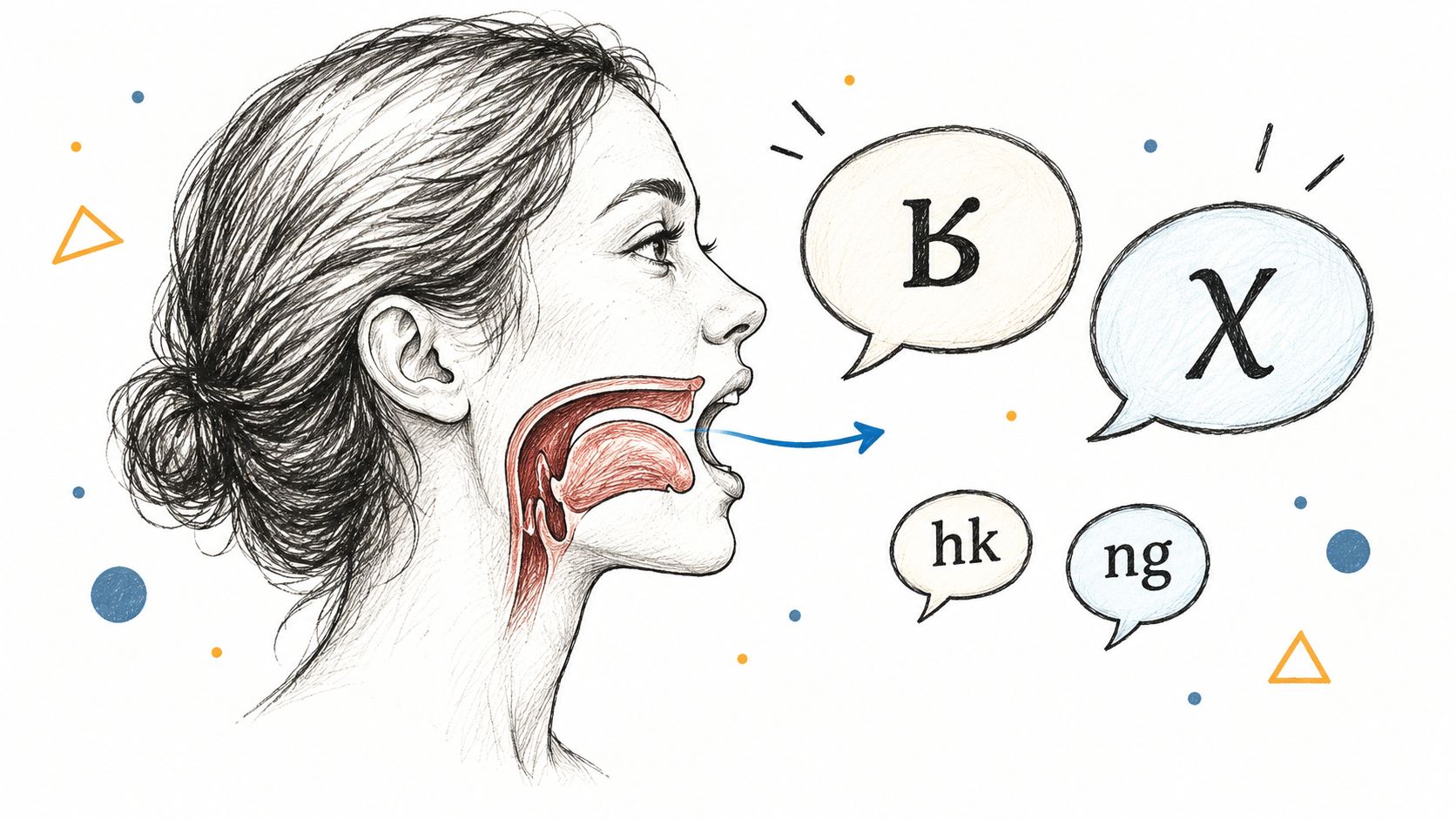
The German R and CH Sounds: Pronunciation Training for Cantonese Speakers


